Overview
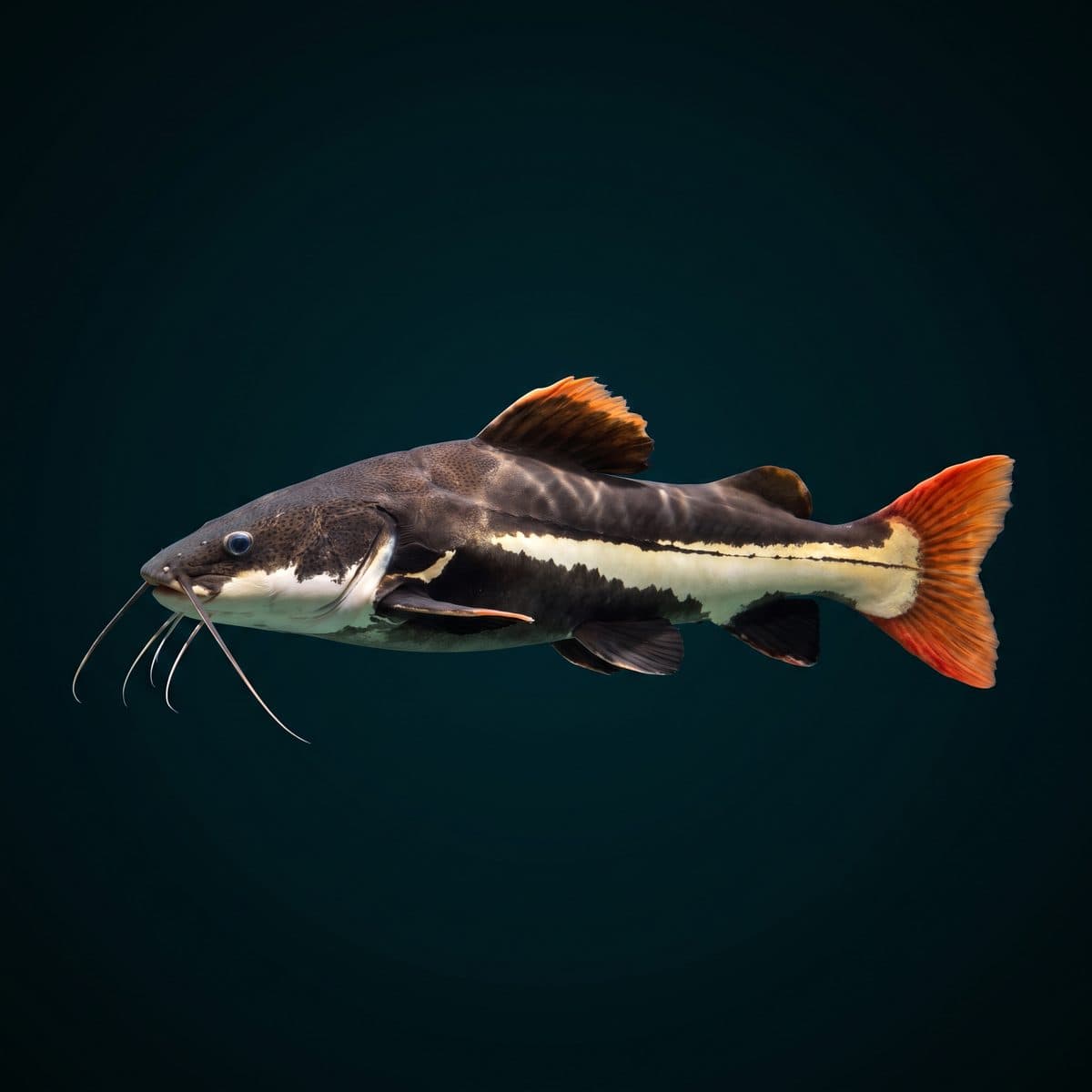
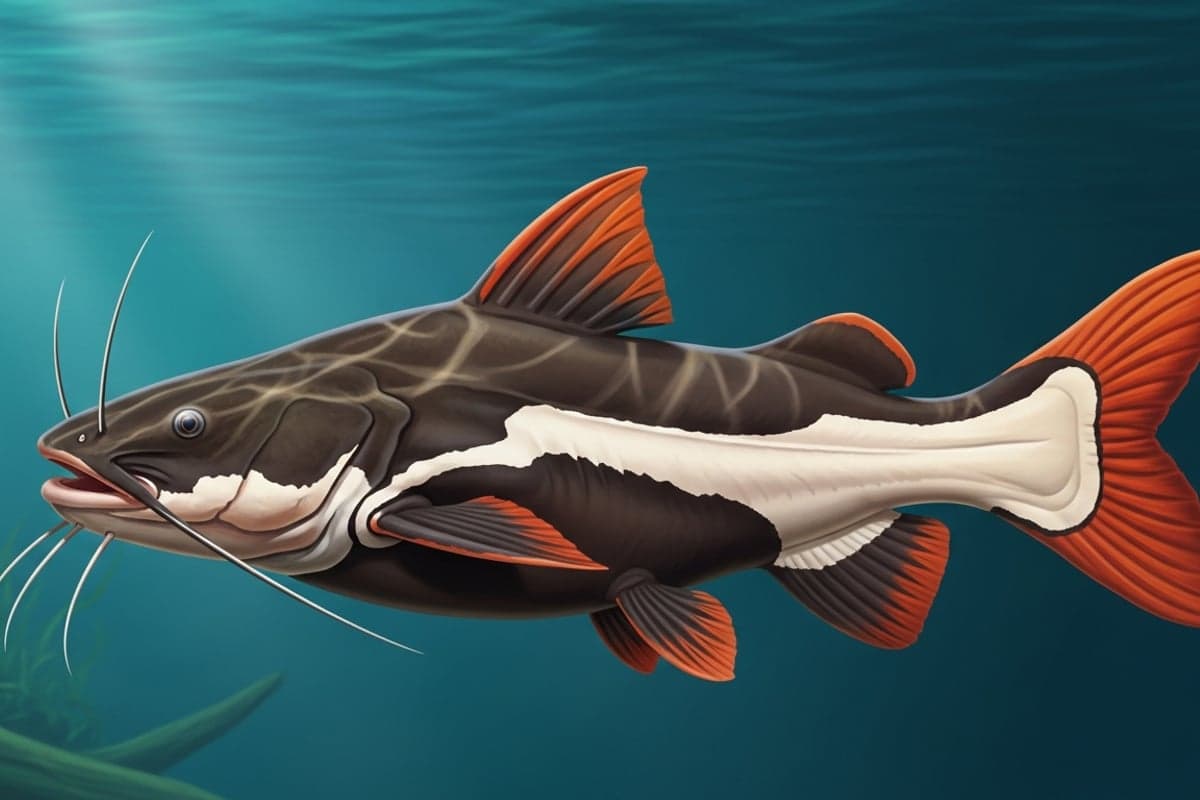
The Red Tail Catfish (Phractocephalus hemioliopterus) is the sole living member of its genus and one of the most recognisable freshwater fish on Earth. Its tricolour pattern — dark dorsum, bright white lateral stripe, and vivid orange-red caudal and dorsal fins — makes it a perennial crowd-pleaser at public aquariums worldwide. In the wild, specimens reach 180 cm (6 feet) and weigh over 80 kg; in captivity, 100–130 cm (40–52 inches) is standard for adults provided adequate space.
The Red Tail Catfish is also, without exaggeration, the single most commonly surrendered large fish in the aquarium hobby. Pet shops sell adorable 5–8 cm juveniles to unsuspecting buyers who have no concept of the animal's growth rate (15–20 cm in the first year, 60+ cm by year two) or adult space requirements (1,000+ gallon minimum). Public aquariums, zoos, and rescue organisations are overwhelmed with unwanted Red Tails. At The Fish Collection, we refuse to sell this species to any customer who cannot demonstrate they already own — or have under construction — a system of at least 1,000 gallons.
This is not meant to discourage legitimate keepers. A well-maintained Red Tail Catfish in an appropriately sized system is one of the most magnificent displays in the freshwater hobby. These are intelligent, interactive animals that develop strong bonds with their keepers and can live for three decades. The key is entering ownership with full knowledge of the commitment. This guide provides that knowledge in uncompromising detail.
Natural Habitat
Wild Phractocephalus hemioliopterus range across the Amazon basin, the Orinoco drainage in Venezuela and Colombia, and the Essequibo River system in Guyana. They occupy the main channels of large rivers, deep pools at tributary confluences, and the submerged forest habitats that form during the annual flood cycle. These are powerful river environments with moderate to strong current, sandy to rocky substrates, and complex submerged structure provided by fallen trees and rock formations.
Water conditions across their range are variable: temperature 22–30 °C, pH 5.5–7.5 (depending on whether the habitat is blackwater, whitewater, or clearwater), and GH from near-zero in blackwater tributaries to 12+ dGH in whitewater systems. Red Tail Catfish are adaptable to this range of conditions, which partly explains their success in captivity — they are among the hardiest of large catfish species with respect to water chemistry tolerance.
In the wild, Red Tails are ambush predators and opportunistic scavengers. They position themselves in areas of structural cover and use their broad, flat head and cavernous mouth to engulf prey — fish, crustaceans, fallen fruit, and essentially anything organic that fits in their mouth. Their indiscriminate feeding behaviour is important to understand for captive management: Red Tails will attempt to eat anything in their environment, including tank décor, heater guards, and other fish that are nominally "too large" to be swallowed.
Tank Requirements
Tank Dimensions & Construction
An adult Red Tail Catfish requires a minimum 1,000-gallon (3,785 L) aquarium or indoor pond with dimensions of at least 360 cm long × 120 cm wide × 75 cm tall (12 × 4 × 2.5 feet). These are not standard dimensions by any measure — Red Tail tanks are custom builds, period. The most common construction methods are plywood lined with fibreglass and marine-grade epoxy, or large welded acrylic panels on a structural steel frame. Glass is impractical at this volume due to weight and fragility risk.
The loaded weight of a 1,000-gallon system exceeds 5,000 kg (11,000 lbs). Ground-floor placement on a reinforced concrete slab is mandatory. Upper-floor installations are not feasible for any residential structure. The tank room must have floor drains for large water changes (250–400 gallons per session), proximity to water supply, adequate electrical capacity for pumps and heaters, and climate control to prevent excessive ambient heat from the equipment.
Interior layout should be minimalist. A smooth sand substrate (Red Tails have sensitive barbels and smooth scaleless skin), one or two very large shelters (sections of 30+ cm diameter culvert pipe or custom-built plywood caves), and no loose objects that could be swallowed. Red Tail Catfish will eat gravel, small rocks, heater components, and thermometer probes if given the opportunity — the tank must be "Red Tail proofed" with the same diligence one would baby-proof a house.
Filtration & Flow
The filtration requirement for a Red Tail Catfish is industrial in scale. Target a combined turnover of 10–12× the tank volume per hour — for a 1,000-gallon system, that means 38,000–45,000 litres per hour. A large sump (200+ gallons) is the biological core, typically incorporating a settling chamber, a moving-bed bio-reactor (50+ litres of K1 media), static bio-media, and a high-wattage UV steriliser (110+ watts). Many keepers add a bead filter or pressurised sand filter for mechanical polishing, particularly after messy feeding events.
The water-change regimen is substantial: 30–40% weekly (300–400 gallons), ideally performed with an automated drip system connected to an RO reservoir and a drain. Manual water changes at this volume are physically demanding and time-consuming; automation is not a luxury but a practical necessity for sustainable long-term management.
Lighting
Standard LED lighting at moderate intensity. Red Tail Catfish are crepuscular — most active at dawn and dusk — and tolerate normal aquarium lighting without issue. The fish's striking colouration displays best under neutral white light (6,000–7,000 K). No special lighting requirements apply.
Water Parameters
Red Tail Catfish are adaptable to a wide range of freshwater conditions, making water chemistry management relatively straightforward compared to the space and filtration challenges:
- Temperature: 22–28 °C (72–82 °F). At this tank volume, two or more titanium inline heaters with a centralized digital controller are necessary for consistent temperature maintenance.
- pH: 6.0–7.5. Neutral is ideal; the species tolerates slight acidity to slight alkalinity without issue.
- GH: 2–15 dGH. No strong preference; adapts to local tap water in most regions.
- KH: 2–10 dKH. Maintain sufficient buffering to prevent pH crashes from the heavy biological load.
- Ammonia / Nitrite: 0 ppm — always. Despite their toughness, Red Tails are scaleless and sensitive to dissolved nitrogenous waste.
- Nitrate: <20 ppm. The filtration and water-change regimen must be calibrated to maintain this threshold despite the substantial waste output of a 20+ kg predatory catfish.
Diet & Feeding
Red Tail Catfish are voracious, indiscriminate feeders that will consume anything organic placed in their environment — and many things that are not organic. Dietary management is critical both for nutritional health and to prevent the foreign-body impaction events that are a leading cause of Red Tail morbidity in captivity.
A balanced feeding schedule for an adult Red Tail includes:
- Primary: Whole fish — tilapia fillets, silversides, smelt, trout. Vitamin-soaked before feeding. For a 100+ cm specimen, offer 300–500 grams per feeding, 2–3 times per week.
- Secondary: Whole shell-on prawns (head-on for calcium), large crayfish, squid, and earthworm bundles.
- Pellets: Hikari Massivore Delite or Northfin Monster Predator Formula. These large sinking pellets are nutritionally balanced and accepted eagerly by trained specimens.
- Fasting: Two days per week minimum. Red Tails are extremely prone to obesity; their sedentary captive lifestyle burns far fewer calories than their active wild existence.
Absolutely avoid feeder goldfish and other live feeder fish. Beyond the well-documented disease risk and nutritional deficiency, the feeding response triggered by live prey can cause Red Tails to become hyperaggressive and difficult to manage during routine tank maintenance. Never feed mammalian proteins (chicken, beef) — these cause fatty deposits and liver damage over time.
Behaviour & Temperament
Red Tail Catfish are powerful, confident predators that, when properly maintained, develop a calm, almost dog-like disposition. They learn their keeper's appearance, feeding schedule, and tank maintenance routine, and many specimens allow gentle touch on their head and barbels during feeding (though this carries risk — their pectoral fin spines can cause deep, painful puncture wounds). They are more active during low-light periods (dawn, dusk, night) but will emerge for food at any time once conditioned to a feeding routine.
The species is not inherently aggressive in the territorial sense. Red Tails do not defend territory or attack tank mates out of malice. Their "aggression" is purely predatory — they will attempt to eat any fish that can fit in their remarkably elastic mouth, which can gape wide enough to accommodate prey up to 50% of the catfish's own body length. Many seemingly secure tank mates have been lost to overnight predation events that the keeper never anticipated.
Red Tails are also notorious escape artists and tank-furniture destroyers. They can displace heaters, crack glass covers, and shift heavy rocks. All equipment must be secured, enclosed, or positioned outside the tank (inline heaters, external UV units). The tank cover must be strong enough to withstand the fish's full body weight pressing upward.
Compatible Tank Mates
Tank mates must be too large to be swallowed and robust enough to coexist with a 100+ cm predator in a 1,000+ gallon system. The candidate list is short:
- Arowana — Silver Arowana and Platinum Arowana are the classic top-dwelling partners in monster fish communities.
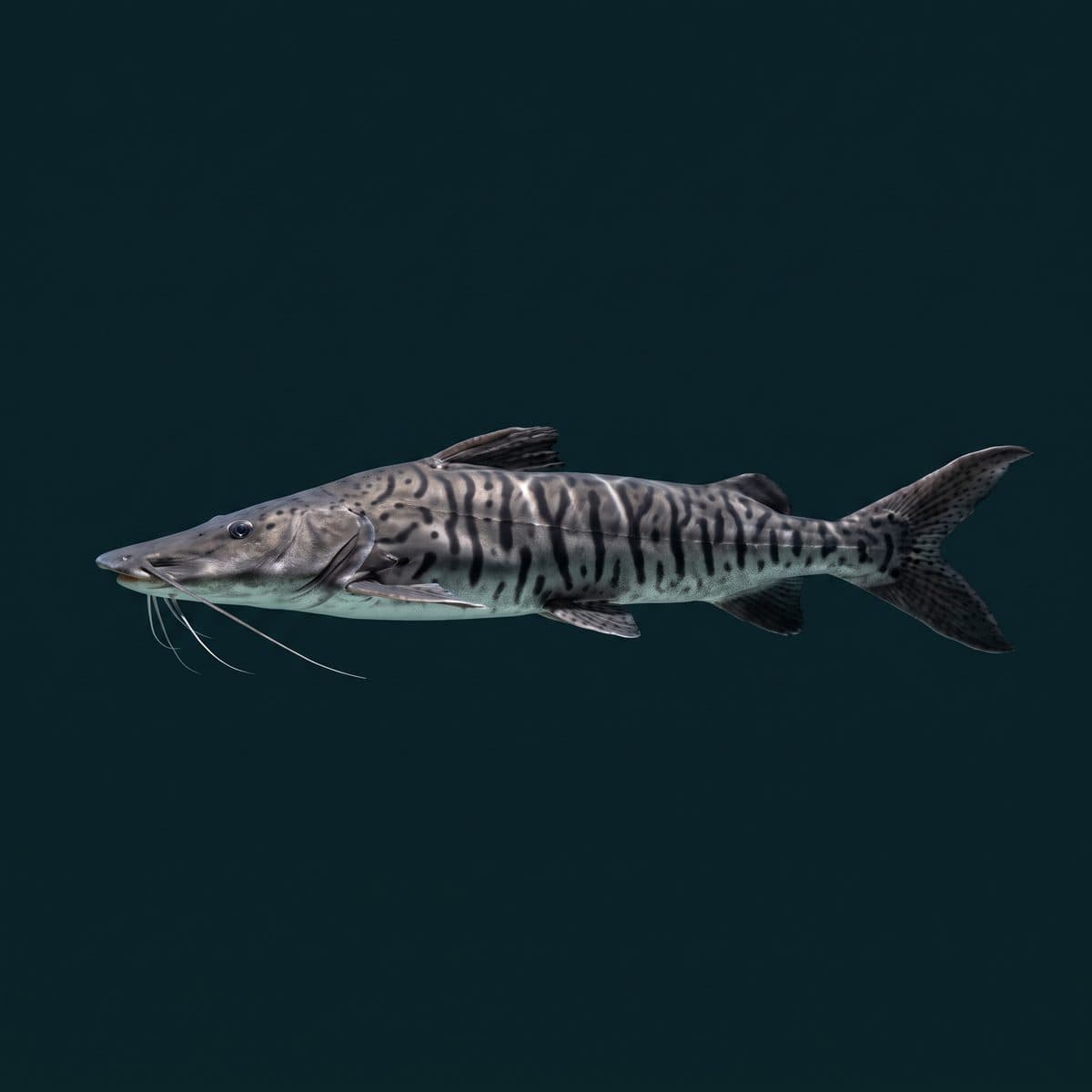
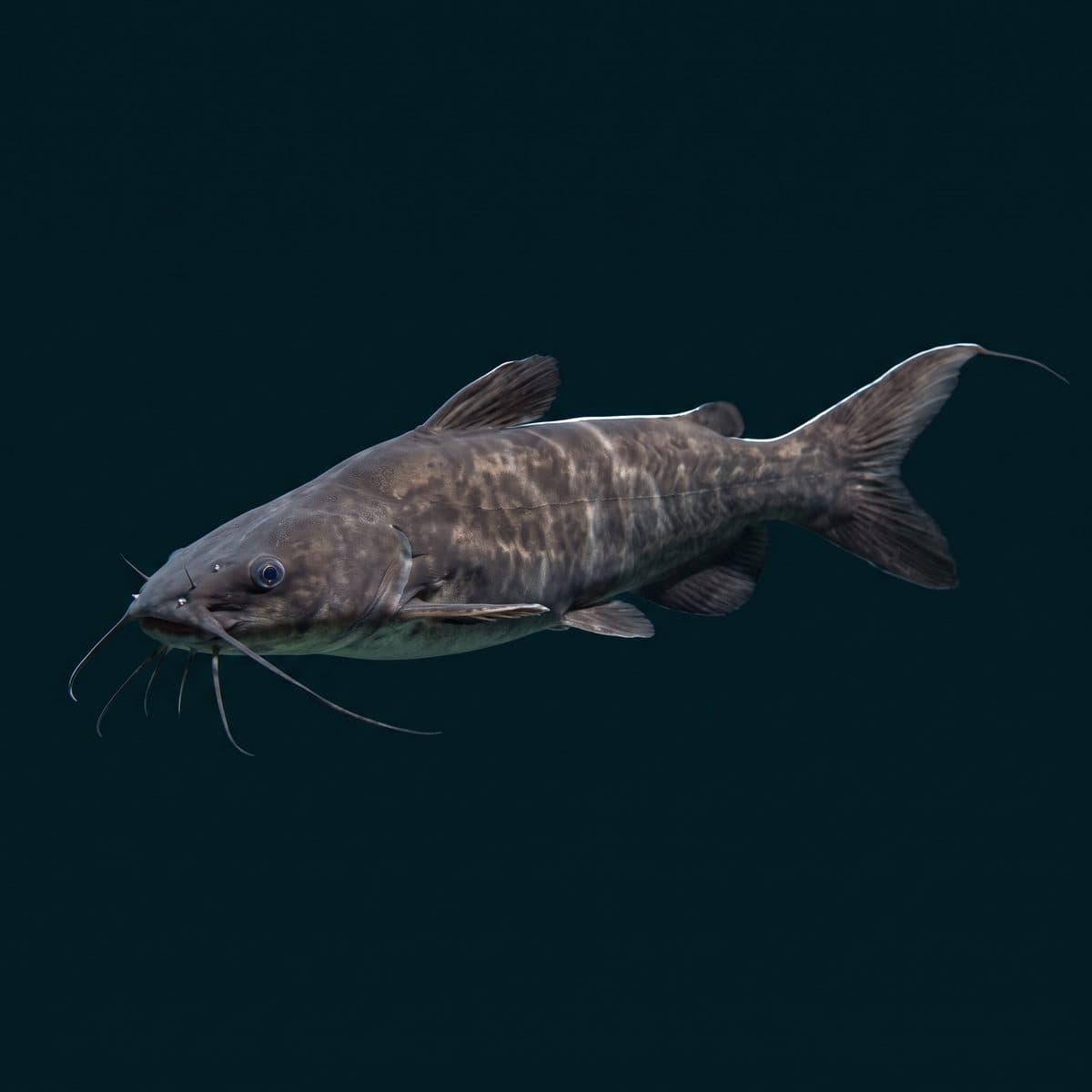
- Other large catfish — Shovelnose Tiger Catfish, Irwini Catfish, and Ripsaw Catfish (Oxydoras niger) are compatible bottom-dwellers.
- Large Bichirs — Polypterus endlicherii at 50+ cm can coexist, though monitor for predation attempts on smaller individuals.
- Peacock Bass — Cichla species at 40+ cm in very large systems.
- Freshwater stingrays — Large Potamotrygon species in wide tanks with adequate floor space.
Even with "compatible" species, nocturnal predation is always a risk. Size-match all tank mates carefully and err on the side of larger companions. A Red Tail Catfish that has successfully eaten a tank mate will actively target similarly sized fish in the future.
Breeding
Captive breeding of Phractocephalus hemioliopterus has been achieved at a small number of commercial aquaculture facilities in South America and Southeast Asia using hormone induction (carp pituitary extract), but it has never been accomplished in a home aquarium setting. The species is believed to undertake migratory spawning runs in the wild, with reproduction linked to seasonal flooding and environmental triggers that cannot be replicated in captivity.
Red Tail Catfish in the ornamental trade are overwhelmingly wild-caught from the Amazon and Orinoco basins. The species is not currently considered threatened due to its large natural range and habitat adaptability, but collection data is limited and localised overfishing for both food and ornamental markets may pose regional risks. Responsible ownership — including a commitment to lifetime care rather than acquisition and eventual surrender — is the most meaningful contribution hobbyists can make to the species' welfare.
Common Health Issues
Foreign Body Ingestion
The most distinctive health risk for captive Red Tail Catfish is foreign body ingestion. Their indiscriminate feeding behaviour means they will swallow gravel, small rocks, heater components, thermometer probes, filter intake guards, and any loose object in their environment. Small items may pass through the digestive tract without incident; larger items cause intestinal impaction, which presents as appetite loss, abdominal distension, and lethargy. Severe cases require surgical intervention by an aquatic veterinarian — a complicated, expensive, and high-risk procedure in a fish this size. Prevention is the only reliable strategy: ensure the tank contains nothing the fish can swallow except food. Sand substrate only, no gravel. All equipment either external or armoured with heavy-gauge protective housings.
Obesity & Fatty Liver
Red Tail Catfish in captivity are almost universally overfed. Their enthusiastic feeding response and "begging" behaviour — swimming to the front of the tank, opening their mouth, and sometimes splashing — triggers a caretaking instinct in their keepers that results in excessive meal frequency and portion sizes. Hepatic steatosis is the eventual result, presenting as an increasingly rounded abdomen, lethargy, and appetite reduction. By the time clinical signs appear, the condition may be irreversible.
The discipline required is straightforward but emotionally challenging: feed adult Red Tails no more than two to three times per week, maintain two fasting days, and ignore the begging. A lean, active Red Tail with a streamlined body profile will outlive a fat, sedentary one by years or decades.
Additional health considerations include scaleless-skin sensitivity to copper-based medications (use only catfish-safe treatments), internal parasites in wild-caught specimens (prophylactic praziquantel during quarantine), and pectoral fin spine injuries — both to the fish (fractured or infected spines from collisions with tank walls in undersized systems) and to the keeper (puncture wounds from handling). Always use wet towels, not nets, when moving Red Tail Catfish, and wear thick gloves to protect against the serrated pectoral spines.