Overview
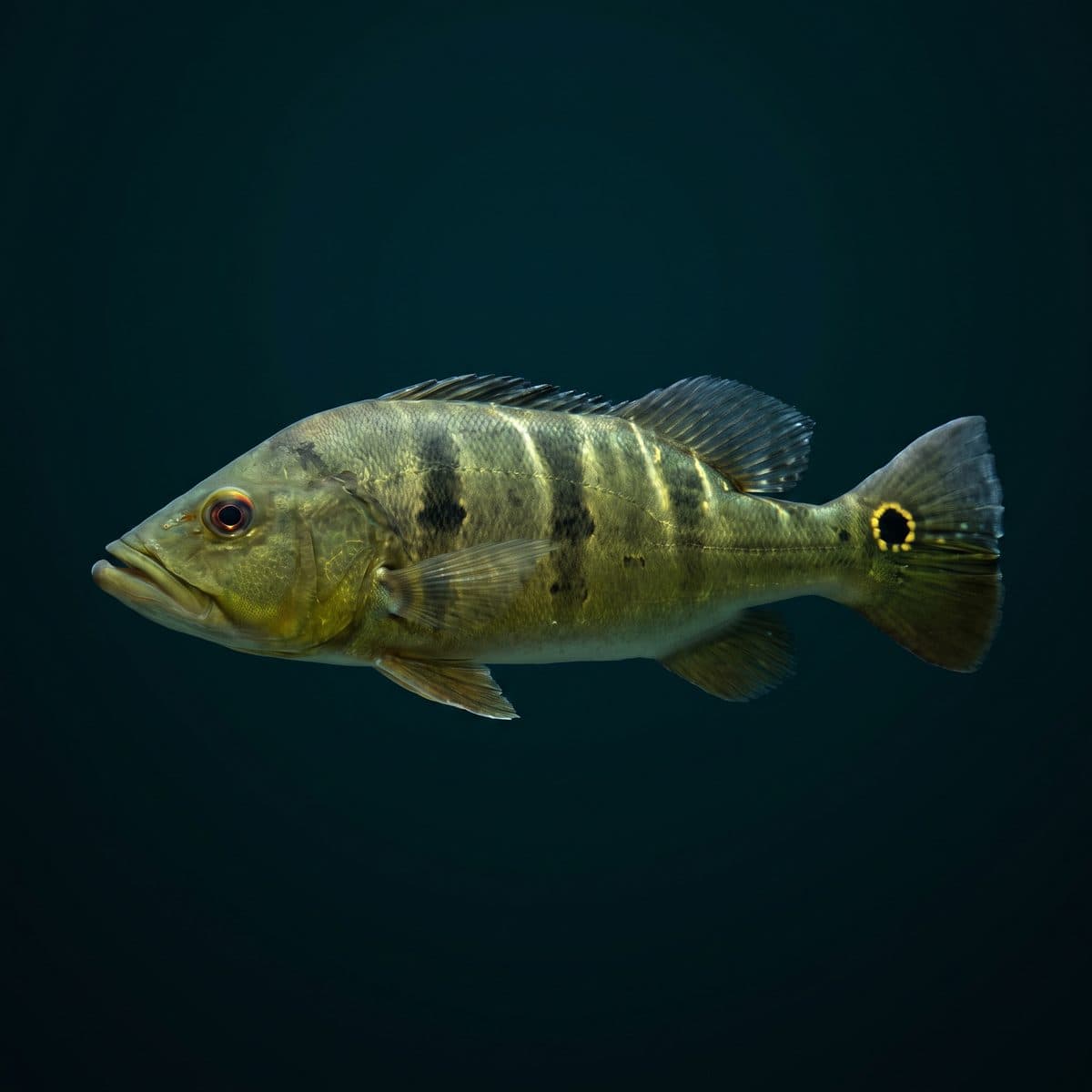
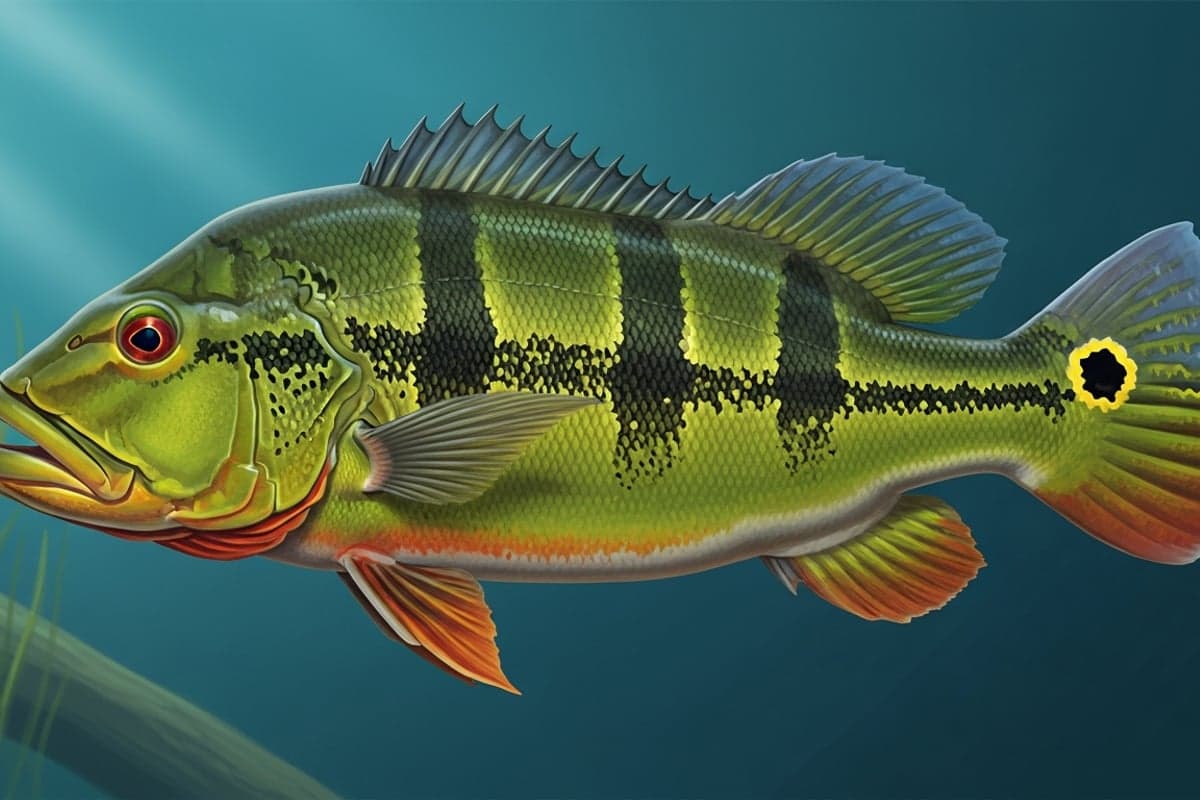
The Peacock Bass (Cichla ocellaris) is the type species of the genus Cichla, a group of large predatory cichlids native to tropical South America. Known as "Tucunaré" in Brazil and "Pavón" in Venezuela, Peacock Bass are legendary among sport anglers for their explosive strikes and dogged fighting ability. In the aquarium hobby, they have gained a dedicated following among monster-fish enthusiasts who appreciate their vivid gold-green colouration, the signature ocellated (eye-like) spot on the caudal peduncle, and their commanding presence in a large display tank.
Cichla ocellaris is the most commonly encountered Peacock Bass species in the trade, though several other species — including C. temensis, C. kelberi, and C. monoculus — also appear. All share similar care requirements, though size at maturity varies. C. ocellaris typically reaches 60–75 cm in captivity, with wild specimens exceeding 80 cm and 10 kg. They are fast-growing, voracious predators that demand space, food, and respect.
At The Fish Collection, we offer captive-bred and ethically sourced Peacock Bass with species-level identification — a critical detail, as many sellers mislabel Cichla species. Our specimens are raised on pellets from an early age, making the transition to a varied captive diet straightforward. This guide covers everything you need to know to house, feed, and maintain Peacock Bass at the highest standard.
Natural Habitat
Cichla ocellaris is native to the clear and blackwater river systems of the Amazon and Orinoco basins, spanning Brazil, Venezuela, Colombia, Guyana, and Suriname. They inhabit a wide range of aquatic environments — from deep river channels and oxbow lakes to flooded forests (igapó) and artificial reservoirs. Water conditions across this range vary considerably but generally fall within 25–32 °C, pH 5.5–7.5, and soft to moderately hard (GH 1–10 dGH).
Peacock Bass are open-water predators that hunt primarily by sight. They prefer clear or moderately stained water where visibility exceeds 1 metre, and are most active during daylight hours — making them one of the few large Neotropical predators that hunt diurnally rather than nocturnally. In the wild, they feed on a diet dominated by fish — particularly characins (tetras, piranhas), small cichlids, and crustaceans — consuming prey up to one-third their own body length.
The species has been widely introduced outside its native range, both intentionally (as a sport-fishing species in Florida, Hawaii, and Panama) and accidentally. These introductions have had mixed ecological outcomes, with feral Peacock Bass populations suppressing native fish communities in some areas. In the aquarium trade, captive-bred specimens from South American and Asian farms form the majority of supply, supplemented by limited wild-caught imports from Colombia and Brazil.
Tank Requirements
Tank Dimensions & Layout
A single adult Peacock Bass requires a minimum 200-gallon (760 L) aquarium measuring at least 210 cm long × 60 cm wide × 60 cm tall (84 × 24 × 24 inches). For a pair or community of large predators, 300–500 gallons is necessary. Length and width are prioritised over height — Peacock Bass are active, fast-swimming fish that need ample horizontal space for cruising and turning.
Keep the aquascape minimal. Peacock Bass are powerful fish that will rearrange or destroy elaborate décor. A few large pieces of driftwood or smooth boulders provide visual interest and territorial markers without impeding swimming. Bare-bottom or fine sand substrate is preferred for ease of maintenance. Avoid sharp decorations that could injure the fish during the powerful acceleration they display when striking prey or fleeing a perceived threat.
Filtration & Flow
Peacock Bass are large-bodied, high-metabolism predators that produce substantial waste. A sump-based filtration system is strongly recommended, targeting a turnover rate of 8–10× the tank volume per hour. For a 200-gallon system, this means approximately 6,000–7,600 litres per hour of combined flow. Biological filtration capacity must be generously sized — K1 moving-bed media in a fluidised reactor handles the ammonia spikes that follow heavy feeding sessions. Include a UV steriliser (36–57 W) and effective mechanical prefiltration (filter socks, roller mat) to maintain water clarity.
Moderate flow is acceptable and even beneficial, as Peacock Bass are naturally found in areas with some current. Avoid dead spots where waste can accumulate and ensure the entire tank volume circulates through the filtration system.
Lighting
Unlike many predatory fish, Peacock Bass are diurnal and display best under moderate-to-bright lighting. Standard LED fixtures in the 6,500–10,000 K range show off their gold-green iridescence beautifully. A photoperiod of 10–12 hours mimics the equatorial light cycle of their native habitat. Peacock Bass are not light-shy and will actively hunt and display under full aquarium lighting.
Water Parameters
Peacock Bass are adaptable to a range of water conditions but perform best within the following parameters:
- Temperature: 26–30 °C (78–86 °F). These are tropical fish that do not tolerate temperatures below 22 °C. Immune function and metabolism decline sharply below 24 °C.
- pH: 6.0–7.5. Captive-bred specimens are generally adaptable within this range.
- General Hardness (GH): 2–10 dGH (36–179 ppm).
- Carbonate Hardness (KH): 2–8 dKH.
- Ammonia / Nitrite: 0 ppm — always.
- Nitrate: <30 ppm. Weekly 25–30% water changes are standard for large predator tanks.
Peacock Bass are relatively hardy once established, but they are intolerant of ammonia and nitrite spikes — common in newly set up or understaffed-filtration tanks. Cycle the tank fully before introducing the fish, and monitor parameters closely during the first month. Temperature stability is important; invest in a quality heater with a digital controller rated for the tank volume.
Diet & Feeding
Peacock Bass are voracious piscivorous predators with high metabolic demands. In the wild, their diet is dominated by fish, supplemented by crustaceans and large insects. In captivity, the goal is to wean them onto a varied diet that includes prepared foods for nutritional completeness.
Recommended foods:
- High-quality pellets — Hikari Massivore, Northfin Predator, or New Life Spectrum Large Fish Formula. Pellet-trained Peacock Bass are the easiest to maintain long-term. Offer as the dietary staple.
- Market prawns — shell-on, heads removed. Excellent source of protein and chitin. 4–6 large prawns per session for an adult.
- Frozen silversides, smelt, or tilapia strips — whole fish provide complete nutrition. Thaw and rinse before offering.
- Earthworms — readily accepted and nutritionally excellent.
- Live feeder fish (limited use) — captive-bred, quarantined guppies or mollies only. Never use feeder goldfish.
Feed adults every other day; juveniles (under 20 cm) should be fed daily. A fast day once per week is beneficial. Peacock Bass have enormous appetites and will gorge if allowed — overfeeding leads to obesity, fatty liver disease, and water quality crashes. Feed a measured amount and resist the temptation to offer more just because the fish is still begging.
Behaviour & Temperament
Peacock Bass are bold, active, and highly predatory cichlids. Unlike many large South American cichlids, they are diurnal hunters that spend the majority of the photoperiod cruising the open water column, scanning for prey opportunities. They are intelligent fish that quickly learn to associate their keeper with food, often rushing to the front glass at the sight of a familiar person. This interactivity makes them compelling display animals.
Aggression in Peacock Bass is primarily directed at conspecifics and fish that encroach on their territory. A single specimen in a community tank is typically manageable; pairs can be housed together if the tank is large enough (300+ gallons) and the pair has bonded. Groups of 3 or more require very large systems (500+ gallons) to distribute aggression. Towards non-Cichla tank mates, aggression is situational — during feeding, Peacock Bass may become territorial around food items, and any fish small enough to eat will be consumed without hesitation.
Compatible Tank Mates
Suitable companions for Peacock Bass include:
- Arowana — Silver or Asian Arowana occupy the surface and coexist well in large systems.
- Large Plecostomus — Common, Sailfin, or Royal Plecos are typically ignored.
- Bichirs — Polypterus endlicherii and similar large species make solid bottom-dwelling companions.
- Oscar Cichlids — Oscars and Peacock Bass are of similar temperament and can coexist in 300+ gallon systems.
- Clown Knife Fish — compatible in very large tanks, as they occupy different activity periods (nocturnal vs. diurnal).
- Freshwater Stingrays — Motoro or Black Diamond rays pair well in wide tanks, occupying the benthic zone exclusively.
Avoid all small fish (anything under 15 cm will be eaten), slow-moving delicate species, and aggressive cichlids of similar size that will engage in damaging territorial disputes (Dovii, Umbee, adult Flowerhorn).
Breeding
Peacock Bass are biparental substrate spawners that can be bred in captivity, though the space requirements are considerable. A bonded pair requires a minimum 300-gallon tank with a flat spawning surface — a large piece of slate, a smooth boulder, or the aquarium glass itself. Pairs typically form naturally from a group raised together; forced pairing of unfamiliar adults often results in serious aggression.
Spawning is preceded by intensified colouration in both sexes — the gold-green flanks become more vivid, and a prominent nuchal hump develops in breeding males. The female deposits 3,000–10,000 adhesive eggs on the chosen surface over several hours. Both parents guard the clutch fiercely, attacking anything that approaches, including the keeper's hand or maintenance equipment.
Eggs hatch in 72–96 hours at 28 °C. The parents move the wriggling fry to pre-excavated pits in the substrate, where they remain for an additional 4–5 days until free-swimming. Free-swimming fry are escorted by both parents in a tight school and can be fed baby brine shrimp immediately. Growth is rapid — fry reach 5 cm within 6 weeks under heavy feeding. Both parents continue to guard the fry for 4–6 weeks, after which the family bond dissolves and the parents may spawn again.
Common Health Issues
Hole-in-the-Head Disease
Hole-in-the-Head (HITH) disease is the most common serious ailment in captive Cichla. It presents as pitted erosions on the head and lateral line, often accompanied by white stringy mucus. The condition is multifactorial — chronic exposure to high nitrate (>40 ppm), poor diet, and infection with the intestinal flagellate Hexamita/Spironucleus are all contributing factors. Treatment involves reducing nitrate to below 15 ppm through aggressive water changes, improving the diet with vitamin-enriched foods, and administering metronidazole (250 mg per 40 litres, repeated after 48 hours). Prevention through consistent water changes and a varied diet is far more effective than treatment.
Bloat
Bloat (dropsy) in Peacock Bass typically results from overfeeding, particularly with fatty foods, or from internal bacterial infection. Symptoms include abdominal swelling, raised scales (pine-coning), lethargy, and loss of appetite. If caught early and caused by overfeeding, a 5–7 day fast followed by a gradual reintroduction of easily digestible foods (earthworms, small prawns) may resolve the issue. Bacterial dropsy — identifiable by pine-coning of scales — carries a poor prognosis and requires antibiotic treatment (kanamycin, combined with metronidazole) in a hospital tank. Prevention centres on measured feeding, a lean diet, and weekly fast days.
Other conditions include ich (treat at standard dose — Peacock Bass are scaled and tolerate medication well), external parasites (anchor worm, fish lice — treat with diflubenzuron or manual removal), and physical injuries from territorial disputes (maintain excellent water quality to promote rapid healing). Regular water testing and a disciplined maintenance schedule prevent the vast majority of health issues.