Overview
The Dragon Goby (Gobioides broussonnetii), commonly marketed as the Violet Goby or Dragon Fish, is a brackish-water goby native to the Atlantic coastal estuaries and mangrove systems of the Americas. It is one of the most consistently misrepresented species in the aquarium trade — pet shops routinely house it in freshwater community tanks and market it as an aggressive predator, when in reality it is a gentle, poor-sighted filter feeder that requires brackish conditions to thrive long-term.
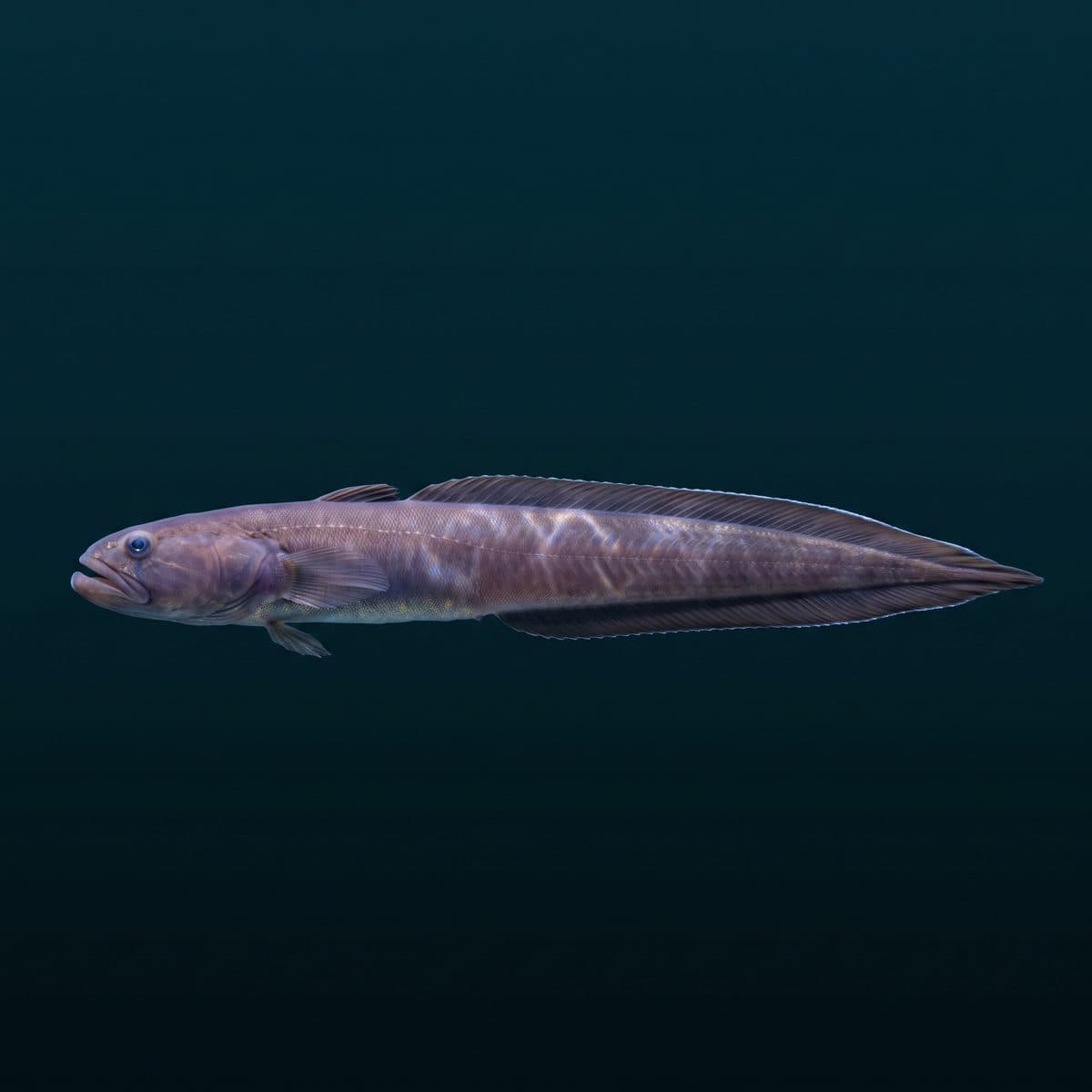
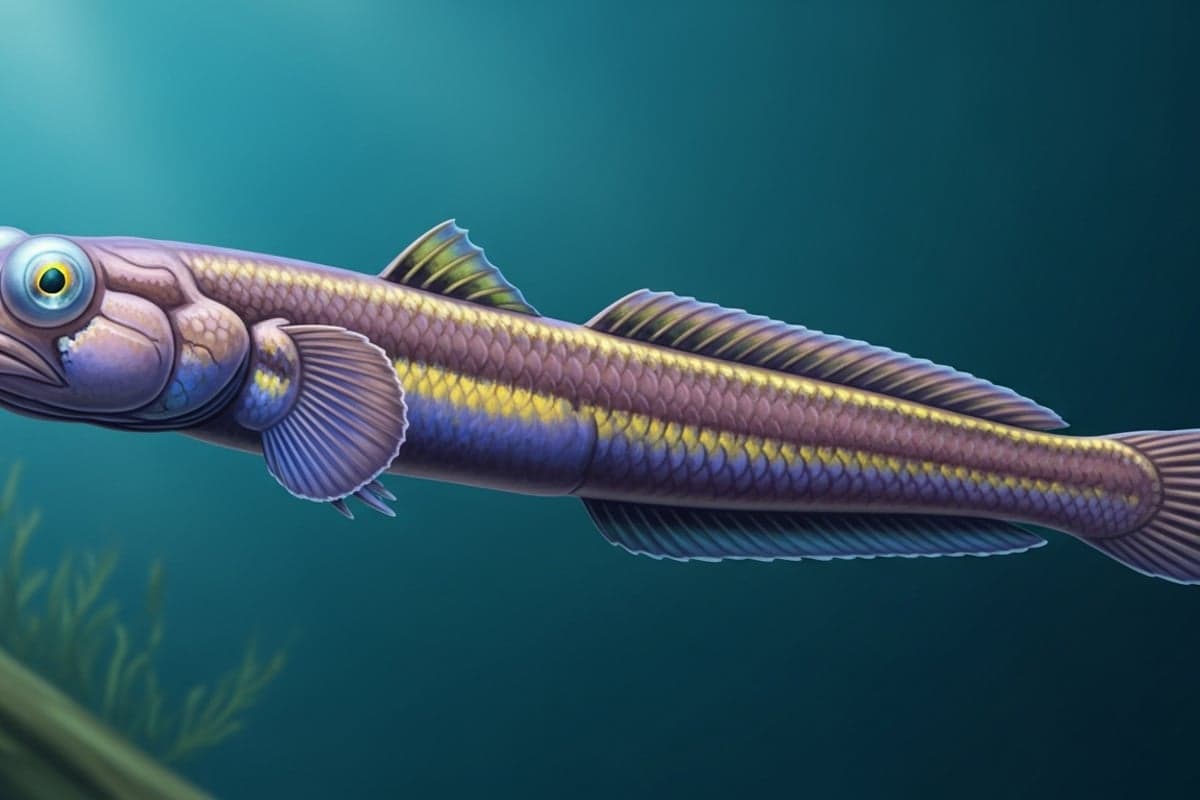
Reaching up to 60 cm (24 inches) in captivity — and occasionally larger in the wild — the Dragon Goby possesses an elongated, laterally compressed body covered in small, iridescent scales that shimmer violet-blue under appropriate lighting. Its most striking feature is a wide, undershot jaw lined with multiple rows of tiny, comb-like teeth adapted not for predation but for sifting fine substrate particles and trapping microscopic food organisms. The small, vestigial eyes confirm its reliance on sensory barbels and lateral line detection rather than vision.
At The Fish Collection, we have maintained Dragon Gobies in purpose-built brackish systems since 2015 and have observed firsthand how dramatically their health and longevity improve when kept in proper salinity versus the freshwater conditions most hobbyists provide. This guide distils that experience into a practical care manual that addresses the species' actual needs rather than the myths surrounding it.
Natural Habitat
Wild Gobioides broussonnetii are found along the western Atlantic coast from Georgia (USA) south through the Gulf of Mexico, the Caribbean, and down to Brazil. They inhabit estuarine environments — the transitional zones where freshwater rivers meet tidal saltwater — including mangrove root systems, tidal mudflats, brackish lagoons, and the lower reaches of coastal rivers where salinity fluctuates with the tides.
These habitats are characterised by soft, silty-sand substrates rich in organic detritus and microfauna. Salinity varies from nearly fresh (SG 1.001) at low tide during rainy season to moderately saline (SG 1.020) at high tide during dry season. The fish are euryhaline — physiologically capable of tolerating a wide salinity range — but they spend the majority of their time in the intermediate brackish zone (SG 1.005–1.015). Water in these estuaries is typically warm (24–30 °C), alkaline (pH 7.5–8.5), and moderately hard, with high turbidity that limits visibility to centimetres.
Dragon Gobies are burrowers. They excavate shallow tunnels in soft substrate, retreating into these during daylight hours and emerging at dusk to feed. Their poor eyesight is perfectly adapted to the turbid, low-visibility conditions of estuarine mudflats where visual acuity offers no advantage. Understanding this crepuscular, fossorial lifestyle is essential to designing an appropriate captive environment.
Tank Requirements
Tank Dimensions & Substrate
A single adult Dragon Goby requires a minimum 50-gallon (190 L) aquarium, with a strong preference for long, shallow designs — a 48 × 18 × 16 inch (120 × 45 × 40 cm) footprint is ideal. These are benthic fish that rarely venture more than 10 cm above the substrate, so floor space matters far more than water height. For a pair, step up to 75 gallons; for a small group of three, 100+ gallons is necessary to provide adequate burrowing territory.
Substrate selection is critical and non-negotiable. Dragon Gobies must have fine, soft sand — play sand, pool-filter sand, or aragonite sand (which also buffers pH upward). The sand bed should be 7–10 cm deep to allow burrowing. Never use gravel: the fish will attempt to sift it, damaging their delicate mouth tissues and causing bacterial infections that can be fatal. PVC pipe sections (5–7 cm diameter) half-buried in the sand provide additional refuges and reduce territorial stress in multi-goby setups.
Filtration & Flow
Filtration must handle the salt content and the biological load of a protein-rich diet. A hang-on-back or canister filter rated for 6–8× the tank volume per hour is sufficient. Marine-grade bio-media (ceramic rings, MarinePure blocks) colonise appropriate bacterial strains for brackish nitrogen cycling. Avoid under-gravel filters, which do not function well in deep sand beds and create anaerobic pockets. A protein skimmer is optional at SG 1.010+ and becomes increasingly effective as salinity rises.
Flow should be moderate and primarily directed along the back wall. Dragon Gobies are not strong swimmers and will struggle in high-flow environments. A gentle, diffused return — via spray bar or lily pipe — creates enough circulation for gas exchange without stressing the fish. Turnover of 5–6× per hour at substrate level is ideal.
Lighting
Dragon Gobies are crepuscular to nocturnal and strongly prefer dim conditions. Standard aquarium LEDs at 30–40% intensity on a 6–8 hour photoperiod are more than sufficient. Moonlight-mode LEDs (blue/red spectrum at very low intensity) allow observation of natural evening feeding behaviour without disturbing the fish. If you keep live plants (Java fern, Anubias, and Vallisneria tolerate low-to-moderate brackish conditions), position them to create shaded zones over the primary burrowing area.
Water Parameters
The single most common husbandry failure with Dragon Gobies is keeping them in pure freshwater. While they can survive in fresh for months or even years, their immune function, appetite, and colouration steadily deteriorate without salt. Target the following parameters for long-term health:
- Specific Gravity: 1.005–1.015. Use marine salt mix (Instant Ocean, Red Sea Coral Pro) — never aquarium "tonic" salt, which lacks the full mineral profile. Measure with a refractometer, not a hydrometer.
- Temperature: 24–28 °C (75–82 °F). A standard aquarium heater is fine; no special equipment needed.
- pH: 7.5–8.5. The marine salt mix naturally buffers pH into the alkaline range.
- GH: 10–25 dGH. Brackish conditions inherently produce moderate-to-high hardness.
- Ammonia / Nitrite: 0 ppm. Cycle the tank fully before adding Dragon Gobies — they are sensitive to new-tank syndrome.
- Nitrate: <20 ppm. Weekly 20–25% water changes with pre-mixed brackish water of matching salinity and temperature.
When performing water changes, always pre-mix the replacement water in a separate container, matching both temperature and salinity before adding it to the tank. Sudden salinity swings of more than 0.003 SG can trigger osmotic shock, which manifests as rapid breathing, erratic swimming, and — in severe cases — organ failure.
Diet & Feeding
Dragon Gobies are not predators. Their primary natural feeding strategy is sifting — they scoop mouthfuls of fine substrate, extract microorganisms (copepods, nematodes, diatoms) and organic detritus, and expel the cleaned sand through their gill plates. In captivity, this behaviour must be accommodated by providing foods that settle into or onto the sand bed.
An effective feeding regimen includes:
- Sinking pellets: Hikari Sinking Wafers, New Life Spectrum Small Fish Formula, or Fluval Bug Bites (bottom feeder formula). Crush pellets to 1–2 mm pieces for easier consumption.
- Frozen foods: Bloodworms, brine shrimp, Mysis shrimp, and daphnia — thawed and target-fed near the fish's burrow entrance using a pipette or turkey baster.
- Live foods: Baby brine shrimp (for juveniles), blackworms, and microworms scattered onto the sand surface provide excellent enrichment and replicate natural foraging behaviour.
- Supplementary: Spirulina flakes or powder, blanched zucchini medallions, and algae wafers provide plant-based nutrition.
Feed after lights-out, when Dragon Gobies are most active and confident. In community tanks, they are easily outcompeted by faster, more visual feeders — target feeding with a pipette directly at the goby's location is essential to ensure adequate intake. Feed daily; these fish have high metabolisms relative to their appearance and will lose condition quickly if underfed.
Behaviour & Temperament
Despite the fearsome common name and menacing jaw, Dragon Gobies are among the most peaceful large fish available in the aquarium hobby. They are almost entirely non-aggressive toward tank mates and will actively avoid confrontation. Their poor eyesight means they are often unaware of other fish unless physical contact occurs. When startled, their first instinct is to retreat into a burrow or press flat against the substrate.
Conspecific behaviour is generally tolerant in tanks with adequate space and burrowing territory. Multiple Dragon Gobies will establish loosely defined territories centred on their preferred burrow sites, with occasional mild jaw-flaring displays at boundaries. These interactions are ritualised and rarely result in physical contact. In tanks with insufficient hiding spots, however, subordinate individuals may be excluded from feeding areas and gradually starve.
Dragon Gobies are most active during the evening and nighttime hours. Keepers who only observe their tank during daytime may wrongly conclude the fish is inactive or sickly. Installing dim moonlight LEDs reveals a surprisingly active, methodical forager that systematically works across the sand bed throughout the night.
Compatible Tank Mates
Tank mates must tolerate brackish conditions (SG 1.005–1.015) and must not be aggressive enough to bully the gentle, vision-impaired goby. Suitable companions include:
- Mollies (Poecilia spp.) — Thrive in brackish water and occupy the mid-to-upper water column. A school of sailfin mollies is the classic Dragon Goby companion.
- Bumblebee Gobies (Brachygobius spp.) — Small, peaceful brackish gobies that occupy different microhabitats.
- Knight Gobies (Stigmatogobius sadanundio) — Hardy brackish species, though slightly territorial; provide ample rockwork.
- Figure Eight Puffers (Dichotomyctere ocellatus) — Compatible salinity range, though monitor for fin-nipping.
- Archerfish (Toxotes jaculatrix) — Surface-dwelling brackish species that ignores bottom-dwelling gobies entirely.
Avoid aggressive cichlids, large predatory fish, and anything that might target the goby's elongated, vulnerable body. Also avoid species that require strict freshwater (most tetras, barbs, Corydoras) — the brackish conditions that keep Dragon Gobies healthy will stress obligate freshwater species.
Breeding
Captive breeding of Gobioides broussonnetii is extremely rare and poorly documented. In the wild, spawning is believed to occur in deeper estuarine channels during seasonal salinity shifts. Males reportedly excavate elaborate burrow systems and court females with body-waving displays. The eggs are adhesive and deposited on the burrow ceiling, where the male guards and fans them until hatching.
The few successful captive spawning reports describe pairs conditioned in SG 1.008–1.012 at 26–28 °C, with a gradual salinity reduction to SG 1.003–1.005 over two weeks to simulate seasonal freshwater influx, followed by a gradual return to full brackish. Eggs hatched in approximately 36–48 hours, producing tiny, planktonic larvae that required infusoria and rotifers as first food. Larval survival rates were extremely low, and no commercial-scale breeding protocol exists. All Dragon Gobies in the aquarium trade are wild-caught, which underscores the importance of providing optimal captive conditions to justify their collection.
Common Health Issues
Osmotic Stress
The most common health problem in captive Dragon Gobies is chronic osmotic stress caused by maintenance in pure freshwater. Symptoms develop gradually: dulling of the iridescent colouration, increased mucus production, lethargy, appetite loss, and progressive immune suppression that makes the fish vulnerable to secondary bacterial and fungal infections. The solution is simple — transition the fish to proper brackish conditions (SG 1.005–1.010) gradually over 7–10 days, increasing salinity by no more than 0.002 SG per day. Most individuals show dramatic improvement in colour and activity within two weeks of reaching target salinity.
Bacterial Infections
Jaw and mouth infections are common in Dragon Gobies housed on inappropriate substrates. Gravel, sharp sand, or crusite damage the delicate oral tissues during sifting behaviour, creating entry points for opportunistic bacteria (Aeromonas, Pseudomonas). Symptoms include swollen or reddened jaw, refusal to feed, and white cottony patches around the mouth. Treatment involves switching to fine sand immediately, dosing the tank with a broad-spectrum antibiotic (kanamycin or nitrofurazone), and adding marine salt to at least SG 1.005 if the fish is currently in freshwater — the mild salinity itself has antibacterial properties. Prevent recurrence by ensuring the substrate is uniformly fine and free of sharp particles.
Other conditions include ich (treat with raised temperature to 30 °C plus 3 g/L marine salt — most ich medications are unsafe for scaleless or small-scaled fish), and internal parasites from wild-caught specimens (treat with praziquantel at 5 mg/L for 24 hours, repeated in two weeks). Quarantine all new arrivals for four weeks minimum in a species-only brackish tank before introducing to an established system.