Defining Rarity in Aquatics
Rarity in the aquarium hobby is not a single metric. It is a composite of four factors: annual trade volume (how many specimens enter the global market per year), collection feasibility (depth, geography, legal barriers), captive-breeding success (whether the species reproduces reliably outside its native habitat), and survival rate in captivity (some species are collected but rarely survive long-term). A fish can be common in the wild yet virtually absent from the trade — or extinct in nature yet thriving in aquaculture.
This list ranks rarity by availability to hobbyists, not ecological abundance. We have verified trade volumes through dealer networks, auction records, and import data through early 2026.
The 15 Rarest Aquarium Fish
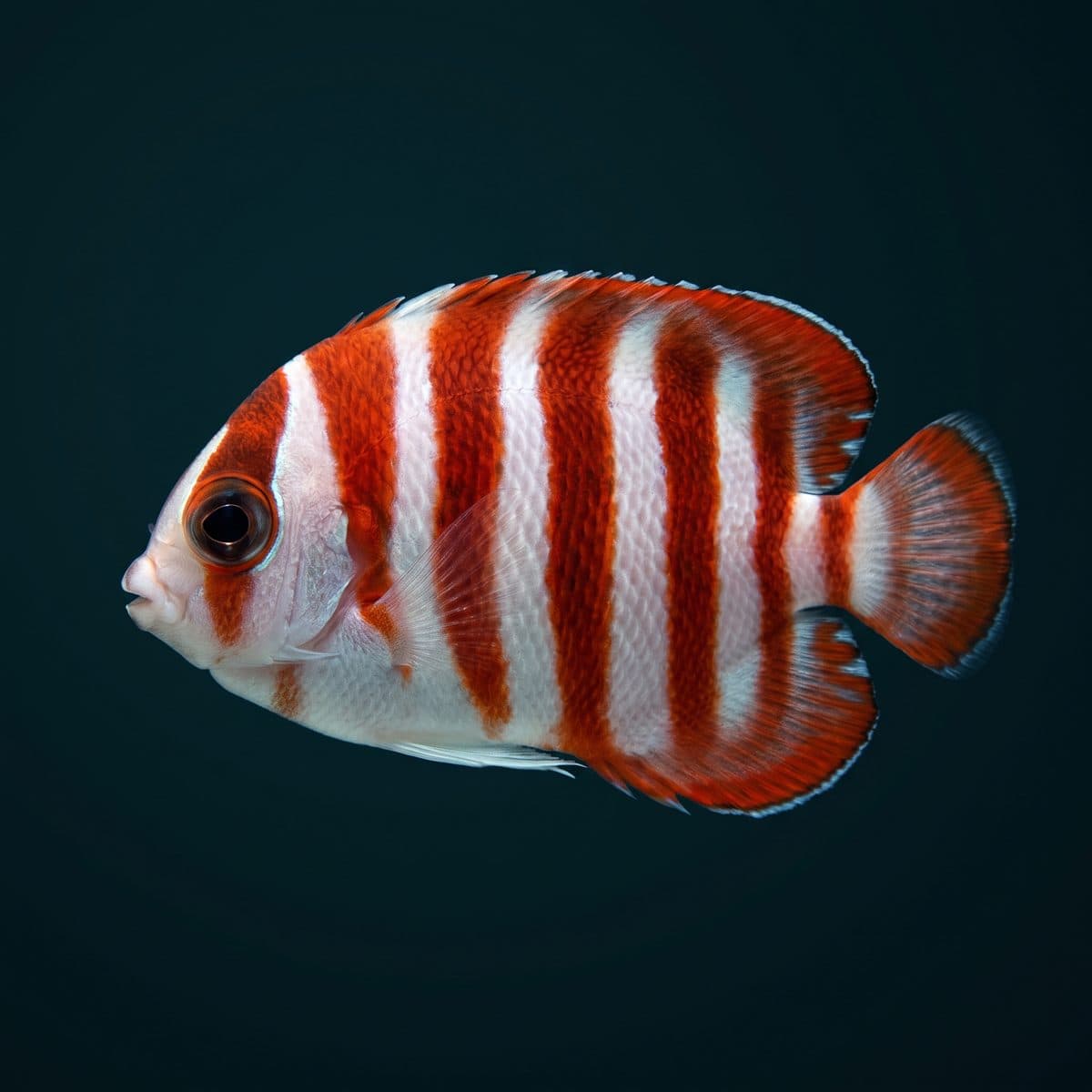
1. Peppermint Angelfish
Scientific name: Paracentropyge boylei
Trade volume: Fewer than 10 per year globally
Price: ~$30,000
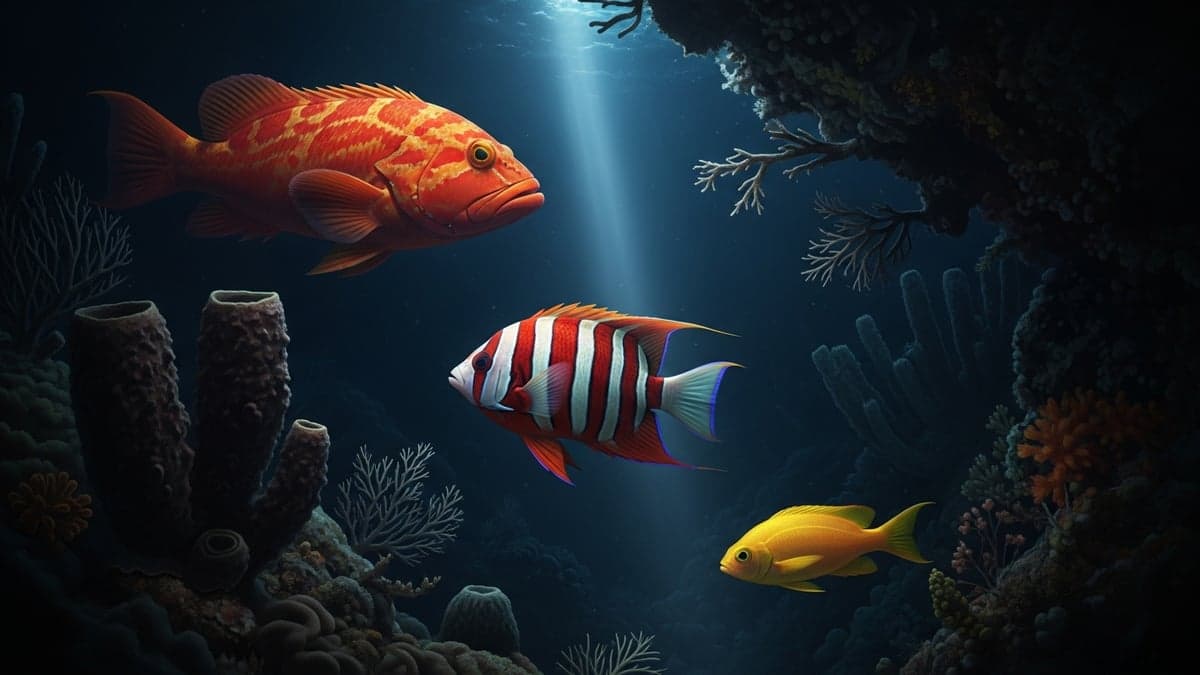
The benchmark for rarity. Found only near Rarotonga at 55–120 metres, every specimen requires a mixed-gas rebreather dive with significant physical risk. No captive breeding has been achieved. The vivid red-and-white banding is unique within Pomacanthidae. A mature reef of 70+ gallons with dim lighting and stable 22–24 °C water is essential. See our angelfish collection for related species.
2. Bladefin Basslet
Scientific name: Jeboehlkia gladifer
Trade volume: 1–5 per year
Price: $10,000+
Collected below 150 metres in the Caribbean using submersible-grade equipment. Decompression mortality is extreme — most specimens do not survive ascent. The elongated dorsal spine and bright orange-red coloration make survivors among the most coveted nano-reef inhabitants. House in a 30+ gallon reef with subdued lighting.
3. Masked Angelfish
Scientific name: Genicanthus personatus
Trade volume: 5–15 per year (captive-bred)
Price: $20,000+
The Northwestern Hawaiian Islands marine reserve makes wild collection effectively impossible. The few specimens in the trade are captive-bred, and breeding success remains sporadic. The white body with stark black facial mask is immediately identifiable. Requires a 125-gallon reef with moderate flow.
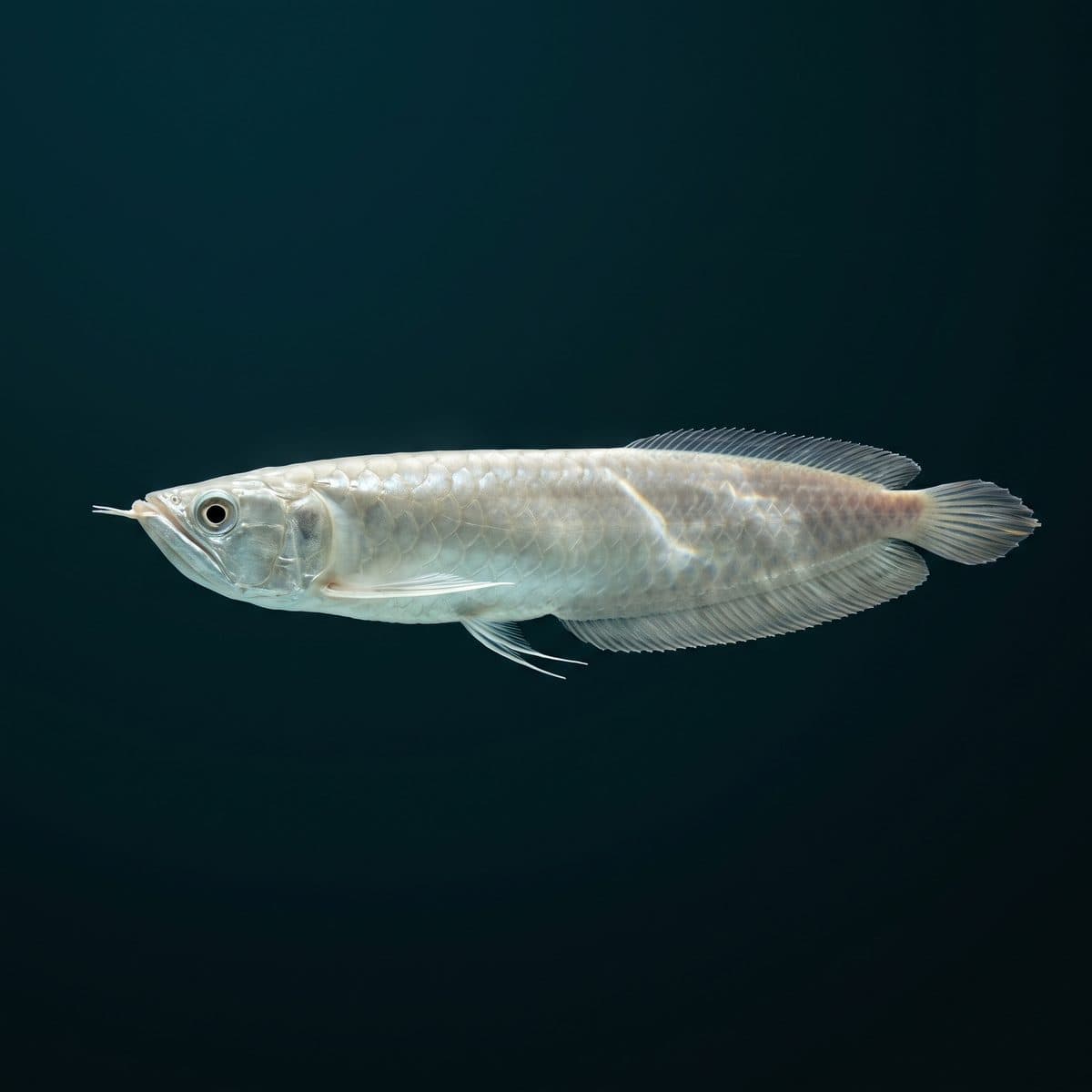
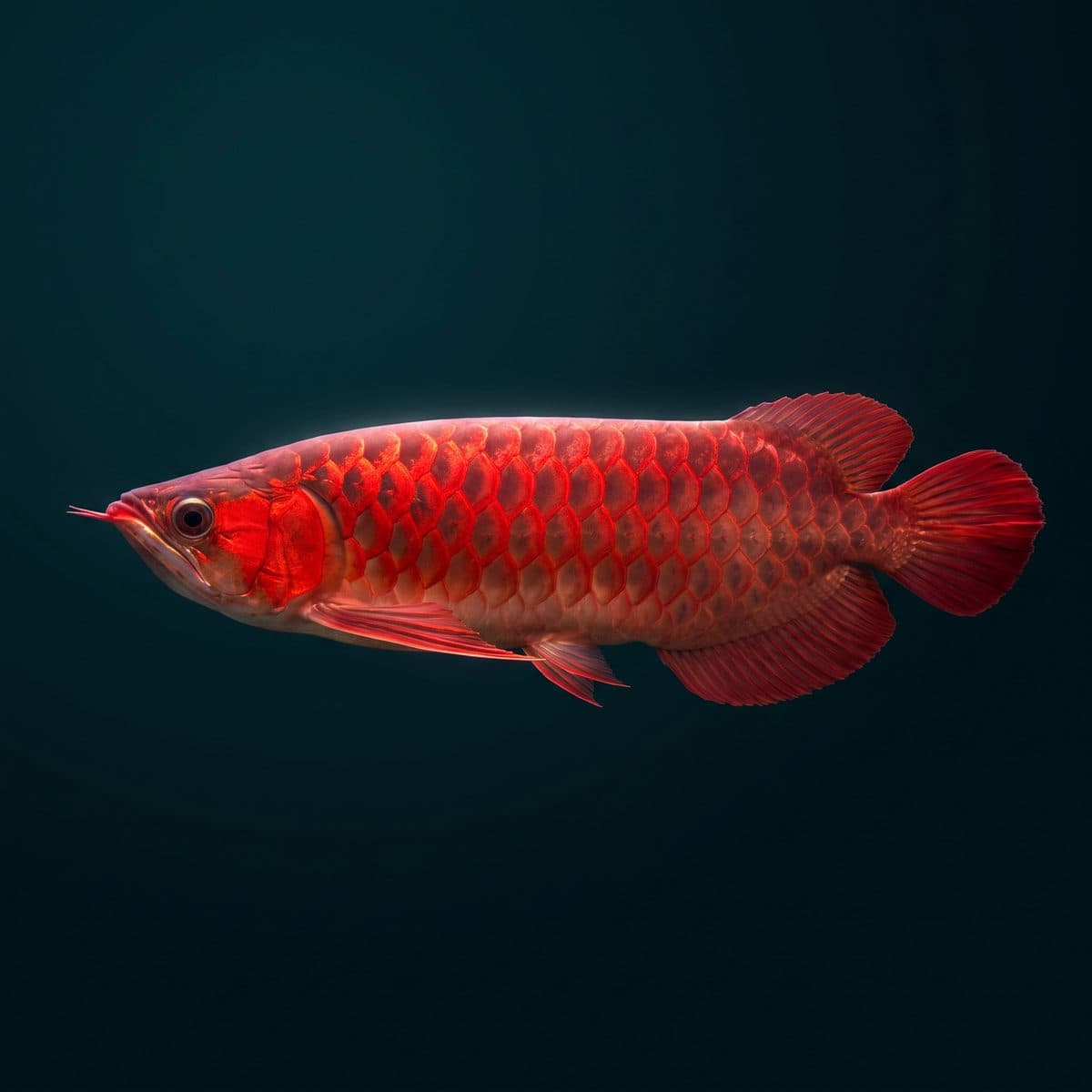
4. Platinum Arowana
Scientific name: Scleropages formosus (leucistic morph)
Trade volume: 10–20 per year globally
Price: $100,000–$600,000
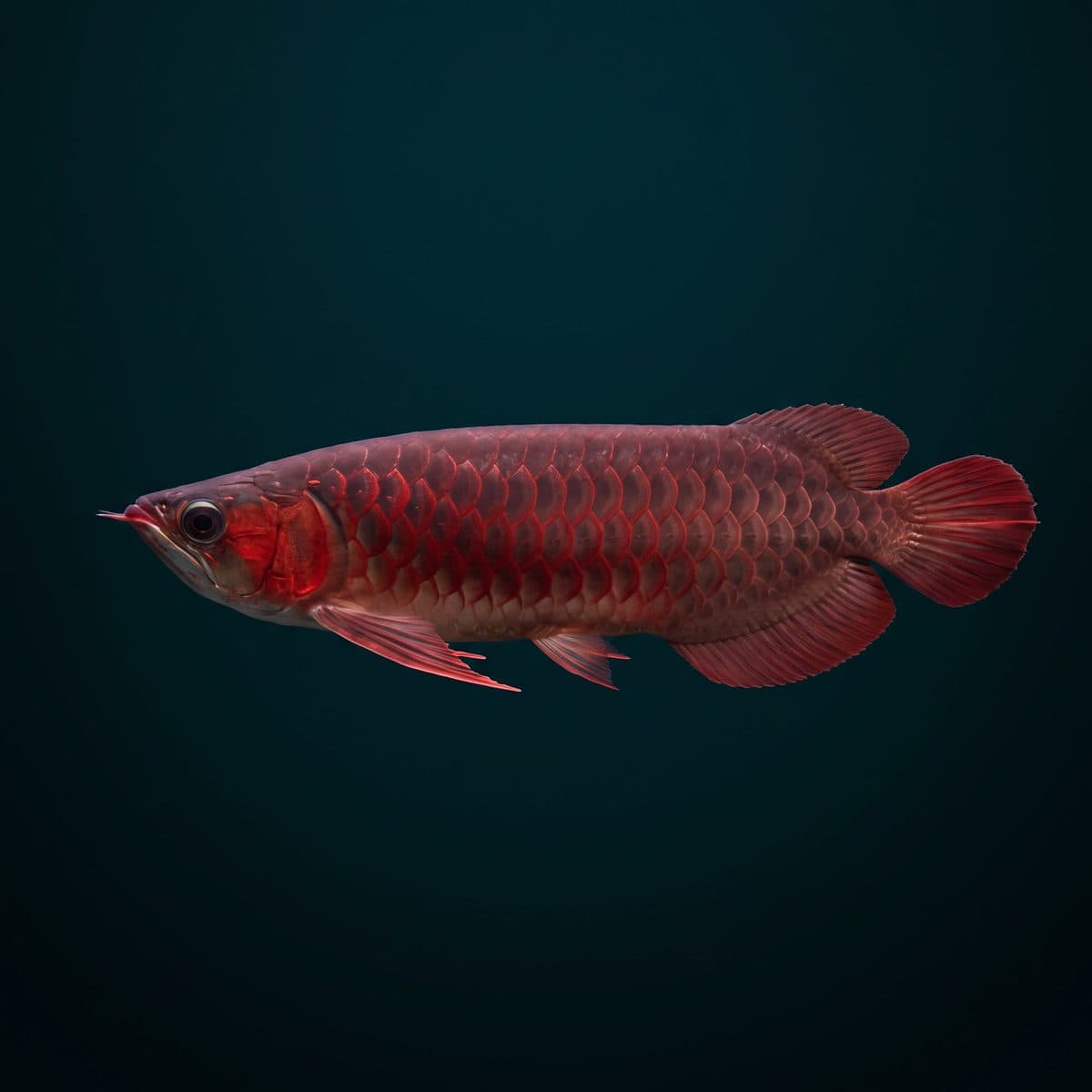
The leucistic mutation appears in roughly one of every 100,000 Asian Arowana fry, and fewer than half maintain pure coloration through adulthood. Every specimen is microchipped and CITES-certified. For comprehensive pricing data across all Arowana morphs, see our Arowana pricing guide. The Fish Collection's Arowana collection includes certified specimens when available.
5. Mars Damselfish
Scientific name: Chrysiptera uswanasi
Trade volume: Fewer than 5 per year
Price: $500–$1,500
Described in 2019 from the Coral Triangle, this flame-red damselfish is restricted to a tiny geographic range and is almost never exported. Unlike most rare fish, it is affordable when available — the challenge is purely one of supply. Hardy in captivity, it thrives in standard reef conditions (24–26 °C, pH 8.1–8.4) in tanks of 30+ gallons.
6. Golden Basslet
Scientific name: Liopropoma aberrans
Trade volume: 5–12 per year
Price: ~$8,000
Another deep-water Caribbean species occupying rubble zones at 60–150 metres. The uniform golden-yellow body is striking, and surviving specimens are surprisingly hardy in captivity. A 50+ gallon reef with ample caves and overhangs replicates the natural habitat effectively.
7. Neptune Grouper
Scientific name: Cephalopholis igarashiensis
Trade volume: 10–20 per year
Price: ~$6,000
Lives at 80–260 metres across the Indo-Pacific. The traffic-light colour scheme — vivid orange fading to neon yellow with pink accents — is unmistakable. Slow decompression over several hours is required during collection. A 200+ gallon predator system with robust biological filtration is essential for long-term care.
8. Candy Basslet
Scientific name: Liopropoma carmabi
Trade volume: 20–40 per year
Price: $1,000–$2,500
Found at 15–70 metres in the Caribbean, the Candy Basslet is less extreme in its depth range than the Golden or Bladefin but remains scarce due to its secretive, cave-dwelling behaviour. Vivid orange-and-lavender striping makes it one of the most beautiful nano-reef fish available. A 20+ gallon tank with plenty of overhangs suits it well.
9. Zebra Pleco (Wild)
Scientific name: Hypancistrus zebra (L046)
Trade volume: 0 (wild); 500–1,000 (captive-bred)
Price: $300–$1,000 (captive-bred)
Brazil banned wild Zebra Pleco exports in 2004, making all legally traded specimens captive-bred. Wild-caught individuals are effectively zero in legal trade. The dramatic black-and-white striping and compact 8–10 cm adult size have made it a cult favourite. Temperature 26–30 °C, pH 6.0–7.0, with plenty of caves for breeding. Browse The Fish Collection's pleco collection for availability.
10. Clarion Angelfish
Scientific name: Holacanthus clarionensis
Trade volume: 50–100 per year
Price: $2,500–$7,000
Endemic to Mexico's Revillagigedo Islands, collection permits have allowed limited numbers since 2016. The solid tangerine body with electric-blue fin edging is unmatched. Captive breeding programmes have begun producing small numbers, which may eventually ease supply. A 180+ gallon reef with stable parameters is recommended.
11. Narcosis Angelfish
Scientific name: Centropyge narcosis
Trade volume: Fewer than 10 per year
Price: $3,000–$5,000
Named for the nitrogen narcosis-inducing depths at which it is found (80–120 metres in the western Pacific), this dwarf angelfish displays vivid yellow-orange coloration with blue highlights. Collection is extremely hazardous, and specimens rarely survive the transition to shallow-water aquarium conditions. When they do, a 50+ gallon reef with dim lighting is ideal.
12. Gem Tang
Scientific name: Zebrasoma gemmatum
Trade volume: 50–200 per year (highly variable)
Price: $800–$3,000
The Gem Tang's rarity is logistical rather than biological. It is reasonably common in its range (western Indian Ocean) but collection and export from Mozambique, Madagascar, and Mauritius is sporadic. Supply fluctuates dramatically year to year. A 180+ gallon reef with strong flow and algae grazing surfaces is essential. Read our Gem Tang ultimate guide for complete care details.
13. Red Handfish
Scientific name: Thymichthys politus
Trade volume: 0 (protected)
Price: Not available
With fewer than 100 individuals remaining in the wild off Tasmania, the Red Handfish is critically endangered and fully protected. It appears on this list as a reminder that rarity in the hobby must be balanced against conservation reality. No specimens are legally available, and the species serves as a case study in why sustainable sourcing matters for every fish on this list.
14. Bandit Angelfish
Scientific name: Apolemichthys arcuatus
Trade volume: 20–50 per year
Price: $800–$2,000
A Hawaiian endemic found at moderate depths (15–50 metres). The striking black-and-white coloration — a broad diagonal black band over a white body — is unique among angelfish. Hawaii's collection restrictions keep supply constrained. A 120+ gallon reef with moderate flow suits this species well.
15. Black Diamond Polka Dot Stingray (Pearl Morph)
Scientific name: Potamotrygon leopoldi (pearl mutation)
Trade volume: 5–10 per year (pearl morph)
Price: $30,000–$100,000+
While standard Polka Dot Stingrays are relatively available, the full-body pearl mutation — where the entire disc is covered in raised, iridescent white spots — is vanishingly rare. These specimens represent the pinnacle of freshwater stingray collecting. Soft, acidic water (pH 5.5–6.5), temperatures of 26–28 °C, and a footprint of at least 8 × 4 feet for adults. See our stingray care guide for husbandry details and The Fish Collection's stingray collection for current availability.
Acquiring Rare Specimens
Patience is the primary currency when pursuing rare fish. Many species on this list cannot be ordered on demand — they appear when collection conditions, export logistics, and survival align, which may happen once or twice a year. Establish relationships with reputable dealers who specialise in rare species and can alert you when specimens become available.
At The Fish Collection, we maintain a priority notification system for our most sought-after species. Clients can register interest in specific species and receive immediate alerts when verified specimens arrive. Every rare fish we sell comes with full provenance documentation, quarantine certification, and post-sale support from our aquatic biology team.
Before acquiring any rare fish, ensure your system is fully established and cycled. Read our exotic fish tank setup guide for a complete walkthrough of system preparation.
Conservation and Responsibility
Collecting rare fish carries an inherent conservation responsibility. Every species on this list exists in finite numbers, and the hobby's long-term viability depends on sustainable practices. Prioritise captive-bred specimens when available. Support breeding programmes — even unsuccessful attempts advance the collective knowledge base. And never purchase fish without verifying legal sourcing and proper documentation.
The Red Handfish on this list is a stark reminder: what is rare today can be gone tomorrow. Responsible collecting ensures that future generations of aquarists can experience these extraordinary species firsthand.