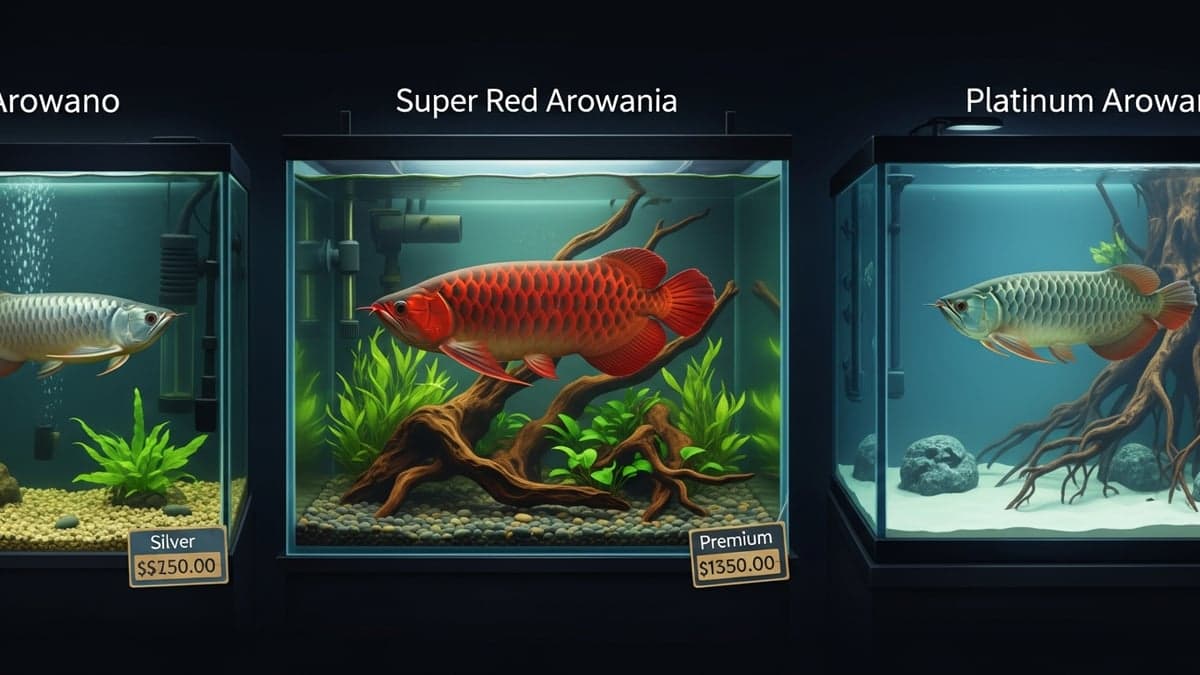
Arowana Pricing Overview
The Arowana market spans three orders of magnitude — from a $40 juvenile Silver Arowana at a local fish store to a $400,000+ Platinum Asian Arowana sold through private brokers. Understanding this price spectrum is essential for anyone entering the hobby, whether you are budgeting for your first monster fish or evaluating a five-figure investment in a show-quality specimen.
Prices in this guide reflect verified US retail transactions in 2026. Asian Arowana prices are higher in the US than in Southeast Asia due to CITES documentation requirements, import logistics, and limited dealer availability. All Asian Arowana sold legally in the US must be captive-bred, microchipped, and accompanied by CITES permits — there are no exceptions.
Silver Arowana Prices — $40–$200
The Silver Arowana (Osteoglossum bicirrhosum) is the most affordable Arowana species and the entry point for most hobbyists. Juveniles (10–15 cm) sell for $40–$80 at most fish stores. Sub-adults (25–40 cm) range from $100–$200. They are not CITES-listed and can be legally imported from South American breeding farms without special permits.
The catch: Silver Arowana grow fast and large — up to 100 cm (40 in) within 3–4 years. They need a minimum 300-gallon tank with a 10 × 4-foot footprint. The ongoing cost of maintaining a system this size ($200–$500/month in electricity, food, and water treatment) far exceeds the purchase price of the fish. Budget for the tank before the fish.
Silver Arowana are powerful jumpers and escape artists. A weighted, locking lid is mandatory. For tank specifications, see our Arowana tank setup guide.
Jardini Arowana Prices — $60–$300
The Jardini Arowana (Scleropages jardinii), also called the Australian Arowana or Gulf Saratoga, is the most aggressive Arowana species. Juveniles sell for $60–$120; adults with strong barramundi-pattern scales reach $200–$300. Not CITES-listed, they import freely from Australian and Indonesian breeders.
Jardini are best kept as solitary specimens in a 180+ gallon tank. They are notoriously intolerant of tankmates and will attack fish of any size. Their care requirements are similar to Asian Arowana but with slightly more alkaline water tolerance (pH 6.5–7.5).
Green Asian Arowana Prices — $300–$2,000
The Green Arowana is the most affordable Asian Arowana variety (Scleropages formosus). It displays an olive-green to grey-green body with less metallic sheen than its red and golden relatives. Juveniles (15–20 cm) start at $300–$600; mature adults with good colour development reach $1,000–$2,000.
Green Arowana are the best entry point for keepers who want a genuine Asian Arowana experience without the five-figure commitment. They carry the same CITES Appendix II protections — every specimen must be microchipped, documented, and sold through licensed dealers. The Fish Collection's Arowana collection includes certified Green Arowana when available.
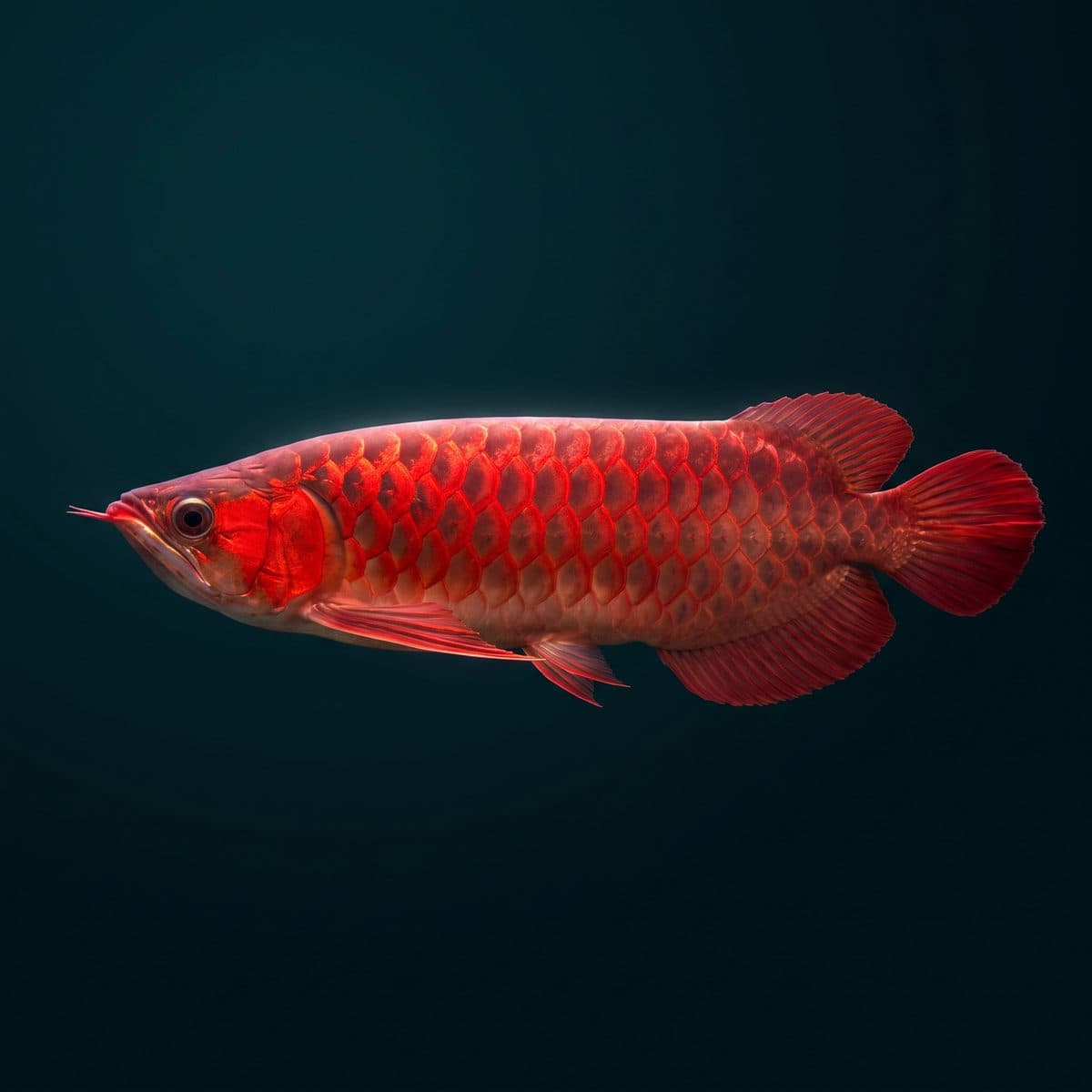
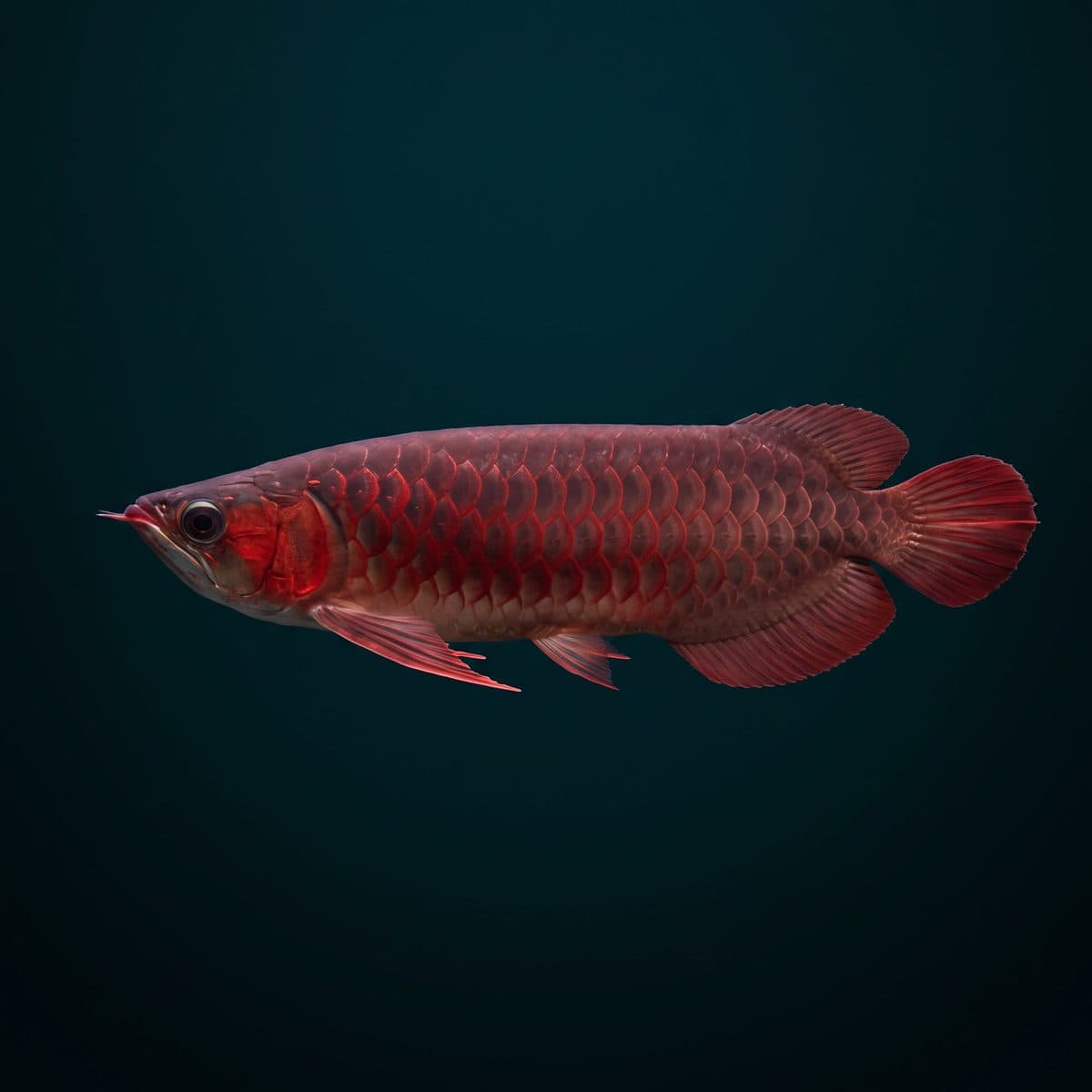
Super Red Arowana Prices — $1,500–$15,000
The Super Red Arowana is the most coveted colour variety for many collectors. Originating from the Kapuas River basin in West Kalimantan, Indonesia, these fish develop deep crimson or blood-red coloration across the entire body — scales, fin membranes, and even the gill plates.
Pricing depends heavily on colour grade:
- Grade 1.5 (Chilli Red): Full-body red coverage extending to the sixth row of scales. $8,000–$15,000 for mature specimens.
- Grade 1 (Blood Red): Deep red coverage to the fourth or fifth row. $4,000–$8,000.
- Grade 2 (Orange Red): Orange-dominant coloration with red highlights. $2,000–$4,000.
- Juvenile (ungraded): $1,500–$3,000 — colour grade cannot be reliably assessed until the fish is 30+ cm.
Colour intensifies with age and proper husbandry. Tanning lights (620–660 nm spectrum), dark substrates, and slightly acidic water (pH 6.0–6.5) enhance red pigmentation. Many keepers add Indian almond leaves to the system for natural tannin enrichment.
Cross Back Golden Arowana Prices — $2,000–$25,000
The Cross Back Golden (also marketed as Malaysian Golden or 24K Golden) is defined by metallic gold scales that "cross the back" — extending from the lower rows up and over the dorsal surface. This full-coverage golden sheen is the primary value driver. Fish where gold coverage stops at the fourth row are classified as "High Back Golden" and sell for significantly less ($800–$3,000).
True Cross Back Goldens from established Malaysian breeding farms command $5,000–$15,000 for sub-adults with verified lineage. Competition-grade specimens with flawless coverage and base colour (blue-based vs green-based) can reach $20,000–$25,000. Blue-based Cross Backs — where the gold overlays a steel-blue body — are the rarest and most expensive variant.
As with all Asian Arowana, CITES documentation and microchip verification are mandatory. Beware of "Golden Arowana" offered without papers — these are either hybrid fish, mislabelled Jardini, or illegally imported specimens.
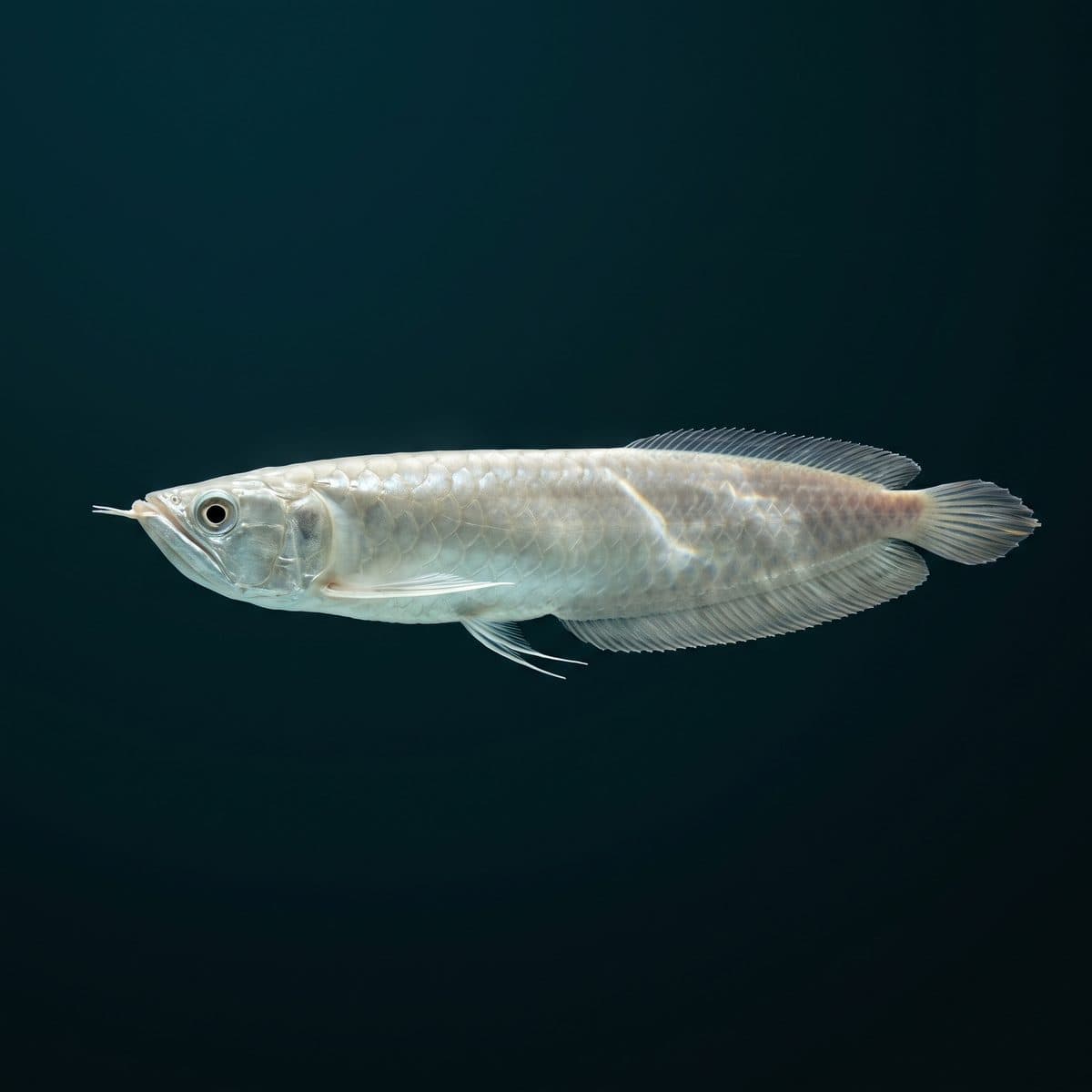
Platinum Arowana Prices — $100,000–$400,000+
The Platinum Arowana is the leucistic morph of the Asian Arowana — a genetic anomaly that produces a flawless, metallic-white body with no visible scale patterning. Fewer than one in 100,000 Asian Arowana fry display this mutation, and fewer than half maintain pure coloration into adulthood. This makes the Platinum the rarest aquarium fish consistently available through the collector market.
Verified Platinum specimens rarely sell below $100,000. A documented auction record stands at approximately $600,000, making it the most expensive aquarium fish ever sold. Prices depend on body size, colour purity (any yellowish tinge reduces value), fin condition, and breeding farm certification. Read our most expensive fish guide for the full backstory.
What Determines Arowana Price
Seven factors consistently determine Arowana pricing:
- Species and variety. Asian > Australian > South American, all else being equal. Within Asian Arowana: Platinum > Cross Back Golden > Super Red > Green.
- Colour grade. Intensity, coverage area (number of scale rows), and base colour all affect value. Colour grading is somewhat subjective, which is why provenance matters.
- Size and age. Larger, mature fish are worth more because their colour grade is established and verified. Buying a juvenile is a gamble — that $1,500 ungraded Super Red might develop into a $10,000 Chilli Red or plateau at Grade 2.
- Breeder reputation. Fish from established farms (PT Siantar, Kim Kang, Qian Hu) carry premiums because their breeding programmes produce consistent, documented results.
- CITES documentation. A fish without proper CITES papers is either illegal or counterfeit. Legitimate documentation adds cost but is non-negotiable for legal ownership.
- Physical condition. Dropped scales, gill curl, drop eye, or fin damage reduce value by 30–70 %. Perfect specimens command the listed prices; flawed fish sell at steep discounts.
- Market region. Asian Arowana sell for 20–40 % more in the US and Europe than in Southeast Asia due to import logistics and limited dealer networks.
Hidden Costs of Arowana Ownership
The purchase price is often a fraction of the total cost of ownership. Budget for these ongoing expenses:
- Tank and equipment: A proper 240-gallon system with sump, lighting, and backup power costs $5,000–$20,000. See our Arowana tank setup guide for specifications.
- Electricity: Heating, filtration, and lighting for a 240+ gallon system typically cost $80–$200/month depending on local rates and climate.
- Food: Quality pellets, frozen shrimp, and live feeders cost $50–$150/month for a single adult Arowana.
- Water changes: Weekly 25 % water changes at 240 gallons means 60 gallons of conditioned water per week. Factor in dechlorinator, RO water if needed, and water utility costs.
- Veterinary care: Aquatic veterinary specialists charge $200–$500 per consultation. Budget for at least one annual check-up.
- Insurance: Collections worth $10,000+ should carry specialist aquatic livestock insurance. Premiums run 3–8 % of insured value annually.
Where to Buy Arowana Safely
The Arowana market is plagued by fraud — mislabelled species, doctored photos, counterfeit CITES papers, and dyed fish are all documented problems. Protect yourself by following these guidelines:
- Buy from licensed CITES dealers only. In the US, Asian Arowana can only be legally sold by dealers registered with the US Fish and Wildlife Service. Ask for the dealer's registration number.
- Demand microchip verification. Every legally traded Asian Arowana is microchipped at the breeding farm. The dealer should scan the chip in front of you (or on video) and match it to the CITES certificate.
- Request live video. For any purchase above $1,000, insist on seeing the specific fish swimming in real time — not stock photos or pre-selected footage.
- Verify return and guarantee policies. Reputable dealers offer live-arrival guarantees and health warranties. The Fish Collection guarantees live arrival on all Arowana shipments and provides 72-hour health coverage.
Browse The Fish Collection's current Arowana inventory — every specimen is CITES-certified, microchipped, and backed by our aquatic biology team.