Overview
Nishikigoi — literally "brocaded carp" — are ornamental varieties of Cyprinus rubrofuscus that have been selectively bred in Japan since the early 19th century. What began as rice farmers noticing colour mutations in their food carp has evolved into a global industry worth billions of pounds, with Japanese breeding farms, international dealers, and competitive shows spanning every continent.
The diversity of koi varieties is staggering. The Japanese classification system recognises 16 major groups encompassing dozens of named varieties, each defined by specific combinations of base colour, pattern, and scale type. For the newcomer, this taxonomy can be overwhelming — but the fundamentals are accessible, and the learning journey is one of the great pleasures of the hobby.
At The Fish Collection, we import koi directly from breeders in Niigata, Hiroshima, and Okayama prefectures, as well as from select Israeli and Thai farms that produce excellent quality fish at accessible price points. Whether you are building your first pond or adding to an established collection, this guide provides the foundational knowledge you need to keep koi successfully and appreciate them deeply.
Major Varieties
Gosanke: Kohaku, Sanke & Showa
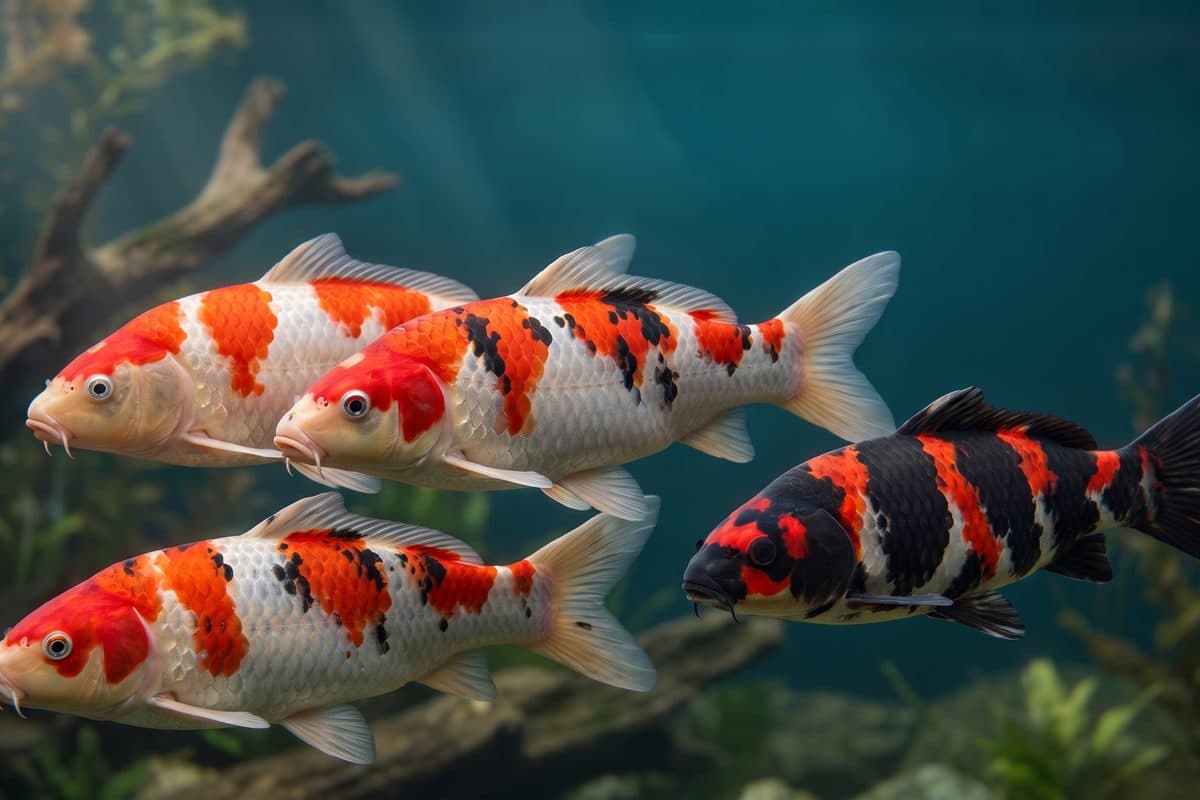
The Gosanke — Kohaku, Taisho Sanshoku (Sanke), and Showa Sanshoku (Showa) — are the three prestige varieties that dominate competitive koi shows. Understanding the Gosanke is fundamental to koi appreciation.
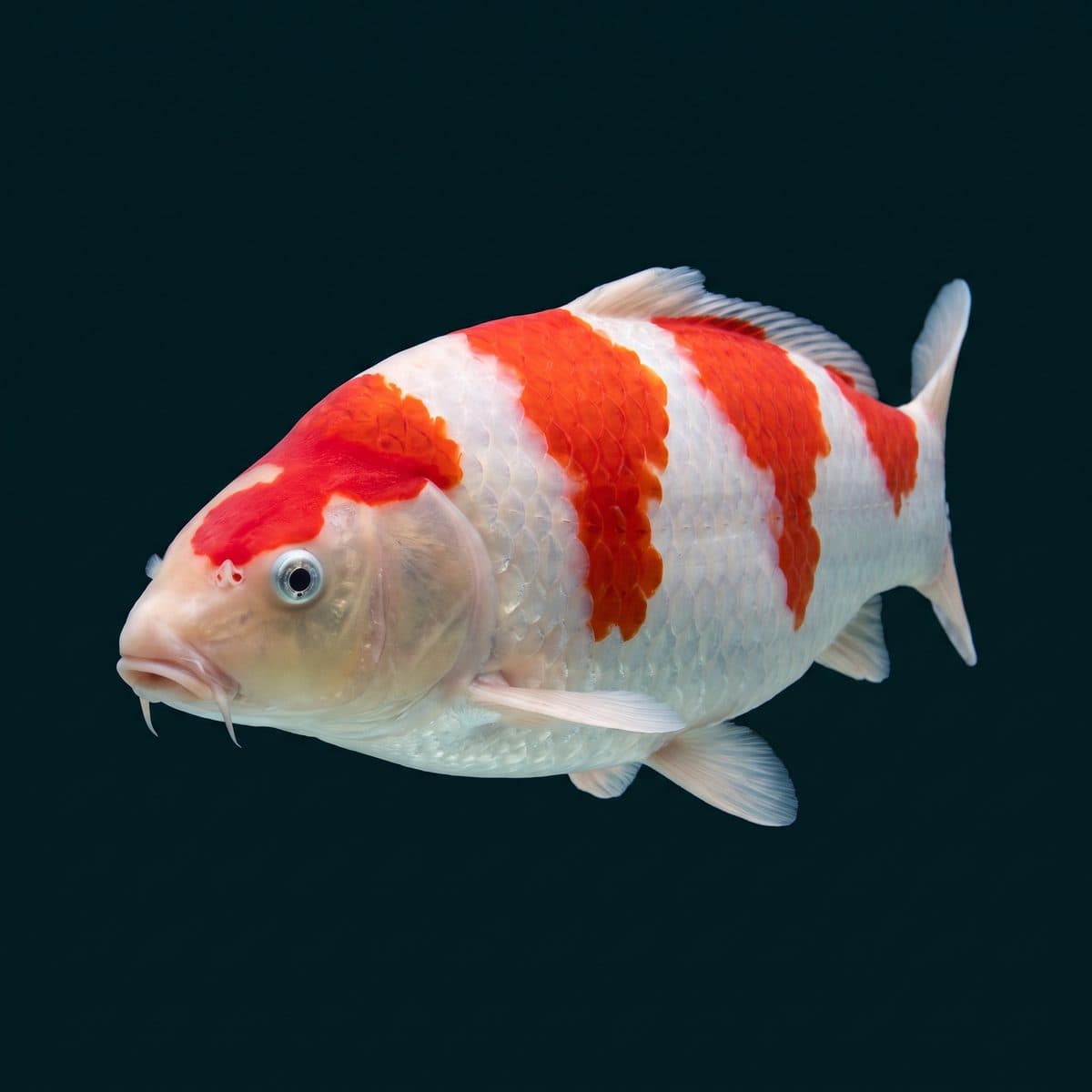
- Kohaku: White base with red (hi) markings. The oldest and most revered variety. Judged primarily on skin quality (shiroji), colour depth, and pattern balance. A flawless Kohaku is considered the ultimate expression of Nishikigoi artistry. For detailed Kohaku guidance, see our dedicated Kohaku Koi Complete Guide.
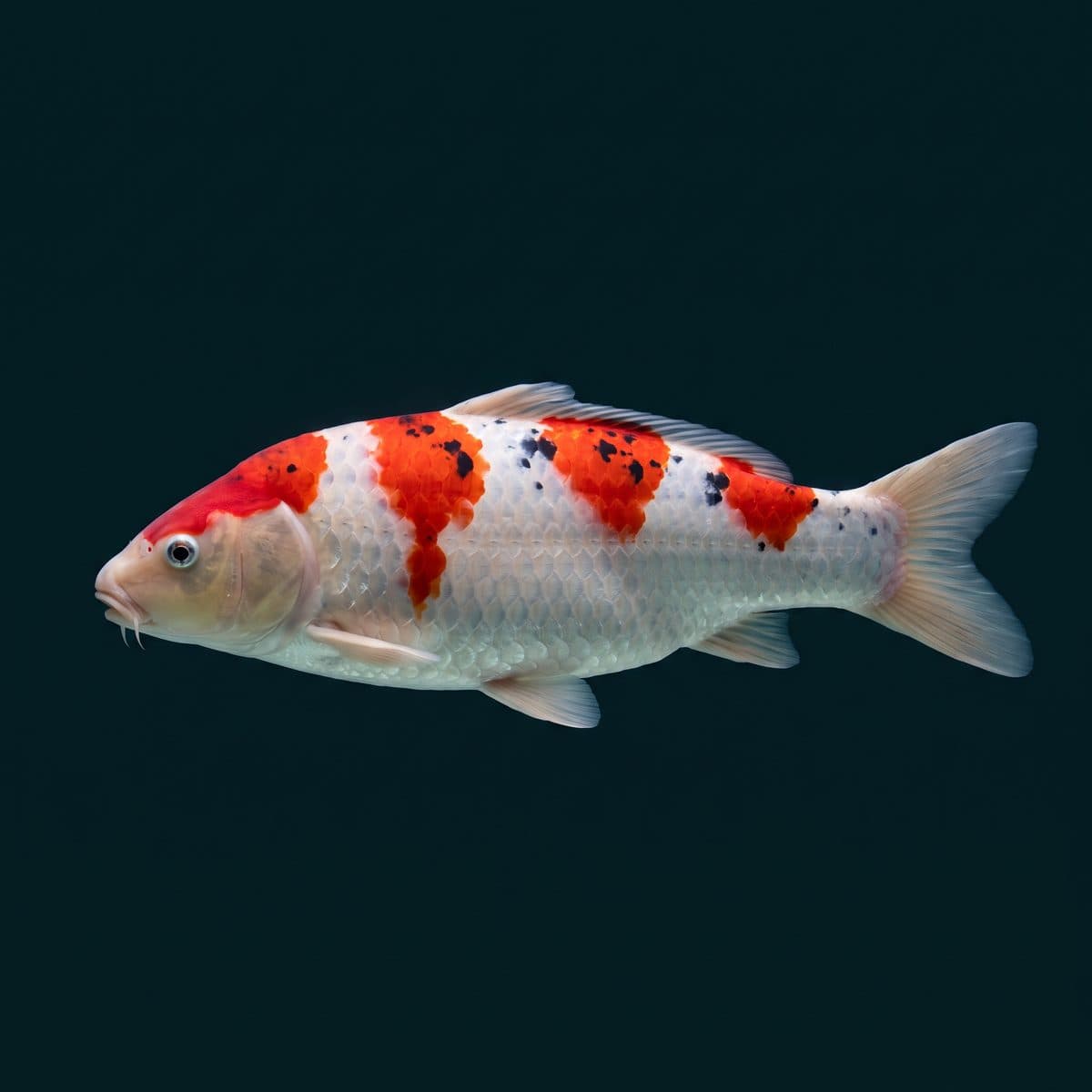
- Taisho Sanshoku (Sanke): White base with red and black (sumi) markings. The black markings appear as accent spots on the white base — never on the head, and ideally small, well-placed, and ink-dark. A great Sanke has all the qualities of a great Kohaku, plus perfectly balanced sumi that enhances rather than clutters the pattern.
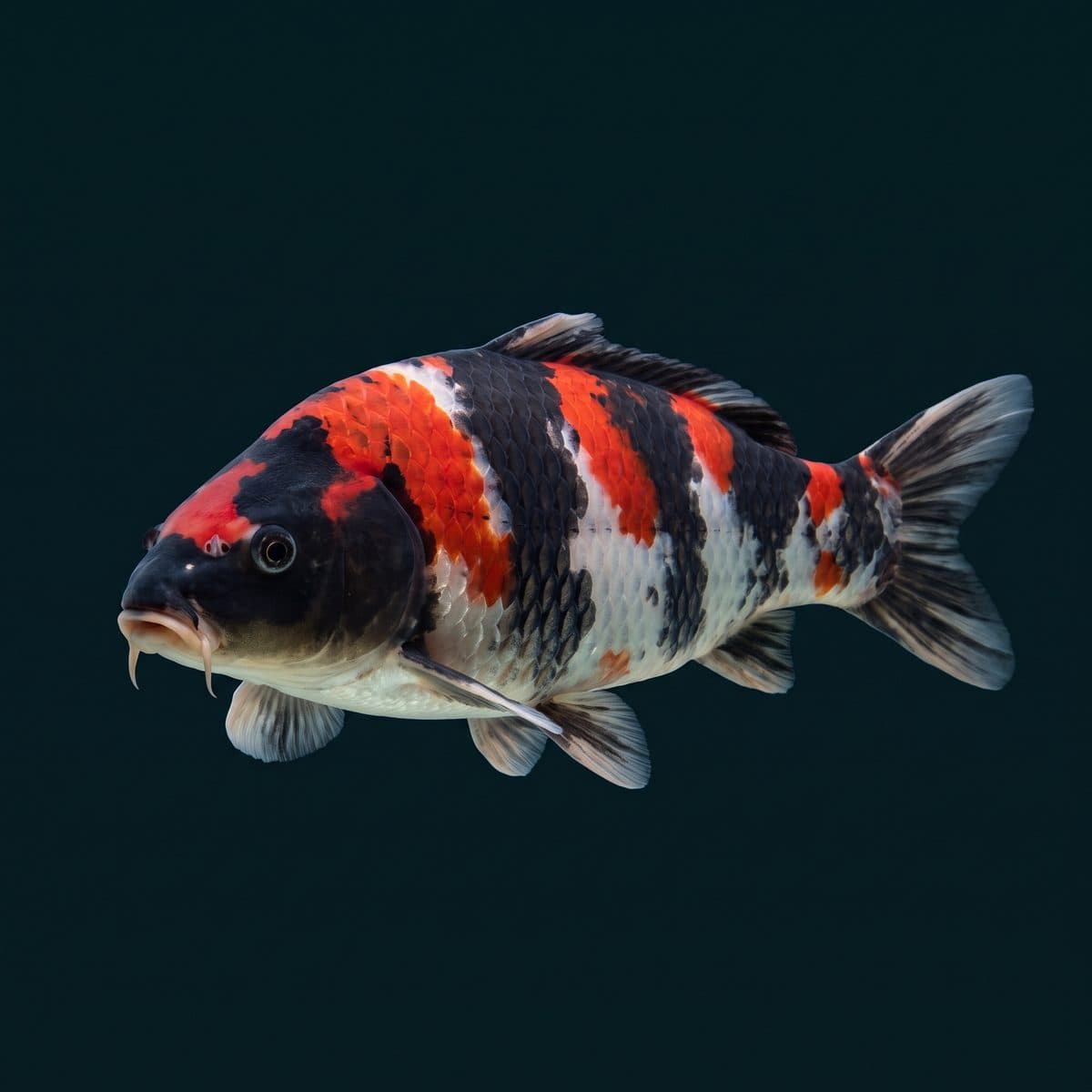
- Showa Sanshoku (Showa): Black base with red and white markings. Distinguished from Sanke by its black base colour and the presence of sumi on the head (menware). Showa have a bold, dramatic appearance — the interplay of deep black, vivid red, and clean white creates striking contrast. Modern Showa have been bred with increasingly more white, making distinction from Sanke a matter of examining the base colour and sumi distribution.
Ogon & Metallic Varieties
The Ogon is a single-coloured metallic koi — a fish of pure, gleaming gold, platinum, or orange. Developed in the 1940s by Sawata Aoki, the Ogon was the first metallic koi variety and remains enormously popular for its visual impact in the pond. Key Ogon varieties include:
- Yamabuki Ogon: Brilliant metallic gold. The most popular Ogon variety.
- Platinum Ogon (Purachina): Uniform metallic silver-white. Stunning in clear water.
- Orenji Ogon: Metallic orange. Warm and vivid.
Metallic lustre has been crossed into patterned varieties to create the Hikarimoyo class — including Kujaku (metallic with red and black pattern), Hariwake (platinum with gold pattern), and Kikusui (metallic doitsu with red markings). These fish combine the visual impact of metallic skin with the pattern interest of traditional varieties.
Butterfly Koi
Butterfly koi (also called long-fin koi or dragon carp) feature dramatically elongated fins and barbels that flow and billow as the fish swims, creating an ethereal, elegant appearance. They were developed by crossing standard Nishikigoi with Indonesian long-fin carp in the 1980s and have become enormously popular worldwide.
It must be noted that Butterfly koi are controversial among traditional Japanese koi enthusiasts and are not recognised at Japanese koi shows. Purists argue that the elongated fins distort the body proportions that centuries of breeding have refined. However, in Western markets and at international shows that include a Butterfly class, they are among the most sought-after and expensive fish, particularly in Kohaku, Sanke, and metallic patterns.
Care requirements for Butterfly koi are identical to standard koi, with one caveat: the long fins are more susceptible to physical damage and bacterial fin rot. Avoid sharp pond edges, aggressive tank mates, and rough handling during netting.
Tancho
The Tancho pattern — a single, round red marking centred on the head of an otherwise white fish — evokes the Japanese national flag and is one of the most prized and instantly recognisable koi patterns. Tancho can occur in any variety (Tancho Kohaku, Tancho Sanke, Tancho Showa), but the Tancho Kohaku — pure white body, single red crown — is the archetypal form.
The tancho marking should be perfectly round or oval, centred symmetrically between the eyes, and deep crimson in colour. It should not extend beyond the eyes or onto the nose. Producing a high-quality Tancho is almost entirely a matter of luck — breeders cannot reliably produce the pattern, making exceptional Tancho specimens rare and valuable.
Pond Setup
A koi pond is a significant infrastructure investment, and cutting corners at the design stage invariably leads to expensive retrofitting later. The key principles are: build bigger than you think you need, invest in filtration, and plan for maintenance access.
- Volume: Minimum 1,000 gallons for a small collection (3–5 koi). For serious keeping, 3,000–5,000 gallons is a practical starting point, and dedicated hobbyists build 10,000–30,000 gallon systems.
- Depth: Minimum 120 cm (4 feet). Deeper ponds (150–180 cm) provide superior thermal stability, predator protection, and water quality.
- Bottom drains: Essential. One 4-inch gravity-fed bottom drain per 5,000 gallons, connected to a settlement chamber (sieve or vortex) that removes solid waste before the biological stage.
- Biological filtration: Multi-chamber systems using Japanese matting, K1 moving-bed media, or bakki showers. Size the filter to turn the pond volume every 1–2 hours. Under-filtering a koi pond is the single most common design error.
- UV sterilisation: 40–80 watts per 5,000 gallons to control suspended algae (green water) and reduce waterborne pathogens.
- Aeration: Air pumps with diffuser arrays or venturi systems. Koi consume substantial dissolved oxygen, especially at higher temperatures and stocking densities. Target a minimum of 7 ppm DO.
- Predator protection: Netting, electric fencing, or motion-activated deterrents to protect from herons, kingfishers, raccoons, and cats. A single heron visit can devastate a collection worth tens of thousands of pounds.
Water Quality
Koi are remarkably hardy fish that tolerate a wide range of conditions, but thriving — developing vibrant colour, rapid growth, and strong immune function — requires actively managed water quality:
- Temperature: 18–24 °C (65–75 °F) for active growth. Koi are cold-hardy to near-freezing temperatures but cease feeding below 10 °C and enter torpor below 6 °C.
- pH: 7.0–8.5. Monitor KH (carbonate hardness) to ensure adequate buffering. Maintain KH above 4 dKH to prevent pH crashes, which can kill fish within hours.
- Ammonia / Nitrite: 0 ppm. Non-negotiable. Any measurable ammonia or nitrite indicates an inadequate or immature biological filter.
- Nitrate: Below 40 ppm. Regular partial water changes (10–20% weekly) are the primary control mechanism.
- Dissolved Oxygen: Above 7 ppm. Critical during warm summer months when oxygen solubility drops and metabolic demand peaks.
- Salinity: A prophylactic salt level of 0.1–0.3% (1–3 grams per litre) is used by many koi keepers to reduce osmotic stress and inhibit certain parasites. Higher concentrations (0.5–0.6%) are used as a short-term treatment for parasitic infections.
Seasonal Feeding
Koi feeding is a seasonal discipline that must be adjusted to water temperature:
- Spring (10–18 °C): As the pond warms and koi emerge from winter torpor, begin feeding with an easily digestible wheatgerm-based pellet (25–30% protein). Feed once daily in small quantities. The koi's digestive system is reactivating after months of inactivity, and overfeeding at this stage can cause fatal gut rot.
- Summer (18–24 °C): The primary growth and colour development season. Feed a high-protein staple pellet (35–40% protein) 2–4 times daily. Introduce colour-enhancing food containing spirulina and astaxanthin to intensify red and orange colouration. Supplement with fresh foods: blanched lettuce, watermelon, orange slices, and prawns.
- Autumn (18–10 °C): Transition back to wheatgerm as temperatures decline. This is the final opportunity to build the koi's fat reserves and condition colour before winter. Feed once daily, reducing to every other day as temperatures approach 10 °C.
- Winter (below 10 °C): Cease feeding entirely. Koi cannot digest food in cold water, and undigested food in the gut promotes bacterial proliferation that can be fatal. Do not feed regardless of how active the koi appear on warmer winter days.
Premium koi food brands trusted by The Fish Collection include Saki-Hikari, JPD (Japan Pet Design), Nishikigoi-O, and Kenzen. Avoid budget pellets with excessive filler — the cost difference is negligible compared to the value of the fish they are feeding.
Health Management
Proactive health management is the hallmark of experienced koi keeping. The two pillars are quarantine and regular microscopic examination.
Quarantine: Every new koi — regardless of source — must be quarantined in a separate, heated (23–25 °C) system for a minimum of 4 weeks before introduction to the main pond. This period allows observation for KHV (Koi Herpesvirus), which is triggered by temperatures in the 22–28 °C range, as well as bacterial infections, parasites, and behavioural abnormalities. A quarantine system need not be elaborate: a 300-gallon stock tank with a filter, heater, air pump, and lid is sufficient.
Microscopic examination: Invest in a basic microscope (100–400× magnification) and learn to perform skin scrapes and gill biopsies. Spring and autumn health checks — examining mucus samples under magnification for Chilodonella, Costia, Trichodina, flukes (Gyrodactylus and Dactylogyrus), and other parasites — allow early detection and treatment before clinical signs appear. This single skill elevates a koi keeper from reactive to proactive and can save an entire collection.
Common koi diseases include:
- KHV (Koi Herpesvirus): The most feared koi disease. Mortality rates of 80–100%. No cure exists. Prevention through quarantine is the only defence.
- Bacterial ulcers: Caused by Aeromonas and Pseudomonas. Treat with topical wound care and, in severe cases, antibiotic injection.
- Parasites: White spot (Ich), Chilodonella, Costia, anchor worm, and fish lice (Argulus) are common. Treat with appropriate medications (formalin, malachite green, potassium permanganate, or commercial anti-parasite treatments) based on microscopic identification.
- Dropsy: Fluid accumulation causing pinecone-like scale protrusion. Usually indicates kidney failure. Prognosis is poor.
Overwintering
In temperate climates, koi must be overwintered in the pond — and the pond must be designed to support this. Key considerations:
- Depth: A minimum of 120 cm ensures that the lower water column remains above freezing even when the surface ices over. Deeper ponds (150+ cm) provide greater safety margins.
- Aeration: Maintain gentle aeration throughout winter. An air stone placed at mid-depth (not the bottom — you do not want to disturb the warmer water layer at the base) prevents the surface from icing over completely, allowing toxic gas exchange.
- De-icer: A floating pond de-icer or heated air stone maintains an opening in the ice for gas exchange. Never break ice by striking it — the shockwave can injure or kill the koi.
- Filtration: Continue running the biological filter at a reduced flow rate. Cease UV sterilisation (unnecessary in cold water and the unit's lifespan is preserved). Ensure the pump intake does not draw from the warm bottom layer.
- Do not feed: As detailed above, feeding below 10 °C is dangerous. The koi live off fat reserves accumulated during autumn.
In regions where pond temperatures drop below 4 °C for extended periods, some keepers move prized specimens indoors to heated stock tanks for the winter. This is common practice for high-value show fish and eliminates the risks associated with prolonged cold exposure, ice damage, and predation during the vulnerable winter period.
Breeding
Koi breeding follows the same seasonal cycle as wild carp. As spring water temperatures reach 18–22 °C, sexually mature fish (typically 3+ years old) begin spawning behaviour. Males develop breeding tubercles on the gill plates and pectoral fins and pursue females aggressively, nudging their flanks to stimulate egg release.
Females deposit adhesive eggs on spawning brushes, submerged plants, or any available surface. A single large female can produce 100,000–500,000 eggs. Remove the parents immediately after spawning to prevent egg predation. Eggs hatch in 4–7 days depending on temperature.
Fry require infusoria or commercial liquid fry food for the first week, then freshly hatched brine shrimp, progressing to powdered and eventually pelleted food over the following months. Culling is essential to maintain quality — professional breeders may retain fewer than 1% of a spawning as grow-on candidates. Without disciplined selection, each generation degrades in colour, pattern, and body conformation.
For the hobbyist, breeding koi is a rewarding educational experience, but producing quality fish comparable to those from professional Japanese breeders requires decades of accumulated breeding knowledge, proven parent stock, and infrastructure (mud ponds, grow-out systems, and the space to raise and cull thousands of fry) that few private keepers possess.