Overview
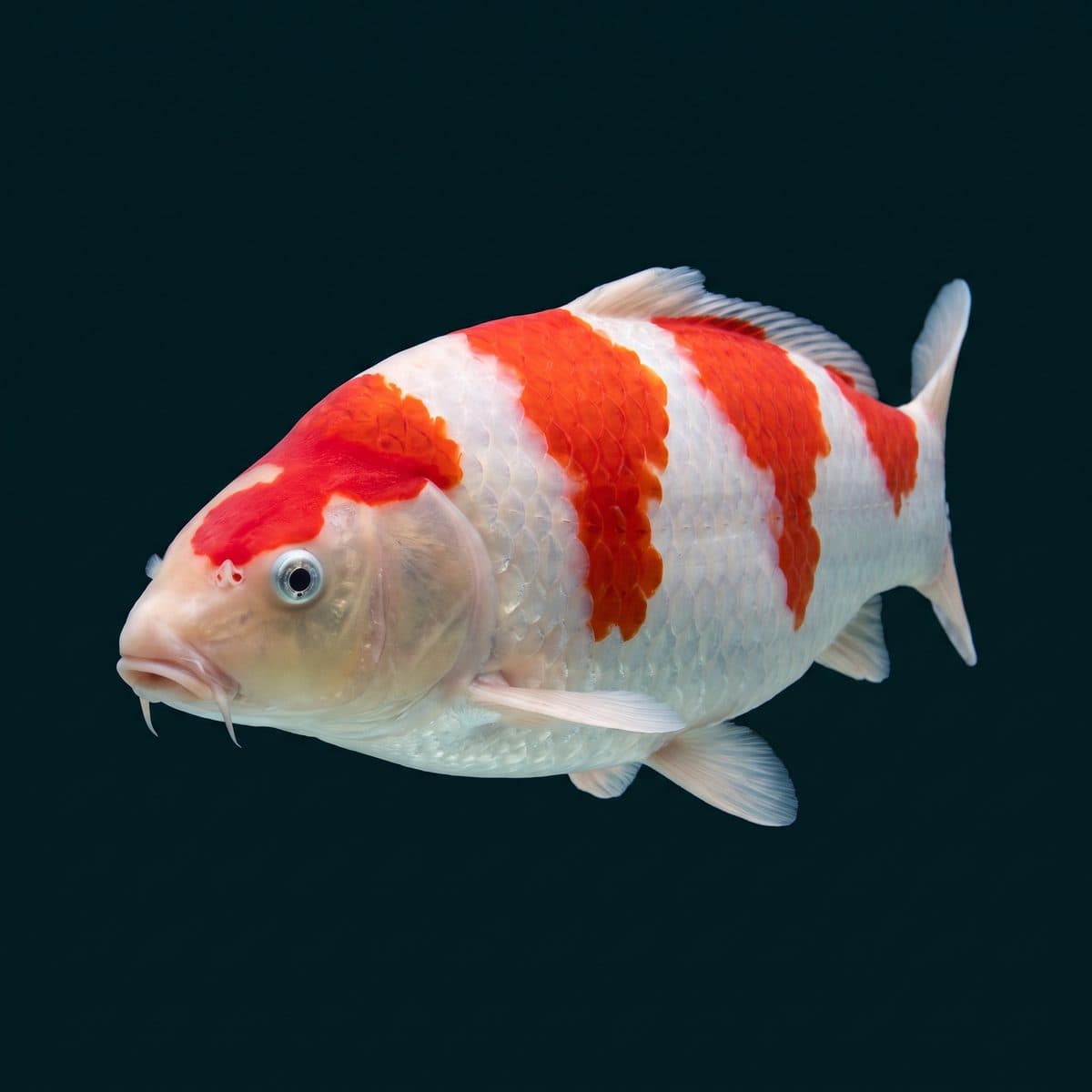
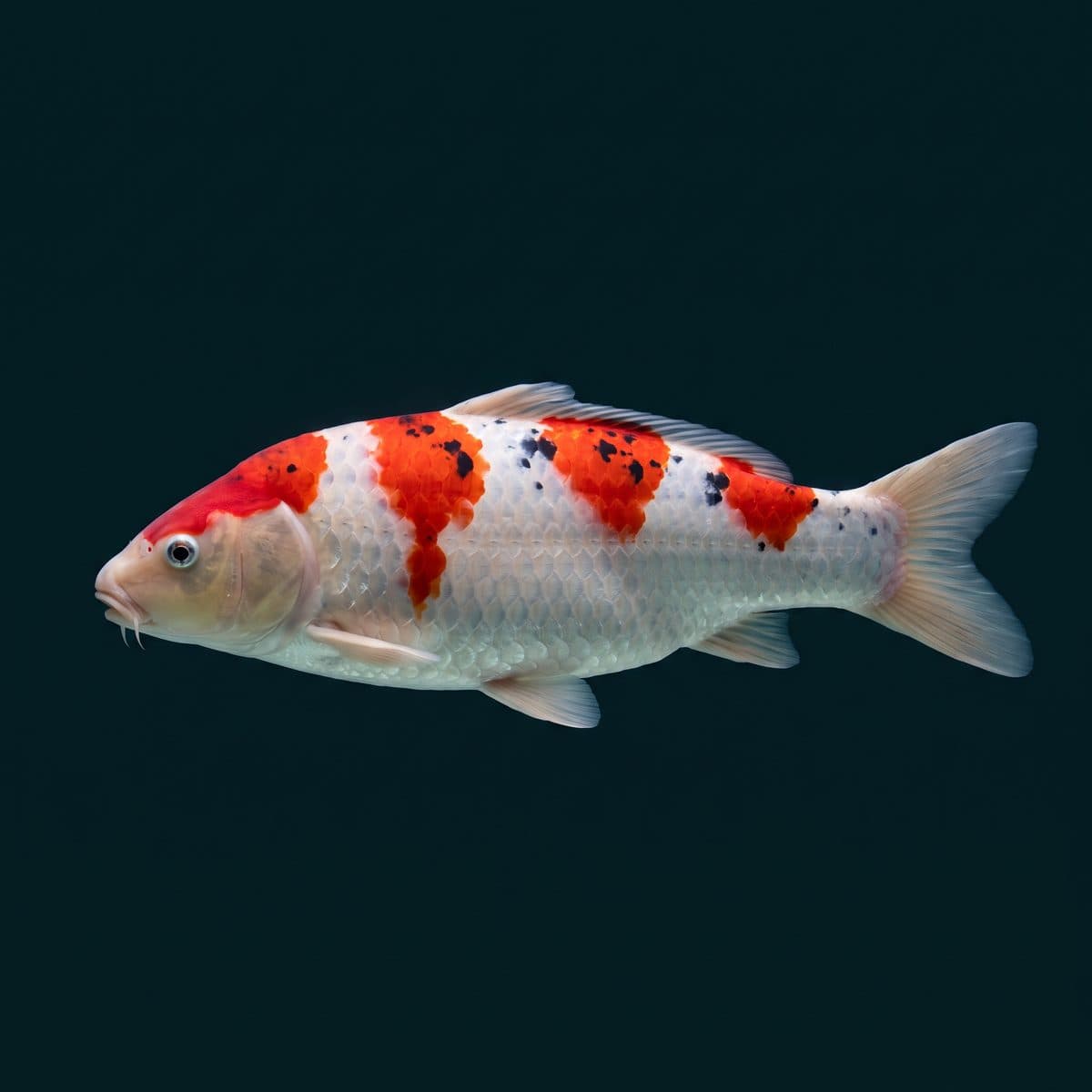
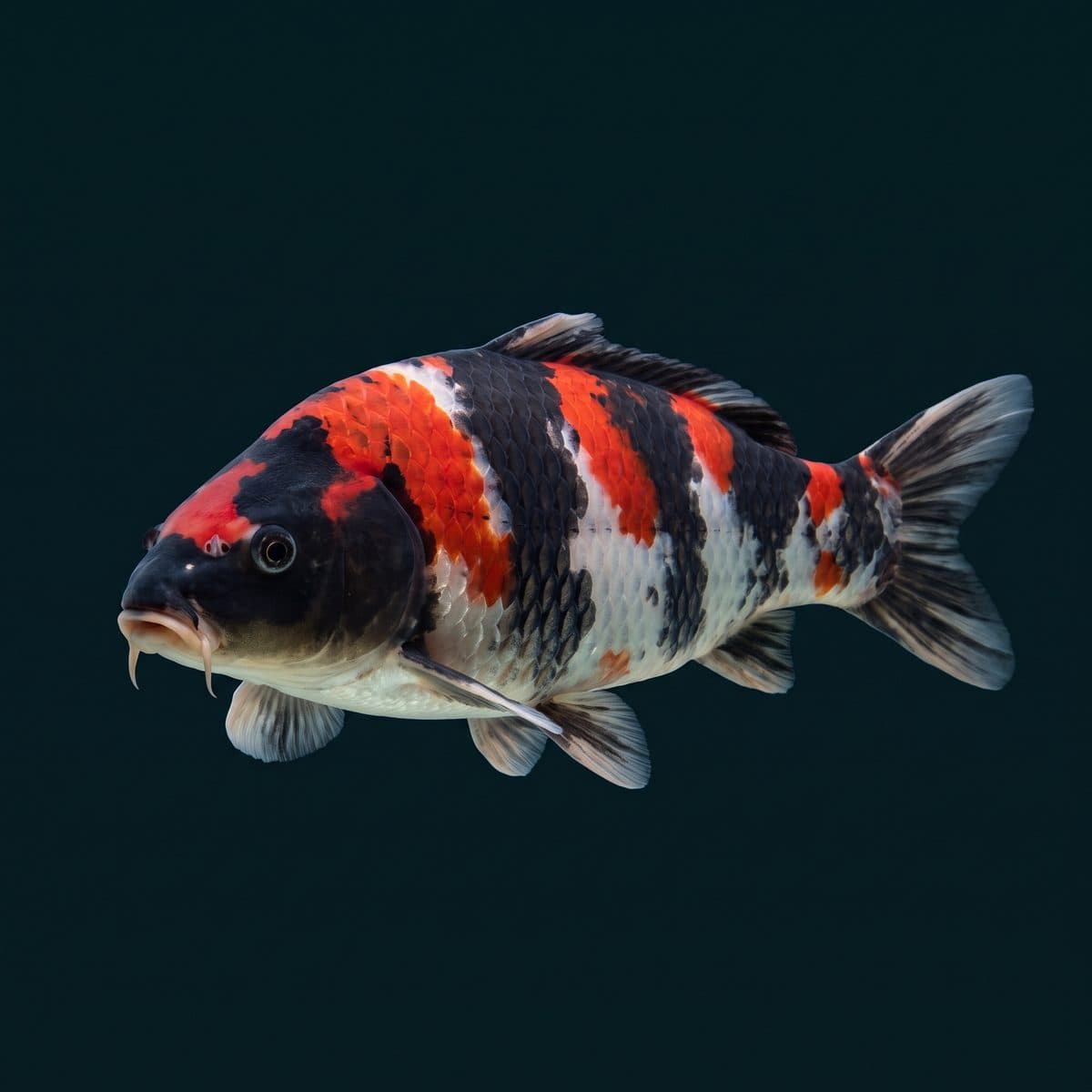
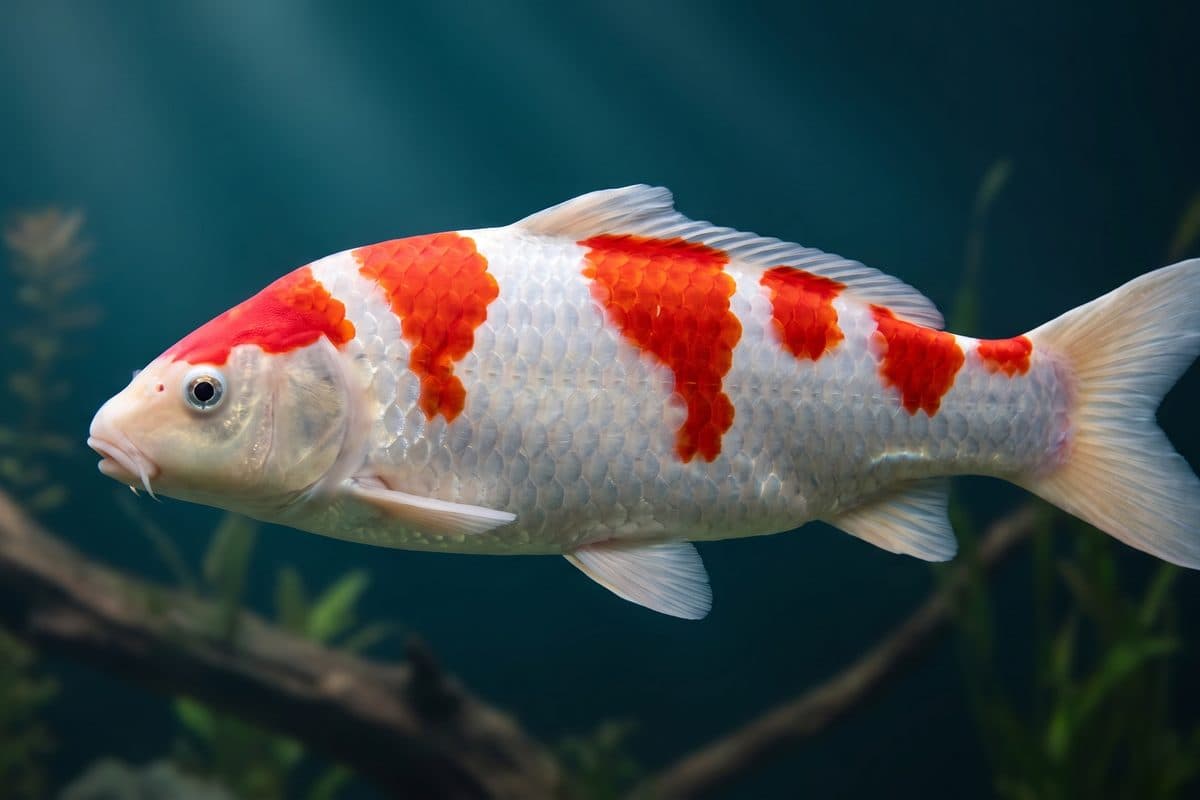
The Kohaku is a white-skinned koi with red (hi) markings — and nothing more. No black, no metallic lustre, no additional colours. This apparent simplicity is precisely what makes the Kohaku the most challenging variety to master and the most revered among serious koi enthusiasts. The Japanese saying "koi keeping begins and ends with Kohaku" reflects the understanding that appreciating this variety requires — and develops — the most refined aesthetic sensibility in the hobby.
A truly exceptional Kohaku possesses snow-white skin of porcelain quality (shiroji), deep crimson markings that glow with an inner luminosity, and pattern edges so precise they appear painted by a master calligrapher. The body must be powerful, symmetrical, and free of any blemish, scale imperfection, or colour bleed. Achieving all of these qualities simultaneously in a single fish is extraordinarily rare, which is why Grand Champion Kohaku at the All Japan Koi Show can command prices exceeding ¥200,000,000 (over £1,000,000).
At The Fish Collection, we source Kohaku from established Japanese breeders in the Niigata prefecture — the historic heartland of Nishikigoi production — and offer specimens ranging from high-quality pond fish to potential show contenders. This guide provides the knowledge you need to select, maintain, and appreciate Kohaku at every level of the hobby.
History of the Kohaku
The Kohaku was the first ornamental koi variety to be developed, emerging from mutations observed in food carp (Cyprinus rubrofuscus) bred by rice farmers in the Niigata mountains of Japan during the early 19th century. The farmers noticed occasional fish with patches of red colouration on otherwise plain bodies and began selectively breeding them — initially as a curiosity, then with increasing seriousness as the aesthetic potential became apparent.
The modern Kohaku traces its lineage to a pivotal fish bred by Kunizo Hiroi around 1888 — a specimen with a distinctly defined red pattern on a clean white base that set the standard for all subsequent breeding. Through the early 20th century, breeders in the Yamakoshi and Ojiya regions of Niigata refined the Kohaku into the variety we recognise today, establishing bloodlines (such as Sensuke, Tomoin, and Manzo) that remain influential in contemporary breeding programmes.
The Kohaku's status as the "King of Koi" was cemented by its dominance in competitive showing. Kohaku win the Grand Champion title at the All Japan Koi Show more frequently than any other variety — a testament to the depth of breeding expertise and the universal recognition that a great Kohaku represents the pinnacle of Nishikigoi artistry.
Pattern Evaluation
Kohaku patterns are described using a specialised vocabulary that every serious koi keeper should master:
- Nidan (two-step): Two distinct red patches separated by white space. A classic, clean pattern that is highly valued when both patches are well-proportioned and balanced.
- Sandan (three-step): Three red patches. Considered by many judges to be the ideal Kohaku pattern, offering visual rhythm and balance across the body length.
- Yondan (four-step): Four red patches. Beautiful when executed well but increasingly difficult to maintain clean separation as the fish grows — patches may merge over time.
- Inazuma (lightning): A continuous red pattern that zigzags down the body like a lightning bolt, with white breaking through at intervals. Dynamic and dramatic.
- Maruten: A Kohaku with a separate, isolated red patch (crown) on the head in addition to body markings. The head mark should be centred and symmetrical.
- Tancho Kohaku: A white koi with a single, round red patch centred on the head — evoking the Japanese flag. The Tancho Kohaku is not technically judged in the Kohaku class at shows (it competes in the Tancho class) but is among the most iconic koi patterns.
Regardless of pattern type, the hi should be uniform in depth and hue across the entire body — patches that fade, thin, or change shade are penalised. The pattern should not extend below the lateral line, and the tail joint should ideally feature a clean white finish (odome) that frames the pattern elegantly.
Kiwa & Sashi
Kiwa refers to the trailing (rear) edge of each red marking. On a high-quality Kohaku, the kiwa should be razor-sharp — an abrupt, clean boundary between red and white with no blurring, smudging, or stray red scales bleeding into the white zone. When viewed closely, the finest kiwa shows each scale cleanly divided: the forward portion coloured red, the rear portion clean white, creating a perfectly defined line.
Sashi is the leading (front) edge of each red marking. Unlike kiwa, the ideal sashi has a subtle insertion zone — one to two rows of scales where the red pigment fades gradually into the white base. This gentle gradation at the leading edge gives the pattern visual depth and is considered a sign of skin quality and pattern stability. Sashi that is too abrupt can indicate shallow pigmentation that may fade with age; sashi that is too diffuse suggests an unstable pattern.
The quality of kiwa and sashi is one of the most reliable indicators of a Kohaku's future development. Experienced breeders and judges evaluate these edges extensively when assessing young fish, as they predict how the pattern will mature over the coming years. A tosai (one-year-old) with excellent kiwa and sashi is a far better investment than a fish with a flashier pattern but blurry edges.
Pond Requirements
Koi are pond fish. While juvenile Kohaku can be temporarily maintained in large aquariums (150+ gallons), adult specimens require a purpose-built pond of at least 1,000 gallons (3,785 litres). For serious keepers maintaining multiple koi, 2,500–5,000 gallons is the practical minimum, and dedicated hobbyists routinely build 10,000–20,000 gallon systems.
Pond depth should be a minimum of 120 cm (4 feet) — deeper water provides thermal stability, protection from predators (herons, raccoons), and space for the koi to exercise vertically. The pond should include a shallow shelf area (30–45 cm deep) for viewing and feeding, with the majority of the volume at full depth.
Bottom drains are essential for waste removal. A properly designed koi pond features at least one bottom drain per 5,000 gallons, plumbed to a settlement chamber or vortex that removes solid waste before it reaches the biological filter. The biological filter — typically a multi-chamber system using Japanese matting, K1 media, or a bakki shower — should turn over the entire pond volume every 1–2 hours.
Ultraviolet sterilisation (40–80 watts per 5,000 gallons) controls green water and reduces pathogen load. Aeration is critical — koi consume significant dissolved oxygen, particularly in warm water and at high stocking densities. Air pumps with diffuser stones or venturi systems should maintain dissolved oxygen above 7 ppm at all times.
Water Parameters
- Temperature: 18–24 °C (65–75 °F) for active growth. Koi are cold-hardy and can survive water temperatures near freezing, but growth and immune function are optimal in the 20–24 °C range. In winter, allow the pond to cool naturally — do not heat unless the pond is too shallow to maintain thermal stratification.
- pH: 7.0–8.5. Koi prefer alkaline conditions. Monitor KH to ensure adequate buffering — koi ponds with heavy biological filtration can experience pH crashes if KH drops below 4 dKH.
- Ammonia / Nitrite: 0 ppm at all times. In a properly filtered and stocked pond, this should be easily achieved.
- Nitrate: Below 40 ppm. Regular partial water changes (10–20% weekly) and pond plants help maintain low nitrate levels.
- Dissolved Oxygen: Above 7 ppm. Aeration is especially critical during warm summer months when oxygen solubility decreases and koi metabolic demand increases.
Diet & Feeding
Koi nutrition directly impacts colour development, body conformation, and skin quality — all critical factors in Kohaku evaluation. A well-designed feeding programme changes with the seasons:
- Spring (water temperature 12–18 °C): Begin feeding with a wheatgerm-based, low-protein (25–30%) pellet as the koi's metabolism reactivates. Feed sparingly — once daily — and increase gradually as temperatures rise.
- Summer (18–24 °C): Switch to a high-quality growth pellet (35–40% protein) for active growth and body development. Feed 2–4 times daily. Supplement with colour-enhancing foods containing spirulina and astaxanthin to deepen hi colouration. Caution: excessive colour food can yellow the white (shiroji), which is disastrous for Kohaku. Limit colour-enhancing feeds to 20–30% of the total diet.
- Autumn (18–12 °C): Transition back to wheatgerm as temperatures decline. This is also the ideal period for a final round of colour food to lock in pigmentation before winter.
- Winter (below 12 °C): Cease feeding entirely. Koi enter a state of torpor in cold water and cannot digest food. Feeding in cold water causes undigested food to rot in the gut, leading to potentially fatal bacterial infections.
Supplementary foods include oranges (a traditional Japanese practice for Kohaku — the citric acid is believed to enhance red colouration), blanched lettuce, watermelon, and prawns. Feed supplementary items no more than twice weekly to avoid nutritional imbalance.
Growth & Development
Kohaku are long-lived fish that continue developing throughout their lives. A tosai (first year) Kohaku is typically 15–25 cm; by nisai (second year), 30–45 cm; sansai (third year), 45–55 cm. Mature specimens (5+ years) from Japanese bloodlines routinely exceed 60 cm, and exceptional fish from jumbo lineages can reach 85–90 cm.
Pattern development is equally dynamic. The hi markings of a young Kohaku will shift, deepen, and sometimes recede as the fish grows. A tosai with a promising sandan pattern may develop into a stunning nisai or may lose definition as patches merge or fade. This unpredictability is part of the fascination of koi keeping — and the reason experienced hobbyists advise selecting young fish based on skin quality and edge definition (kiwa/sashi) rather than current pattern, which is transient.
Growth rate is heavily influenced by water volume, temperature, stocking density, and nutrition. Fish maintained in larger ponds with warmer summer temperatures and generous feeding will grow significantly faster than those in smaller, cooler systems. However, rapid growth must be balanced against colour stability — pushing growth too aggressively can cause hi to thin and fade.
Breeding
Breeding Kohaku is a pursuit that consumes entire lifetimes. Japanese breeders spawn selected pairs in mud ponds in late spring, producing 100,000–500,000 eggs per spawning. From this vast number, the breeder begins a ruthless culling process: at 4–6 weeks, fry without any red colouration are removed. At 3 months, fish with poor pattern placement or body shape are culled. By one year, the breeder may retain fewer than 1% of the original hatch for growing on.
The parent selection is paramount. Breeders maintain detailed records of how specific pairings produce — which male consistently sires offspring with stable hi, which female line produces superior shiroji. This accumulated knowledge, passed through generations of breeding families, is the true treasure of the Niigata koi industry and cannot be replicated by hobbyists working with limited stock and space.
Home breeding is possible in ponds of 2,000+ gallons but should be approached with realistic expectations. Without access to proven parent stock and the space to raise and cull thousands of fry, the likelihood of producing show-quality Kohaku is very low. The exercise is educational and rewarding in its own right, but serious quality requires serious infrastructure.
Common Health Issues
Koi Herpesvirus (KHV) is the most devastating disease in koi keeping. It is highly contagious, with mortality rates of 80–100% in naive populations. Symptoms include gill necrosis, sunken eyes, excess mucus production, and rapid death. There is no cure; management involves quarantine, supportive care, and allowing survivors (which become carriers) to develop immunity. Prevention through rigorous quarantine of all new fish (minimum 4 weeks at 23–25 °C) is essential.
Parasites — particularly Ichthyophthirius (white spot), Chilodonella, Costia, and anchor worm (Lernaea) — are common in pond environments. Regular microscopic scrapes during the spring health check allow early detection and treatment. Maintain a koi health kit with formalin, malachite green, potassium permanganate, and a quality anti-parasite medication.
Bacterial ulcers caused by Aeromonas or Pseudomonas typically appear as red, open sores on the body. They are usually secondary to physical injury, parasitic damage, or environmental stress. Topical treatment with propolis or wound sealant, combined with antibiotic injections (by a veterinarian) for severe cases, is the standard protocol.
Judging Criteria
At formal koi shows, Kohaku are evaluated on the following criteria, roughly in order of importance:
- Skin quality (shiroji): The white base must be snow-white, luminous, and free of any yellowing, blemishing, or shimmer. Skin quality is genetic and is the foundation upon which all other traits are built.
- Hi quality: The red markings should be deep, uniform, and consistent across the entire body. Thin, faded, or patchy hi is heavily penalised.
- Pattern balance: The overall pattern should be visually balanced when the fish is viewed from above. Pattern should extend from head to tail with appropriate white space between markings.
- Kiwa and sashi: As detailed above — sharp trailing edges and subtly graded leading edges indicate high skin quality and pattern stability.
- Body conformation: A torpedo-shaped, symmetrical body with a broad, powerful head and a smoothly tapering tail section. The fish should be well-proportioned with no deformities.
- Deportment: The fish should swim with confidence, power, and poise. Nervous, erratic, or lethargic fish are penalised.