Overview
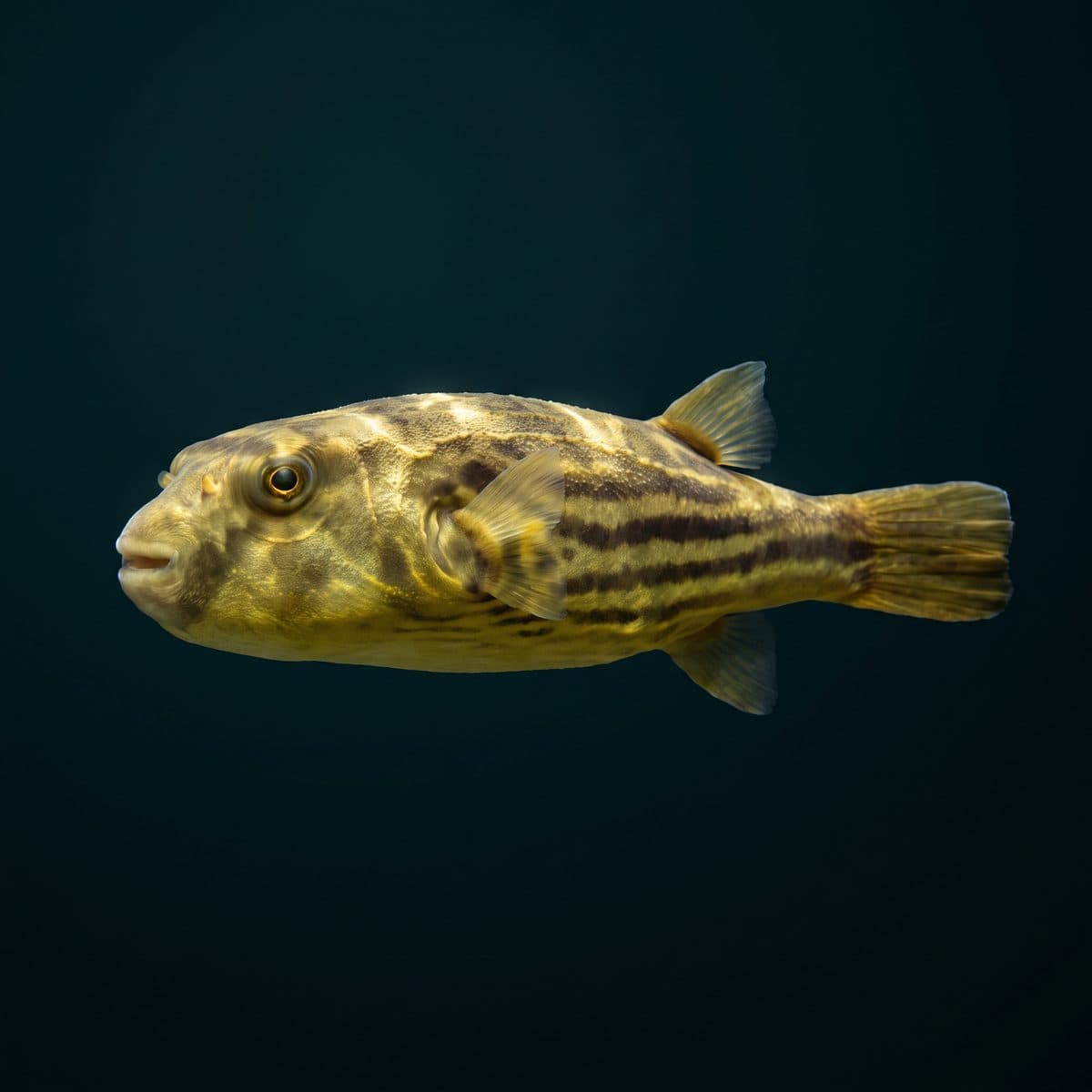
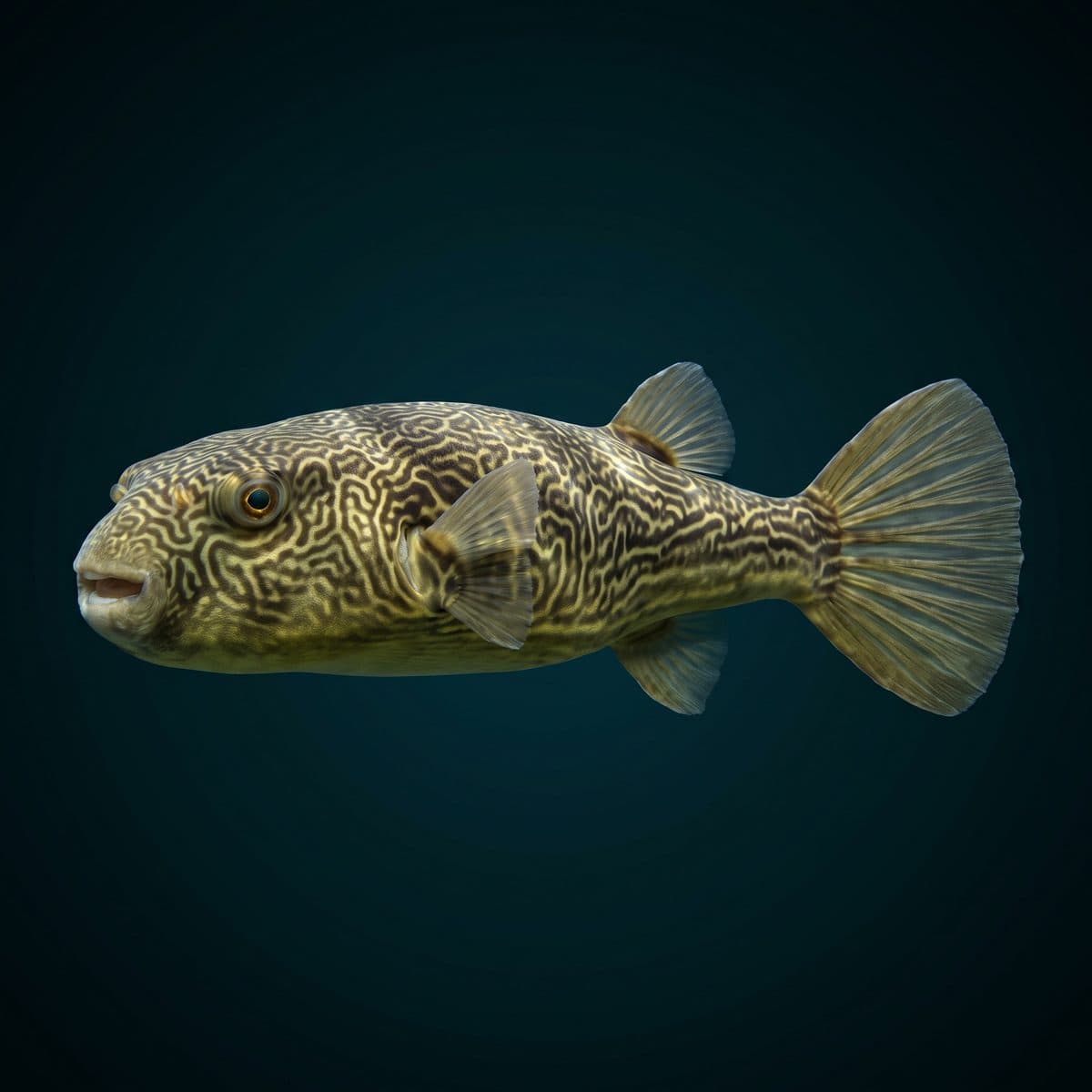
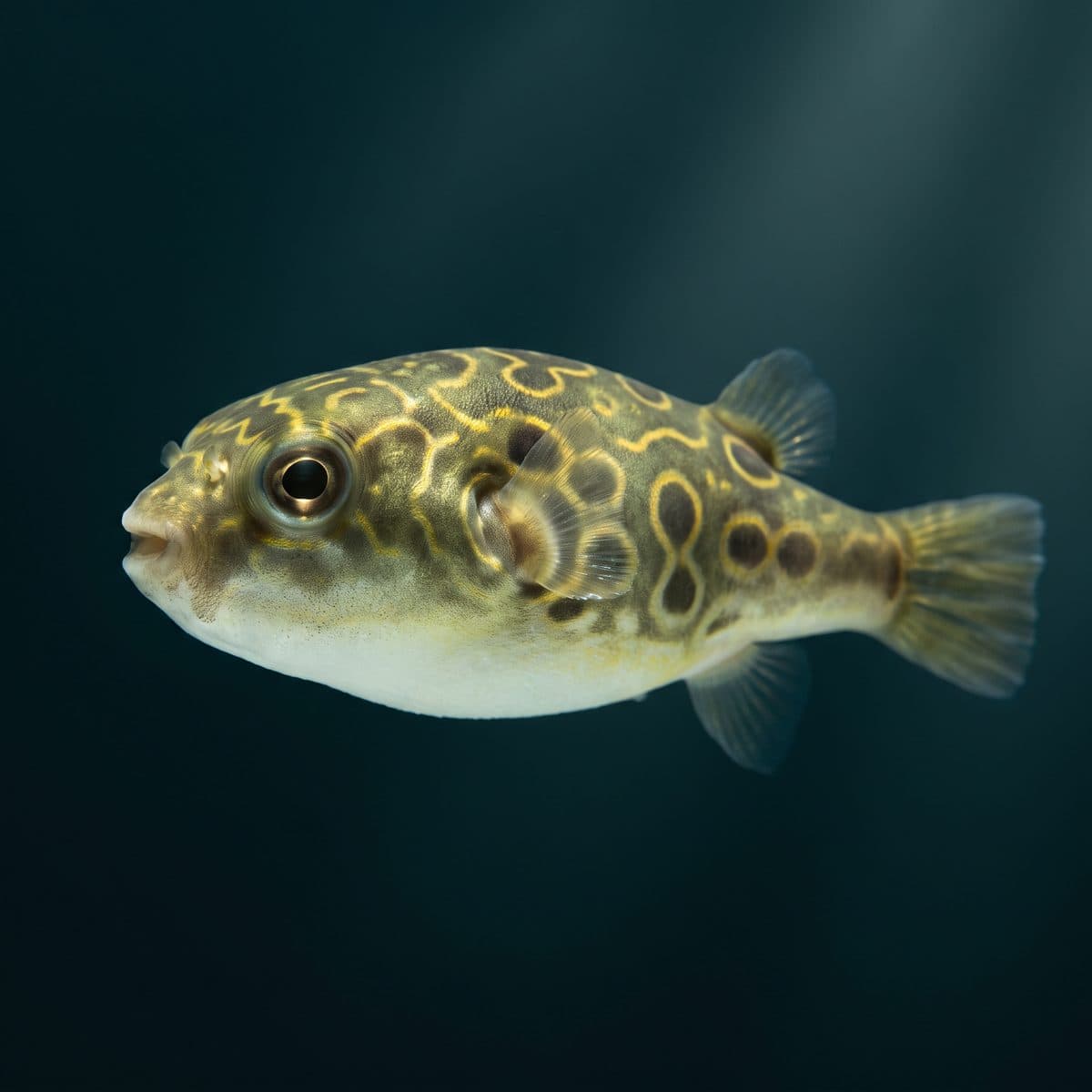
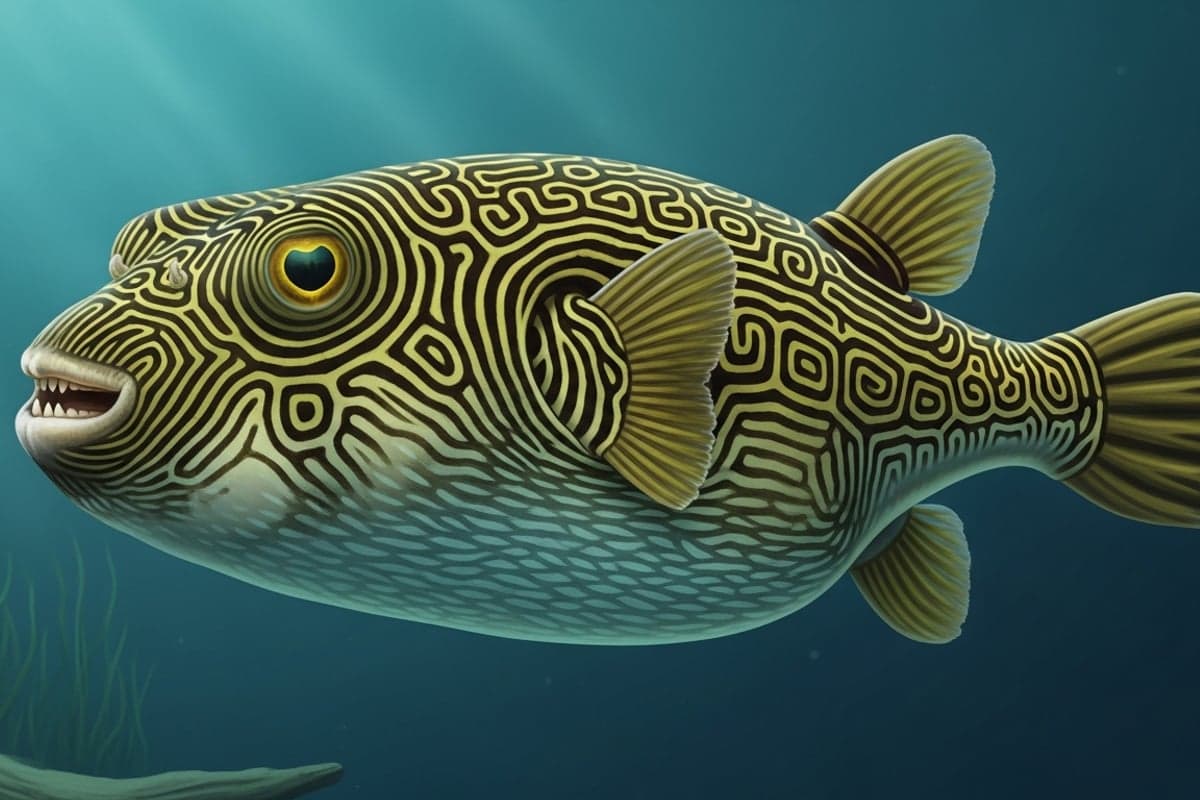
The Mbu Pufferfish (Tetraodon mbu) holds the distinction of being the world's largest purely freshwater pufferfish. Specimens in the wild have been documented at over 75 cm (30 inches), and captive individuals regularly exceed 60 cm (24 inches) in well-maintained systems. Native to the Congo River basin — one of Africa's most biodiverse aquatic ecosystems — and the rocky shorelines of Lake Tanganyika, the Mbu combines the intelligence and personality that pufferfish are famous for with a body size that demands aquarium infrastructure on an entirely different scale from typical freshwater setups.
At The Fish Collection, we are transparent about the Mbu Pufferfish: this is a species that we actively discourage most hobbyists from purchasing. The juvenile Mbu sold in shops at 5–8 cm will grow into a 60+ cm animal that requires a custom aquarium of at least 500 gallons, consumes kilograms of shellfish monthly, produces waste at a rate that overwhelms standard filtration, and lives for over a decade. The number of hobbyists who can genuinely provide lifetime care for a Mbu is vanishingly small. If you are among them, this guide will ensure you do it right.
What justifies this extraordinary commitment is the Mbu's equally extraordinary personality. These fish develop genuine bonds with their keepers, displaying recognition, excitement, and even frustration through an elaborate repertoire of behaviours including colour changes, body posture, water spitting, and patterning variations that experienced keepers learn to read like facial expressions. A well-kept Mbu is less an aquarium fish and more a wet pet — an aquatic companion with a personality as large as its body.
Natural Habitat
Wild Tetraodon mbu inhabit the main channels and tributaries of the Congo River system — the second-largest river by discharge volume on Earth — as well as the rocky littoral zones of Lake Tanganyika. The Congo River is characterised by powerful currents, rocky substrates interspersed with sandy stretches, and water chemistry that varies by region but is generally neutral to slightly alkaline (pH 7.0–8.5), moderately hard (8–18 dGH), and warm (24–28 °C).
In Lake Tanganyika, Mbu Puffers occupy the shallow rocky habitats along the shoreline, sharing their environment with cichlids, synodontis catfish, and freshwater crabs — the latter forming a significant portion of their diet. The lake's water is famously stable: pH 8.0–9.0, GH 10–15 dGH, and a constant temperature of 25–27 °C. This stability is a key consideration for captive care — Mbu Puffers do not tolerate rapid parameter fluctuations.
In both river and lake habitats, the Mbu is a mid-water to bottom-dwelling predator that uses its powerful beak to crush molluscs, crustaceans, and the occasional smaller fish against rocks. Their eyesight is excellent, and they are active diurnal hunters that patrol territories covering substantial areas of riverbed or lakeshore.
Tank Requirements
Tank Dimensions & Construction
A single adult Mbu Pufferfish requires a minimum 500-gallon (1,900 L) aquarium, with dimensions of at least 300 cm long × 90 cm wide × 70 cm tall (120 × 36 × 28 inches). These are not standard aquarium dimensions — Mbu tanks are almost universally custom-built from plywood lined with fibreglass or food-grade epoxy, or commissioned from specialist acrylic manufacturers. Glass tanks of this volume are impractically heavy and prohibitively expensive.
Before purchasing a Mbu, verify that your floor structure can support the loaded weight (a 500-gallon system weighs approximately 2,500 kg / 5,500 lbs including stand, water, and equipment). Ground-floor placement on a concrete slab is ideal. Upper-floor installations require structural engineering assessment. The tank room must also have adequate drainage for large water changes (100–200 gallons per session) and proximity to both water supply and a drain.
Interior décor should be minimal and robust. Large, smooth boulders (too heavy for the fish to move), sections of large-diameter PVC pipe (25+ cm) for shelter, and a sand substrate are appropriate. Avoid anything with sharp edges, thin walls, or small openings that could trap the fish. Mbu Puffers will rearrange, bite, and test every object in their environment — decorations must withstand a 60 cm fish with the bite force to crush crab shells.
Filtration & Flow
The waste output of a Mbu Pufferfish is staggering. An adult consumes several hundred grams of shellfish per week, and the resulting waste — crushed shell fragments, uneaten tissue, and high-protein faecal matter — demands industrial-grade biological and mechanical filtration. Target a combined turnover of 10–12× the tank volume per hour, which for a 500-gallon system means 19,000–23,000 litres per hour of combined pump capacity.
A large sump (100–150 gallons) with multiple filtration stages is essential: coarse mechanical filtration (filter socks or foam), a fluidised K1 moving-bed reactor for biological processing, a secondary static bio-media chamber (ceramic rings, MarinePure), and a high-wattage UV steriliser (80–110 watts). Some keepers incorporate an algae scrubber or refugium to supplement nutrient export. Weekly water changes of 30–40% are the minimum; twice-weekly changes are preferred if nitrate levels trend above 15 ppm.
Lighting
Standard LED lighting on an 8–10 hour photoperiod. The Mbu's intricate maze-like body patterning displays best under neutral white light (6,500–7,000 K) at moderate intensity. No specialised lighting requirements exist.
Water Parameters
Mbu Pufferfish are adapted to the stable water chemistry of the Congo River and Lake Tanganyika. Rapid parameter shifts are more dangerous than slightly sub-optimal static values:
- Temperature: 24–28 °C (75–82 °F). Consistency is critical — use a digital controller with titanium inline heaters rated for the tank volume. Mbu tanks often require two heaters for redundancy.
- pH: 7.0–8.0. Slightly alkaline is ideal. The crushed coral or aragonite sand used as substrate naturally buffers pH upward.
- GH: 8–18 dGH. Moderately hard water supports beak mineralisation and overall health.
- KH: 5–15 dKH. High buffering capacity prevents the pH crashes that can occur in heavily stocked tanks with high CO2 output from biological filtration.
- Ammonia / Nitrite: 0 ppm — always. Scaleless pufferfish are exceptionally sensitive to dissolved nitrogenous waste.
- Nitrate: <15 ppm. With the heavy biological load a Mbu generates, maintaining low nitrate requires aggressive water-change schedules and potentially supplementary nutrient export methods.
Diet & Feeding
Like all Tetraodontids, the Mbu possesses continuously growing fused dental plates (the beak) that must be worn down through regular consumption of hard-shelled prey. The scale of feeding, however, matches the scale of the fish — an adult Mbu requires significantly more shellfish than smaller puffer species, and the associated cost is a genuine ongoing expense that prospective keepers must budget for.
A feeding schedule for an adult Mbu includes:
- Every other day: Hard-shelled items — large pond snails, whole crayfish, blue mussels in half-shell, hard clams, and whole shell-on prawns. Quantity varies by fish size but typically 200–400 grams per feeding session for a 50+ cm specimen.
- Once weekly: Supplementary protein — silversides, earthworm bundles, squid, or cockle meat for dietary variety.
- One to two days weekly: Fasting. Mbu Puffers are highly prone to obesity due to the combination of a sedentary captive lifestyle and a keeper's natural inclination to feed an interactive fish that begs enthusiastically.
Cultivate multiple snail breeding colonies (Ramshorn, Mystery Snails, Malaysian Trumpet Snails) in dedicated tanks to reduce ongoing food costs. Many Mbu keepers also establish relationships with local seafood markets for discounted shellfish.
Beak Maintenance
Beak overgrowth in Mbu Puffers is more difficult to address than in smaller species simply because of the fish's size and power. Anaesthetising and handling a 5+ kg, 60 cm pufferfish is a two-person procedure requiring experience, appropriate equipment, and ideally veterinary supervision. Prevention through consistent hard-shell feeding is paramount. Monitor beak alignment weekly — the plates should meet evenly, and the fish should crush food effortlessly. Any difficulty eating or asymmetric jaw closure warrants immediate dietary assessment and potentially veterinary intervention.
Behaviour & Temperament
The Mbu Pufferfish is widely considered the most intelligent and personable freshwater fish available in the aquarium hobby. Keepers consistently report behaviours that go well beyond simple conditioning: Mbus learn daily routines, differentiate between household members, display apparent excitement or displeasure through colour and posture changes, and engage in play-like behaviours with tank enrichment items. Some specimens will squirt water at their keeper to solicit attention or food — a behaviour that suggests sophisticated cause-and-effect reasoning.
This intelligence comes with a caveat: Mbu Puffers are also prone to boredom and frustration in understimulating environments. An under-enriched Mbu may pace repetitively, glass-surf, or develop stress-related colour fade. Rotate enrichment items (floating balls, feeding puzzles, new rock arrangements) weekly. Some keepers place a small television or tablet near the tank for visual stimulation — anecdotal reports suggest Mbus genuinely attend to moving images.
Aggression toward tank mates is extreme and total. Like the Fahaka Puffer, the Mbu must be housed alone. Its larger size and more powerful bite make the consequences of failed tank-mate experiments even more severe.
Compatible Tank Mates
None. The Mbu Pufferfish is an obligate solitary species in captivity. Its combination of size, intelligence, aggression, and crushing bite power makes it incompatible with any other aquarium inhabitant. Even large, armoured species like adult Plecostomus or Bichirs — which survive with some other large predators — will be systematically harassed and ultimately killed or severely injured by a Mbu. Do not attempt to find exceptions to this rule; experienced Mbu keepers have tried everything, and the result is always the same.
Breeding
Captive breeding of Tetraodon mbu has never been reliably documented. The combination of extreme aggression toward conspecifics, the enormous space requirements for even a single individual, and the lack of detailed knowledge about wild spawning triggers makes captive reproduction essentially impossible with current hobbyist resources. All Mbu Puffers in the aquarium trade are wild-caught from the Congo River system, which raises legitimate conservation concerns as collection data is limited and population impact assessments are sparse.
If captive breeding is ever achieved, it will likely require pond-scale facilities (thousands of gallons), controlled seasonal flooding simulation, and detailed hormonal analysis of wild-caught specimens to identify spawning triggers. This is a project for well-funded aquaculture institutions, not individual hobbyists.
Common Health Issues
Overgrown Beak
Beak overgrowth remains the most critical health risk for captive Mbu Puffers. The mechanics are identical to those in the Fahaka — insufficient hard-shell consumption allows the dental plates to grow beyond functional alignment — but the treatment is vastly more complex due to the fish's size and strength. Trimming a Mbu's beak requires clove oil anaesthesia at carefully titrated doses (the fish is large enough that overdose risk is real), a team of at least two experienced handlers, and veterinary-grade trimming tools. Emergency beak trims cost $200–$500+ at specialist aquatic veterinary practices. Feed hard-shelled prey consistently and monitor beak alignment to avoid this scenario entirely.
Obesity & Fatty Liver
Mbu Puffers are exceptionally food-motivated and will beg relentlessly for meals. Keepers who feed based on the fish's apparent hunger rather than a disciplined schedule invariably produce obese specimens. Hepatic lipidosis (fatty liver disease) presents as abdominal distension, lethargy, and appetite loss — by the time symptoms are visible, the condition is often advanced. Maintain strict feeding schedules with regular fasting days, and resist the temptation to feed more than the recommended amounts, regardless of how persuasively the fish begs.
Other health considerations include sensitivity to copper-based medications (use only pufferfish-safe treatments), internal parasites in wild-caught specimens (treat prophylactically with praziquantel during quarantine), and stress-related conditions from inadequate tank size or insufficient environmental enrichment. A Mbu kept in a tank below 500 gallons will develop chronic stress that manifests as colour fade, reduced appetite, glass-surfing, and immune suppression.