Overview
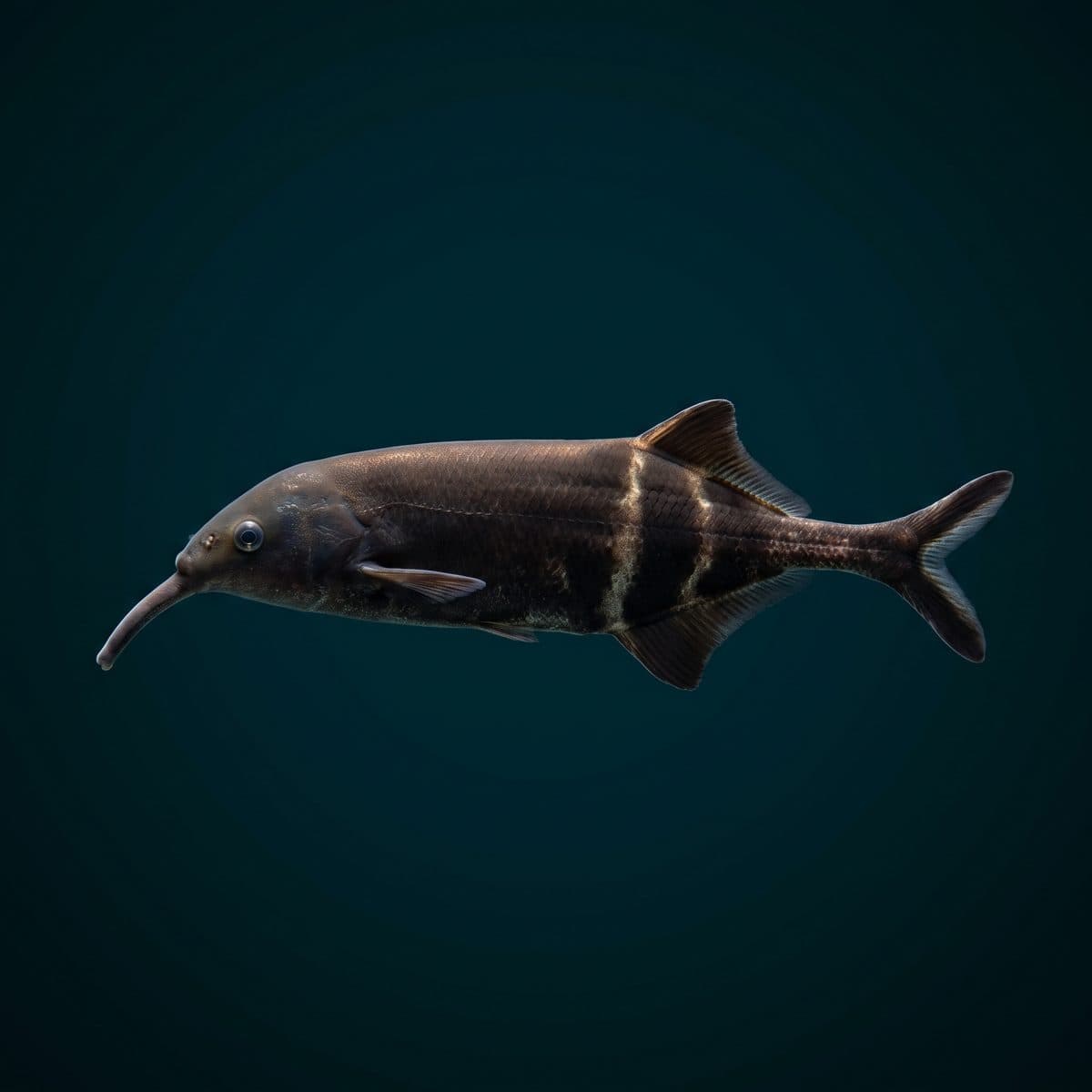
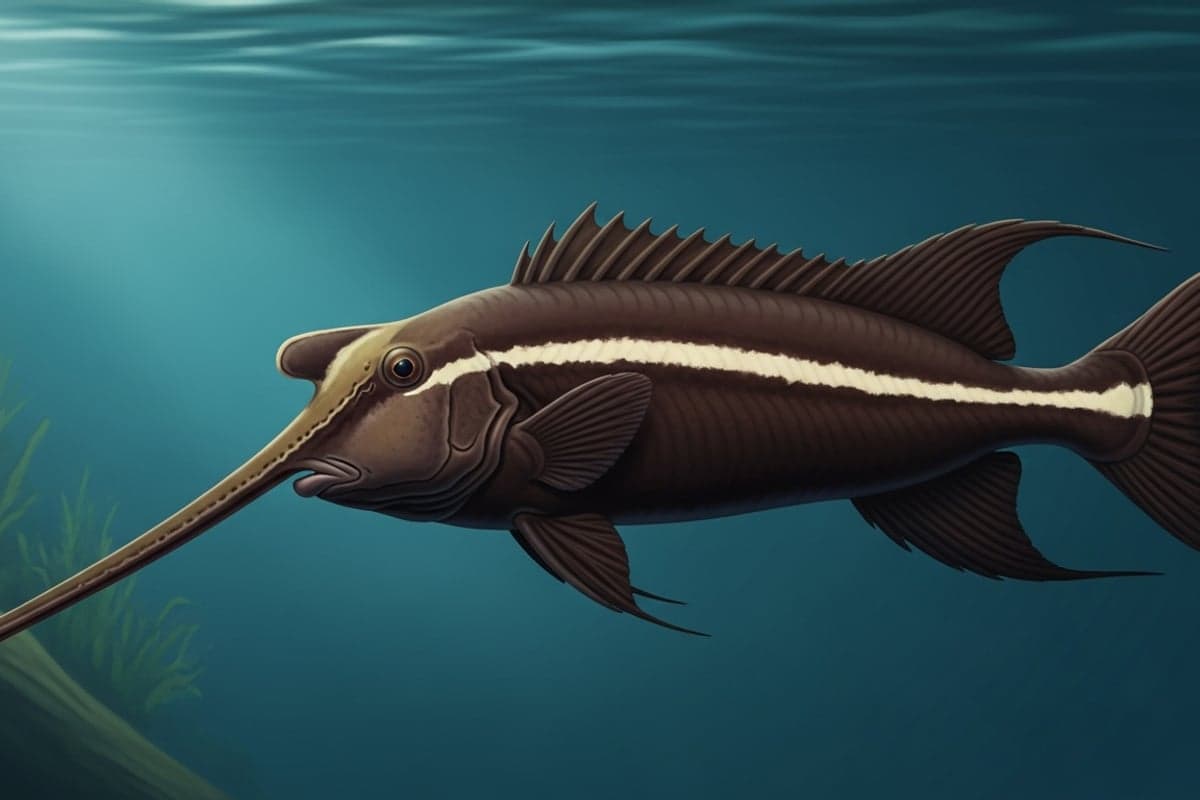
The Elephantnose Fish (Gnathonemus petersii) belongs to the family Mormyridae, a group of weakly electric fishes endemic to Africa. The species' most striking feature is its elongated, trunk-like extension of the lower jaw — technically a chin appendage called the Schnauzenorgan — which is densely packed with electroreceptor cells. This organ, combined with a specialised electric organ located near the caudal peduncle, allows the fish to generate and interpret weak electric fields for navigation, prey detection, and social communication in total darkness.
What makes the Elephantnose particularly compelling for advanced aquarists is its cognitive capacity. Studies at the University of Bonn have demonstrated that G. petersii possesses one of the highest brain-to-body-mass ratios of any fish — comparable to humans by proportion. They can learn to navigate mazes, recognise individual tank mates by their unique electric organ discharge (EOD) signatures, and discriminate between objects using electrolocation alone. In a properly maintained aquarium, keepers often report interactive behaviour that surpasses most other freshwater species.
At The Fish Collection, we have worked with mormyrids for over a decade and consider the Elephantnose Fish one of the most rewarding species in our catalogue. However, their sensitivity to water quality, medication, and social stress means they demand a keeper who is willing to invest in proper husbandry. This guide provides everything you need to succeed.
Natural Habitat
The Elephantnose Fish is native to the slow-moving, turbid rivers and floodplain pools of West and Central Africa, with its range spanning from the Niger River basin through the Congo system. These waterways are characterised by dark, tannin-stained water with visibility often under 30 cm, a soft muddy or sandy substrate, and dense stands of submerged vegetation and fallen timber. The fish are strictly nocturnal in the wild, emerging from daytime refugia at dusk to probe the substrate methodically for chironomid larvae, tubificid worms, and small crustaceans.
Water chemistry in their native habitats is typically soft and slightly acidic to neutral — pH 6.0–7.2, with general hardness below 10 dGH and conductivity in the range of 50–200 µS/cm. Temperatures remain stable between 24 °C and 28 °C year-round. The low-visibility environment is precisely why the electric sense evolved: where eyes fail, electrolocation provides a three-dimensional "image" of the surroundings in real time.
Replicating these conditions in captivity is essential. Bright lighting, sharp gravel substrates, and boisterous tank mates all work against the Elephantnose's biology. A successful setup mimics the dim, sheltered, substrate-rich environment of a West African backwater — and the fish will reward you with confident, exploratory behaviour rather than the chronic hiding that plagues poorly maintained specimens.
Tank Requirements
Tank Dimensions & Layout
A single Elephantnose Fish requires a minimum aquarium of 55 gallons (210 litres) with dimensions of at least 120 cm long × 40 cm wide × 45 cm tall. The footprint matters more than height — these fish spend their time along the bottom, probing every centimetre of substrate. For a small group (3–5 individuals, which is recommended for reducing conspecific aggression), upgrade to 100 gallons (380 L) or larger.
The substrate must be fine sand — never gravel, crushed coral, or sharp-edged materials. The Schnauzenorgan is delicate living tissue packed with electroreceptors, and abrasive substrates will cause chronic damage that impairs feeding ability and can lead to secondary infection. We recommend play sand or pool-filter sand, rinsed thoroughly before use, to a depth of 5–8 cm.
Provide abundant cover in the form of PVC pipe sections, coconut half-shells, driftwood tangles, and dense plantings of low-light species such as Anubias, Java Fern, and Cryptocoryne. Each Elephantnose in the group needs its own dedicated hiding spot to establish a territory and reduce stress-related aggression. Arrange décor to create multiple line-of-sight breaks throughout the tank.
Filtration & Flow
Target a turnover rate of 6–8× the tank volume per hour using a canister filter or sump system. Elephantnose Fish are extremely sensitive to dissolved nitrogenous waste — ammonia and nitrite must be undetectable at all times, and nitrate should remain below 15 ppm. Incorporate high-quality biological media such as sintered glass or ceramic rings, and add a pre-filter sponge to prevent small worms or food particles from being drawn into the impeller.
Flow should be moderate and diffused. Avoid strong directional currents, which stress these fish and interfere with their electrosensory perception. A spray bar positioned along the back panel distributes flow evenly. Supplement with an air-driven sponge filter for gentle additional biological filtration — the fine pores also harbour the microfauna that Elephantnose fish graze on between meals.
Lighting
Dim lighting is not optional — it is a fundamental requirement. In bright conditions, Elephantnose Fish will remain hidden indefinitely and refuse to feed, leading to gradual starvation. Use a low-intensity LED fixture at 20–40% brightness, or employ floating plants such as Amazon Frogbit, Salvinia, or Ceratopteris to diffuse overhead light. A moonlight or red-spectrum LED on a timer is an excellent addition, as it allows you to observe natural nocturnal foraging behaviour without disturbing the fish. Photoperiod should be 8–10 hours of dim daylight followed by 14–16 hours of darkness or moonlight-only illumination.
Water Parameters
Elephantnose Fish demand pristine, stable water conditions. Target the following:
- Temperature: 24–28 °C (75–82 °F). Use a reliable inline or titanium heater. Avoid temperature swings greater than 1 °C per day.
- pH: 6.0–7.5. A steady pH of 7.0 is ideal for most community setups.
- General Hardness (GH): 3–12 dGH (54–214 ppm).
- Carbonate Hardness (KH): 2–8 dKH. Maintain at least 3 dKH to buffer against pH crashes.
- Ammonia / Nitrite: 0 ppm — non-negotiable. Even trace ammonia causes gill and skin irritation in mormyrids.
- Nitrate: <15 ppm. Perform 25–30% water changes twice weekly if stocking density is moderate.
- Conductivity: 100–300 µS/cm. High conductivity above 500 µS/cm interferes with electrolocation and causes behavioural stress.
An important note for mormyrid keepers: water conductivity directly affects the performance of the electric sense. In highly conductive water (high TDS/mineral content), the electric field generated by the fish becomes "short-circuited," reducing the effective range of electrolocation. Conversely, extremely soft water with very low conductivity amplifies the field but can cause pH instability. The sweet spot for G. petersii is 150–250 µS/cm, achievable by blending RO water with dechlorinated tap water.
Diet & Feeding
Feeding is the single greatest challenge in Elephantnose Fish care. These are specialised benthic invertivores with small mouths adapted for extracting worms and larvae from sediment. The overwhelming majority will not accept flake food, pellets, or any floating dry food — and attempting to train them onto such foods is usually futile and risks starvation.
The dietary staples for G. petersii are:
- Live blackworms (Lumbriculus variegatus): The single best food. Maintain a culture or purchase weekly. Place worms directly on the substrate; the Elephantnose will locate them via electrolocation.
- Frozen bloodworms (Chironomus larvae): An acceptable daily staple. Thaw in a small cup of tank water and distribute across the substrate using a turkey baster.
- Live or frozen tubifex worms: Excellent nutrition but ensure they are sourced from clean cultures to avoid introducing pathogens.
- Frozen brine shrimp: A useful supplementary food but lower in nutritional density than worms.
- Live daphnia and moina: Good for enrichment and stimulating natural hunting behaviour.
Feed once or twice daily, offering only what is consumed within 10–15 minutes. Elephantnose Fish are slow, methodical feeders — they cannot compete with fast-moving tank mates for food, which is a critical consideration when selecting companions. Uneaten food must be removed promptly to prevent ammonia spikes. In well-established tanks with sand substrates, a healthy population of microfauna (copepods, nematodes, seed shrimp) will develop naturally and provide continuous supplemental grazing between scheduled meals.
Behaviour & Tank Mates
Elephantnose Fish display a complex social hierarchy mediated by their electric organ discharges. Each individual produces a unique EOD waveform — essentially an electric "fingerprint" — that conveys species identity, sex, size, and emotional state. When two Elephantnose Fish encounter each other, they engage in rapid-fire electrical exchanges that can be detected with a simple AM radio held near the tank. This electrocommunication system is one of the most sophisticated non-visual signalling systems in the animal kingdom.
In captivity, conspecific interactions range from peaceful coexistence to intense territorial aggression, depending on tank size and the number of individuals. The worst configuration is a pair — one fish will invariably dominate and relentlessly harass the subordinate, often to death. Groups of 1 or 5+ are strongly recommended. In groups of 5 or more, aggression is diffused across multiple individuals and a stable hierarchy forms. Each fish claims a hiding spot and defends a small territory, but outright combat is rare.
Monitor for signs of chronic subordination: a fish that remains permanently hidden, shows pale or mottled colouration, or has a visibly thinner body condition than its group mates may be experiencing sustained social stress. If this occurs, provide additional hiding spots or rehome the individual.
Compatible Tank Mates
Ideal tank mates are peaceful, moderate-sized species that occupy different water column zones and will not outcompete the Elephantnose for food. Good choices include:
- Congo Tetras (Phenacogrammus interruptus): A natural co-inhabitant from the same geographic range. Peaceful, appropriately sized, and tolerant of dim lighting.
- Corydoras species: Bottom-dwelling catfish that coexist peacefully, though ensure they are not outcompeting the Elephantnose for substrate-level foods.
- Butterfly Fish (Pantodon buchholzi): A surface-dwelling African species that occupies a completely different niche.
- Rope Fish (Erpetoichthys calabaricus): Another West African nocturnal species; an excellent companion in dimly lit setups.
- Small to medium Synodontis catfish: Peaceful species like S. nigriventris are compatible.
Avoid aggressive cichlids, large barbs, or any fish that nips fins. Also avoid other weakly electric fish (e.g., Black Ghost Knife Fish) — their overlapping electric fields create sensory interference that stresses both species.
Breeding
Breeding Gnathonemus petersii in captivity is exceptionally rare and has only been documented a handful of times under controlled research conditions. The species is gonochoristic (separate sexes) but externally monomorphic — males and females are visually identical. Sexing can be achieved by analysing the EOD waveform, as male and female discharges differ subtly in duration and frequency, though this requires specialised equipment.
In the wild, spawning is triggered by the onset of the rainy season, which brings rising water levels, decreased conductivity, and increased turbidity. Research teams that have achieved spawning in captivity used large (500+ litre) heavily planted tanks, simulated a dry-to-wet season transition by gradually increasing water volume and reducing conductivity over several weeks, and provided a diet enriched with live foods. Eggs were scattered among fine-leaved plants and hatched in approximately 10–14 days at 26 °C. The fry are tiny and require infusoria followed by newly hatched brine shrimp nauplii.
For the home aquarist, breeding Elephantnose Fish is not a realistic goal. All specimens in the trade are wild-caught, primarily from Nigerian and Cameroonian export facilities. Focus your efforts on providing the best possible care for your wild-caught individuals rather than attempting reproduction.
Common Health Issues
Electrosensory Stress
The most underappreciated health risk for Elephantnose Fish is sensory overload from electromagnetic interference (EMI). Powerheads with poorly shielded motors, electronic ballasts, stray voltage from faulty equipment, and even nearby wireless routers can generate electromagnetic fields that interfere with the fish's electrolocation system. Symptoms include erratic swimming, loss of appetite, chronic hiding, and a noticeable increase in EOD frequency (detectable with a hydrophone or AM radio). Mitigate EMI by using equipment with properly grounded wiring, positioning pumps outside the main tank where possible, and ensuring no stray voltage enters the water — a grounding probe is strongly recommended.
Skin Infections
Elephantnose Fish are highly susceptible to bacterial and fungal skin infections, particularly on the Schnauzenorgan. Damage from rough substrates or aggressive tank mates creates entry points for Columnaris (Flavobacterium columnare) and Saprolegnia fungus. Infected tissue appears whitish, frayed, or cottony. Treatment is complicated by the species' extreme sensitivity to many common medications — never use copper-based treatments, formalin, or potassium permanganate with mormyrids. Methylene blue at half dose and Seachem KanaPlex (kanamycin) are safer alternatives. Prevention through pristine water quality and appropriate substrate is always preferable to treatment.
Elephantnose Fish are also vulnerable to Ichthyophthirius multifiliis (ich), and treatment must be approached carefully. Raise temperature to 30 °C gradually (1 °C per day) and use half-dose methylene blue or Kordon Ich Attack (a herbal formulation). Avoid malachite green and formalin — both are lethal to mormyrids at standard dosing.