Overview
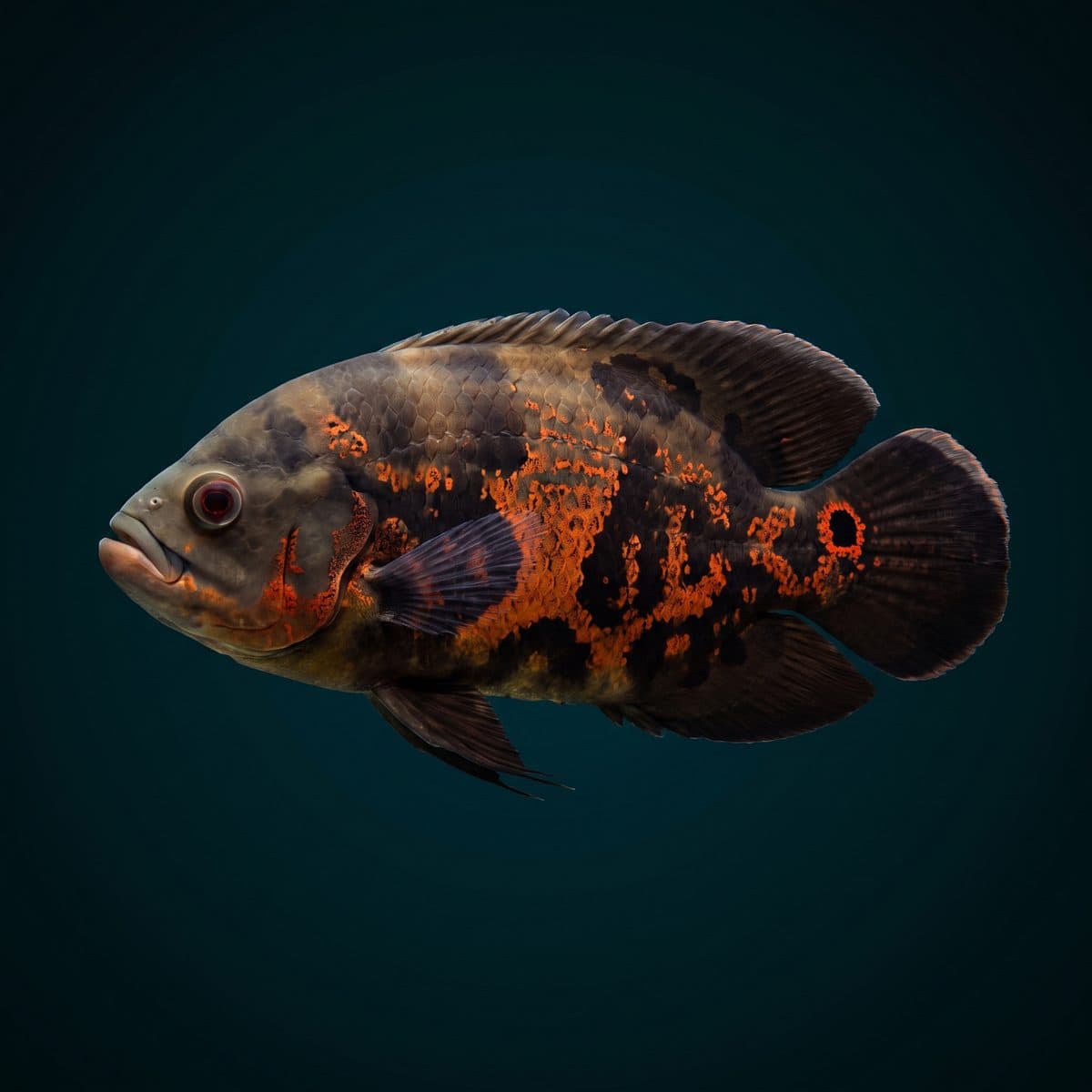
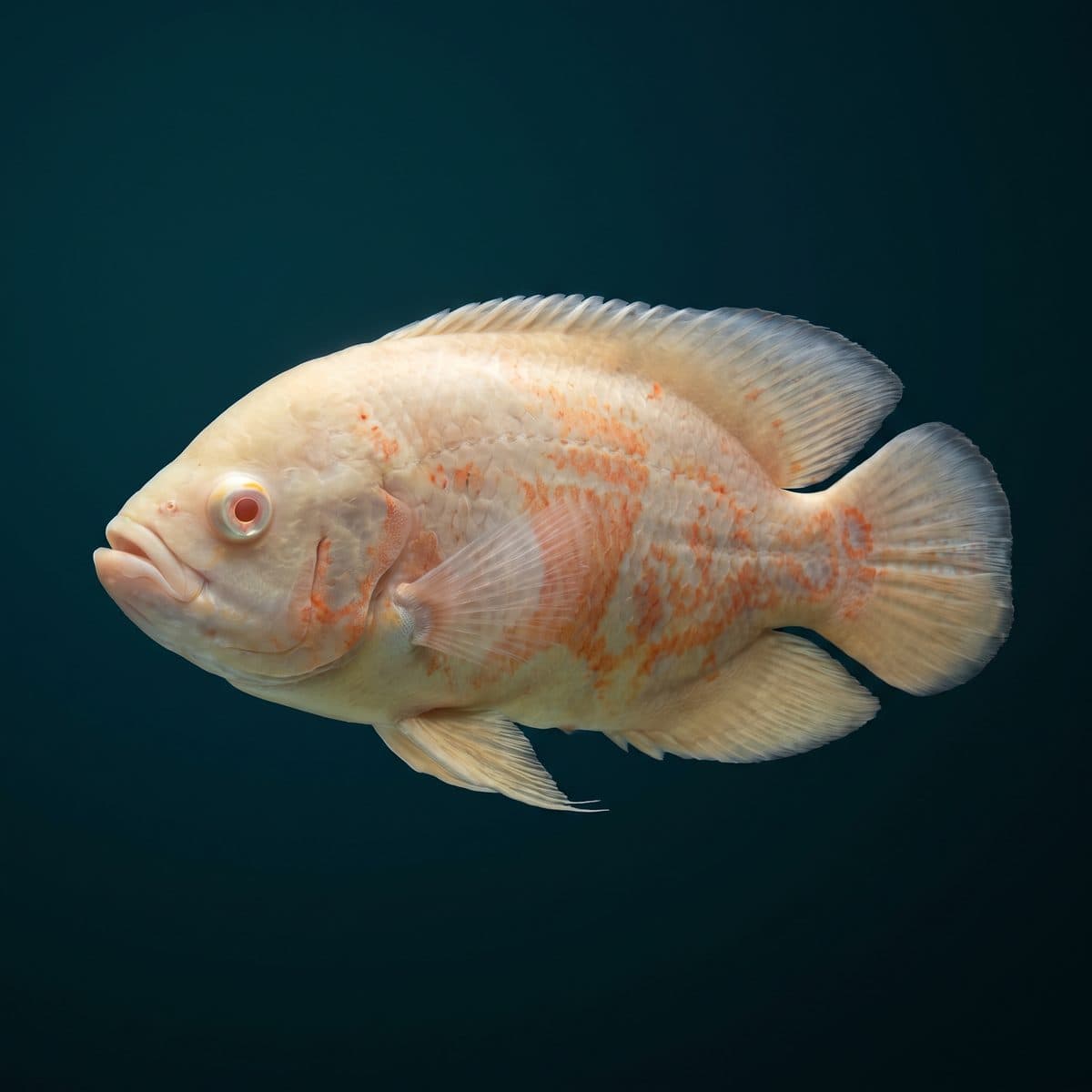
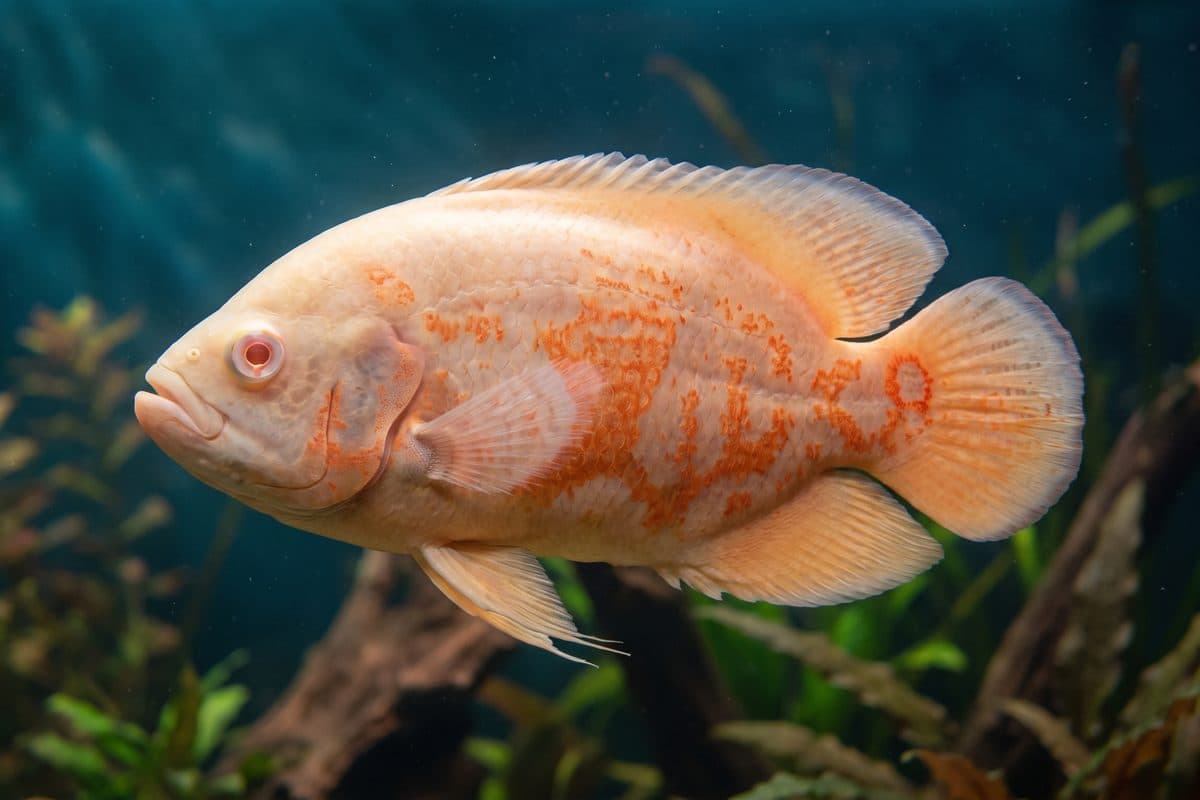
The Albino Oscar is a captive-bred colour morph of Astronotus ocellatus distinguished by the complete absence of melanin pigmentation. Where the Tiger Oscar displays dark olive-to-black base colours, the Albino Oscar presents a clean white, cream, or pale pink body decorated with bold red, orange, or copper markings. The eyes are characteristically pink or red — the hallmark of true albinism, revealing the blood vessels behind the unpigmented iris.
First produced by selective breeding in the 1960s, Albino Oscars quickly became a staple of the ornamental fish trade. They share the same intelligence, personality, and interactive behaviour as their normally pigmented counterparts — the only significant differences relate to light sensitivity and visual acuity.
Genetics & Appearance
Albinism in Oscars is an autosomal recessive trait — both parents must carry the albino gene for offspring to express the phenotype. When two albino Oscars are crossed, 100% of offspring will be albino. Crossing an albino with a normally pigmented Oscar that does not carry the gene produces 100% normally pigmented offspring that are heterozygous carriers.
Several distinct Albino Oscar lines exist in the trade:
- Standard Albino: White/cream base with diffuse red-orange markings. The pattern is less defined than the Tiger variant.
- Albino Tiger: The albino gene expressed on the Tiger pattern — cream base with bold, defined red-orange Tiger markings. The most visually striking albino variant.
- Albino Red: Extensive red-orange coverage with minimal white — essentially a Red Oscar with the albino gene removing all dark pigmentation.
- Albino Lemon: Yellow-gold markings on a white base, replacing the orange pigmentation.
Light Sensitivity
The most important care consideration specific to Albino Oscars is photosensitivity. Without melanin in the iris, albino eyes cannot regulate light intake as effectively as normal eyes. This has practical implications:
- Reduce lighting intensity: Use dimmable LED fixtures or lower wattage. If using standard aquarium LEDs, keep intensity at 40–60% of maximum.
- Provide shade: Floating plants (Amazon Frogbit, Water Lettuce, Salvinia) create shaded zones where the fish can retreat from overhead light. Driftwood overhangs and cave structures also help.
- Avoid direct sunlight: Position the tank away from windows where direct sunlight could create intense illumination.
- Night feeding option: Some keepers of Albino Oscars find their fish are more active feeders and less skittish with the main lights off, using only ambient room lighting during feeding times.
With appropriate lighting management, Albino Oscars display the same bold, interactive personality as their pigmented counterparts. They are not inherently more timid — any shyness observed in Albino Oscars is almost always a lighting issue rather than a temperamental difference.
Tank Requirements
Tank requirements for Albino Oscars are identical to those for Tiger Oscars: 75 gallons minimum for a single adult, 125+ gallons for a pair, with robust canister filtration rated at 6–8× turnover per hour. The only modification is the lighting adjustments described above.
Décor considerations are the same — minimal, heavy, and Oscar-proof. Albino Oscars are equally enthusiastic about redecorating their tanks. Use securely positioned driftwood, heavy rocks, and weighted or attached plants (Anubias, Java Fern, Bolbitis).
Water Parameters
Identical to standard Oscars: 74–81 °F (23–27 °C), pH 6.0–8.0, GH 5–20 dGH. Ammonia and nitrite must be maintained at 0 ppm, with nitrate below 40 ppm (ideally below 20). Weekly 30–40% water changes are essential given the Oscar's high bioload.
Diet & Feeding
Albino Oscars have identical nutritional requirements to standard Oscars. High-quality cichlid pellets should form the dietary staple (60–70%), supplemented with frozen shrimp, bloodworms, earthworms, and occasional fruit or vegetable matter. Some keepers supplement with carotenoid-rich foods (astaxanthin pellets, paprika-enriched foods) to enhance the intensity of the red-orange markings — albino fish can still produce carotenoid pigments, and dietary supplementation noticeably brightens their colour.
One dietary consideration: vitamin A is particularly important for eye health in albino animals. Ensure the pellet diet contains adequate vitamin A, or supplement with foods naturally rich in beta-carotene (sweet potato, spirulina, carrot).
Behaviour
Albino Oscars display the same intelligent, interactive behaviour as Tiger Oscars. They recognise their keepers, accept hand-feeding, and demonstrate the full range of Oscar personality traits — from enthusiastic greeting displays to sulky refusal to eat when conditions change. The reduced visual acuity of albino eyes may make them slightly less responsive to visual stimuli at distance, but in the confined environment of an aquarium this difference is negligible.
Tank mate compatibility follows the same principles: large, robust species that can coexist with a territorial cichlid. Albino Oscars are not at a competitive disadvantage with normally pigmented tank mates — their reduced vision is compensated by their lateral line system, and their aggression levels are equivalent.
Breeding
Breeding Albino Oscars follows the same protocol as standard Oscars (see our Tiger Oscar guide for the complete breeding protocol). The genetic consideration is that albinism is recessive: crossing two Albino Oscars produces 100% albino fry, while crossing an Albino with a heterozygous carrier produces approximately 50% albino and 50% normally pigmented offspring. Crossing an Albino with a non-carrier produces 100% normally pigmented carriers.
Albino Oscar parents are as attentive as their pigmented counterparts. Despite reduced visual acuity, they successfully guard eggs, fan them for water circulation, and protect free-swimming fry.
Natural Habitat & Origins
To understand the Albino Oscar, it helps to picture where the species comes from. Astronotus ocellatus is native to the Amazon basin — the slow, warm, tannin-stained rivers, flooded forests, and backwaters of Brazil, Peru, Colombia, and neighbouring countries. Wild Oscars live among submerged branches and leaf litter in soft, acidic water, ambushing smaller fish and picking off insects, crustaceans, and the occasional fruit that drops from the canopy.
One thing to be clear about: there are effectively no albino Oscars in the wild. A white, pink-eyed fish stands out to predators and rarely survives to adulthood in nature, so the albino form exists almost entirely because of captive breeding, where it's protected and selected for. Your fish is a domesticated colour morph of a wild Amazonian cichlid, not a wild-type animal — which is why it's hardy and adaptable but also why it needs the light management covered earlier.
The wild diet and habitat still shape good care, though. These fish evolved as opportunistic predators in warm, soft, structured water, which is exactly what informs the tank setup, the protein-forward diet, and the driftwood-and-cave décor we recommend. Recreate the spirit of that flooded-forest environment — warm, stable, well-filtered water with cover to retreat to — and an Albino Oscar thrives.
Filtration & Maintenance
Oscars are, to put it bluntly, waste machines. They're big, they eat a lot of protein, and they produce a heavy bioload that will overwhelm undersized filtration fast. This is the single most common reason Oscars — albino or otherwise — end up sick, so it's worth getting right.
Run canister or sump filtration rated for at least 6–8 times the tank's volume per hour. Many experienced keepers run two canisters on an Oscar tank, both for capacity and for redundancy, so a single filter failure doesn't crash the system. Fill them with plenty of biological media, and don't over-clean it — rinse mechanical media in old tank water and stagger any biomedia cleaning so you never wipe out your bacterial colony.
Water changes are non-negotiable. Plan on 30–40% weekly at a minimum; heavily stocked tanks may need twice that. Keep ammonia and nitrite at 0 ppm and nitrate below 40 (ideally under 20) — chronic high nitrate is strongly linked to hole-in-the-head disease in Oscars. Vacuum the open substrate each week to remove the uneaten food and waste these messy eaters leave behind. Test your water regularly rather than guessing; Oscars hide illness until it's advanced, and clean water is your best insurance.
Health & Common Problems
Albino Oscars get the same illnesses as standard Oscars, with a couple of extra points around their eyes. The big ones to know:
- Hole-in-the-head (HITH/HLLE): The classic Oscar disease — pitted lesions on the head and along the lateral line. It's linked to poor water quality (especially high nitrate), stray voltage, activated-carbon overuse, and nutritional gaps. Fix water quality and diet early and it's usually reversible.
- Ich (white spot): Common after stress or a chill. Raise temperature gradually to 30 °C and treat; Oscars tolerate ich medications well.
- Bloat and internal issues: Often from overfeeding or a diet too heavy in fatty foods like beef heart. Vary the diet and don't overfeed.
- Eye health: Because albino eyes lack protective melanin, watch for cloudiness or injury, and make sure the diet carries enough vitamin A. Their weaker eyesight also means they can bump décor, so avoid sharp hardscape.
Prevention is the same story as always: quarantine new fish, keep the water pristine, feed a varied diet, and don't crowd the tank. An Albino Oscar in a well-run tank is a genuinely tough fish that can live 10–15 years and become a real personality in the home.
Choosing a Healthy Albino Oscar
A little care at the shop saves a lot of trouble at home. When you're picking out an Albino Oscar, watch the fish for a few minutes before you commit. A healthy young Oscar is alert, curious, and often swims up to investigate you at the glass — that boldness is a good sign.
Look for a clean, bright white or cream body with crisp red-orange markings and no grey haze, ragged fins, or open sores. The eyes should be clear (pink or red is normal for an albino, but they shouldn't be cloudy or sunken). Check the head and lateral line for any early pitting that could signal hole-in-the-head. A slightly rounded belly is good; a pinched, hollow belly suggests the fish hasn't been eating or is carrying internal parasites.
Ask to see it feed if you can — a fish that strikes food eagerly is a fish that's likely to settle well. Avoid tanks where other fish look sick, since disease spreads through a shop's shared water systems. Finally, be realistic about size: those adorable 5 cm juveniles reach 30–35 cm and need a 75+ gallon tank. Buy the fish you can house at full size, not just the one that fits today.
Is an Albino Oscar Right for You?
Albino Oscars are among the most rewarding freshwater fish you can keep — they're intelligent, interactive, and genuinely bond with their keepers — but they're a commitment, not an impulse buy.
An Albino Oscar suits you if you:
- Can provide a 75+ gallon tank (125+ for a pair) with heavy-duty filtration.
- Are ready for weekly water changes and the mess a large cichlid makes.
- Want a "wet pet" with real personality that will hand-feed and recognise you.
- Can dim the lighting and provide shade for the fish's light-sensitive eyes.
Look at something else if you:
- Have a tank under 75 gallons or want a community of small, peaceful fish.
- Aren't prepared for a decade-plus commitment and the upkeep it demands.
- Want a low-maintenance, hands-off setup.
Get the tank and filtration right, manage the lighting for those albino eyes, and you'll have a charismatic centrepiece fish for 10–15 years. The Albino Oscar isn't hard to keep — it's just big, messy, and long-lived, and those three facts should drive your decision more than the fish's striking looks.