Choosing Large Freshwater Fish
Large freshwater fish transform an aquarium from a decoration into a centrepiece — these are animals with genuine presence, personality, and often decades-long lifespans. But the appeal of a massive predator or a football-sized cichlid comes with proportional responsibility. Before committing to any large species, you must honestly assess three things: your tank size (current and maximum possible), your experience level, and your long-term commitment.
The species below are organised by minimum tank size, from the most accessible (75 gallons) to the most demanding (200+ gallons). Each listing includes adult size, temperament, care difficulty, and compatibility notes. For detailed species profiles, explore our species directory.
Best Large Fish for 75-Gallon Tanks
1. Oscar Cichlid
Scientific name: Astronotus ocellatus | Adult size: 30–35 cm (12–14 in) | Min tank: 75 gal | Difficulty: Beginner-friendly
The Oscar is the gateway large fish for most aquarists. Highly intelligent, individually recognisable, and available in dozens of colour morphs (Tiger, Red, Albino, Lemon), Oscars develop strong bonds with their keepers and will hand-feed eagerly. They are messy eaters requiring robust filtration (8× turnover minimum). Keep singly or in bonded pairs — Oscars are territorial and will bully unfamiliar conspecifics in tight quarters. Temperature 24–28 °C, pH 6.0–8.0.
2. Flowerhorn Cichlid
Hybrid origin | Adult size: 25–35 cm (10–14 in) | Min tank: 75 gal | Difficulty: Intermediate
Flowerhorns are selectively bred hybrids prized for their massive nuchal hump (kok), vivid colours, and aggressive personality. Competition-grade specimens fetch $5,000–$60,000. They are almost always kept alone — Flowerhorns are among the most territorial cichlids and will kill most tank mates. Temperature 28–31 °C, pH 7.0–8.0. See our complete Flowerhorn guide and cichlid collection for available specimens.
3. Green Terror Cichlid
Scientific name: Andinoacara rivulatus | Adult size: 20–30 cm (8–12 in) | Min tank: 75 gal | Difficulty: Intermediate
Named for both their brilliant green-blue metallic colouration and their aggressive temperament, Green Terrors are stunning centrepiece fish. Males develop a prominent nuchal hump. They can coexist with similarly sized, robust cichlids in 125+ gallon tanks but will dominate smaller or more passive species. Temperature 24–28 °C, pH 6.5–8.0.
4. Jack Dempsey Cichlid
Scientific name: Rocio octofasciata | Adult size: 20–25 cm (8–10 in) | Min tank: 75 gal | Difficulty: Beginner-friendly
A classic Central American cichlid named after the boxer for its pugnacious attitude. Standard colouration is dark blue-grey with iridescent speckles, but the Electric Blue Jack Dempsey morph — a recessive genetic variant — is one of the most visually striking freshwater fish available. More aggressive during breeding but generally manageable in a 75-gallon setup with appropriate décor for territory establishment. Temperature 22–28 °C, pH 6.5–7.5.
5. Blood Parrot Cichlid
Hybrid origin | Adult size: 20–25 cm (8–10 in) | Min tank: 75 gal | Difficulty: Beginner-friendly
Blood Parrots are hybrid cichlids (Midas Cichlid × Redhead Cichlid cross) recognisable by their rounded body shape and permanently open mouth. Despite their deformity, they are hardy, personable fish that thrive in community setups with similarly sized species. Their small mouth limits aggression — they cannot inflict the damage that an Oscar or Flowerhorn can. Temperature 25–28 °C, pH 6.5–7.5.
Best Large Fish for 125-Gallon Tanks
6. Bichir (Polypterus spp.)
Scientific name: Polypterus spp. | Adult size: 30–75 cm (12–30 in) depending on species | Min tank: 125 gal for larger species | Difficulty: Intermediate
Bichirs are living fossils — armoured, air-breathing predators that have remained virtually unchanged for 100 million years. The most commonly kept species include P. endlicherii (75 cm), P. ornatipinnis (50 cm), and P. senegalus (30 cm, suitable for 55 gallons). Their prehistoric appearance, tough constitution, and compatibility with other large fish make them exceptional additions to predator tanks. Temperature 25–28 °C, pH 6.5–7.5.
7. Red Tail Catfish
Scientific name: Phractocephalus hemioliopterus | Adult size: 100–130 cm (40–50 in) | Min tank: 1,000+ gal (adult) | Difficulty: Expert only
One of the most commonly impulse-purchased — and subsequently rehomed — large fish in the hobby. Red Tail Catfish are sold as adorable 5 cm juveniles but grow rapidly to over a metre, requiring enormous systems that few private keepers can provide. If you can commit to a 1,000+ gallon tank or pond, they are magnificent, long-lived (20+ years) predators with genuine personality. If you cannot, do not buy one. See our Red Tail Catfish care guide. Temperature 22–26 °C, pH 6.0–7.5.
8. Peacock Bass
Scientific name: Cichla spp. | Adult size: 30–75 cm (12–30 in) depending on species | Min tank: 125–300 gal | Difficulty: Intermediate-Advanced
Peacock Bass are explosive predators from South American rivers, prized for their vivid colouration (gold, green, and black ocellus markings) and aggressive feeding response. Smaller species like C. kelberi (30 cm) work in 125-gallon tanks; larger species like C. temensis (75 cm) need 300+ gallons. They are active swimmers that require length over height. Temperature 26–30 °C, pH 6.5–7.5.
9. Wolf Fish
Scientific name: Hoplias spp. | Adult size: 30–100 cm (12–40 in) | Min tank: 125 gal (H. malabaricus) | Difficulty: Advanced
Ambush predators with prominent teeth, powerful jaws, and explosive strike capability. Wolf fish are not community fish and require careful handling — see our complete wolf fish guide for the full breakdown. The smaller Rainbow Wolf Fish (Erythrinus erythrinus, 15–25 cm) is suitable for 55–75 gallons. Temperature 24–28 °C, pH 5.5–7.5.
10. Fahaka Pufferfish
Scientific name: Tetraodon lineatus | Adult size: 40–45 cm (16–18 in) | Min tank: 125 gal | Difficulty: Advanced
The Fahaka is the largest commonly kept freshwater pufferfish, with a personality to match its size. Highly intelligent, individually recognisable, and absolutely intolerant of tank mates — Fahakas will kill anything they are housed with, including fish three times their size. They require hard-shelled foods (snails, clams, crab legs) to wear down their continuously growing beak. See our Fahaka pufferfish guide. Temperature 24–28 °C, pH 7.0–8.0.
Best Large Fish for 200+ Gallon Tanks
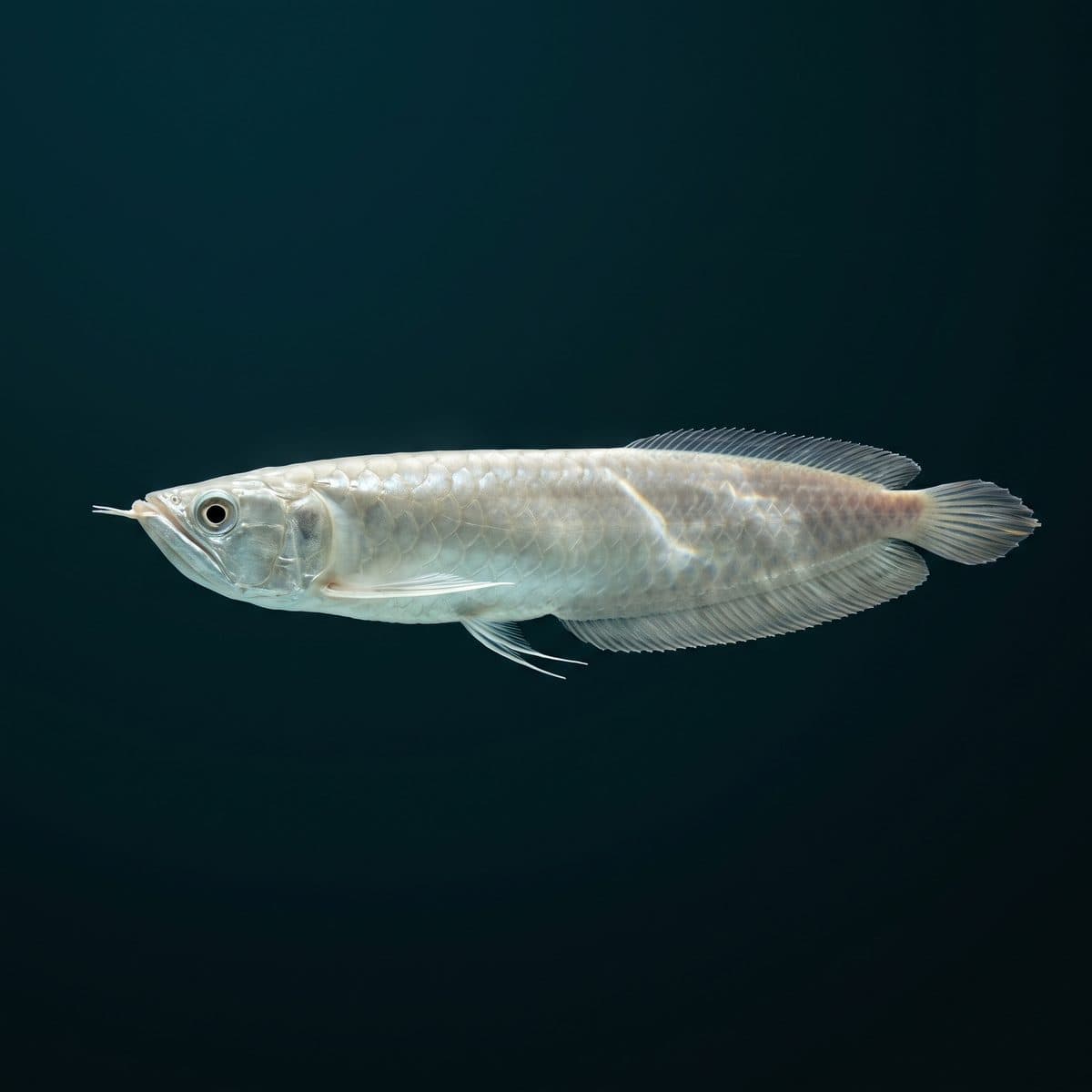
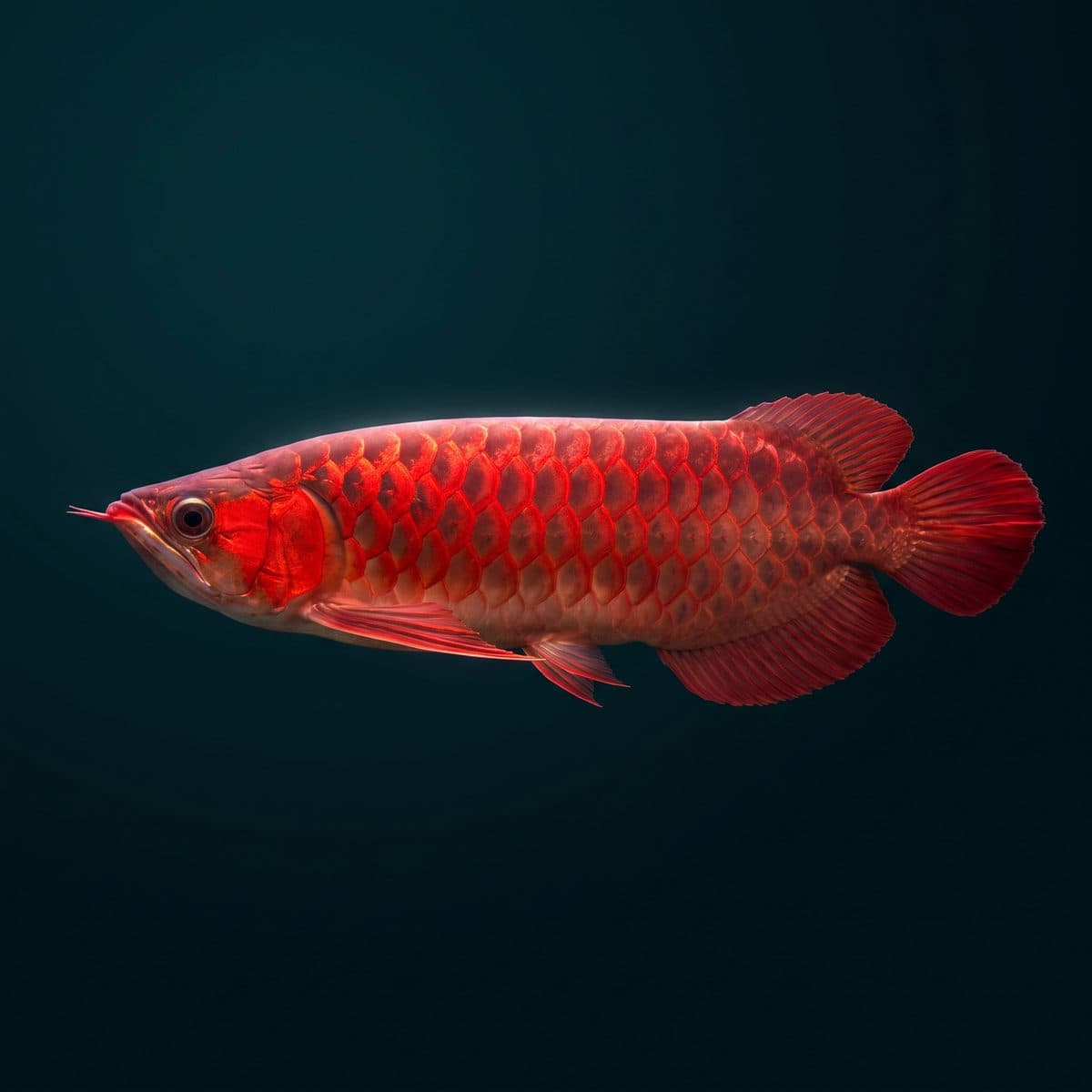
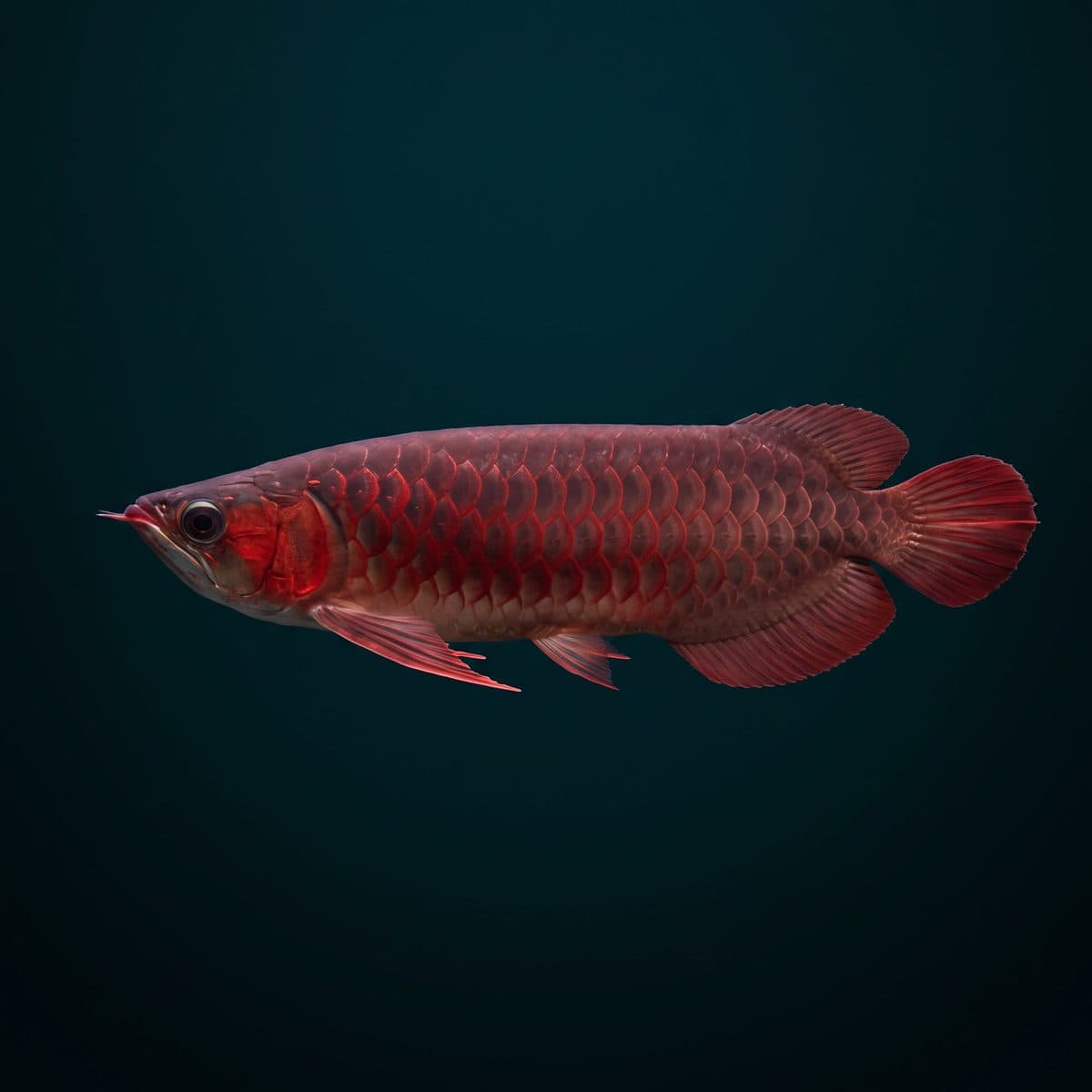
11. Arowana
Scientific name: Scleropages formosus (Asian), Osteoglossum bicirrhosum (Silver) | Adult size: 60–100 cm | Min tank: 240 gal (Asian), 300 gal (Silver) | Difficulty: Advanced
The crown jewel of the large freshwater fish hobby. Asian Arowana are CITES-listed, available only as captive-bred specimens, and range from $300 (Silver Arowana) to $400,000+ (Platinum morph). Their surface-patrol swimming, dramatic jumping behaviour, and metallic colouration make them unlike any other freshwater species. See our Arowana care guide and Arowana collection.
12. Freshwater Stingray
Scientific name: Potamotrygon spp. | Adult size: 40–60 cm disc diameter | Min tank: 300 gal (8 × 4 ft footprint) | Difficulty: Advanced
Freshwater stingrays from South American river systems are among the most visually stunning large fish available. Species range from the common Motoro Ray ($200–$500) to the Black Diamond Polka Dot Stingray ($1,500–$100,000 for exceptional patterning). They require sand substrate, soft acidic water, and substantial floor space. Browse our stingray collection.
13. Giraffe Catfish
Scientific name: Auchenoglanis occidentalis | Adult size: 50–70 cm (20–28 in) | Min tank: 200 gal | Difficulty: Intermediate
A gentle giant among large catfish. Giraffe Catfish have distinctive brown-and-cream mottled patterning, a peaceful disposition, and compatibility with a wide range of large tank mates. They are omnivorous and easy to feed. Temperature 23–27 °C, pH 6.5–7.5. An excellent choice for mixed large-fish community tanks.
14. Clown Knife Fish
Scientific name: Chitala ornata | Adult size: 60–100 cm (24–40 in) | Min tank: 200 gal | Difficulty: Intermediate-Advanced
Clown Knife Fish are nocturnal predators with a distinctive blade-shaped body and bold silver-and-black spotted patterning. They generate electric fields to navigate and locate prey in low-light conditions. Despite their predatory nature, they are relatively peaceful with fish too large to eat. They prefer dim lighting, heavy cover, and subdued tank environments. Temperature 24–28 °C, pH 6.0–7.0.
15. MBU Pufferfish
Scientific name: Tetraodon mbu | Adult size: 60–75 cm (24–30 in) | Min tank: 500 gal | Difficulty: Expert
The largest freshwater pufferfish in the world and arguably the most personable aquarium fish alive. MBU Puffers recognise their keepers, beg for food, and display dog-like interactive behaviour. However, they grow enormous, produce massive bioload, and require a constant supply of hard-shelled foods to maintain their beak. Only for keepers with the space and resources for a 500+ gallon system. See our MBU Pufferfish care guide. Temperature 24–26 °C, pH 7.0–8.0.
Large Community-Friendly Species
16. Giant Gourami
Scientific name: Osphronemus goramy | Adult size: 40–60 cm (16–24 in) | Min tank: 200 gal | Difficulty: Intermediate
Giant Gouramis are among the most intelligent freshwater fish, recognising individual humans and capable of learning simple tricks. Juveniles are attractively striped; adults develop a solid greyish body with a prominent forehead. They are largely herbivorous (unusual for a large fish), eating vegetables, fruits, and commercial pellets. Peaceful with large tank mates but territorial with conspecifics. Temperature 24–28 °C, pH 6.5–8.0.
17. Silver Dollar
Scientific name: Metynnis spp. | Adult size: 15–20 cm (6–8 in) | Min tank: 75 gal (school of 6+) | Difficulty: Beginner-friendly
Silver Dollars are the perfect dither fish for large predator tanks. They are herbivorous schooling fish that are too large for most predators to eat, active enough to encourage shy tank mates out of hiding, and peaceful with all non-plant species. Keep in groups of six or more. They will destroy live plants, so use artificial plants or robust species like Java Fern. Temperature 24–28 °C, pH 5.5–7.5.
18. Tinfoil Barb
Scientific name: Barbonymus schwanenfeldii | Adult size: 30–35 cm (12–14 in) | Min tank: 125 gal (school of 5+) | Difficulty: Beginner-friendly
Active, fast-swimming schooling fish with metallic silver bodies and red-tipped fins. Tinfoil Barbs are hardy, omnivorous, and peaceful — but their size and activity level demand substantial swimming space. They are excellent companions for large, peaceful community setups alongside Giant Gouramis, Silver Dollars, and non-aggressive catfish. Temperature 22–27 °C, pH 6.5–7.5.
19. Bala Shark
Scientific name: Balantiocheilos melanopterus | Adult size: 25–35 cm (10–14 in) | Min tank: 125 gal (school of 5+) | Difficulty: Intermediate
Bala Sharks are sleek, silver-bodied cyprinids that are frequently underestimated at purchase. Sold as 5 cm juveniles, they grow to 30+ cm and require schooling groups and significant swimming space. In an appropriately sized tank, they are active, hardy, and visually impressive. They are jumpers — a secure lid is mandatory. Temperature 22–28 °C, pH 6.5–7.5.
20. Dragon Goby
Scientific name: Gobioides broussonnetii | Adult size: 35–60 cm (14–24 in) | Min tank: 75 gal | Difficulty: Intermediate
The Dragon Goby (also called the Violet Goby) is a bizarre, eel-shaped fish with tiny eyes, a massive mouth, and iridescent purple-blue scales. Despite their fearsome appearance, Dragon Gobies are gentle filter-feeders that sift sand for microorganisms. They require brackish water (SG 1.005–1.015), sandy substrate, and a peaceful environment. See our Dragon Goby care guide. Temperature 24–28 °C, pH 7.5–8.5.
Tank Planning Tips for Large Fish
- Buy the tank for adult size, not juvenile size. Every fish on this list will outgrow a small tank. Budget for the final setup from day one — upgrading mid-growth is stressful for the fish and expensive for you.
- Filtration cannot be oversized. Large fish produce large bioload. A sump rated for 10× turnover is the baseline for predator systems. Supplementary canister filters add critical redundancy.
- Research before you buy. Red Tail Catfish, Clown Knife Fish, and Giant Gouramis are among the most frequently rehomed large fish in the hobby because new keepers underestimate their adult requirements.
- Plan for decades. Many large freshwater fish live 15–25 years. A Silver Arowana purchased today may still be alive in 2046. Make sure your commitment matches the animal's lifespan.
- Source from specialists. The Fish Collection offers expert guidance on species selection, tank planning, and ongoing care support for every large freshwater fish in our inventory.