Overview
The Sanke's origin is traced to the Taisho period in Niigata Prefecture, Japan, where breeders of Kohaku (red-and-white koi) occasionally produced offspring with additional black markings. Rather than discarding these fish, breeders recognised the aesthetic potential of the tri-colour combination and began selectively developing the variety. By the mid-20th century, the Sanke had been refined into a distinct variety with its own judging standards, and it had taken its place alongside the Kohaku and Showa as one of the Gosanke — the three varieties that dominate high-level koi competitions worldwide.
A truly exceptional Sanke — with snow-white skin, deep crimson hi, jet-black sumi, and perfect pattern balance — is widely regarded as the pinnacle of koi aesthetics. Grand Champions at the All Japan Koi Show (the "Olympics" of the koi world) are frequently Sanke, and top-quality specimens from prestigious Japanese breeders can command prices exceeding £100,000.
Pattern Appreciation
Understanding what makes a Sanke beautiful requires familiarity with the three elements of its pattern:
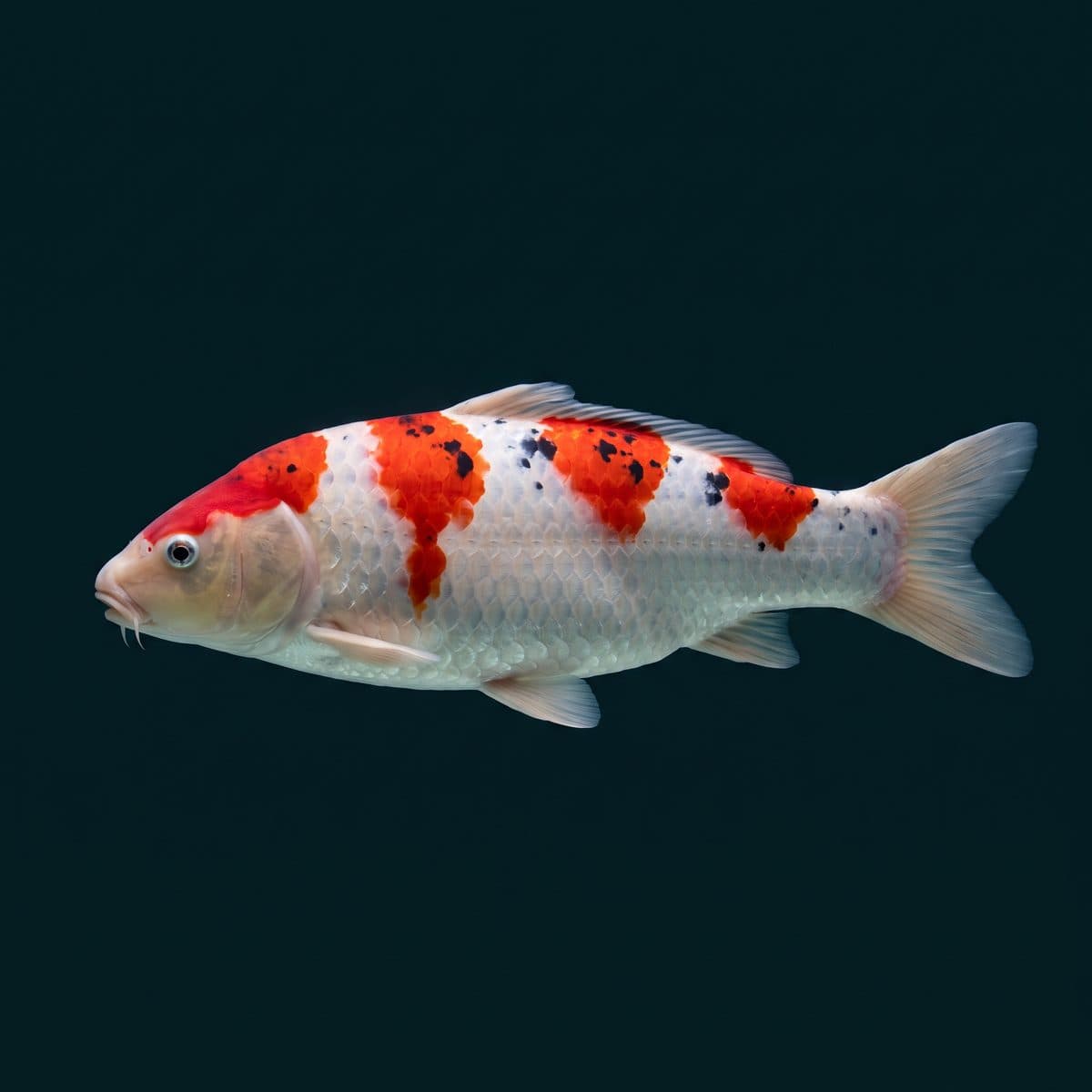
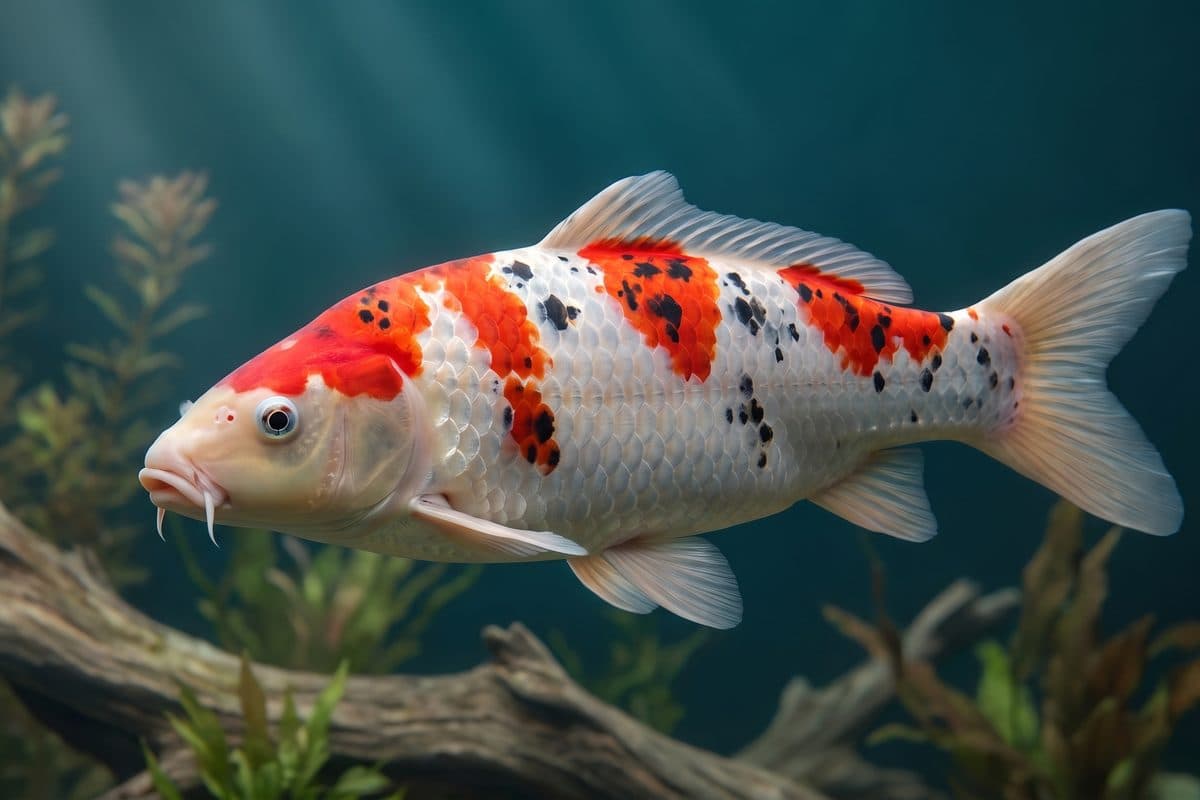
Shiroji (white base): The foundation of any Sanke. The white should be pure, snow-white — not yellowish, greyish, or creamy. The quality of the shiroji is often the first thing a judge evaluates, as it provides the "canvas" against which the red and black elements are displayed.
Hi (red markings): Should be deep, uniform crimson — not orange, pink, or blotchy. The hi pattern should be well-distributed across the body, ideally starting on the head, continuing across the back in a stepping pattern, and finishing before the tail (leaving a clean white tail peduncle, called "odome"). The hi should have clean, sharp edges (kiwa) where it meets the white — blurry or feathered edges are a fault.
Sumi (black markings): The element that distinguishes Sanke from Kohaku. Sumi on a Sanke should be glossy, lacquer-black spots distributed strategically on the body to complement and balance the hi pattern. Critical rules for Sanke sumi:
- Sumi should appear on the body and pectoral fins, but never on the head (this is the primary rule separating Sanke from Showa).
- Sumi spots should be small-to-medium in size, well-defined, and placed to create visual balance with the hi pattern.
- Tejima — black stripes in the pectoral fins — are highly valued on Sanke and are considered an indicator of quality bloodline.
Sanke vs Showa
Sanke and Showa Sanshoku are the two tri-colour koi varieties and are frequently confused. The definitive differences:
- Sanke: White base + red + black. Sumi appears as accent spots on a white canvas. No sumi on the head. The overall impression is white fish decorated with red and black.
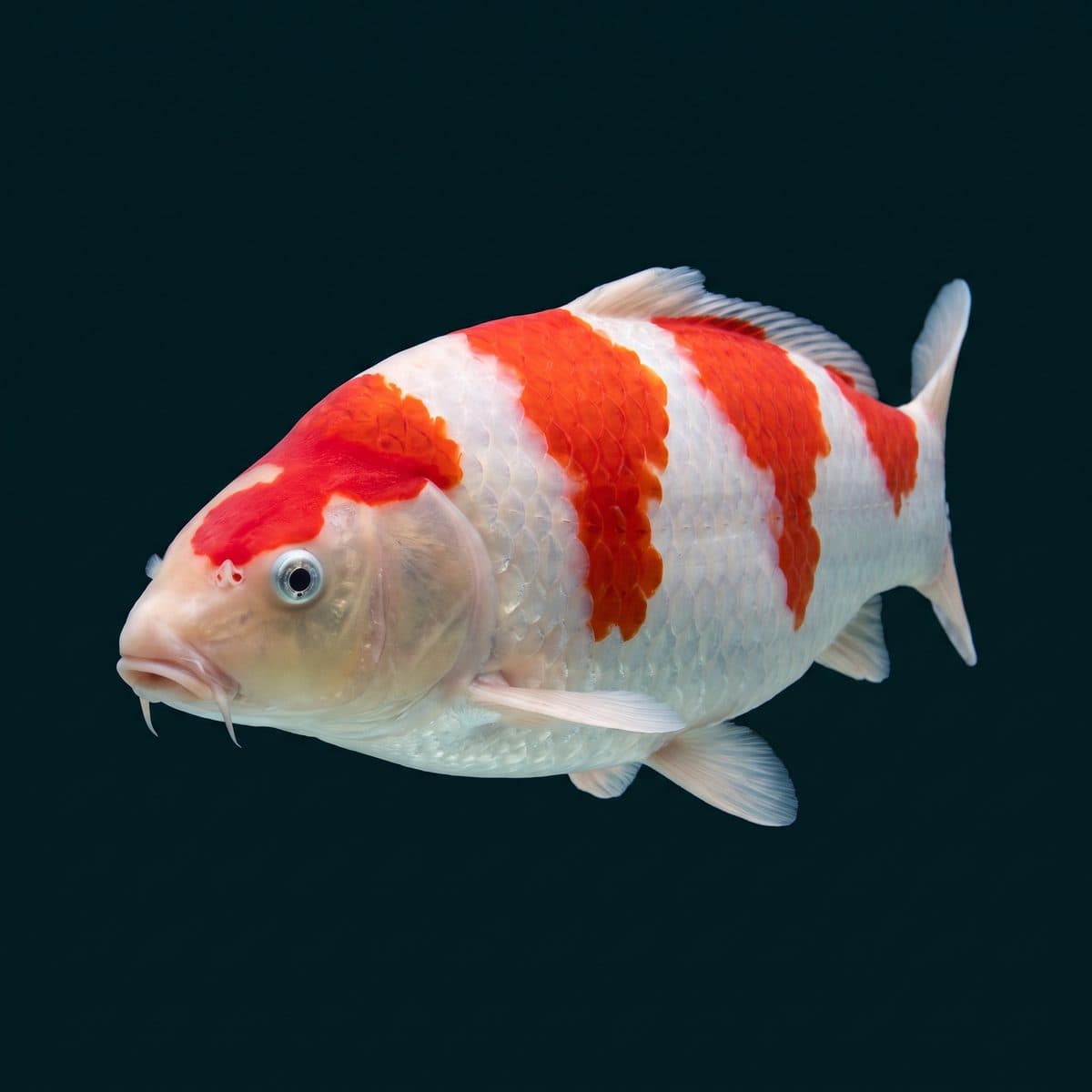
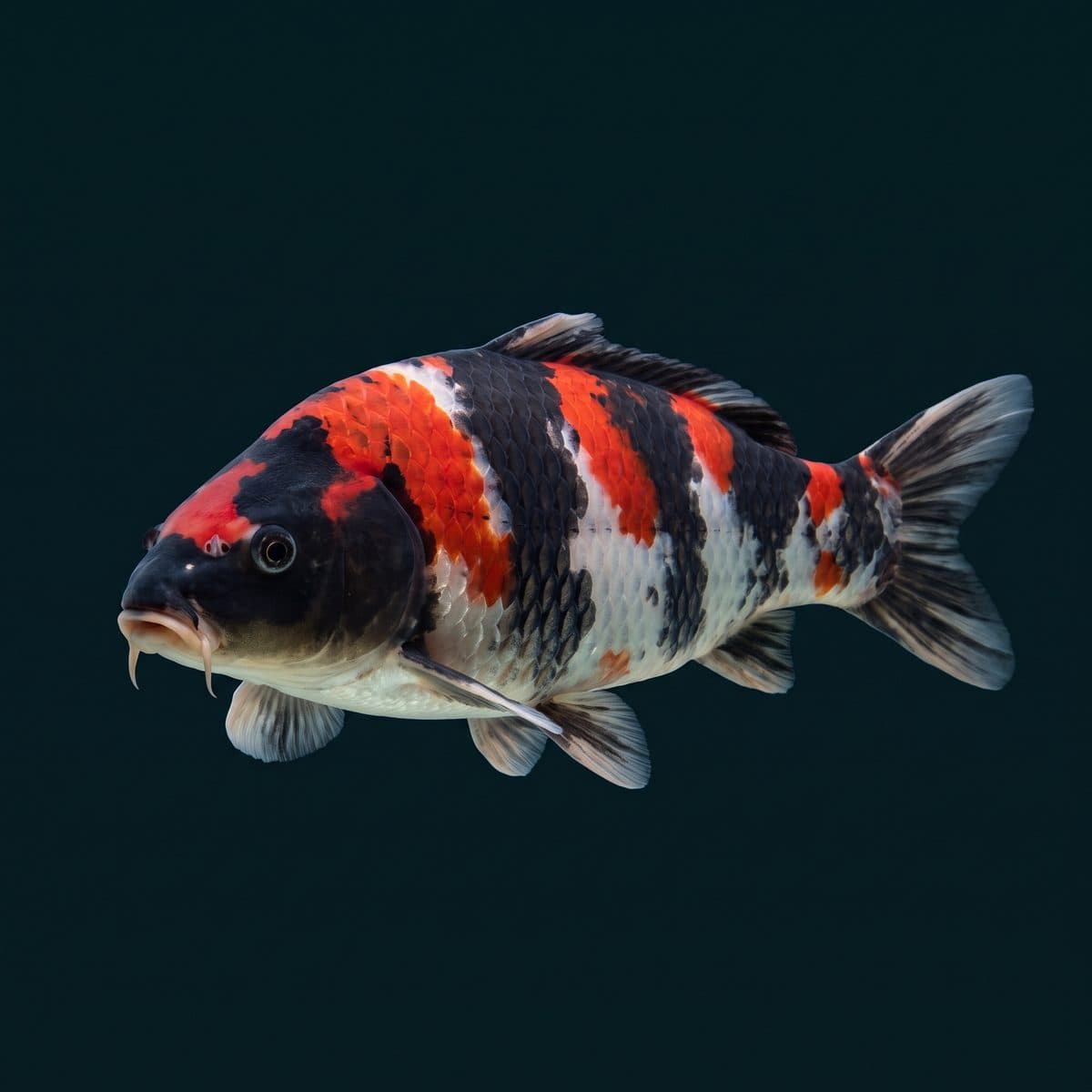
- Showa: Black base + red + white. Sumi is the dominant colour, wrapping around the body. Sumi appears on the head (usually as a dramatic black pattern element). The overall impression is a black fish with red and white markings breaking through.
The simplest field identification: if the head has black, it's a Showa. If the head is only white and red, it's a Sanke. However, modern breeding has blurred these lines — some Sanke carry deep sumi that develops late and changes the initial classification, and some Showa have been lightened to look more Sanke-like. Expert evaluation considers the overall body pattern, scale structure, and parentage.
Selection Criteria
When selecting a Sanke, evaluate:
- Shiroji quality: Pure, porcelain white. Reject fish with yellowish or dingy white.
- Hi quality: Deep, even crimson with clean edges. The hi pattern should be balanced left-to-right across the body.
- Sumi quality: Glossy black, well-defined spots. Note that young Sanke often have undeveloped sumi that will intensify with age — buying from reputable breeders helps predict sumi development.
- Body conformation: Torpedo-shaped, well-proportioned body. Good body shape is the foundation that carries the pattern.
- Skin quality: Lustrous, healthy sheen. Quality skin is often the difference between a good koi and a great one.
Pond Requirements
Sanke require the same pond setup as all koi — they are the same species with no special infrastructure needs:
- Pond size: 1,000 gallons (3,785 L) minimum; 2,000+ gallons recommended. Larger ponds produce larger, healthier koi with better colour development.
- Depth: 4 feet (1.2 m) minimum for predator protection and temperature stability.
- Filtration: Multi-stage pond filtration: mechanical (settlement chamber, drum filter, or brush media), biological (moving bed, static media, or bead filter), and UV sterilisation. Target turnover of the entire pond volume every 1–2 hours.
- Aeration: Pond air pumps or venturi returns for adequate dissolved oxygen.
Water Parameters
- Temperature: 59–77 °F (15–25 °C) for active feeding; koi tolerate winter temperatures near freezing with reduced feeding.
- pH: 7.0–8.5.
- Ammonia/Nitrite: 0 ppm.
- Nitrate: Below 40 ppm.
- KH: 100+ ppm to maintain pH stability.
Diet & Colour Enhancement
Standard koi nutrition applies, with colour-specific considerations:
- Staple: High-quality koi pellets with 30–40% protein (spring through autumn). Reduce to wheatgerm-based, lower-protein feed as water temperature drops below 60 °F (15 °C).
- Colour enhancement: Spirulina and astaxanthin supplements enhance hi intensity. Feed colour-enhancing food 2–3 times weekly during the growing season. Avoid over-supplementation, which can cause hi to bleed into the shiroji — a serious fault.
- Supplements: Fresh fruit (orange slices, watermelon), blanched lettuce, and shelled peas as treats.
An important note for Sanke specifically: colour enhancers that intensify red can also cause a yellowish tinge in the shiroji if overused. Balance colour-enhancing food with standard growth food to maintain pure white skin quality.
Pattern Development Over Time
Sanke patterns evolve significantly as the fish grows:
- Tosai (year one): Hi is usually well-established but may be light or orange. Sumi may be faint, spotty, or nearly invisible — this is normal. Many quality Sanke look like Kohaku at this stage.
- Nisai (year two): Hi deepens to crimson. Sumi begins to emerge and define itself. The overall pattern starts to take shape.
- Sansai (year three): The fish begins to express its mature pattern. Sumi solidifies into defined spots. Body shape approaches adult proportions.
- Year four and beyond: Pattern continues to refine. In well-bred Sanke, the sumi continues to develop and improve with age, sometimes not reaching full expression until 5–7 years old.
This extended development timeline is why experienced koi keepers often say "you can't judge a Sanke until it's three years old." Patience is rewarded.
Sanke Bloodlines
As with all high-end koi, a Sanke's bloodline tells you a great deal about how it will develop, and serious buyers pay close attention to which breeder produced a fish. Generations of selective breeding at particular Japanese farms have fixed distinct Sanke characteristics — especially in the sumi, the black element that's the hardest to predict in any young koi.
The most storied Sanke bloodline is Matsunosuke, prized for a deep, glossy sumi that emerges from beneath the skin and finishes late but spectacularly. Other respected houses include Sakai Fish Farm, Torazo, and Kanno, each with its own signature — some producing bright, early-developing hi, others emphasising body shape or a particular sumi character. These aren't rankings so much as different expressions of the Sanke ideal.
For a keeper, the practical use of bloodline is forecasting. Because Sanke sumi can take five to seven years to reach its full expression, a known lineage gives you and the breeder a realistic basis to predict what a young fish will become. When you buy a quality tosai or nisai, you're paying partly for the fish today and partly for the genetic promise of the adult it's likely to grow into. If you're aiming for show quality, choosing a fish from a proven Sanke bloodline is one of the smartest moves you can make.
Seasonal Care
Sanke are kept exactly as any other koi through the year, and matching your care to water temperature is central to their health and colour. Spring and summer, with the pond in the 68–77 °F range, are the growing season: feed quality high-protein koi food several times a day, run filtration hard, and enjoy the deepening of the hi and the strengthening body.
As autumn arrives and the water cools, scale back feeding and shift to a lower-protein, wheatgerm-based food that digests more easily in the cold. Once the pond falls below about 50 °F (10 °C), stop feeding altogether — a koi simply can't digest food at low temperatures, and anything left in the gut can rot and cause fatal problems. This single rule prevents one of the most common winter losses in koi keeping.
Winter sees koi go dormant, resting near the bottom of a deep pond where the temperature is most stable. A depth of at least 4 feet and a de-icer or air stone to keep a gap in any ice for gas exchange will carry them through safely. A quick word on colour: while the deepest sumi in tri-colour koi is helped along by cooler water, Sanke keepers should be careful not to let colour-feeding and warmth push the hi to bleed — clean, stable, seasonally appropriate conditions produce the best long-term colour.
Health & Common Problems
Sanke share the health profile of all koi — the same species, the same concerns — and as always the pond's water quality is the foundation everything rests on. The main issues to watch for:
- Parasites: Flukes, ich, costia, and trichodina cause flashing, rubbing, and clamped fins, and most commonly arrive on new, un-quarantined fish.
- Bacterial ulcers and fin rot: Red sores and ragged fins from Aeromonas-type bacteria, usually following injury or taking hold in poor water. Prompt treatment is important.
- Koi Herpesvirus (KHV): A serious, frequently fatal virus that switches on in warmer water around 63–77 °F. There's no cure, so quarantine is the only reliable protection.
- Spring vulnerability: Koi emerge from winter with weakened immunity and are especially prone to ulcers and infection during the spring warm-up. A stable, clean pond eases them through.
The cornerstone of koi health is a long, strict quarantine — at least four weeks in a heated holding tank — for every new fish, however reputable the source. There's a particular reason to be careful with a Sanke: its clean white shiroji shows every flaw, and a bacterial infection or parasite damage that mars that white can ruin an otherwise beautiful fish. Combine diligent quarantine with strong filtration, low nitrate, and stable parameters, and a Sanke will thrive for 25–35 years or more.
Buying a Sanke — What to Look For
Buying a Sanke rewards a good eye and a little patience, because the variety changes so much as it matures. Young Sanke often look like plain Kohaku, their sumi still faint or hidden, so what you're really assessing in a tosai is potential as much as present beauty. As experienced keepers say, you can't truly judge a Sanke until it's around three years old.
Start with the fundamentals that carry any pattern: a strong, well-proportioned torpedo-shaped body and lustrous, healthy skin. Then evaluate the three colour elements. The shiroji should be pure, porcelain white — reject dingy or yellowish white, as it's the canvas everything else sits on. The hi should be deep, even crimson with clean, sharp edges (kiwa). The sumi should be glossy and well-placed, and remember it will develop and intensify over years, so faint sumi in a young fish from a good bloodline is promising rather than disqualifying. Tejima — black striping in the pectoral fins — is a prized sign of quality.
Match your expectations to your budget and goals. Pet-grade Sanke start around £20–£50 and make lovely pond fish; pond-quality Japanese fish run into the hundreds; and show-grade specimens from prestige breeders reach into the thousands and beyond. Whatever the level, buy from a seller who quarantines properly and can speak to the fish's bloodline and likely development — with Sanke, that knowledge is worth as much as the fish itself.