Overview
The Altum Angelfish (Pterophyllum altum) is the crown jewel of the angelfish genus and, for many experienced aquarists, the most beautiful freshwater fish in existence. First described by Pellegrin in 1903 from specimens collected in the Atabapo River (a blackwater tributary of the upper Orinoco in Venezuela), P. altum has maintained its reputation as the "true" wild angelfish — an animal whose dramatic proportions, subtle colouration, and demanding husbandry requirements set it categorically apart from the domesticated P. scalare varieties that dominate the hobby.
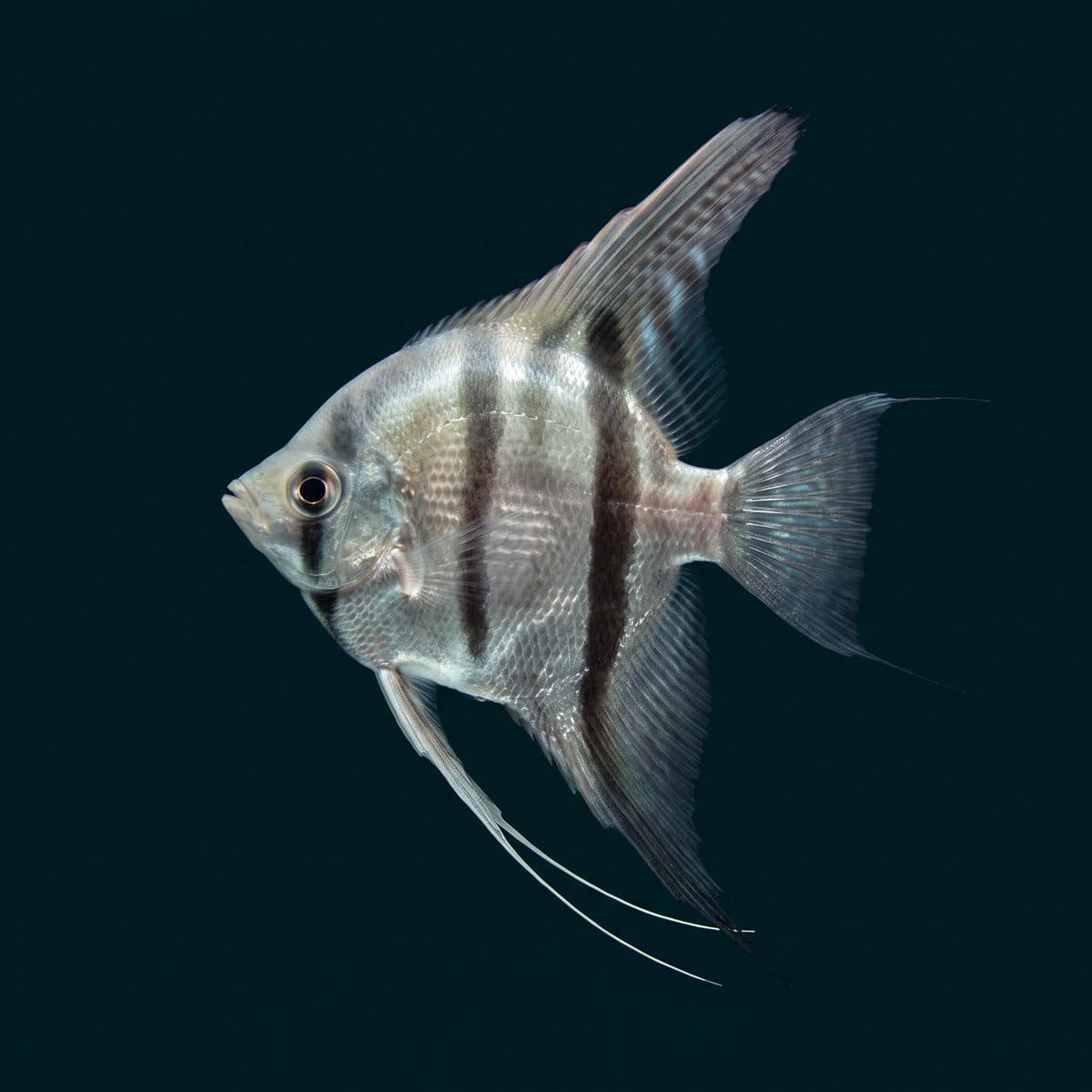
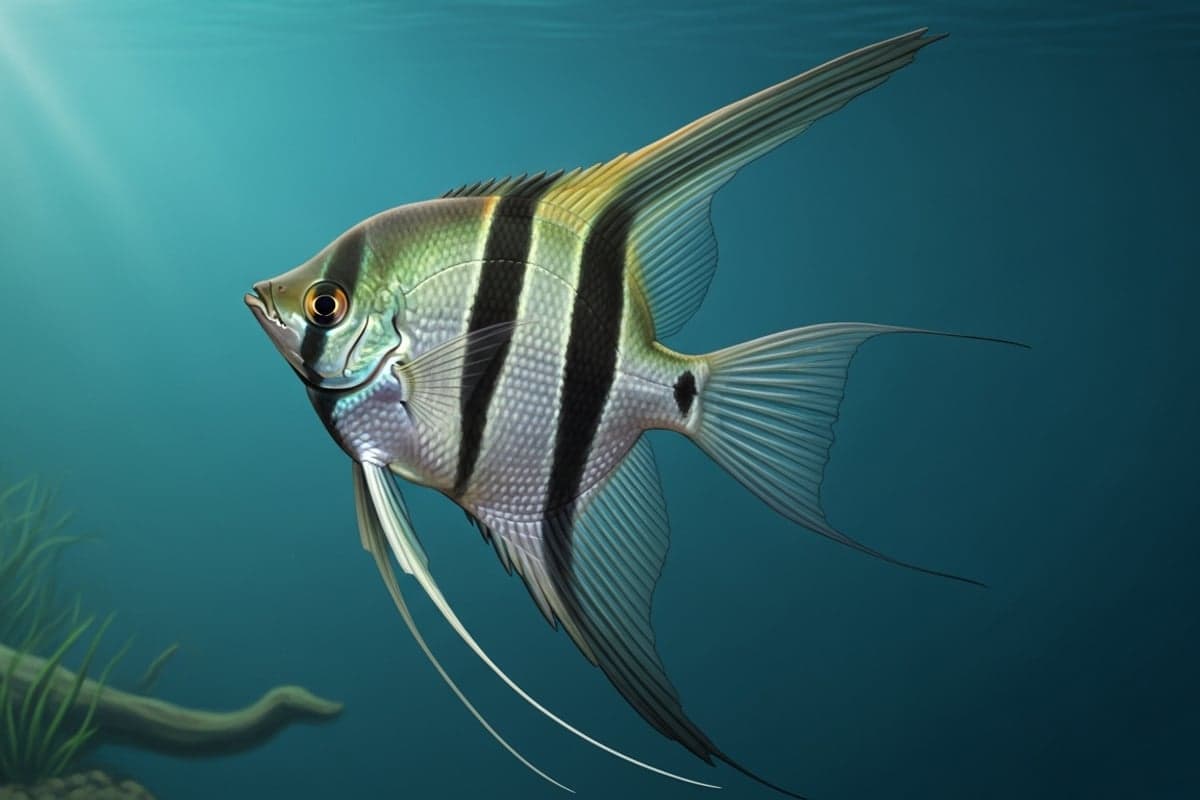
What distinguishes the Altum from all other angelfish is its extraordinary vertical dimension. A mature Altum can measure 18 cm from nose to caudal fin base — comparable to a large domestic scalare — but its extended dorsal and anal fins push the total fin-to-fin height to 40+ cm, creating a dramatically tall, laterally compressed silhouette that is unmistakable. The body displays subtle olive-green to silver base colouration with three bold dark vertical bars (a fourth, fainter bar crosses the caudal peduncle), a distinctive notch in the forehead profile above the eye, and a reddish-brown suffusion on the dorsal surface that intensifies with age and confidence.
At The Fish Collection, we import Altum Angelfish directly from our collection partners on the Atabapo and Inírida rivers in Colombia and Venezuela. We consider every Altum shipment a high-stakes operation — import mortality for this species runs 10–30% even under optimal conditions, and post-import losses from delayed acclimation failure can push that figure higher. The fish that survive acclimation and settle into a properly maintained aquarium are, however, extraordinarily hardy and can live well over a decade. This guide distils our hard-won experience into a practical protocol for the aquarist willing to accept the challenge. For more on our broader angelfish species collection, visit the category page.
Natural Habitat
Pterophyllum altum is restricted to the upper Orinoco River basin and the upper Rio Negro drainage — specifically the blackwater tributaries of the Atabapo, Inírida, Guainía, and upper Negro rivers along the Colombia-Venezuela border. These are among the most chemically extreme freshwater environments on Earth: pH ranges from 3.5 to 5.5, conductivity is typically below 20 µS/cm (corresponding to near-zero mineral content), and the water is stained a deep tea-brown by dissolved humic and fulvic acids leached from decomposing rainforest vegetation.
Water temperature in these habitats is consistently warm — 27–31 °C year-round with minimal seasonal variation. Dissolved oxygen is moderate (4–6 mg/L) and current is slow. The substrate is typically fine white sand overlain by a deep layer of decomposing leaf litter. Vegetation includes submerged root tangles from riparian trees, fallen branches, and occasional stands of aquatic grasses. Altum Angelfish are found in groups of 5–20 individuals sheltering among submerged root structures and branch tangles, typically at depths of 1–3 metres.
The extreme blackwater chemistry of the Altum's habitat is not merely a preference — it is a physiological requirement that has profound implications for captive care. The acidic, mineral-free water suppresses bacterial and fungal pathogens, meaning wild Altum have evolved with a weakened immune response to the pathogens that thrive in neutral or alkaline aquarium water. When imported into standard aquarium conditions (pH 7.0, moderate hardness), their immune system is poorly equipped to combat the exponentially higher pathogen load, and this mismatch is the primary driver of the notorious import mortality associated with the species.
Altum vs. Scalare: Identification
Misidentification is rampant in the angelfish trade. Many fish sold as "Altum Angelfish" are actually wild-caught P. scalare from various localities, or even domestic scalare bred to mimic the Altum's appearance. True P. altum can be distinguished from P. scalare by the following characteristics:
- Forehead profile: P. altum has a distinctive steep, concave notch (saddle) above the eye in the forehead profile. P. scalare has a smoother, more convex forehead.
- Body proportions: P. altum is proportionally taller relative to body length. The distance from dorsal spine tip to anal spine tip dramatically exceeds body length in mature specimens.
- Vertical barring: The bars in P. altum are typically darker, broader, and more sharply defined than in wild P. scalare, with a characteristic reddish-brown hue between the bars.
- Scale count: The definitive diagnostic: P. altum has 46–48 lateral line scales; P. scalare has 33–38. This requires close examination but is the only foolproof identification method.
- Origin: True P. altum are collected exclusively from the upper Orinoco/upper Negro drainages. Fish from the Amazon, Essequibo, or any other river system are P. scalare or P. leopoldi, regardless of what the seller claims.
Purchase Altum Angelfish only from reputable importers who can verify collection locality. The Fish Collection provides collection-site documentation for every Altum we sell.
Tank Requirements
Tank Dimensions & Aquascaping
The defining tank requirement for Altum Angelfish is height. A minimum internal water height of 55 cm (22 inches) is essential to accommodate the species' extraordinary fin span — and 60–70 cm is strongly preferred. Standard 55-gallon tanks (50 cm tall) are marginal; 75-gallon tanks (55 cm tall) are the practical minimum. For a group of 6 adults (the recommended social configuration), a 100–125 gallon tank with dimensions of at least 150 × 45 × 60 cm (length × width × height) is ideal.
Aquascaping should replicate the flooded-forest environment: vertical driftwood branches extending from substrate to near the surface, dense stands of tall Vallisneria or Amazon Swords, and a base layer of Indian almond leaves over fine sand substrate. The leaves serve dual purposes — they provide cover that makes the fish feel secure and they release tannins that acidify and buffer the water. Floating plants (Amazon Frogbit, Ceratopteris) diffuse overhead light and complete the blackwater biotope aesthetic.
Leave ample open swimming space in the mid-water column between driftwood structures. Altum Angelfish are mid-water dwellers that need vertical clearance to extend their fins fully and horizontal space to cruise gracefully through the tank. Overcrowding with décor is as problematic as overcrowding with fish.
Filtration & Flow
Target a turnover rate of 6–8× the tank volume per hour using a canister filter with an emphasis on biological filtration. In the extremely soft, acidic water required for Altum, the biological filter bacteria (Nitrosomonas and Nitrobacter) operate at reduced efficiency — nitrification slows significantly below pH 6.0 and can cease almost entirely below pH 5.0. This means: (a) the biofilter must be oversized to compensate, and (b) stocking density must be conservative to avoid overwhelming the diminished nitrification capacity.
Supplement the canister filter with a large air-driven sponge filter — the sponge provides additional biological surface area that is particularly effective in acidic conditions. Peat filtration (Seachem Peat or equivalent, placed in a filter media bag in the canister) is an excellent addition that releases humic acids, naturally lowers pH, and imparts the tannin staining that characterises blackwater habitats.
Flow should be gentle. Altum Angelfish are adapted to slow-moving or nearly still water and struggle in strong currents. A spray bar distributing flow along the back panel, or a lily pipe outlet creating a gentle circular flow pattern, is ideal. Avoid powerheads or wavemakers.
Lighting
Low lighting is essential. In nature, the combination of dense canopy overhead and deeply tannin-stained water means Altum Angelfish live in near-twilight conditions. Bright aquarium lighting causes chronic stress, pale colouration, and hiding behaviour. A dimmable LED at 20–40% intensity, heavily supplemented by floating plant cover, creates the subdued, warm-toned ambience that brings out the best in both the fish and the blackwater aquascape. Tannin-stained water itself acts as a natural light filter, attenuating blue wavelengths and producing the characteristic amber glow of a healthy blackwater biotope.
Water Parameters
Water chemistry is the make-or-break factor in Altum Angelfish care. The species demands conditions that most aquarists would consider extreme:
- Temperature: 28–30 °C (82–86 °F). Altum prefer significantly warmer water than domestic scalare. The elevated temperature increases metabolic rate and pathogen growth, making excellent water quality even more critical.
- pH: 4.5–6.5. The target range for long-term maintenance is 5.0–6.0. Newly imported wild-caught fish should be maintained at the low end (pH 4.5–5.5) initially and only gradually adjusted upward if necessary.
- General Hardness (GH): 0–3 dGH (0–54 ppm). Near-zero mineral content is the goal. An RO/DI system is virtually mandatory unless your tap water is naturally very soft.
- Carbonate Hardness (KH): 0–1 dKH. At this level, pH stability comes from humic/fulvic acid buffering (from tannins) rather than carbonate buffering. This requires a fundamentally different approach to water chemistry management than most freshwater systems.
- Ammonia / Nitrite: 0 ppm. In acidic water, ammonia exists primarily as the less-toxic ammonium ion (NH₄⁺), but nitrite remains fully toxic regardless of pH. Vigilant monitoring is essential.
- Nitrate: <10 ppm. Keep as low as possible.
- Conductivity: 10–80 µS/cm. This ultra-low conductivity is achieved using pure RO/DI water remineralised with only enough mineral content to support basic physiological function.
The practical reality of maintaining these parameters: you need an RO/DI unit producing water at 0 TDS, a reliable pH controller or monitoring system, a steady supply of tannin-producing materials (Indian almond leaves, driftwood, peat), and the discipline to perform frequent small water changes (10–15% twice weekly) with RO water conditioned to match the tank's chemistry. Large, infrequent water changes are dangerous in blackwater systems because they can cause rapid pH swings in the absence of carbonate buffering.
Acclimation Protocol
Acclimation is the single most critical period in the life of a captive Altum Angelfish. The species is notorious for delayed mortality — fish that appear healthy for the first 48–72 hours after arrival can suddenly crash and die over the subsequent 1–2 weeks. This delayed mortality is caused by the cumulative physiological stress of transport and the transition from collection-site water (pH 4.0–5.0, negligible conductivity) to shipping water (which may drift to pH 6.0+ during transit due to CO₂ accumulation and buffering from organic waste).
Our recommended acclimation protocol:
- 1. Prepare the receiving tank: The tank must be fully cycled and maintained at pH 5.0–5.5, temperature 29 °C, and conductivity below 50 µS/cm before the fish arrive. Do not attempt to acclimate Altum into neutral or alkaline water — this is the single most common cause of import failure.
- 2. Drip acclimation: Float the shipping bag for 20 minutes to equalise temperature, then begin a slow drip (2–3 drops per second) from the receiving tank into the bag. Continue for a minimum of 2 hours, extending to 3–4 hours if the shipping water pH differs by more than 1.0 unit from the tank water.
- 3. Transfer: Net the fish gently and transfer to the receiving tank. Discard the shipping water — never add it to the tank.
- 4. Blackout period: Keep the lights off for the first 48 hours. Minimise all disturbance — do not tap the glass, do not attempt to feed, do not perform maintenance.
- 5. First feeding: After 48–72 hours, offer a small amount of live food (blackworms, daphnia). Do not be alarmed if the fish refuse — appetite may take a week to return.
- 6. Prophylactic treatment: Many importers recommend a low-dose prophylactic treatment with metronidazole (125 mg per 40 L) and praziquantel (PraziPro at half dose) during the first week to address the internal parasites that are nearly universal in wild-caught Altum. Administer only after the fish have settled and are showing normal posture and fin extension.
Diet & Feeding
Altum Angelfish are carnivorous and strongly prefer live and frozen foods over prepared diets. The key dietary challenge is persuading newly imported wild-caught fish to eat — many will refuse all food for the first 5–10 days after arrival, and some individuals hold out for longer. Patience and the right food offerings are essential.
Optimal dietary components:
- Live blackworms: The single most effective food for acclimating new Altum. Place a small cluster on the substrate and allow the fish to graze at their own pace. The worms' natural movement triggers the feeding response even in stressed individuals.
- Frozen bloodworms: The daily staple for established fish. Thaw in a small cup of tank water and release near the group's preferred resting area.
- Live daphnia and moina: Excellent for stimulating feeding in reluctant individuals and providing dietary variety.
- Frozen mysis shrimp: A high-quality protein source readily accepted by acclimated fish.
- Frozen brine shrimp: Supplementary food with lower nutritional density than mysis or bloodworms.
- Quality pellets: Some long-term captive Altum can be trained to accept small sinking pellets (New Life Spectrum Small Fish Formula, Northfin Community). This is a gradual process — begin by mixing a few pellets with frozen bloodworms and increase the ratio over weeks.
Feed twice daily in small amounts. Altum are deliberate feeders that pick at food items individually rather than gulping them. Remove uneaten food within 15 minutes to protect water quality. In a well-established blackwater system, a healthy population of microfauna (copepods, ostracods, rotifers) will develop naturally and provide continuous supplemental grazing between scheduled feedings.
Behaviour & Temperament
Altum Angelfish are gregarious, moderately territorial cichlids that are best kept in groups of 5–8 individuals. In a properly sized tank, the group establishes a loose hierarchy with a dominant pair occupying the central territory and subordinate individuals maintaining respectful distances. Aggression is expressed through lateral displays, fin flaring, and brief chases — serious combat is rare in adequately spaced groups. The species is significantly less aggressive than many Amazonian cichlids and can be characterised as "assertive but civil."
Their behaviour in a well-maintained blackwater aquarium is captivating. The group drifts slowly through the aquascape in a loose formation, fins fully extended, pausing to investigate driftwood surfaces and leaf litter. Dominant individuals develop intensified vertical barring and a reddish-brown dorsal suffusion that deepens with confidence and maturity. Stressed or subordinate fish display pale, washed-out colouration — a clear visual indicator of the group's social dynamics.
Altum are sensitive to environmental disturbance. Sudden lighting changes, loud noises, and unfamiliar movements outside the tank trigger a panic response — the group bolts as a unit and can collide with tank walls or décor, potentially damaging their delicate extended fins. Approach the tank calmly, avoid tapping the glass, and use dawn/dusk ramping on your light timer to prevent the startle response caused by lights switching on abruptly.
Compatible Tank Mates
Tank mates must tolerate the extreme water chemistry (pH below 6.0, near-zero hardness) and warm temperatures (28–30 °C) that Altum require. This immediately eliminates most common aquarium species. Compatible options include:
- Cardinal Tetras (Paracheirodon axelris): Wild-caught Cardinals from the same blackwater habitats are the quintessential Altum companion — a tight school of 20+ Cardinals creates a stunning biotope display.
- Rummynose Tetras (Hemigrammus rhodostomus): Another soft-water South American tetra that thrives in acidic blackwater conditions.
- Corydoras species: C. sterbai and C. adolfoi tolerate warm, acidic water well and serve as peaceful bottom-zone companions.
- Apistogramma species: Small dwarf cichlids like A. agassizii or A. cacatuoides occupy the bottom-to-mid-water zone and add colour without competing with the Altum's mid-water territory.
- Otocinclus: Gentle algae grazers that tolerate soft, acidic conditions.
Avoid any fish that nips fins (Tiger Barbs, Serpae Tetras), aggressive cichlids, and any species that requires hard, alkaline water. Also avoid very small fish (neon tetras under 2 cm) that adult Altum may consume.
Breeding
Breeding Altum Angelfish in captivity is the holy grail of angelfish keeping — achieved by very few aquarists worldwide. The species is extremely reluctant to spawn under captive conditions, and the handful of successful breeding reports share several common elements: a mature group (4+ years old) in a large, established blackwater system (150+ gallons), pH maintained below 5.5 with conductivity under 30 µS/cm, and a prolonged conditioning period with heavy live-food feeding.
Spawning, when it occurs, follows the typical angelfish pattern: a bonded pair cleans a vertical surface (driftwood, leaf, or tank glass), and the female deposits 100–300 adhesive eggs in neat rows. The male follows, fertilising each row. Both parents guard the spawn aggressively. Eggs hatch in 48–60 hours at 29 °C, and fry become free-swimming approximately 5 days post-hatch.
The primary barrier to captive breeding is pair formation. Altum do not pair reliably in the artificial social environment of an aquarium, and forced pairing (isolating a male and female together) typically results in aggression rather than bonding. The best strategy is to raise a group of 8–10 juveniles to adulthood and allow natural pair bonds to form — a process that requires 4–5 years of patience. Even then, many groups never produce a breeding pair. If you succeed, the accomplishment places you in elite company among freshwater aquarists worldwide.
Common Health Issues
Acclimation Shock & Import Mortality
The single greatest health risk for Altum Angelfish is the transition from wild collection to captive conditions. Import mortality rates of 10–30% are considered normal for the species, and post-import losses from delayed acclimation failure can raise cumulative mortality to 40–50% in poorly managed imports. The proximate causes of death are multifactorial: osmotic stress from water chemistry differences, immune suppression in the face of unfamiliar pathogen loads, internal parasite burden that becomes lethal under stress, and simple refusal to eat.
Mitigating import mortality requires: purchasing from reputable importers who maintain proper transport protocols, having the receiving tank perfectly prepared at the appropriate acidic, soft-water chemistry before the fish arrive, following the slow drip-acclimation protocol described above, and resisting the temptation to intervene with medications during the first 48 hours (treatment stress can be worse than the condition being treated during the acute acclimation period). Once Altum survive the first 3–4 weeks in captivity and are feeding consistently, they become remarkably robust and can thrive for well over a decade.
Hexamita & Internal Parasites
Internal parasites — particularly Hexamita (flagellate protozoa) and intestinal nematodes — are nearly universal in wild-caught Altum Angelfish. In the wild, the parasites coexist with the host in a balanced relationship mediated by the immune system and the pathogen-suppressive properties of acidic blackwater. In captivity, particularly if water conditions are sub-optimal, this balance tips in favour of the parasites.
Hexamita infection manifests as white, stringy faeces, loss of appetite, emaciation, and — in advanced cases — hole-in-the-head erosion. Treatment with metronidazole (250 mg per 40 L in the water column, or mixed into food at 1% by weight for fish that are still eating) is the standard protocol. Treat for 5 days, then perform a 50% water change. Intestinal nematodes are treated with levamisole (13 mg per gallon, added to the water column) or fenbendazole mixed into food.
Prophylactic deworming during the first 2–4 weeks post-import, once the fish are feeding, is strongly recommended and can prevent the delayed mortality crash that occurs when subclinical parasite loads become clinical under the stress of captive acclimation.