Freshwater Stingray Pricing Overview
Freshwater stingrays (family Potamotrygonidae) are among the most captivating and expensive fish in the freshwater hobby. Native to South American river systems — primarily the Amazon, Xingu, Tapajos, and Tocantins basins — these disc-shaped predators combine alien beauty with genuine interactivity. Many keepers describe their stingrays as "aquatic dogs" that learn to accept food from hand and recognise their owners.
Pricing in the stingray world spans an extraordinary range. A common Motoro ray pup can be had for $250, while a genetically verified Black Diamond Leopoldi with perfect patterning may sell for $50,000–$100,000. Understanding species, size, patterning, and provenance is critical before making a purchase.
Price Ranges by Species
Entry-Level Species ($250–$600)
The most accessible freshwater stingrays for new keepers:
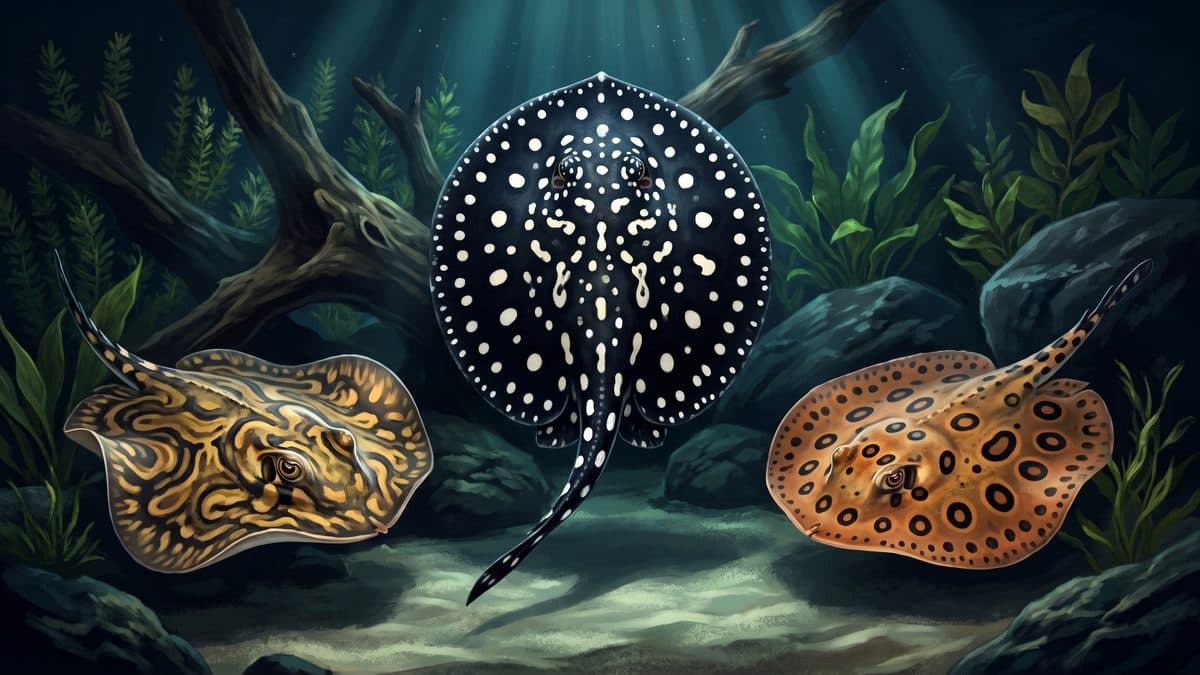
- Motoro Ray (Potamotrygon motoro): $250–$500. The most commonly bred and imported stingray species. Orange or yellow ocelli (eye-spots) on a brown base. Captive-bred pups are widely available and hardy. The ideal starter ray.
- Reticulata Ray (P. orbignyi): $300–$600. Reticulated dark patterning on a lighter base. Less commonly available than Motoro but similarly hardy.
- Scobina Ray (P. scobina): $300–$500. Smaller species with intricate rosette patterning. Stays more manageable in size (disc width to 30 cm).
At this tier, you are entering the stingray hobby at the most practical price point. These species are forgiving of minor husbandry mistakes, widely captive-bred, and readily available from specialist dealers.
Mid-Range Species ($600–$3,000)
Mid-range rays offer more dramatic patterning and greater prestige:
- Hystrix Ray (P. hystrix): $600–$1,500. Dramatic black-and-white contrast with bold spotting. More sensitive than Motoro, requiring pristine water quality.
- Henle's Ray (P. henlei): $800–$2,000. From the Tocantins River. Dark base with white to yellow spots. Desirable for its bold contrast and intermediate availability.
- Itaituba / Pearl Ray (P. sp. "Itaituba"): $1,000–$2,500. Striking pearl-white spots on a jet-black base. Highly sought after for its visual impact.
- Motoro x Leopoldi hybrids: $500–$2,000. Cross-bred specimens that combine Motoro hardiness with Leopoldi patterning. Controversial among purists but popular for their visual appeal and lower price point.
Premium and Rare Species ($3,000–$100,000+)
The apex of the freshwater stingray market:
- Leopoldi Ray (P. leopoldi): $3,000–$10,000. The iconic "Polka Dot Stingray" from the Xingu River. Jet-black base with brilliant white polka dots. Pure Leopoldi are subject to Brazilian export restrictions, making legally sourced specimens expensive.
- Black Diamond Leopoldi: $10,000–$100,000+. A selectively bred variant of the Leopoldi with reduced, highly defined white spots on a deep black base. The most extreme Black Diamond specimens — with perfectly round, evenly spaced spots — have sold for six figures. This is the "Platinum Arowana" of the stingray world.
- Xingu River short-tail varieties: $5,000–$20,000. Various undescribed Potamotrygon species from the Xingu with unique patterning. Availability is extremely limited due to collection restrictions.
Stingray Price Comparison Table
Typical 2026 market prices by species and size:
- Motoro | Pup (4–6 inch disc): $250–$350
- Motoro | Sub-adult (8–12 inch disc): $400–$600
- Hystrix | Pup: $600–$900
- Henle's | Sub-adult: $1,000–$2,000
- Itaituba Pearl | Pup: $1,000–$1,500
- Leopoldi | Pup (captive-bred): $3,000–$5,000
- Leopoldi | Adult (12+ inch disc): $5,000–$10,000
- Black Diamond Leopoldi | Select grade: $10,000–$50,000
- Black Diamond Leopoldi | Extreme grade: $50,000–$100,000+
What Affects Stingray Prices
Key price drivers in the freshwater stingray market:
- Species and genetics: Leopoldi and its variants command the highest prices due to Brazilian export restrictions and limited captive-breeding stock outside Asia.
- Patterning quality: Contrast, spot definition, and evenness of patterning dramatically affect value. Two Leopoldi from the same litter can differ in price by 5–10x based on patterning.
- Size: Larger rays are more expensive but also pose higher shipping risk. Most buyers purchase pups or sub-adults.
- Sex: Females are typically 20–50% more expensive than males because they are essential for breeding and grow larger.
- Provenance: Rays from documented breeding lines (especially verified pure Leopoldi) carry a premium over unverified stock.
- Legal status: Stingrays are restricted or banned in several US states (California, Arizona, Georgia, and others), which affects regional availability and price.
Where to Buy Freshwater Stingrays
Sources for freshwater stingrays in 2026:
- Specialist online dealers: The Fish Collection and other curated exotic fish retailers offer health-guaranteed stingrays with proper shipping protocols (rays require insulated boxes and large water volume for transit).
- Asian breeders: Many premium Leopoldi and Black Diamond specimens originate from breeding facilities in Thailand, Taiwan, and Indonesia. Import requires CITES documentation and a reliable transhipper.
- Stingray-specific breeders: A growing number of US and European breeders specialise in Motoro, Hystrix, and Leopoldi. Direct purchase eliminates import complexity.
- Aquarium expos: Events like Aquashella and regional aquarium shows occasionally feature stingray vendors with specimens you can inspect in person.
Is It Worth the Investment?
Freshwater stingrays are a significant commitment in both money and husbandry. The fish themselves are only part of the cost — a proper stingray tank (minimum 300 gallons for a single adult Motoro, 500+ gallons for Leopoldi) with heavy-duty filtration, sand substrate, and robust heating runs $2,000–$5,000 for equipment alone.
That said, stingrays are unlike anything else in the freshwater hobby. They are intelligent, interactive, and visually mesmerising. For keepers with the space, budget, and dedication, a stingray tank is a living showpiece. Start with a captive-bred Motoro pup to learn the basics of ray husbandry before investing in premium species. Browse The Fish Collection for available stingray specimens.