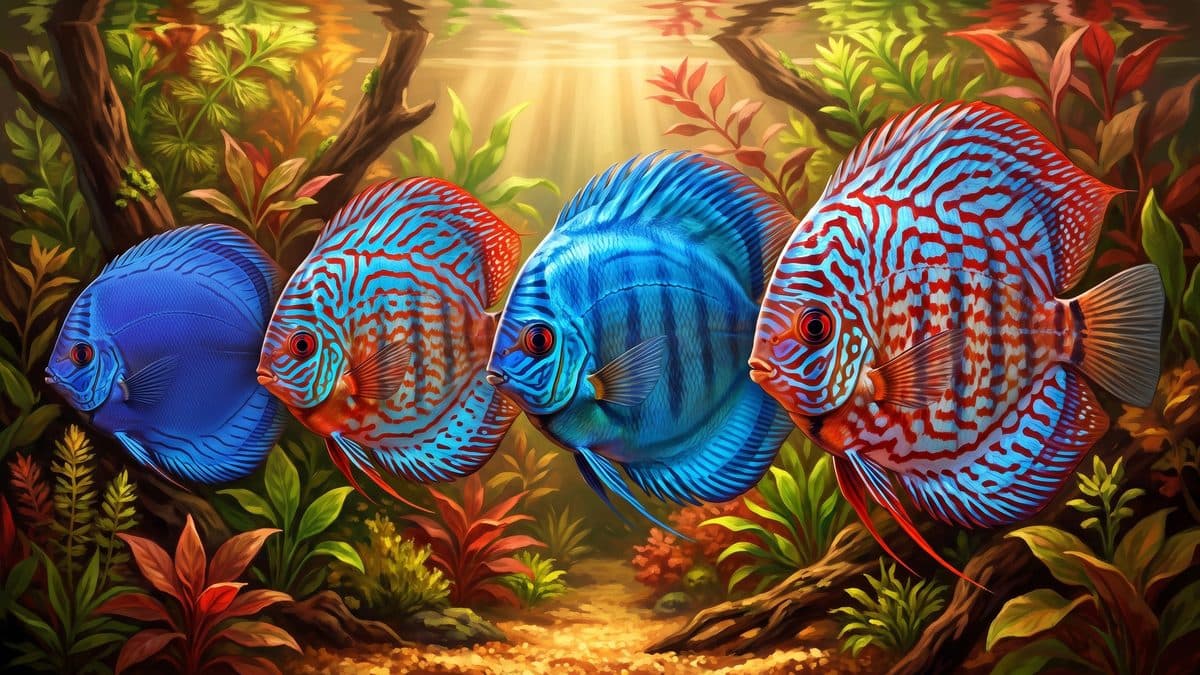
Discus Fish Pricing Overview
Discus (Symphysodon spp.) have earned the title "King of the Aquarium" — and their price tags reflect that royal status. Once considered fish only for experts with deep wallets, decades of captive breeding have made discus more accessible than ever. Yet pricing still varies enormously based on strain, size, colour intensity, and source.
In 2026, a hobbyist can enter the discus world for as little as $30 per fish for common captive-bred juveniles, while collectors chasing show-quality Heckel discus or high-end strains like Eruption or Checkerboard Pigeon may spend $500–$1,000+ per specimen. Understanding what drives these price tiers is essential before committing to a group — and discus should always be kept in groups of at least six.
Price Ranges by Strain and Grade
Common Strains ($30–$80)
The most affordable discus are mass-produced captive-bred strains from Asian farms (primarily Thailand, Malaysia, and Vietnam). These include:
- Blue Diamond: $30–$50 for 3-inch juveniles. Solid powder-blue body with minimal patterning. The most widely available and affordable strain.
- Red Melon: $35–$60. Warm orange-red body colour. Extremely popular and well-established in the hobby.
- Marlboro Red: $40–$65. Deeper red than Red Melon with a white forehead blaze. Slightly more in demand.
- Pigeon Blood: $35–$55. Creamy-white base with red/orange spotting. One of the original "designer" strains, now very common.
- Turquoise: $40–$70. Classic strain with blue-green striations over a brown or reddish base. Closest in appearance to wild Green discus.
At this tier, you are buying healthy, colourful fish that will thrive in a well-maintained discus tank. The trade-off is that colour intensity and body shape may not match the perfection of hand-selected premium specimens.
Premium Strains ($80–$300)
Premium discus are either selectively bred for exceptional colour, hand-picked from large batches, or represent more complex genetic lines:
- Eruption / Eruption Red: $100–$200. Intense red body with blue face striations. One of the most visually striking modern strains.
- Checkerboard Pigeon: $120–$250. Grid-like red patterning over a white base. Difficult to breed consistently, driving prices up.
- Snow White: $80–$150. Pure albino-white body with red eyes. Premium specimens have zero yellowing.
- Golden: $80–$180. Rich golden-yellow body. Show-quality specimens with no dark markings command the highest prices.
- Red Scribbelt / Red Map: $100–$200. Complex red maze-like patterning over a blue base. Each fish is unique.
- Leopard: $90–$180. Red or blue base covered in distinct spotted patterning. Well-developed spots increase value.
At this price point, you are paying for genetic consistency, colour saturation, and body conformation (round, symmetrical disc shape with proportional fins). Reputable breeders at this tier typically offer health guarantees and DOA (dead on arrival) policies for shipped fish.
Show-Grade and Wild-Caught ($300–$1,000+)
The top tier of discus pricing includes competition-quality captive-bred specimens and wild-caught fish:
- Show-grade captive-bred: $300–$600. These are the top 1–2% of any breeding batch, hand-selected for perfect body shape, colour intensity, and fin conformation. Often sold by specialist breeders in Germany, Asia, or the US who compete at international discus shows.
- Wild Heckel Discus: $150–$500+. The original "blue discus" from the Rio Negro basin. Wild Heckels have a distinctive single bold vertical bar and subtle blue-green iridescence. They are notoriously sensitive to water chemistry (require very soft, acidic water: pH 4.5–6.0, TDS under 50).
- Wild Green / Brown Discus: $100–$300. Collected from various Amazon tributaries. Each collection point produces fish with subtly different patterning and coloration.
- Competition winners and breeding pairs: $500–$1,000+. Proven breeding pairs of show-quality strains or fish that have placed at major competitions (e.g., Aquarama, German Discus Championship) command the highest prices.
Discus Price Comparison Table
The following table summarises typical 2026 pricing across grades and sizes:
- Juvenile (2–3 inches) | Common strain: $15–$40
- Sub-adult (3–4 inches) | Common strain: $30–$80
- Adult (5–6 inches) | Common strain: $50–$120
- Sub-adult (3–4 inches) | Premium strain: $80–$200
- Adult (5–6 inches) | Premium strain: $150–$300
- Adult (5–6 inches) | Show-grade: $300–$600
- Adult | Wild Heckel: $150–$500+
- Proven breeding pair | Premium/Show: $500–$1,000+
What Affects Discus Prices
Several factors drive the wide range of discus pricing:
- Strain rarity: Newer or genetically complex strains (Eruption, Checkerboard Pigeon) cost more because consistent production is difficult.
- Size and age: Larger, fully coloured adults command 2–4x the price of juveniles. However, juveniles adapt better to new tanks.
- Body shape: A perfectly round, symmetrical disc shape is the gold standard. Fish with elongated bodies or uneven fins are culled or sold at discount.
- Colour intensity: Vibrant, saturated colour under normal aquarium lighting (not enhanced by hormones or colour-boosting foods) is the hallmark of quality genetics.
- Source and reputation: Fish from renowned breeders (Stendker in Germany, Forrest in the US, select Asian farms) carry a premium for health guarantees and genetic consistency.
- Wild vs. captive-bred: Wild discus cost more due to collection logistics and export restrictions from Brazil, and they require more specialised water chemistry.
- Shipping costs: Discus are sensitive to temperature swings. Insulated shipping with heat or cold packs adds $30–$60 per box to the final cost.
Where to Buy Discus Fish
The best sources for discus in 2026:
- Specialist online retailers: The Fish Collection and similar curated shops offer health-guaranteed specimens with proper acclimation support. This is the safest option for beginners.
- Direct from breeders: Many top breeders sell direct via their websites or social media. You get the freshest fish and often the best prices, but availability is limited to their current stock.
- Discus-specific forums and groups: Communities like Simply Discus, discus Facebook groups, and aquarium classifieds connect buyers directly with breeders and other hobbyists.
- Local fish stores (LFS): Some specialist LFS maintain dedicated discus systems. The advantage is seeing fish in person; the disadvantage is typically higher prices (30–50% markup) and limited strain selection.
- Aquarium shows and auctions: Events like AquaFest and regional club auctions occasionally feature discus at competitive prices.
Avoid big-box pet stores for discus — the fish are typically mass-imported juveniles that have endured significant stress, and staff rarely have the expertise to maintain discus-appropriate water parameters.
Is It Worth the Investment?
Discus are absolutely worth the investment for hobbyists willing to commit to their care requirements. A group of six well-maintained discus in a 75-gallon planted tank is one of the most visually stunning displays in freshwater fishkeeping. The fish are interactive, recognise their owners, and display complex social behaviours.
The key cost consideration is not just the fish — it is the total system. A proper discus setup (75+ gallon tank, canister filter, heater rated for 28–30 degrees C, RO water system if your tap water is hard) runs $500–$1,500 before fish. Budget $200–$600 for a group of six common-strain adults, or $600–$2,000 for premium strains.
For value-conscious buyers, purchasing juvenile discus ($15–$40 each) and growing them out is the most economical approach. You will lose some to natural attrition, but the survivors will colour up beautifully and bond into a cohesive group. Browse The Fish Collection for currently available discus specimens.