Why Stingray Tanks Are Different
Freshwater stingrays break almost every conventional aquarium rule. Standard fishkeeping wisdom focuses on water volume — stingrays demand floor space. Most aquarists think in gallons — stingray keepers think in square feet of bottom area. The fish's disc-shaped body, bottom-dwelling lifestyle, and habit of burying in substrate mean that tank design priorities are fundamentally different from those for pelagic species like Arowana or cichlids.
Compounding this, stingrays are among the most water-quality-sensitive freshwater fish in the hobby. Their large, permeable ventral surface absorbs dissolved waste faster than streamlined fish of equivalent mass. A nitrate level that an Oscar tolerates comfortably can send a stingray into death curl. The tank you build is not just a home — it is a medical-grade life-support system that must maintain near-pristine conditions for animals that may live 15–20 years.
Tank Dimensions and Shape
Rectangular vs Round Tanks
The stingray hobby debates rectangular versus round (or oval) tanks endlessly. Both have merit:
Rectangular tanks are the practical standard. They are cheaper to manufacture, easier to source, fit against walls, and integrate straightforwardly with sump plumbing. The downside is dead corners — stingrays cannot navigate sharp 90-degree corners efficiently, and detritus accumulates in corners where flow stagnates. Mitigate by directing return flow across the bottom at a 30-degree angle toward each corner, and by manually siphoning corners during water changes.
Round or oval tanks eliminate dead corners entirely. Stingrays patrol the curved perimeter naturally, water flow distributes evenly, and detritus migrates toward a central drain where it can be captured by the filtration system. The downsides are cost (custom round tanks cost 2–3× more than rectangular equivalents), space inefficiency (a round footprint wastes room corners), and plumbing complexity (overflow placement requires custom engineering).
For most keepers, a rectangular tank with rounded internal corners (acrylic construction allows this) offers the best compromise. If budget allows, a purpose-built oval or D-shaped tank is the optimal choice for a dedicated stingray system.
Sizing by Species
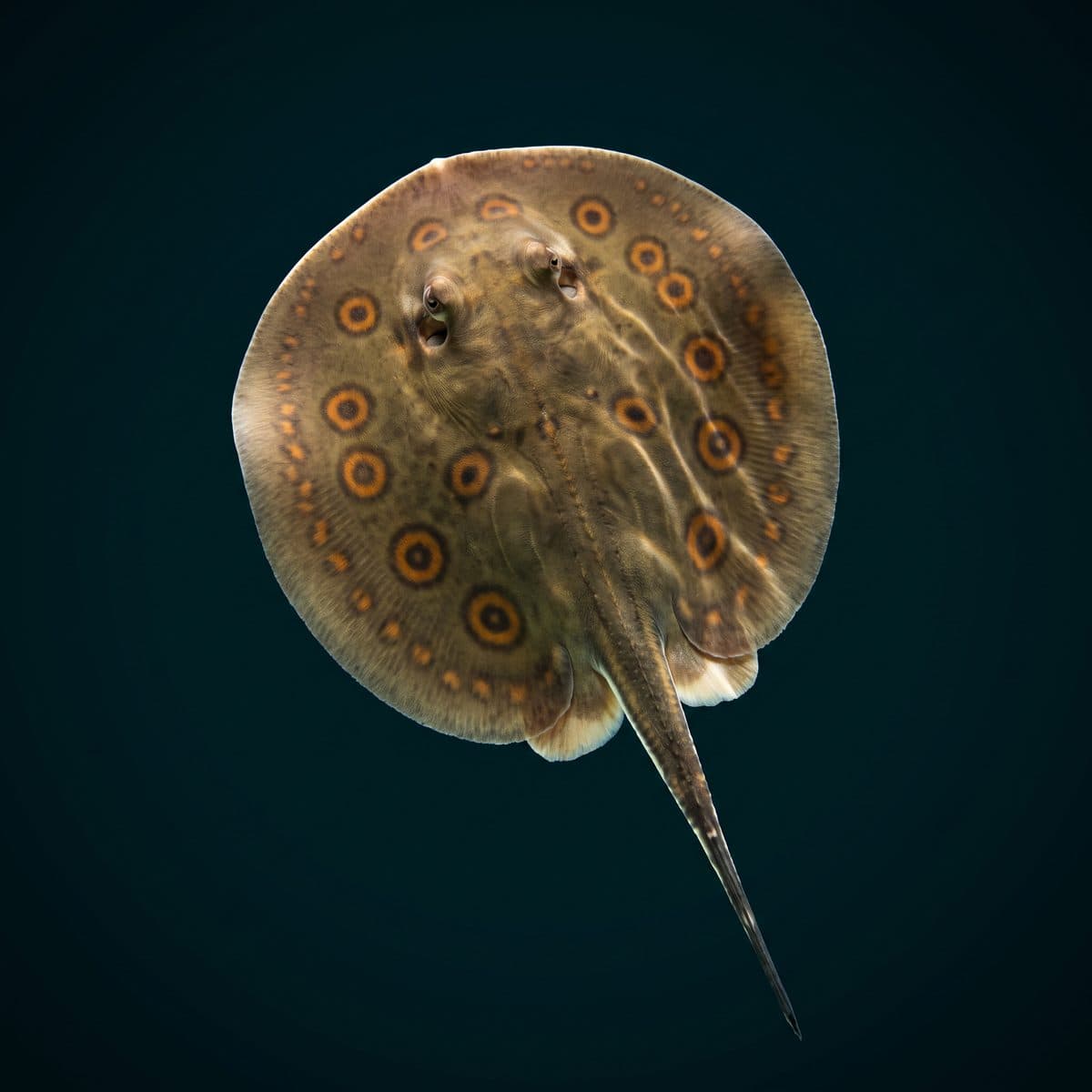
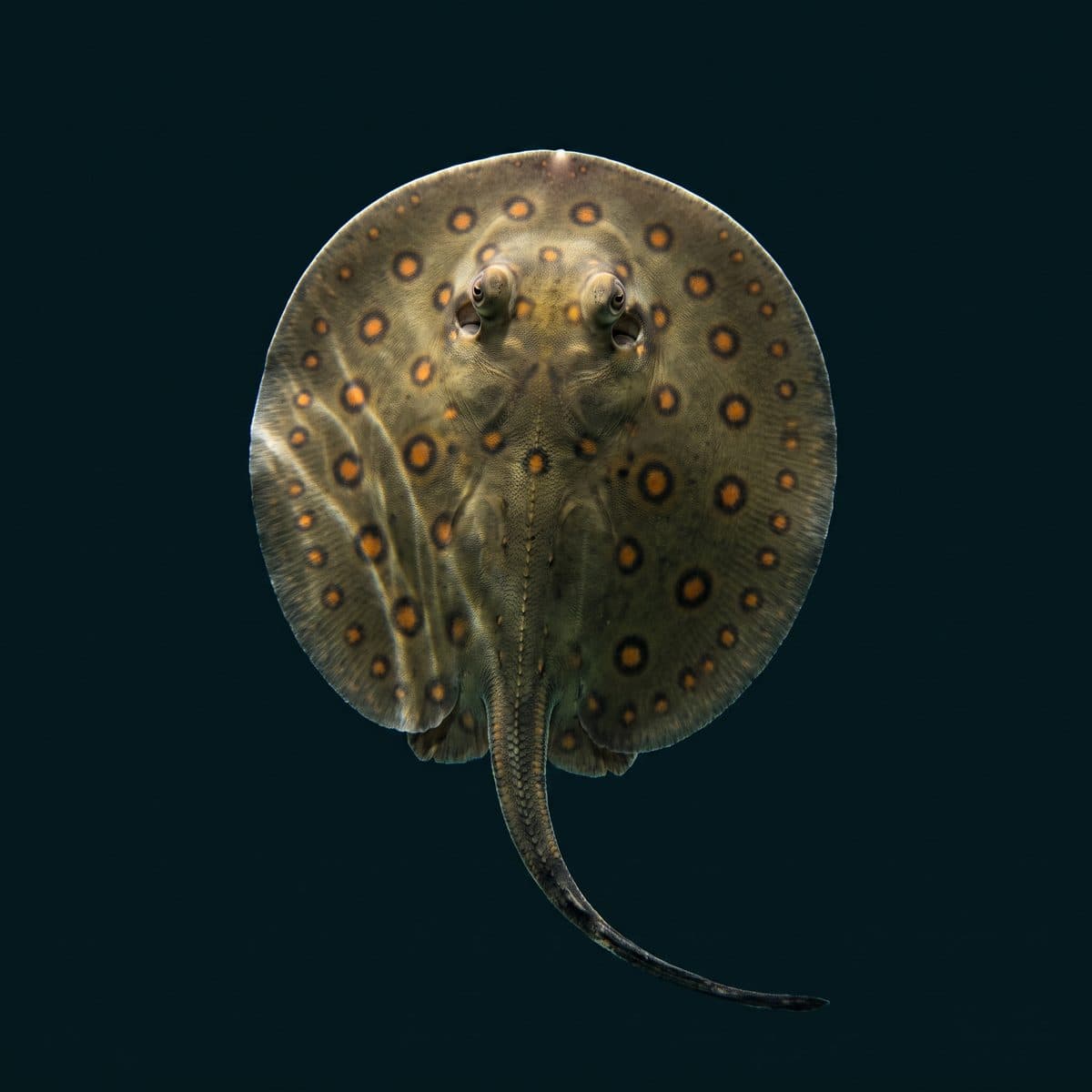
- Pearl Stingray, Hystrix (disc width 30–40 cm adult): 180 gallons minimum, 6 × 3-foot footprint.
- Motoro (disc width 40–60 cm adult): 300 gallons minimum, 8 × 4-foot footprint.
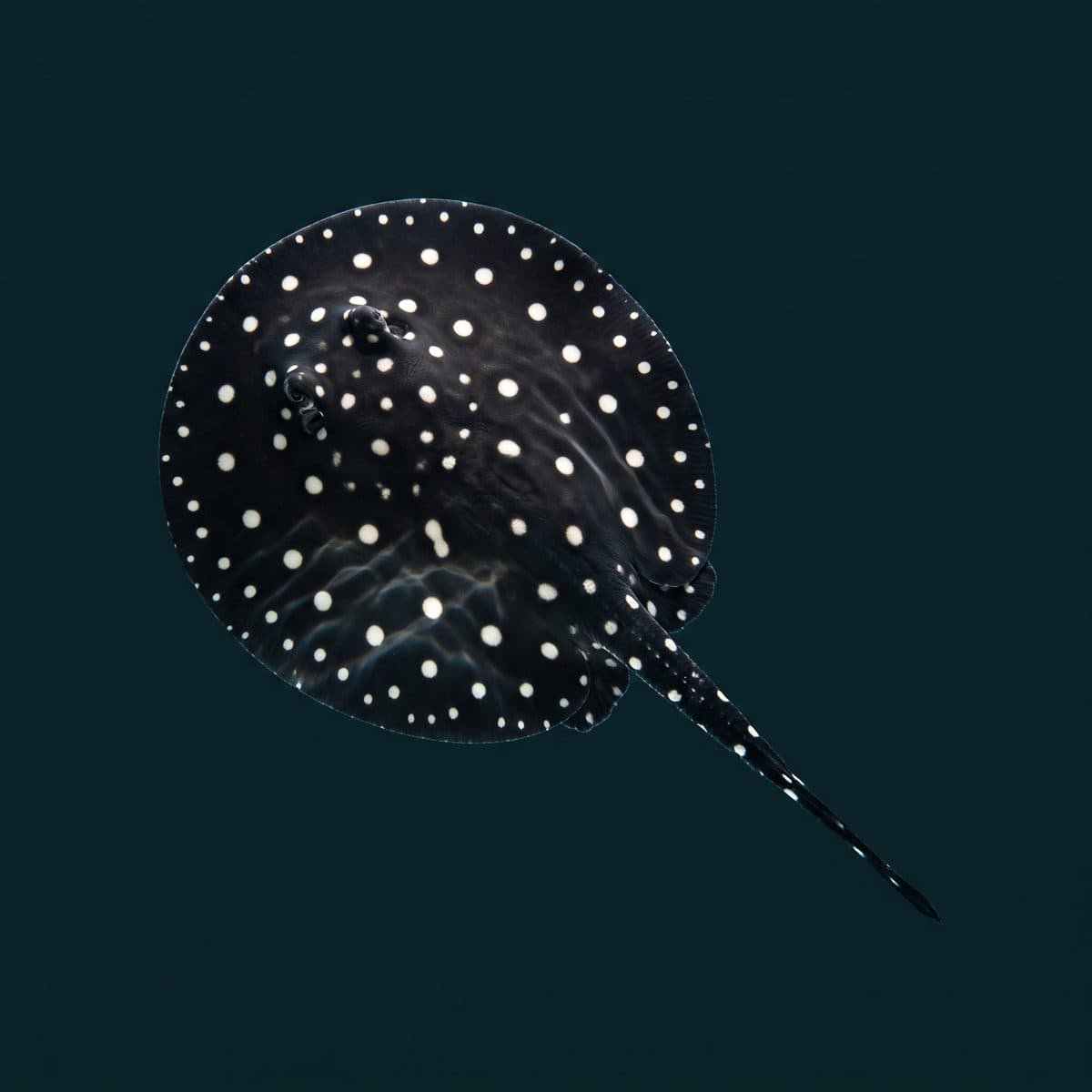
- Black Diamond Polka Dot (disc width 45–60 cm adult): 300 gallons minimum, 8 × 4-foot footprint.
- Breeding pair (any species above): 500+ gallons, 10 × 4-foot footprint or larger.
Tank height should be 18–24 inches. Taller tanks add volume without adding usable space for rays and increase hydrostatic pressure on bottom panels. Acrylic is strongly preferred over glass for stingray tanks — it is lighter, more impact-resistant, and allows curved panel construction. For tanks exceeding 300 gallons, custom acrylic with eurobracing is the industry standard.
Substrate Requirements
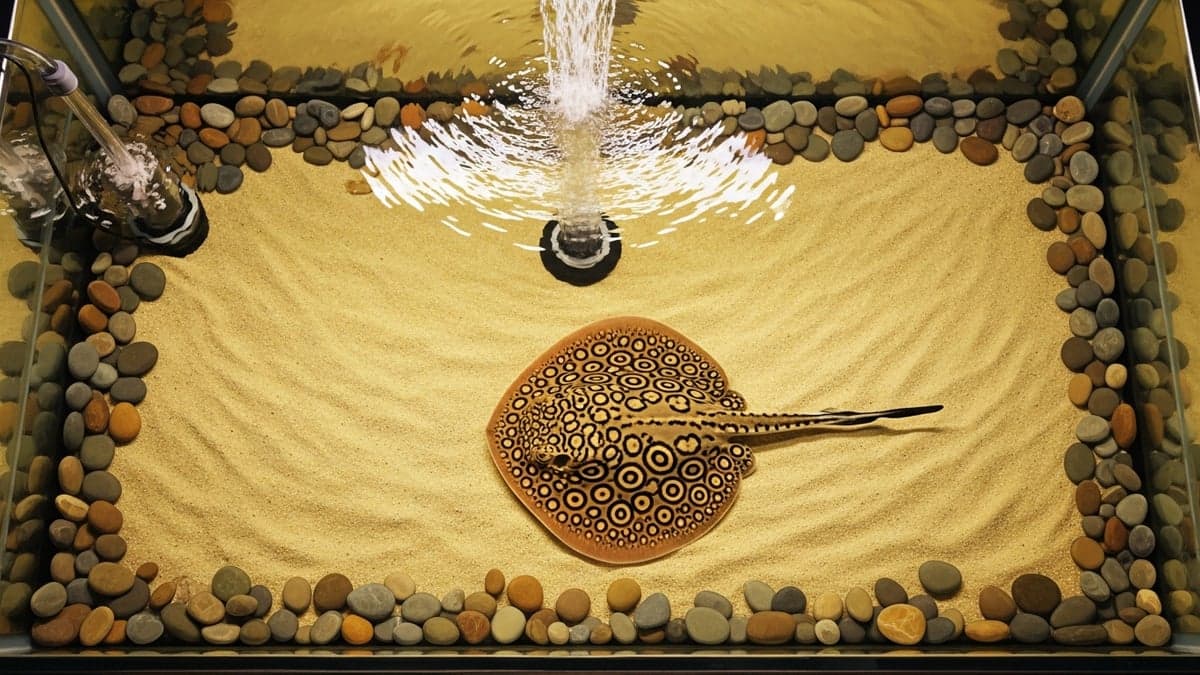
Substrate choice is the single most critical non-water-quality decision in stingray keeping. Fine river sand (1–2 mm grain size) is the only acceptable substrate.
Why sand is mandatory:
- Stingrays bury themselves as a primary comfort behaviour and stress response. Inability to bury causes chronic stress and immune suppression.
- Their ventral surface is soft and unscaled — direct contact with gravel, crushed coral, or rough substrate causes abrasions that rapidly become infected.
- Sand allows natural feeding behaviour (rays pin prey to the substrate and manoeuvre it toward their ventral mouth).
Recommended sand types: Pool filter sand (silica, #20 grade), play sand (washed and rinsed thoroughly), or natural river sand. Avoid coloured/coated sand (dyes can leach), aragonite sand (raises pH above stingray tolerance), and any substrate with sharp edges (crushed shell, crushed coral).
Depth: 3–5 cm. Deep enough for rays to bury with just their eyes and spiracles exposed, shallow enough to prevent anaerobic pockets. Stir the sand bed during each water change to prevent hydrogen sulphide accumulation in deeper zones.
Filtration System Design
Sump Configuration for Stingrays
A sump is mandatory for stingray tanks. No canister or hang-on-back system can handle the bioload of an adult Potamotrygon species. Design your sump at 40–60 % of the display tank volume — for a 300-gallon display, use a 120–180 gallon sump.
Four-chamber sump design:
- Chamber 1 — Mechanical: Dual filter sock holders (200-micron) on the overflow drain. Stingrays produce copious mucus and large waste particles — change socks every 2–3 days. Below the socks: 30 PPI coarse foam pad for secondary mechanical capture.
- Chamber 2 — Biological: 15–20 litres of sintered-glass biomedia (Siporax, Matrix, or equivalent with 800+ m²/L surface area). Water flows slowly through baffled media trays. Never replace more than 25 % of biomedia at once.
- Chamber 3 — Chemical/Equipment: Activated carbon in a media reactor (200 g per 100 litres, replaced every 2 weeks). UV steriliser (40–55 W for 300 gallons) — highly recommended for stingrays, which are susceptible to bacterial infections. Temperature probe and pH probe holders.
- Chamber 4 — Return: Return pump delivering 10–12× total system turnover per hour. For a 300-gallon display + 150-gallon sump (450 total), target 4,500–5,400 GPH at zero head. Account for head pressure loss — a pump rated for 6,000 GPH at zero head delivers approximately 4,500 GPH at a 4-foot head height.
Position the overflow intakes at the bottom of the display tank — stingray waste settles on the bottom, and bottom-draining overflow designs capture detritus far more efficiently than surface-skimming weirs alone. A combined bottom drain plus surface skim is ideal.
Supplementary Filtration and UV
Run a large canister filter (Fluval FX6 or equivalent, rated for 400+ gallons) in parallel with the sump for biological redundancy. If the sump pump fails, the canister maintains water movement and biological filtration until you intervene.
UV sterilisation deserves special emphasis for stingray systems. Stingrays are highly susceptible to bacterial infections — their large, permeable ventral disc is essentially an open surface exposed to every pathogen in the water column. A properly sized UV steriliser (40+ watts for 300 gallons, at a flow rate slow enough for effective pathogen kill) reduces waterborne bacterial and parasitic loads significantly. This is not optional equipment — it is a core component of responsible stingray husbandry.
Water Parameters
Stingrays come from soft, acidic blackwater habitats. Replicating these conditions is essential:
- Temperature: 26–28 °C (79–82 °F). Stability within ±0.5 °C is the target. Temperature swings trigger stress responses including death curl.
- pH: 5.5–6.8. Most Potamotrygon species thrive at pH 6.0–6.5. Avoid pH above 7.0 — alkaline conditions interfere with stingray osmoregulation.
- General Hardness: 1–6 dGH. Soft water replicates their natural habitat and supports proper ion balance across the gill and disc membranes.
- Carbonate Hardness: 1–4 dKH. Enough to buffer against pH crashes but not so high that pH is driven above target range.
- Ammonia: 0 ppm — absolutely non-negotiable. Even trace ammonia (0.25 ppm) causes gill irritation, appetite loss, and immune suppression in stingrays.
- Nitrite: 0 ppm.
- Nitrate: Below 10 ppm preferred; below 20 ppm absolute maximum. Stingrays display stress behaviours (curled disc edges, lethargy, colour fading) at nitrate levels that most tropical fish tolerate without issue.
- TDS: 50–150 ppm.
If your tap water is hard and alkaline (as is common in much of the US), invest in an RO/DI system. Blend RO water with a small amount of tap water or remineralise with a product like Seachem Equilibrium to achieve target GH without overshooting pH. Indian almond leaves, peat moss in the sump, and alder cones naturally acidify and soften water while releasing beneficial tannins.
Water Change Protocol
Stingrays demand aggressive water change schedules — there is no workaround:
- Minimum: 30–40 % weekly.
- Recommended: 50 % twice weekly for tanks running near stocking capacity.
- During quarantine or illness: 25 % daily until the issue resolves.
All replacement water must be temperature-matched (within 1 °C of tank water), dechlorinated, and parameter-tested before addition. Even a 2 °C temperature differential during a 50 % water change can stress a stingray enough to trigger disc curling and appetite loss. Pre-heat replacement water in a separate container or use an inline water heater on your water-change line.
During water changes, siphon the sand bed thoroughly. Stir the sand in sections to release trapped detritus, and direct the siphon hose along the bottom perimeter where waste accumulates. Corners (in rectangular tanks) require extra attention.
Heating and Temperature Control
Use titanium heaters rated for your total system volume (display + sump). For a 300-gallon display with a 150-gallon sump, total volume is 450 gallons — use two 500-watt titanium heaters for redundancy, each connected to its own external digital temperature controller (Inkbird ITC-308 or equivalent).
Place both heaters in the sump, not the display tank. Stingrays rest directly on the substrate and will park on top of a display-mounted heater, burning their ventral surface. The resulting wound is extremely difficult to heal and often leads to fatal secondary infection.
Dual-controller redundancy is critical: if one heater's thermostat fails in the "on" position, the controller cuts power before the water overheats. If one heater fails entirely, the second maintains temperature until you replace the failed unit. For a 450-gallon system worth $5,000–$100,000+ in livestock, two $35 controllers are essential insurance.
Lighting for Stingrays
Stingrays are crepuscular — most active at dawn and dusk — and prefer subdued lighting. Intense overhead lighting causes them to bury or huddle in shaded areas, reducing their activity and display value.
- Primary lighting: A dimmable full-spectrum LED at 30–50 % intensity (6,500 K). Run 8–10 hours daily with 60-minute sunrise/sunset ramp. Never use abrupt on/off — startled stingrays can thrash and injure themselves on tank walls.
- Moonlight: A low-intensity blue or warm-white LED (2–5 watts) running overnight. This allows observation of natural nocturnal behaviour and prevents the fish from being startled by sudden morning illumination.
Avoid high-intensity lighting unless you have provided ample shaded areas using driftwood positioned above the sand line. Stingrays will actively avoid bright zones, which defeats the purpose of a display tank.
Cycling Before Adding Rays
No stingray should enter an uncycled or incompletely cycled tank. The standard fishless cycling protocol applies:
- Set up the full system (tank, sump, heaters, sand, circulation) and run for 24 hours to verify function and check for leaks.
- Add pure ammonia to 2–4 ppm.
- Dose bottled nitrifying bacteria (Seachem Stability, Dr. Tim's One and Only) to accelerate colonisation.
- Test ammonia and nitrite daily with liquid reagent kits. Maintain ammonia at 2 ppm by re-dosing when it hits zero.
- The cycle is complete when both ammonia and nitrite drop from 2 ppm to 0 ppm within 24 hours. Expect 4–6 weeks.
- Perform a 70 % water change after cycling to dilute accumulated nitrate.
After cycling, run the system at target parameters (temperature, pH, GH) for at least one additional week before introducing a ray. This confirms stability under real operating conditions. Verify that all equipment — especially backup systems — functions correctly.
Final Setup Checklist
- Tank: 300+ gallons, 8 × 4-foot minimum footprint, acrylic preferred, 18–24 inches height
- Stand: steel frame rated for 2,000+ kg, on ground-floor concrete if possible
- Substrate: fine river sand, 1–2 mm grain, 3–5 cm depth
- Sump: 120–180 gallons, 4-chamber design with bottom drain integration
- Biomedia: 15–20 L sintered glass (800+ m²/L surface area)
- Return pump: 6,000+ GPH at zero head (delivering 4,500+ GPH at operating head)
- Canister filter: supplementary redundancy, rated 400+ gallons
- UV steriliser: 40–55 W at appropriate flow rate
- Heaters: 2 × 500 W titanium in sump, each on external controller
- Lighting: dimmable LED at 30–50 % + moonlight
- Water: 26–28 °C, pH 5.5–6.8, GH 1–6 dGH, nitrate below 10 ppm
- Nitrogen cycle: complete (ammonia and nitrite 0 ppm within 24 hrs)
- Backup power: UPS for pump + heaters; battery air pump minimum
- Safety equipment: Kevlar-lined gloves, long-handled tools, hot-water first-aid kit
Once every item is verified, your system is ready to receive a stingray. The Fish Collection ships all stingray specimens with detailed acclimation instructions and post-sale support. For a broader overview of stingray husbandry including feeding and health, see our freshwater stingray care guide.