What Makes an Aquarium Fish Expensive
Aquarium fish prices are governed by the same forces that drive any collector market: scarcity, desirability, and the cost of acquisition. A species confined to a single reef at 120 metres depth, protected by international treaty, and impossible to breed in captivity will always command a premium over a farm-raised cichlid shipping by the thousands from Southeast Asia. Understanding these dynamics separates informed collectors from impulsive buyers.
Three primary factors determine price at the upper end of the market. Biological rarity — some species exist only in micro-habitats or produce desirable colour morphs at rates below one in 100,000 fry. Legal restriction — CITES listings, national export bans, and marine reserve designations create supply bottlenecks that compound natural scarcity. And collection difficulty — deep-reef species require mixed-gas rebreather dives with mortality rates exceeding 50 % on ascent, meaning each surviving fish absorbs the cost of those lost in transit.
For a broader overview of exotic fish pricing tiers, see our most expensive fish in the world guide, which covers the full spectrum from $300 Zebra Plecos to $600,000 Platinum Arowana.
Ranked: The Most Expensive Aquarium Fish
The following ranking reflects verified dealer transactions and auction records through early 2026. Prices represent healthy, legally sourced specimens — not speculative listings or unverified social-media claims.
Platinum Arowana — $400,000+
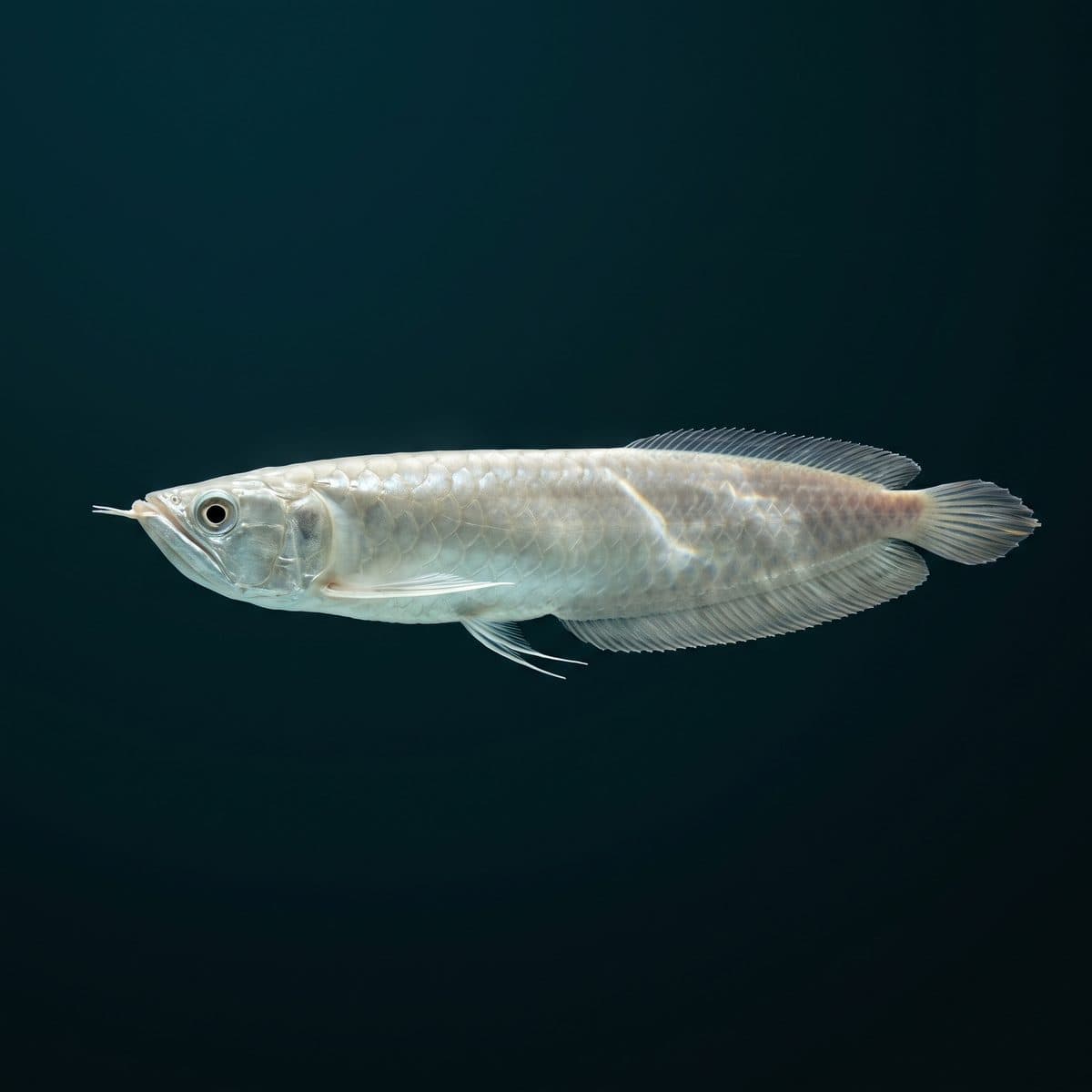
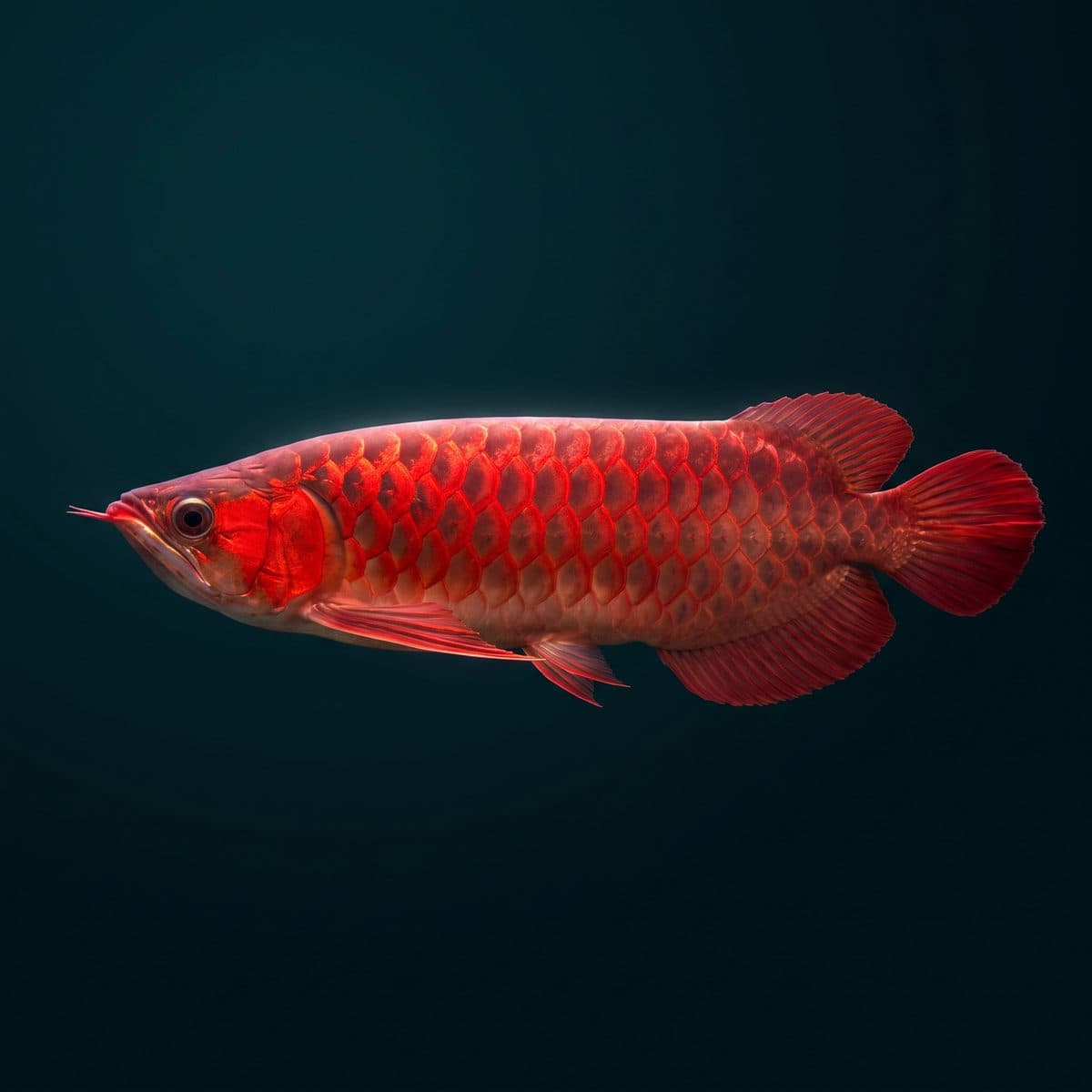
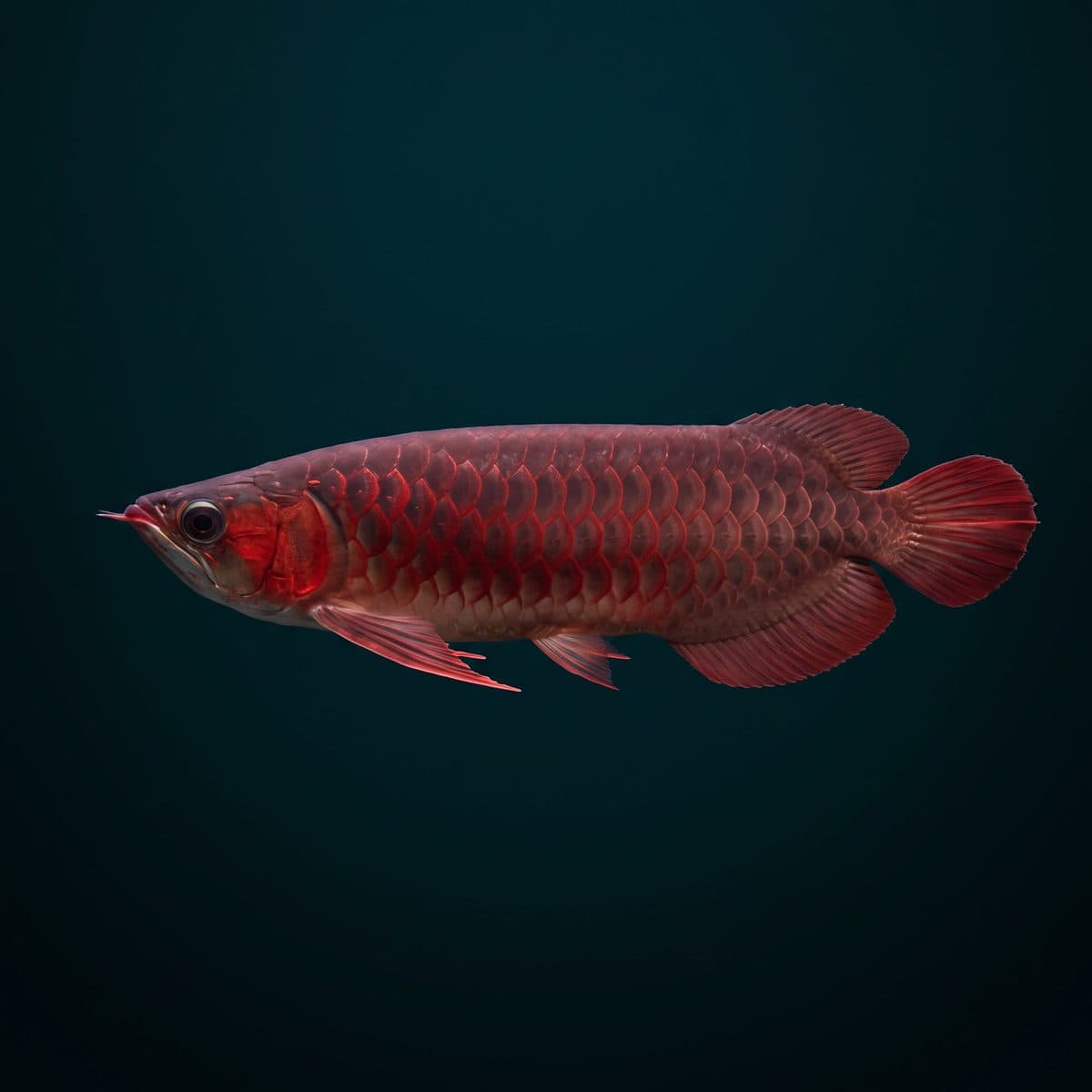
The Platinum Arowana (Scleropages formosus) remains the undisputed pinnacle of the aquarium hobby. This leucistic morph of the Asian Arowana exhibits a flawless metallic-white body devoid of visible scale patterning — a mutation occurring in roughly one of every 100,000 fry. Authenticated specimens are microchipped at birth, accompanied by CITES certificates, and traceable to licensed breeding facilities in Malaysia, Indonesia, or Singapore.
The all-time auction record stands at approximately $600,000 for a specimen with perfect body proportions and zero yellowing. Even "standard" Platinum Arowana rarely trade below $100,000. Housing requirements include a 240-gallon (900-litre) minimum tank, filtration rated for 10× turnover, and water parameters held at 26–28 °C with pH 6.5–7.0. For detailed pricing across all Arowana colour morphs, consult our Arowana cost and pricing guide.
The Fish Collection carries CITES-certified Arowana specimens for collectors operating at this tier.
Peppermint Angelfish — $30,000
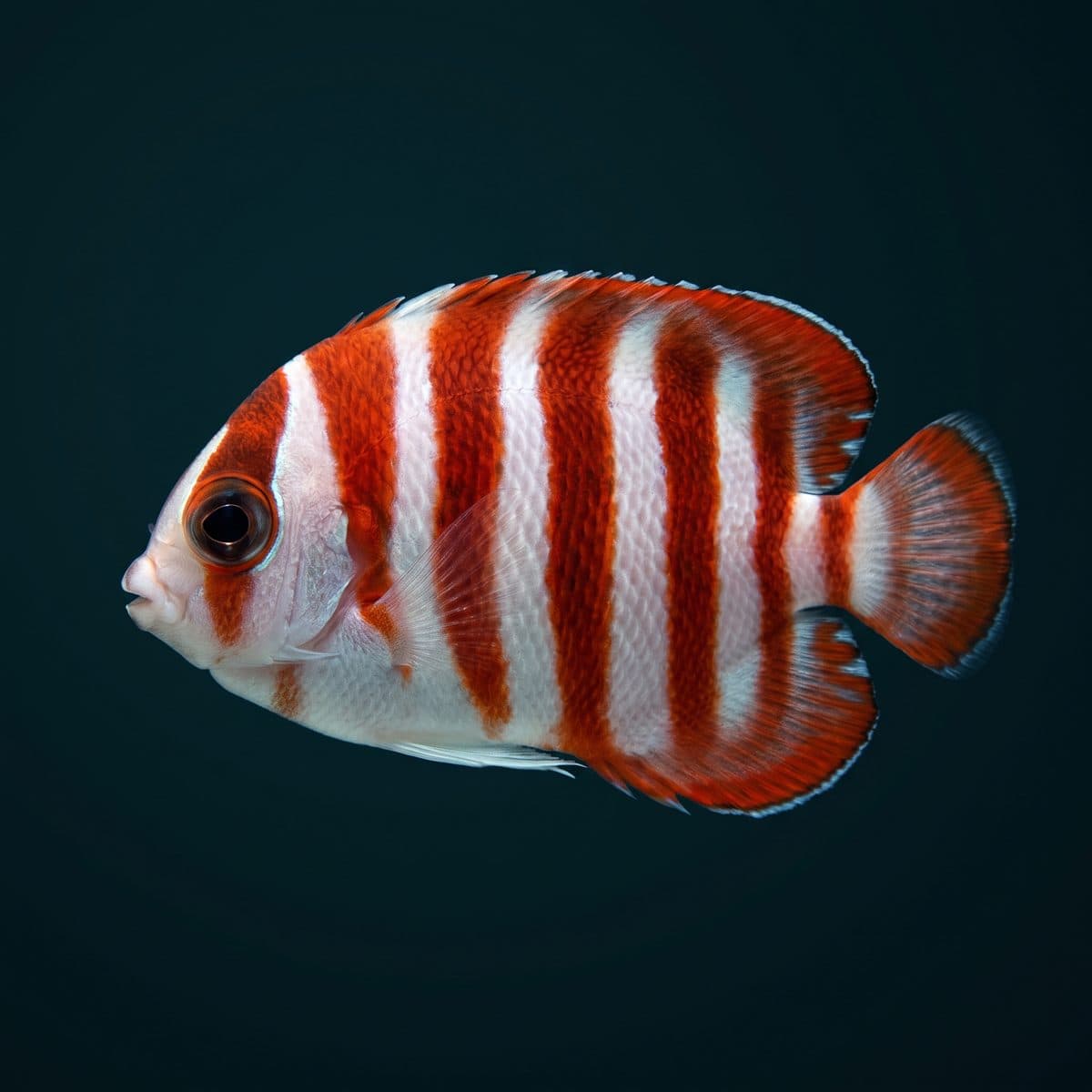
The Peppermint Angelfish (Paracentropyge boylei) is a deep-reef endemic found exclusively near Rarotonga, Cook Islands, at depths of 55–120 metres. Collection requires mixed-gas rebreather equipment, and only a handful of specimens reach the trade each year. At roughly 7 cm fully grown, its vivid red-and-white banding is unmatched in the Pomacanthidae family. House in a mature reef aquarium of at least 70 gallons with dim lighting zones, stable temperatures of 22–24 °C, and pH 8.1–8.4.
Browse our angelfish collection for species sharing the same family lineage.
Masked Angelfish — $20,000+
Native to the Northwestern Hawaiian Islands marine reserve, the Masked Angelfish (Genicanthus personatus) is nearly impossible to collect legally. The small number of specimens in the trade are almost exclusively captive-bred, and breeding success remains extremely limited. Adults display an elegant white body with a stark black facial mask. A 125-gallon reef with moderate flow and ample live rock is the minimum recommended setup.
Bladefin Basslet — $10,000+
Found at depths exceeding 150 metres in the Caribbean, the Bladefin Basslet (Jeboehlkia gladifer) is a thumbnail-sized fish with an outsized price tag. Collection requires submersible-grade equipment, and decompression mortality remains high. Surviving specimens are bright orange-red with an elongated dorsal spine. A nano reef of 30+ gallons with subdued lighting and gentle flow replicates its natural deep-water habitat.
Competition Flowerhorn — Up to $60,000
Unlike deep-water species, Flowerhorn Cichlid value is driven entirely by selective breeding. Grand Champion specimens at major Malaysian and Thai competitions have fetched $60,000+ based on kok size, body symmetry, colour intensity, and pearling density. Even non-competition specimens with strong genetics command $1,000–$5,000. For a deep dive into this species, see our Flowerhorn Cichlid complete guide.
Black Diamond Polka Dot Stingray — Up to $100,000
The Black Diamond Polka Dot Stingray (Potamotrygon leopoldi) from Brazil's Xingu River system has one of the widest price ranges in the hobby. Common patterning starts around $1,500, but specimens with high-contrast, perfectly round white dots on jet-black discs — or rare mutations like full-body pearling — have crossed $100,000. They require soft, acidic water (pH 5.5–6.5, temp 26–28 °C) and a footprint of at least 8 × 4 feet for an adult pair. See our freshwater stingray care guide for husbandry details.
Browse The Fish Collection's stingray collection for available specimens.
Clarion Angelfish — $2,500–$7,000
Endemic to Mexico's Revillagigedo Islands, the Clarion Angelfish (Holacanthus clarionensis) became available through limited collection permits starting in 2016. Its solid tangerine body with electric-blue fin edging makes it one of the most photogenic reef fish alive. Requires a 180+ gallon reef with stable salinity (1.024–1.026 SG) and temperature of 24–26 °C.
Gem Tang — $800–$3,000
The Gem Tang (Zebrasoma gemmatum) hails from the western Indian Ocean — primarily Mozambique, Madagascar, and Mauritius — where collection is sporadic and export logistics are challenging. Its jet-black body studded with brilliant white spots makes it instantly recognisable. Prices fluctuate significantly based on supply; during collection droughts, specimens regularly exceed $2,000. A 180+ gallon reef with strong flow and abundant algae grazing surfaces is recommended. For collectors interested in this species, our Gem Tang ultimate guide covers everything from sourcing to long-term care.
Neptune Grouper — $6,000
The Neptune Grouper (Cephalopholis igarashiensis) inhabits 80–260 metres across the Indo-Pacific. Its vivid orange-to-yellow colour scheme with pink accents is unmistakable. Decompression during collection is the primary bottleneck — fish must be brought up over several hours. A 200+ gallon predator system with robust biological filtration is essential.
Golden Basslet — $8,000
Another deep-water Caribbean species, the Golden Basslet (Liopropoma aberrans) inhabits rubble zones between 60 and 150 metres. Its uniform golden-yellow body makes it one of the most visually striking basslets, but collection logistics keep annual supply to fewer than a dozen specimens entering the US market. A mature reef of 50+ gallons with ample caves replicates its natural habitat.
Freshwater vs Saltwater: Where the Money Goes
A common misconception holds that marine fish are always more expensive than freshwater. The data tells a more nuanced story. The single most expensive aquarium fish — the Platinum Arowana — is freshwater. So is the Black Diamond Polka Dot Stingray at its upper price range. What marine fish dominate is the $3,000–$30,000 bracket, where deep-reef collection costs create a pricing floor that does not exist in freshwater.
Freshwater prices at the extreme end are driven by genetic rarity (Platinum Arowana) or pattern quality (Polka Dot Stingray), while saltwater prices are driven primarily by collection depth and geographic isolation. Both sectors reward patience and due diligence equally. For collectors entering the freshwater side, our guide to the best large freshwater fish covers species across multiple price tiers.
Authentication and Provenance
At five- and six-figure price points, provenance is everything. Every Asian Arowana legally sold must carry a microchip matching its CITES certificate. Stingrays from Brazil require export documentation under IBAMA regulations. Deep-reef marine fish should come with collection-site records and quarantine history from the importing dealer.
At The Fish Collection, every premium specimen ships with full provenance paperwork, including breeding-facility or collection-site certification, CITES documentation where applicable, and a detailed health assessment from our aquatic biology team. We recommend that any collector purchasing a fish above $5,000 request live video of the specific specimen, inspect for clean fins, alert behaviour, full coloration, and no signs of lateral-line erosion.
For further guidance on legal sourcing, read our rare fish legal to own in the US guide.
Building a Six-Figure Collection
Building a world-class aquarium collection is a multi-year endeavour that rewards strategic planning over impulsive acquisition. Begin with a species whose care requirements match your current infrastructure, invest in the best life-support equipment available, and allow each addition 60–90 days of quarantine before joining the display system.
Diversify across freshwater and marine if your facility permits. A dedicated Arowana display alongside a deep-reef nano tank gives you exposure to both ends of the collector market. And insure your collection — specialist aquatic insurers now cover livestock, and for collections exceeding $50,000, a comprehensive policy is a sound investment.
Browse The Fish Collection's full Arowana, stingray, and angelfish collections to begin curating your inventory. Every specimen ships with a live-arrival guarantee and full post-sale support.