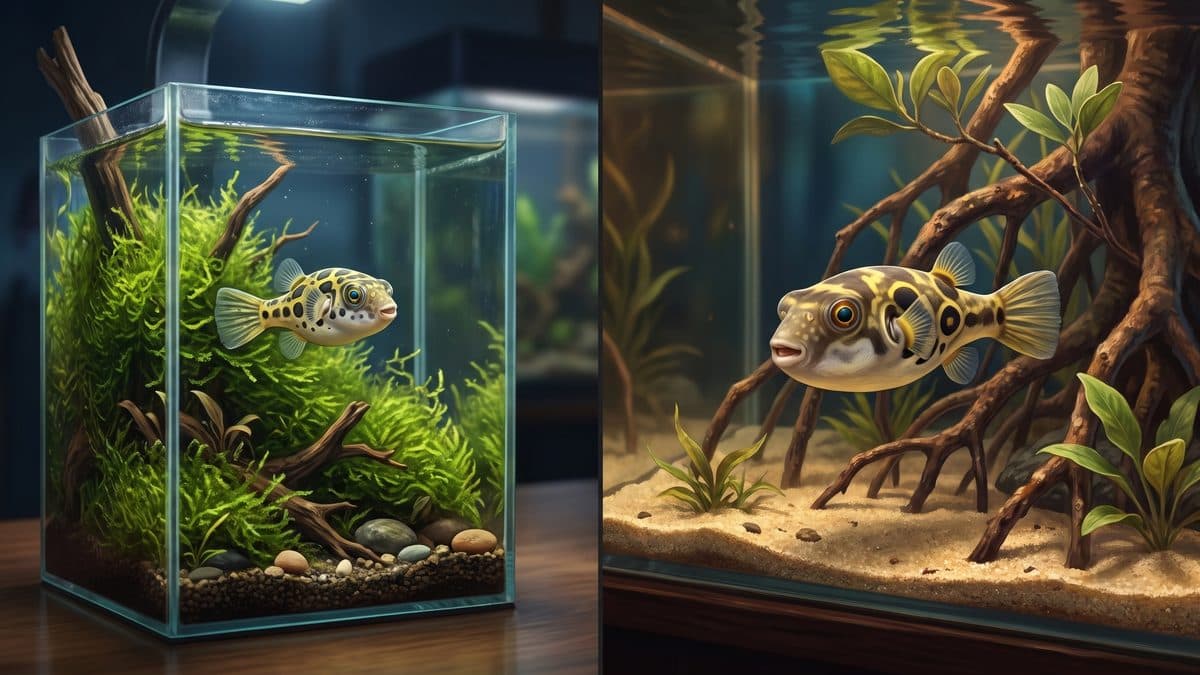
Why Pufferfish Captivate Beginners
Pufferfish are unlike any other fish in the aquarium hobby. They have expressive eyes that track movement independently (like a chameleon), beak-like teeth that continuously grow and must be worn down by crunching hard-shelled prey, and genuine curiosity — they investigate new objects, recognise their keepers, and display individual personalities that rival those of much larger pets.
The trade-off is that pufferfish are more demanding than typical community fish. Most species are aggressive or territorial, require specific diets (live or frozen invertebrates, not flake food), and many need brackish or full marine water as adults. The species on this list have been selected because they are the most accessible for beginners, with manageable tank sizes and care requirements.
The single most important aspect of pufferfish care is dental maintenance. Pufferfish teeth (a fused beak structure) grow continuously throughout their lives. Without regular hard-shelled foods — snails, clams, mussels, crayfish — the beak overgrows and the fish can no longer eat, leading to starvation. This dietary requirement is non-negotiable for every species on this list.
Top 7 Pufferfish for Beginners
1. Pea Puffer (Carinotetraodon travancoricus)
The Pea Puffer is the easiest pufferfish for beginners — and the smallest pufferfish in the world at just 2.5 cm (1 inch). Native to Kerala, India, it is a fully freshwater species that thrives in a planted nano tank of just 10 gallons for a small group. Their tiny size, bold personality, and bright yellow-green colouration with dark spots make them endlessly entertaining.
Pea Puffers are micro-predators that hunt small snails, frozen bloodworms, and live brine shrimp. They are territorial — provide dense planting and sight breaks, and stock at 1 puffer per 5 gallons. They nip fins of slow-moving tank mates, so they are best kept in a species-only setup or with fast, robust fish. Parameters: pH 6.5–7.5, temperature 24–28 °C.
2. Amazon Puffer (Colomesus asellus)
The Amazon Puffer is a fully freshwater species reaching 8–10 cm, native to the Amazon and Orinoco river basins. It is one of the few truly social pufferfish — groups of 6+ swim together in open water rather than claiming individual territories. Their bright yellow-green body with dark horizontal bands makes them visually appealing.
Amazon Puffers are active, fast swimmers that need a 55+ gallon long tank with open swimming space and moderate current. They are less aggressive than most pufferfish but still nip slow tank mates. Their teeth grow extremely fast and they absolutely require hard-shelled foods (snails, shellfish) at least 2–3 times per week. Parameters: pH 6.0–7.5, temperature 24–28 °C.
3. Congo Puffer (Tetraodon miurus)
The Congo Puffer is a fascinating ambush predator from the Congo River Basin. At 10–15 cm, it buries itself in sand substrate with only its eyes and mouth visible, waiting for prey to swim overhead. It is a dedicated freshwater species that comes in colour morphs from tan to brick-red to grey, and can change its colour intensity to match its surroundings.
Congo Puffers are strictly species-only fish — they will eat anything that fits in their mouth, including fish of nearly equal size. Keep a single specimen in a 40+ gallon tank with 8–10 cm of fine sand for burying. Feed meaty foods: shrimp, mussel, fish pieces, and snails for dental wear. They are surprisingly hardy once established. Parameters: pH 6.5–7.5, temperature 24–28 °C.
4. Figure Eight Puffer (Dichotomyctere ocellatus)
The Figure Eight Puffer is named for the dark figure-eight-shaped markings on its yellow-green back. At 6–8 cm, it is a compact, attractive pufferfish that does well in low-end brackish water (specific gravity 1.002–1.008). This makes it more demanding than freshwater species but far easier than full marine pufferfish.
Figure Eights are moderately aggressive — keep singly or in groups of 3+ (never pairs, which leads to bullying) in a 30+ gallon brackish tank. They accept frozen bloodworms, snails, clams, and shrimp. Their inquisitive nature and hovering swimming style make them engaging pets. Parameters: pH 7.5–8.5, temperature 24–28 °C, SG 1.002–1.008.
5. South American Puffer (Colomesus asellus)
Often sold under the same name as the Amazon Puffer, the South American Puffer refers specifically to tank-bred specimens widely available in the hobby. These captive-bred fish are hardier and less skittish than wild-caught Amazon Puffers, making them more beginner-friendly. Care requirements are identical: groups of 6+ in a 55+ gallon freshwater tank.
The critical care note remains dental maintenance: South American Puffers have the fastest-growing teeth of any commonly kept pufferfish. Offer snails (Malaysian Trumpet Snails, Ramshorn Snails) and shellfish at every feeding. A breeding colony of snails in a separate tank provides a sustainable food supply. Parameters: pH 6.0–7.5, temperature 24–28 °C.
6. Green Spotted Puffer (Dichotomyctere nigroviridis)
The Green Spotted Puffer (GSP) is one of the most commonly sold pufferfish — and one of the most commonly mis-kept. At 12–15 cm, it is a robust, beautifully marked species with a bright green back covered in dark spots and a white belly. Juveniles tolerate freshwater, but adults require full brackish to marine water (SG 1.010–1.020+).
GSPs are aggressive — keep singly in a 30+ gallon brackish/marine tank with crushed coral substrate to buffer pH. They eat snails, clams, mussels, shrimp, and frozen meaty foods. Their intelligence and interactivity make them exceptional pets for keepers willing to manage brackish water chemistry. Parameters: pH 7.5–8.5, temperature 24–28 °C.
7. Fahaka Puffer (Tetraodon lineatus)
The Fahaka Puffer is the most challenging species on this list — included because it is one of the most interactive and personable freshwater fish in the hobby. At 30–45 cm adult size, the Fahaka is a large, aggressive, freshwater pufferfish from the Nile River system. It must be kept completely alone in a 125+ gallon tank.
Fahaka Puffers recognise their keepers, beg for food, and display mood changes through colour and pattern shifts. They eat snails, crayfish, clams, mussels, and frozen shrimp — hard-shelled foods are critical for their rapidly growing beak. Only recommended for beginners committed to a single large tank with a single spectacular fish. Parameters: pH 7.0–8.0, temperature 24–28 °C. For comprehensive care, see our Fahaka Pufferfish guide.
What to Look For When Buying a Pufferfish
- Rounded belly: A healthy pufferfish has a slightly rounded abdomen. Sunken or concave bellies indicate starvation or internal parasites.
- Aligned beak: The upper and lower beak plates should meet evenly. Overgrown beaks mean the fish has not been fed hard-shelled food.
- Active curiosity: Healthy pufferfish are alert and inquisitive. They should track your movement and investigate your finger on the glass.
- No dark belly: A dark or grey belly indicates stress, illness, or internal parasites in many species.
- Correct species ID: Pufferfish are frequently mislabelled. Verify the species, adult size, and water requirements before purchasing.
Common Mistakes with Beginner Pufferfish
- Ignoring dental care: Without regular hard-shelled foods (snails, clams, mussels), pufferfish beaks overgrow and the fish starves. Feed crunchy foods at least 2–3 times per week.
- Wrong water type: Green Spotted and Figure Eight Puffers need brackish water as adults. Freshwater long-term weakens their immune system.
- Community tank placement: Most pufferfish are aggressive fin-nippers or predators. Pea Puffers can work with fast tank mates; most others are best kept alone or species-only.
- Feeding only frozen food: Frozen bloodworms do not wear down the beak. Pufferfish need the physical resistance of crunching through shells for dental health.
- Undersized tanks: A Fahaka needs 125+ gallons. A GSP needs 30+. Research adult size and plan accordingly.
Getting Started Equipment
- Tank: 10 gallons for Pea Puffers; 30 for Figure Eight or GSP; 40 for Congo; 55 for Amazon/South American; 125+ for Fahaka.
- Filter: Canister or oversized HOB rated for 2x tank volume. Pufferfish are messy eaters.
- Heater: Adjustable heater at 3–5 watts per gallon set to 26 °C.
- Substrate: Fine sand for Congo Puffers. Sand or gravel for others. Crushed coral for brackish species.
- Marine salt: Instant Ocean for brackish species. A refractometer for measuring specific gravity.
- Snail colony: A separate 10-gallon tank breeding Ramshorn or Pond Snails for a free, sustainable dental food supply.
- Frozen foods: Frozen bloodworms, mysis shrimp, brine shrimp, clams, and mussels.
- Test kit: API Freshwater or Saltwater Master Test Kit depending on species.
Budget $100–$200 for a Pea Puffer nano setup; $300–$500 for a brackish setup; $800–$1,500+ for a Fahaka system. See our equipment guide.