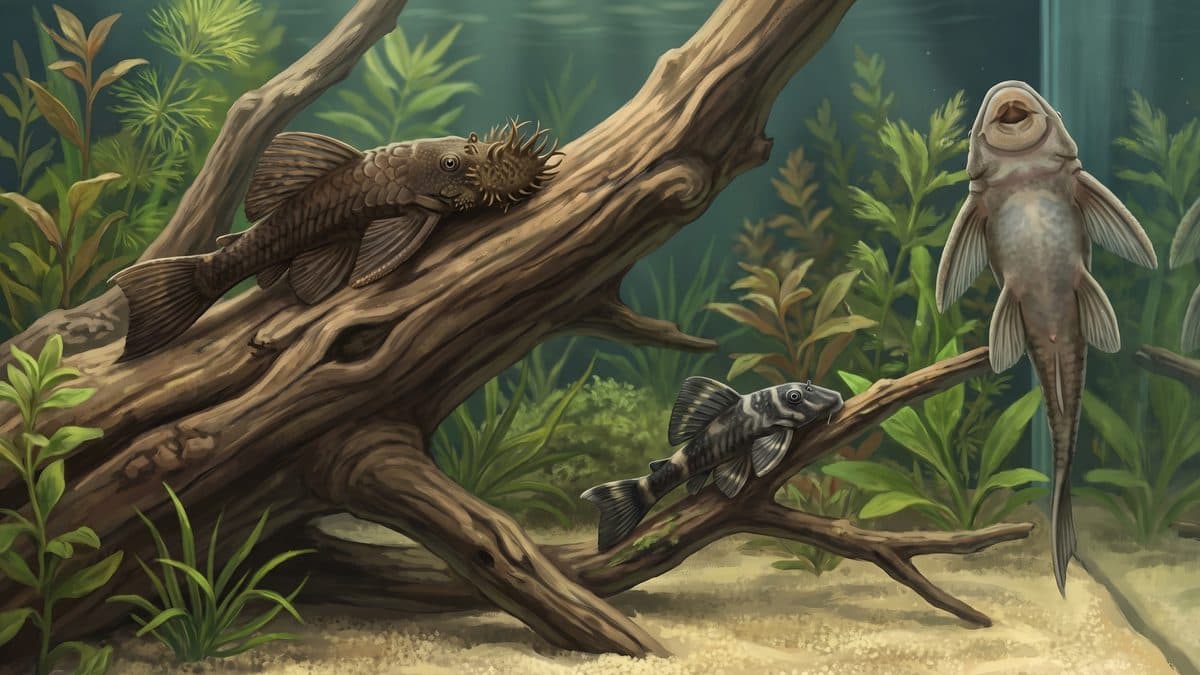
Why Plecos Are Popular with Beginners
Plecos — short for Plecostomus, the family Loricariidae — are armoured catfish prized for their algae-eating ability and unique appearance. With over 800 described species, they range from the 2 cm Otocinclus to the 60+ cm Common Pleco. The key for beginners is choosing species that stay small, genuinely eat algae, and do not outgrow a standard aquarium.
The Common Pleco (Hypostomus plecostomus) sold in most pet stores is the single worst pleco choice for beginners — it reaches 45–60 cm and produces enormous waste. Every species on this list stays under 15 cm and is genuinely suited to tanks of 20–55 gallons.
All plecos are nocturnal or crepuscular, doing most of their work at night. They need driftwood (essential for digestion in many species), hiding caves, and supplemental feeding beyond whatever algae grows naturally in the tank.
Top 7 Plecos for Beginners
1. Bristlenose Pleco (Ancistrus spp.) — L144/L183
The Bristlenose Pleco is the undisputed king of beginner plecos. At 12–15 cm, it stays small enough for a 30-gallon tank while being one of the most effective algae eaters in the hobby. Males develop distinctive bushy tentacles on the snout — females have minimal or no bristles. Colour morphs include standard brown, albino, super red, and longfin varieties.
Bristlenose Plecos are hardy (pH 6.0–7.5, temperature 22–28 °C), breed readily in captivity, and eat virtually every type of soft algae. Provide driftwood, algae wafers, and blanched vegetables (zucchini, cucumber, spinach). One per 30 gallons is the standard stocking ratio.
2. Clown Pleco (Panaqolus maccus) — L162
The Clown Pleco is a tiny (8–10 cm) wood-eating pleco with striking orange-and-black tiger striping. It is one of the most colourful small plecos and does well in tanks as small as 20 gallons. Unlike Bristlenose Plecos, Clown Plecos are primarily wood eaters (xylivores) rather than algae eaters — they rasp driftwood as their primary food source.
This means driftwood is absolutely essential, not optional. Supplement with sinking wafers and blanched vegetables. Clown Plecos are shy and spend most daylight hours hidden in caves or under wood. Parameters: pH 6.0–7.5, temperature 24–28 °C. They are completely peaceful and ideal for planted community tanks.
3. Rubber Lip Pleco (Chaetostoma formosae) — L445
The Rubber Lip Pleco is an excellent algae eater that reaches 12 cm. Native to fast-flowing Colombian streams, it prefers higher oxygen levels and moderate current — making it a good match for tanks with hang-on-back filters or powerheads. Its flat, streamlined body and sucker mouth are adapted for clinging to rocks in strong currents.
Rubber Lip Plecos are hardier than many alternatives and tolerate slightly cooler water (20–26 °C). They graze on green algae and biofilm continuously. Supplement with algae wafers and spirulina-based foods. One per 30+ gallon tank with good water flow. pH 6.5–7.5.
4. Starlight Bristlenose (Ancistrus dolichopterus) — L183
The Starlight Bristlenose is a visually stunning variety — jet-black body covered in bright white pinpoint dots, with white-tipped dorsal and caudal fins. At 12–15 cm, it has identical care requirements to the standard Bristlenose but commands higher prices ($15–$30 vs. $5–$10) due to its dramatic appearance.
Care is identical to the standard Bristlenose: provide driftwood, algae wafers, blanched vegetables, and caves for hiding. They are effective algae grazers and breed readily when given clay or PVC caves. A fantastic choice for beginners who want visual impact without added difficulty. pH 6.0–7.0, temperature 24–28 °C.
5. Pitbull Pleco (Parotocinclus jumbo) — LDA25
The Pitbull Pleco is a tiny (4–5 cm) species that fills a similar niche to Otocinclus but is significantly hardier. Native to Brazilian streams, it actively grazes on biofilm and soft algae across glass, rocks, and plant leaves throughout the day — unusual for a pleco, most of which are nocturnal.
Keep a group of 4–6 in a 20+ gallon tank with moderate flow and established algae/biofilm growth. They are completely peaceful and excellent for planted aquariums. Their small size means they do not produce significant waste. Parameters: pH 6.0–7.5, temperature 22–26 °C. Supplement with algae wafers and blanched vegetables if algae is scarce.
6. Gold Nugget Pleco (Baryancistrus xanthellus) — L018/L085
The Gold Nugget Pleco is one of the most visually spectacular freshwater fish available — jet-black body covered in bright yellow polka dots with bold yellow fin edging. At 15 cm, it is the largest species on this list and needs a 55+ gallon tank.
Gold Nuggets are slightly more demanding than Bristlenose Plecos: they prefer warm water (26–30 °C), soft to neutral pH (6.0–7.0), and excellent water quality with regular water changes. They are omnivorous — feed a mix of algae wafers, frozen bloodworms, and protein-rich sinking pellets. They can be territorial toward other plecos, so keep only one per tank unless the tank is very large.
7. Medusa Pleco (Ancistrus ranunculus) — L034
The Medusa Pleco reaches 12–13 cm and features an elaborate pattern of dark spots and worm-like markings on a tan-brown body. Males develop impressive branching bristles that give the species its mythological name. It is a hardy Ancistrus species with care requirements virtually identical to the standard Bristlenose.
Provide driftwood, caves (clay or PVC), algae wafers, and blanched vegetables. The Medusa Pleco is an effective algae grazer and breeds readily in captivity. It is peaceful and does well in community tanks of 30+ gallons. Parameters: pH 6.0–7.5, temperature 24–28 °C. A great choice for beginners who want something visually distinctive.
What to Look For When Buying a Pleco
- Rounded belly: A healthy pleco has a slightly rounded abdomen. Sunken or concave bellies indicate starvation — a common problem in store tanks where plecos are not fed adequately.
- Active suction: A healthy pleco grips surfaces firmly. Fish that float or drift listlessly may be stressed, starved, or ill.
- Clear eyes and skin: Check for cloudy eyes, white fungal patches, or damaged fins. Plecos are armoured but not immune to disease.
- Correct species ID: Many pet stores mislabel plecos. Verify the L-number or species name before purchasing to ensure you know the adult size.
- Ask about feeding: Ask the store what they feed their plecos. If the answer is "they eat algae off the glass," the store may not be feeding them properly.
Common Mistakes with Beginner Plecos
- Buying a Common Pleco: The number one mistake. Common Plecos reach 45–60 cm and produce massive waste. They outgrow 90% of home aquariums. Always choose a species from this guide instead.
- No driftwood: Most plecos need driftwood for digestion. Wood-eating species like Clown Plecos will slowly starve without it. Even algae-eating Bristlenose Plecos benefit from wood fibre.
- Assuming they only eat algae: No pleco can survive on tank algae alone. Supplement with algae wafers, blanched vegetables, and occasional protein (frozen bloodworms).
- No hiding caves: Plecos are nocturnal and need dark, secure hiding spots during the day. Without caves, they become chronically stressed.
- Keeping multiple males in small tanks: Male plecos — especially Bristlenose and Gold Nuggets — are territorial about caves. One male per 30 gallons is a safe ratio.
Getting Started Equipment
- Tank: 20 gallons for Pitbull Plecos; 30 gallons for Bristlenose, Clown, and Medusa; 55 gallons for Gold Nugget.
- Driftwood: Malaysian driftwood, Mopani wood, or spider wood. At least one large piece per pleco. Essential, not decorative.
- Caves: Clay pleco caves, coconut shells, or PVC pipe (2–3 inch diameter). One cave per pleco minimum.
- Filter: HOB or canister filter rated for 1.5x tank volume. Rubber Lip Plecos prefer additional flow from a powerhead.
- Heater: Adjustable heater at 3–5 watts per gallon. Gold Nuggets need warmer water (26–30 °C).
- Feeding: Hikari Algae Wafers, Repashy Morning Wood (wood-based gel food for Clown Plecos), blanched zucchini clips.
- Lighting: Standard LED on a timer (8–10 hours). Moderate light promotes the algae growth plecos feed on.
- Test kit: API Freshwater Master Test Kit.
Budget $200–$400 for a complete 30-gallon pleco setup. See our aquarium equipment guide for details.