Overview
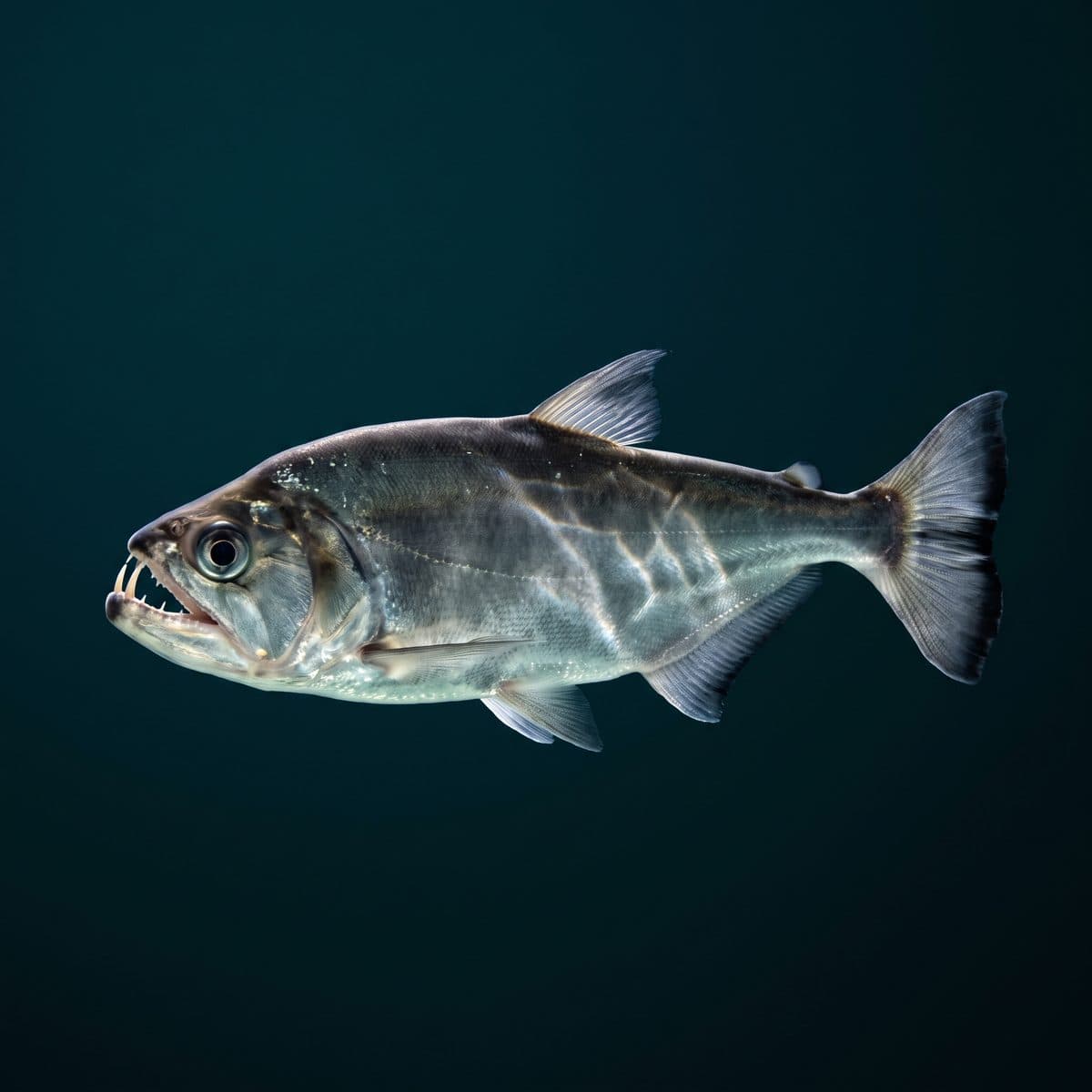
The Red-Bellied Piranha (Pygocentrus nattereri) is a serrasalmid characin native to virtually every major river system in South America east of the Andes — from the Amazon and Orinoco to the Paraná and São Francisco basins. It is the most widespread piranha species, the most commonly kept in captivity, and the species responsible for the genus's terrifying (and largely undeserved) reputation. In reality, P. nattereri is a shoaling fish whose famous group-feeding behaviour is primarily a defensive adaptation — safety in numbers — rather than evidence of cooperative predatory strategy.
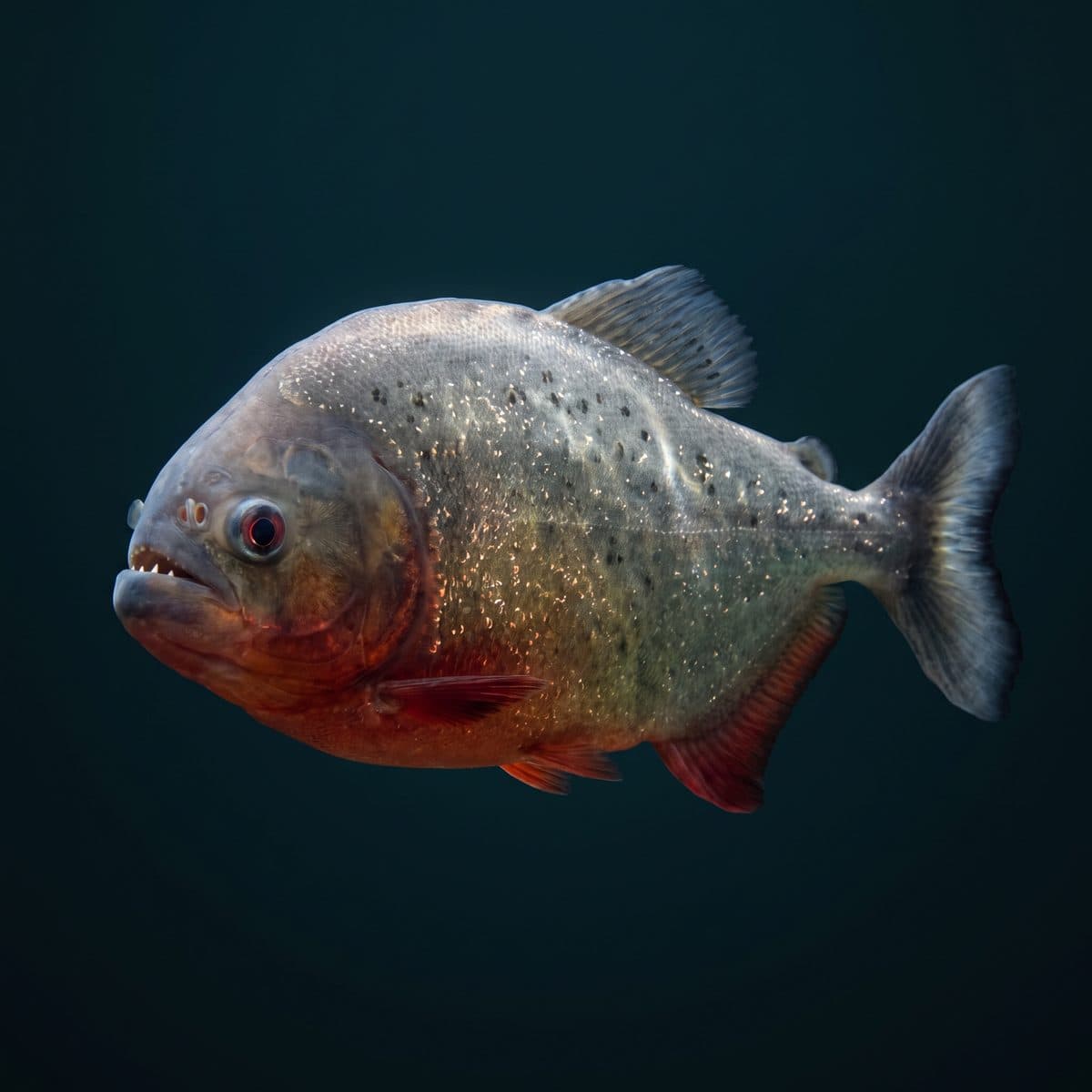
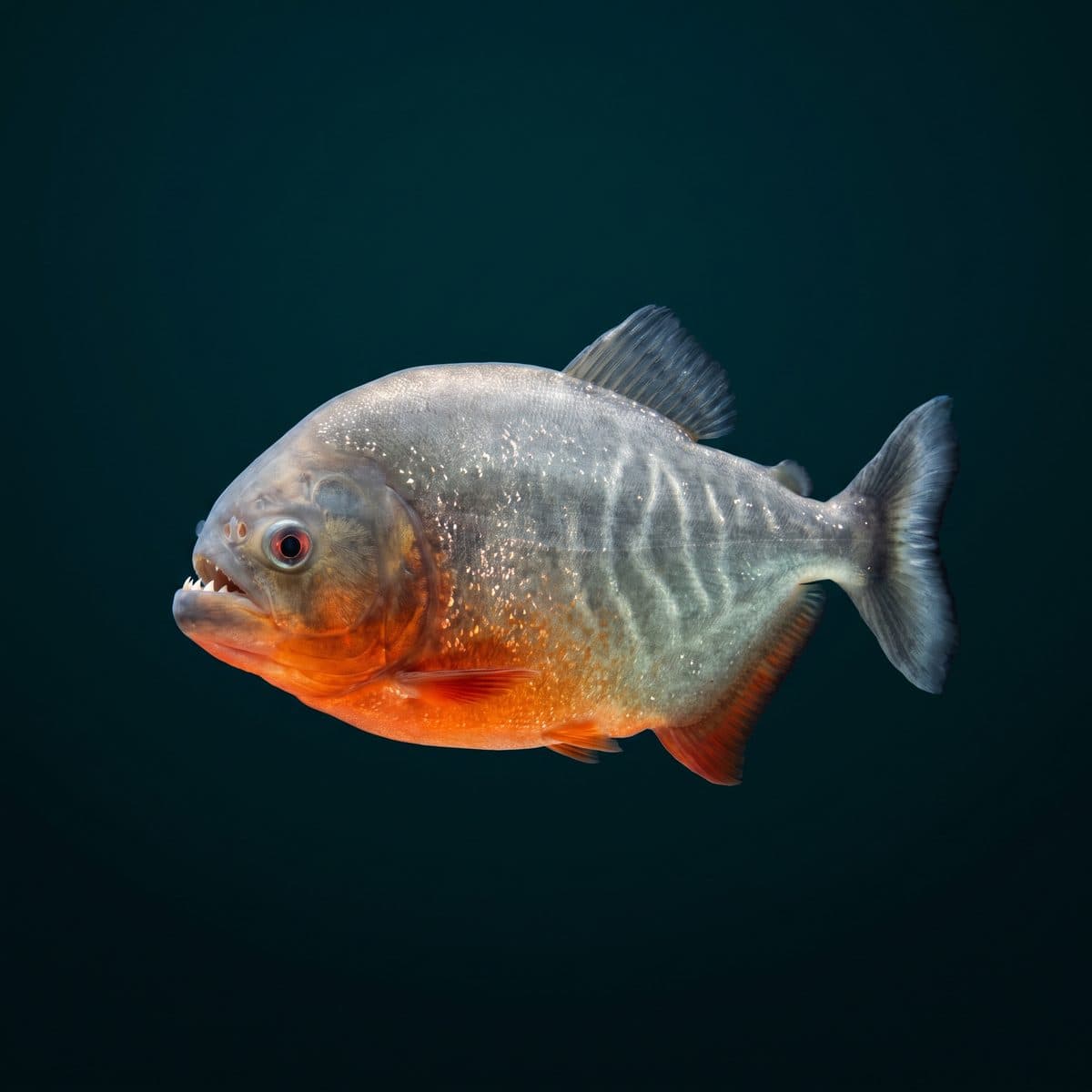
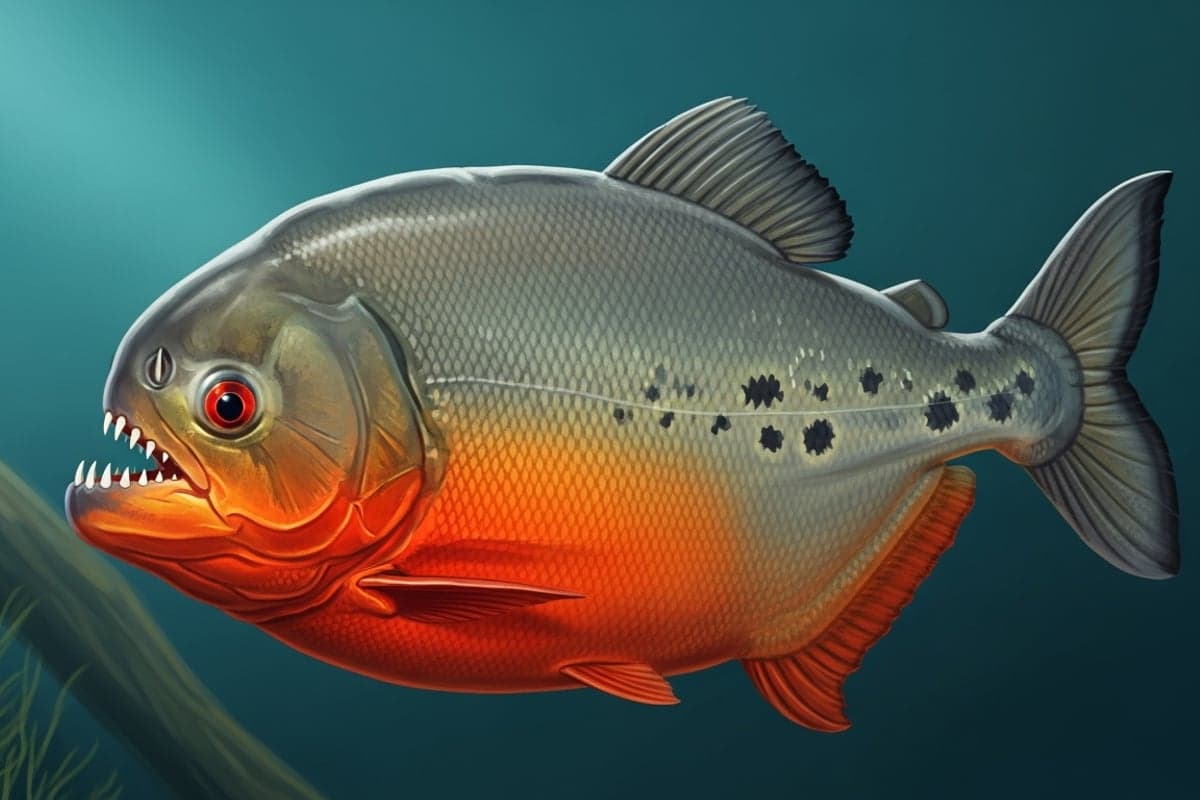
What makes the Red-Bellied Piranha genuinely compelling for aquarists is not the shock value of their teeth (though the dentition is undeniably impressive — interlocking triangular cusps that function like a bear trap), but rather their complex social dynamics, startling intelligence, and dramatic colouration. Adult specimens display a brilliant crimson-to-orange ventral surface, iridescent silver flanks peppered with dark spots, and fiery red eyes — an appearance that is genuinely beautiful and far removed from the grey, menacing creature of popular imagination.
At The Fish Collection, we have maintained piranha species since our founding and currently house breeding colonies of P. nattereri, P. piraya, and several Serrasalmus species. We advocate strongly for responsible piranha keeping: these are fascinating animals that deserve expert-level care, not impulse purchases motivated by adolescent bravado. This guide provides the knowledge necessary for long-term success with the species.
Natural Habitat
Pygocentrus nattereri inhabits an extraordinarily wide range of freshwater environments across tropical South America. Core habitat includes the floodplain lakes, slow-moving tributaries, and marginal vegetation zones of the Amazon, Orinoco, Paraná, and São Francisco river systems. During the wet season, they disperse into vast flooded forests (igapó and várzea) to exploit the seasonal abundance of fruits, seeds, insects, and fish fry. During the dry season, they concentrate in shrinking pools — and it is this dry-season concentration that creates the "feeding frenzy" scenarios that spawned their fearsome reputation.
Water conditions across their range vary enormously: pH from 5.5 (blackwater tributaries) to 7.5 (whitewater rivers), temperatures from 22 °C (southern Paraná) to 30 °C (equatorial Amazon), and hardness from near zero (Rio Negro) to moderate (Pantanal wetlands). This broad ecological tolerance translates to excellent adaptability in captivity — Red-Bellied Piranha are far less demanding regarding water chemistry than many South American species.
In the wild, the Red-Bellied Piranha's diet is overwhelmingly composed of fish fins, scales, insects, crustaceans, and plant material (fruits and seeds). Whole-fish predation does occur but is not the norm — stable isotope studies have demonstrated that P. nattereri functions as an omnivore, not the obligate hyper-predator of legend. The famous mass-feeding events documented in film are almost exclusively the result of artificial concentration: fish trapped in shrinking dry-season pools or attracted to carcasses discarded by fishers.
Legal Status
Piranha ownership is prohibited or restricted in numerous jurisdictions. In the United States, piranha are illegal to own in roughly 25 states including California, Texas, New York, and Florida. In states where ownership is legal (e.g., Michigan, Minnesota), no permit is typically required. In the UK, piranha ownership is legal with no permit. In the EU, regulations vary by country — Germany and the Netherlands permit ownership, while France restricts it. Australia and New Zealand ban all piranha species.
Always verify national, state/provincial, and municipal regulations before purchasing. The Fish Collection ships piranha only to jurisdictions where ownership is confirmed legal and requires buyer acknowledgment of local legal compliance before processing any order.
Tank Requirements
Tank Dimensions & Aquascaping
Red-Bellied Piranha are obligate schooling fish that must be kept in groups of 5 or more. A school of 5–6 adults requires a minimum aquarium of 125 gallons (475 litres) with dimensions of at least 180 cm long × 45 cm wide × 55 cm tall. For larger schools (8–12), which produce more natural behaviour and diffuse aggression more effectively, upgrade to 180–240 gallons. The cardinal rule: more piranha in a bigger tank produces calmer, healthier, bolder fish. A pair or trio in a small tank creates a stress-filled environment where the dominant individual terrorises the subordinates.
Aquascaping should provide both open swimming space and abundant cover. Driftwood tangles, dense plantings of robust species (Amazon Swords, Vallisneria, Java Fern — avoid delicate plants, which piranha uproot), and floating plant cover create the shaded, structured environment that makes the school feel secure. Indian almond leaves or blackwater extract enhance the natural biotope aesthetic and provide tannins that benefit skin health.
Substrate should be fine sand or small-gauge smooth gravel. Avoid bare-bottom setups, which reflect light upward and increase the fish's already considerable nervousness. A dark substrate enhances the school's colouration and promotes confident behaviour.
Filtration & Flow
Piranha are messy eaters that generate a heavy bioload from both waste and uneaten food fragments. Target 10–12× turnover per hour — significantly higher than for most tropical community tanks. A large canister filter (Fluval FX6 or equivalent) paired with a second canister or large internal sponge filter provides the biological and mechanical capacity needed. Activated carbon in one filter stage helps manage the discolouration and odour that high-protein diets produce.
Flow should be moderate. Piranha inhabit slow-moving waters and do not appreciate strong currents, but sufficient flow to prevent dead spots and maintain oxygen levels is essential. A spray bar distributing flow along the back panel works well. Supplement with an airstone or sponge filter for additional oxygenation, particularly in warm (28+ °C) setups where dissolved oxygen is naturally lower.
Perform 30–40% water changes weekly. The combination of high bioload and protein-rich diet makes nitrate accumulation rapid. Temperature-match and dechlorinate all replacement water. Many experienced piranha keepers use a continuous drip water-change system that replaces 2–3% of the tank volume daily, maintaining exceptionally stable conditions with minimal disturbance.
Lighting
Dim to moderate lighting is ideal. Piranha are notably light-shy — bright lighting causes the school to retreat to the back of the tank and remain motionless, exhibiting the pale, washed-out colouration of stressed fish. Floating plants (Amazon Frogbit, Water Lettuce, Salvinia) provide natural shade and dramatically increase the school's confidence and activity level. A low-intensity LED at 30–50% brightness on an 8-hour photoperiod, supplemented with a moonlight setting during evening hours, reveals the most natural and engaging behaviour.
Water Parameters
The Red-Bellied Piranha's broad natural range means it tolerates a wide water-chemistry envelope:
- Temperature: 24–28 °C (75–82 °F). The sweet spot for colour, activity, and health is 26 °C.
- pH: 6.0–7.5. Slightly acidic to neutral conditions are ideal. Indian almond leaves or peat filtration can naturally lower pH for a more authentic blackwater biotope.
- General Hardness (GH): 2–15 dGH (36–268 ppm). Adaptable to a wide range.
- Carbonate Hardness (KH): 2–8 dKH. Maintain at least 3 dKH for pH stability.
- Ammonia / Nitrite: 0 ppm — always.
- Nitrate: <30 ppm. Lower is always better.
While piranha are tolerant of a broad chemistry range, they are sensitive to sudden changes. Rapid pH drops from large water changes with unbuffered RO water, or temperature swings from adding unmatched replacement water, trigger stress responses including colour loss, erratic swimming, and aggression spikes within the school. Gradual, consistent management is the key.
Diet & Feeding
The piranha's reputation as a meat-devouring monster simplifies the feeding question in many keepers' minds, but the reality is more nuanced. P. nattereri is an omnivore with a gut morphology adapted for both animal and plant material. A varied diet produces healthier, more colourful, and longer-lived fish than a monotonous regimen of raw meat.
Optimal dietary components:
- Frozen white fish fillets: Tilapia, cod, or pollock fillets cut to bite-sized chunks. Feed 2–3 times per week as the protein staple.
- Frozen shrimp: Whole prawns (shell-on) or krill. The shell provides roughage and the carotenoid content enhances the red belly colouration. Feed 2–3 times per week.
- Frozen smelt or silversides: Whole small fish provide complete nutrition. Offer once weekly.
- Earthworms (nightcrawlers): Live or fresh — an excellent, readily accepted food that is nutritionally outstanding. Feed once weekly.
- High-quality pellets: Hikari Massivore, Northfin Monster, or New Life Spectrum large-fish formula. Pellets can constitute 20–30% of the diet and simplify feeding logistics.
- Fresh fruits and vegetables: Yes, seriously. Red-Bellied Piranha eagerly consume banana slices, grapes, peas, and melon in the wild. Offering fruit once weekly provides dietary fibre, vitamins, and enrichment.
Feed once daily, in an amount the school consumes within 5–10 minutes. Remove all uneaten food within 30 minutes. Overfeeding is the single most common husbandry error with piranha — the resulting water quality deterioration causes more health problems than underfeeding ever would. Fast one day per week.
Never feed live mammals or birds to piranha. Besides being ethically indefensible, mammalian fat is poorly digested and contributes to hepatic problems. Live feeder fish are unnecessary, carry disease, and promote abnormal aggression. Piranha do not need live prey to thrive — this is pure myth.
Behaviour & Schooling Dynamics
The single most important thing to understand about Red-Bellied Piranha behaviour is that they are fundamentally prey animals, not apex predators. In the wild, P. nattereri is consumed by caimans, river dolphins, large catfish, herons, and otters. Their schooling behaviour is a predator-avoidance strategy — the "wall of teeth" deters attackers not through aggression but through the implicit threat that any predator that strikes will be bitten by dozens of neighbours defending themselves. This explains the paradox that every piranha keeper quickly discovers: a school of the world's most "fearsome" fish will panic and flee to the back of the tank when the keeper turns on the room light.
In captivity, a school of 6+ Red-Bellied Piranha typically establishes a loose dominance hierarchy. The largest individual (usually a female — P. nattereri females grow larger than males) claims the centre of the school, with subordinate individuals occupying peripheral positions. Aggression within the school is expressed primarily through brief chases and occasional fin-nipping rather than lethal attacks, though serious injuries can occur in overcrowded or underfed groups. Maintaining a school size of 6+ individuals, providing adequate space, and feeding consistently are the three pillars of intraspecific peace.
Piranha are most active during feeding, dawn, and dusk. Between these periods, the school typically hovers motionlessly in a shaded area of the tank, oriented into the current, with individuals spaced approximately one body length apart. This hovering behaviour is completely normal and should not be mistaken for illness. When confident and well-settled, the school will disperse throughout the tank, investigate décor, and engage in playful sparring that showcases their remarkable agility.
Compatible Tank Mates
The safest approach is a species-only setup. That said, experienced keepers have found certain species that coexist with Red-Bellied Piranha in sufficiently large systems:
- Large Plecostomus: Common Plecos, Sailfin Plecos, and Royal Plecos (25+ cm) are frequently kept with piranha. Their heavy armour and nocturnal habits provide protection, though fin damage to the Pleco is possible.
- Silver Dollars (Metynnis spp.): Close relatives of piranha that school in the mid-water column. Their similar body shape appears to trigger a "conspecific" recognition that inhibits predation. A school of 6+ large Silver Dollars is one of the most reliable piranha tank mates.
- Pacu (Piaractus brachypomus): Another close serrasalmid relative. Only for very large systems (300+ gallons), as Pacu grow to 60+ cm.
Any fish under 15 cm will eventually be bitten, harassed, or eaten. Slow-moving, long-finned species are particularly vulnerable. Do not add tank mates to an established piranha school — introduce all inhabitants simultaneously.
Breeding
Red-Bellied Piranha breed readily in captivity, making them one of the most successfully captive-bred piranha species. Breeding is typically triggered by a large (50%) cool-water change that simulates the onset of the rainy season, combined with a reduction in photoperiod and an increase in protein-rich feeding.
Spawning pairs — which form temporarily within the school — select a flat surface or shallow depression in the substrate. The female deposits 1,000–5,000 adhesive eggs in batches, and the male fertilises them immediately. The male guards the nest aggressively for the 2–3 day incubation period, attacking any school members that approach. Fry are free-swimming within 5–7 days of hatching and can be raised on newly hatched brine shrimp and microworms.
Raising piranha fry is challenging because of intense sibling cannibalism. Fry must be sorted by size frequently and provided with abundant live food to reduce predation on siblings. Growth is rapid — fry reach 3–5 cm within 3 months under good conditions.
Common Health Issues
Conspecific Bite Wounds
The most common health issue in captive piranha is bite wounds from school mates. These typically present as crescentic lacerations on the flanks, fins, or caudal peduncle. Minor bites — involving skin and superficial muscle — heal remarkably quickly in clean water; piranha have an exceptional regenerative capacity and can regrow lost fin tissue and close skin wounds within 1–2 weeks. Deeper bites that expose muscle or bone require intervention: isolate the injured fish in a hospital tank, treat with aquarium salt (3 g/L) and a broad-spectrum antibiotic (kanamycin or erythromycin) to prevent secondary bacterial infection, and return the fish to the school only when the wound has closed.
Frequent bite wounds indicate a systemic husbandry problem: the school is too small (fewer than 5 individuals), the tank is too small (under 125 gallons for 5–6 fish), feeding is insufficient or infrequent, or a single dominant individual has become an outlier aggressor. Address the root cause rather than simply treating the symptom.
Ich & Parasites
P. nattereri is moderately susceptible to Ichthyophthirius multifiliis, particularly following temperature fluctuations or the stress of transport and introduction to a new tank. Treatment is straightforward: raise temperature to 30 °C gradually (1 °C per day) and treat with half-dose malachite green + formalin (piranha are slightly more sensitive to medications than robust cichlids). Alternatively, heat alone (30–32 °C) maintained for 10–14 days is effective for mild cases. Maintain aeration during treatment, as warmer water holds less dissolved oxygen.
Internal parasites (nematodes, cestodes) are common in wild-caught specimens. Symptoms include weight loss despite normal feeding, white or stringy faeces, and abdominal swelling. Treat with praziquantel (PraziPro) for cestodes and levamisole for nematodes, following manufacturer dosing instructions. Quarantine all new piranha for a minimum of 4 weeks before adding to an established school.