Overview
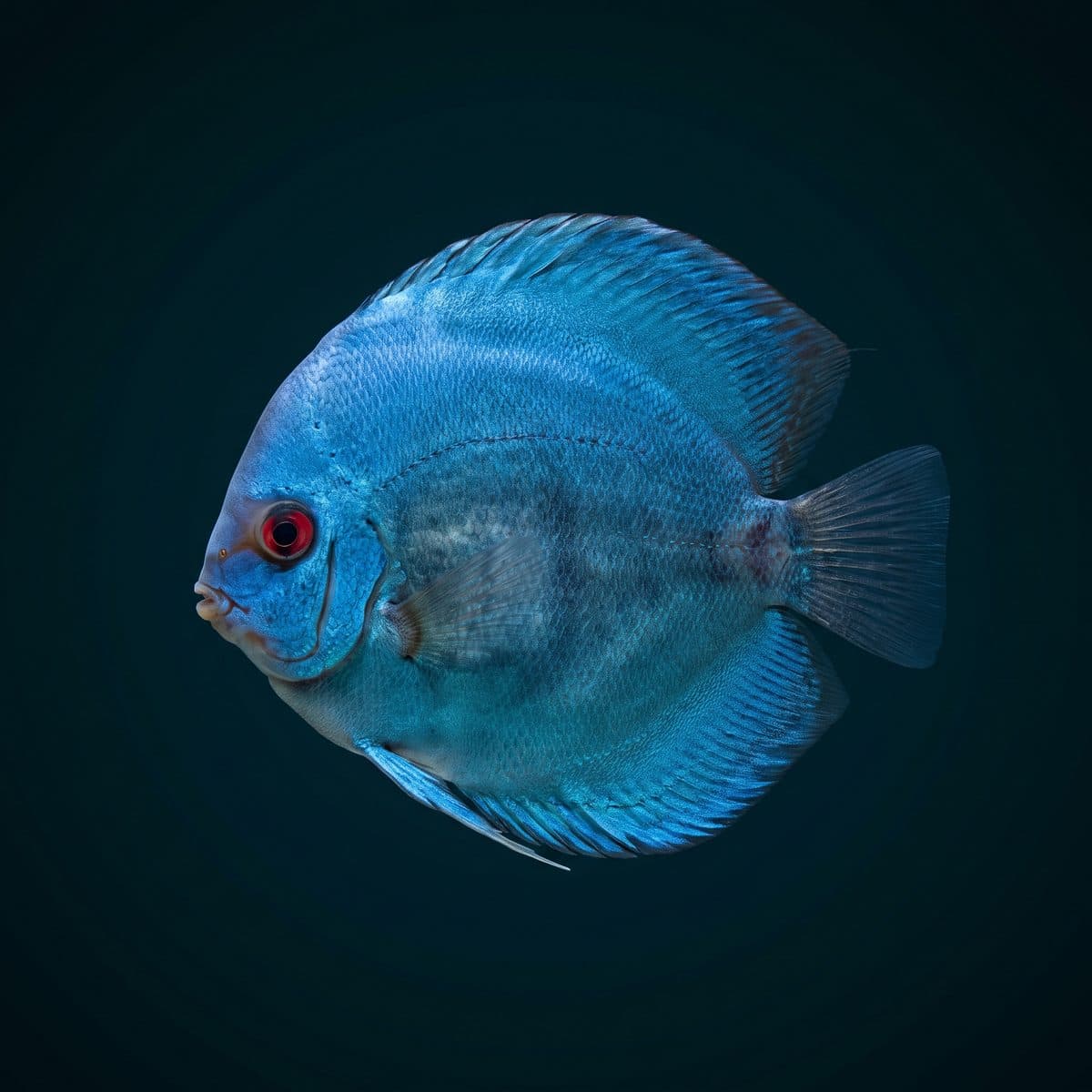
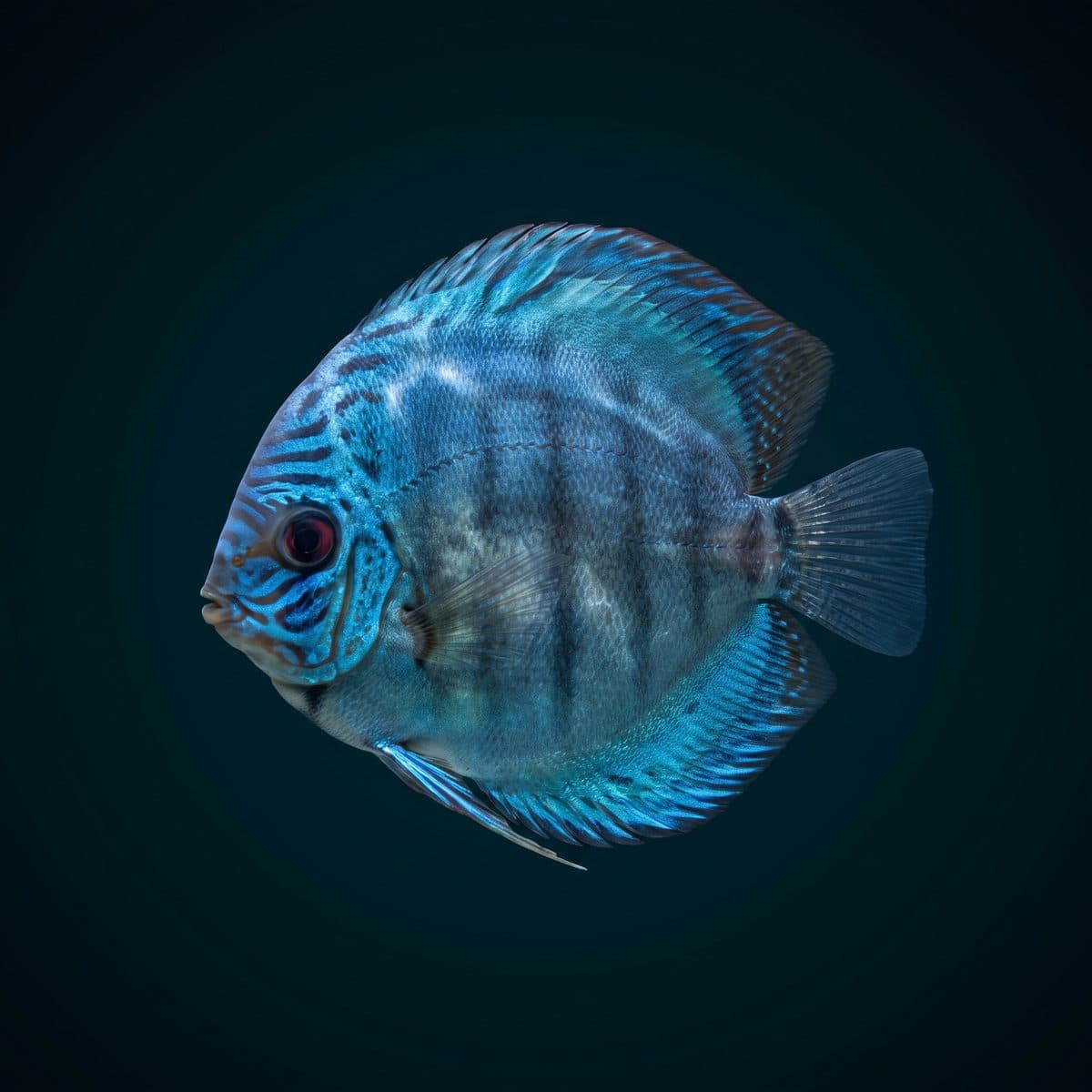
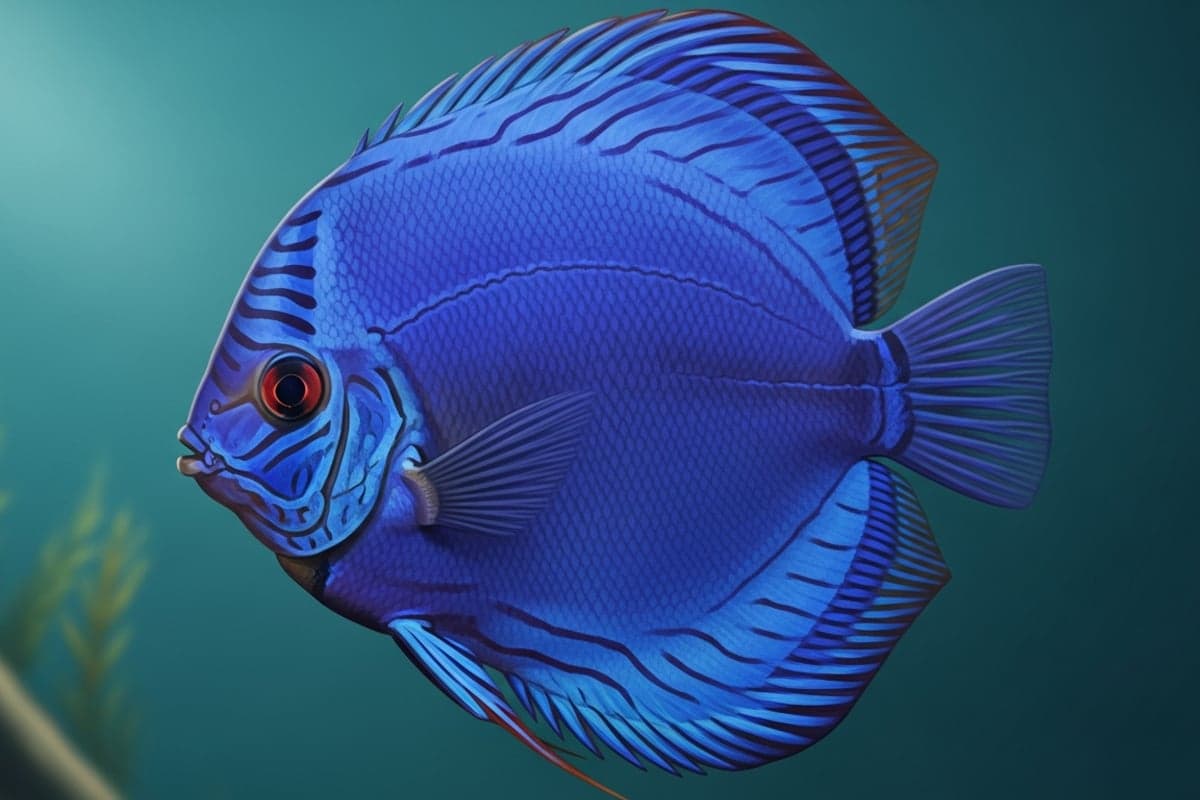
The Blue Diamond Discus is a captive-bred colour morph of Symphysodon aequifasciatus, selectively developed by Asian breeders — primarily in Malaysia, Thailand, and Singapore — from the naturally occurring blue strains of the wild Heckel and Brown Discus. What distinguishes the Blue Diamond from other blue variants is the complete absence of patterning: a flawless specimen displays a solid, uniform cobalt-blue body from head to tail, with no vertical stress bars, no red or brown undertones, and no peppering on the fins. Achieving this level of colour consistency requires generations of selective breeding and is the reason show-quality Blue Diamonds command significant prices.
At The Fish Collection, Discus have been a cornerstone of our livestock programme since the beginning. We source our Blue Diamonds from a select network of breeders whose facilities we have personally inspected and whose genetic lines we have tracked for years. Every Discus we ship has been quarantined for a minimum of 14 days, dewormed with praziquantel, and conditioned onto a varied diet of frozen and prepared foods — ensuring that buyers receive a healthy, feeding, stress-free specimen ready for their display tank.
Discus have an undeserved reputation as impossibly difficult fish. The truth is that they are demanding but predictable: provide warm, clean water, high-quality food, a calm social group, and consistent maintenance, and they will reward you with a decade or more of stunning beauty. This guide provides the complete roadmap.
Natural Habitat & Breeding Origins
Wild Symphysodon species inhabit the Amazon River basin and its tributaries, particularly the blackwater and clearwater systems of Brazil, Colombia, and Peru. They are found in slow-moving, heavily vegetated floodplain lakes and river margins where temperatures range from 26–32 °C, pH runs as low as 4.5 in extreme blackwater environments, and dissolved mineral content is negligible (GH 0–2 dGH, TDS 10–50 ppm). These conditions — ultra-soft, acidic, warm water — define the species' physiological requirements.
The Blue Diamond morph does not exist in the wild. It is the product of decades of selective breeding, primarily in Southeast Asian fish farms, from blue-gene wild stock originally collected from the Rio Madeira, Rio Negro, and Rio Purus. The breeding process involved line-breeding for solid blue pigmentation, selecting against the vertical barring pattern that all wild Discus display, and fixing the trait through multiple generations. Modern Blue Diamonds are typically 15–20 generations removed from wild stock and are considerably more robust than their wild ancestors, though they still require warm, clean water to thrive.
Understanding the wild ancestry is important because it explains why Discus demand elevated temperatures and soft water even in captivity. Their physiology evolved for an extreme environment, and attempts to keep them in standard community conditions (24 °C, pH 7.5, hard water) consistently result in stress, poor colouration, and disease.
Tank Requirements
Tank Dimensions & Aquascape
Discus are social cichlids that must be kept in groups — a minimum of 6 fish is required to establish a stable social hierarchy and reduce individual aggression. A group of 6 Blue Diamond Discus requires a minimum 55-gallon (210 L) aquarium with dimensions of at least 120 cm long × 40 cm wide × 50 cm tall (48 × 16 × 20 inches). For larger groups or community setups, 75–125 gallons is preferable. Unlike many species, height matters for Discus — their laterally compressed body shape means they utilise vertical space, and tanks under 45 cm tall restrict their posture.
Aquascaping for Discus is a matter of philosophy. Many serious breeders use bare-bottom tanks for ease of maintenance and disease detection. Show tanks can be beautifully planted with heat-tolerant species such as Echinodorus (Amazon Swords), Anubias, and Vallisneria, all of which thrive at Discus temperatures. Driftwood and vertical root structures provide visual barriers that reduce territorial aggression. Avoid overcrowding the tank with décor — Discus need open swimming space in the middle of the water column.
Filtration & Flow
Biological filtration must be robust enough to maintain zero ammonia and nitrite while processing the significant organic load from 3–5 daily feedings. A canister filter rated for twice the tank volume, or a sump system with ample bio-media, is the standard approach. Target a turnover rate of 4–6× the tank volume per hour. Discus do not appreciate strong current — use a spray bar or lily pipe to diffuse the output and create gentle circulation throughout the tank.
Many successful Discus keepers run bare-bottom tanks with sponge filters as supplemental biological filtration. Sponge filters provide additional surface area for beneficial bacteria, gentle aeration, and are easy to clean. A UV steriliser is a valuable addition for pathogen control, particularly in tanks with multiple Discus from different sources.
Lighting
Blue Diamond Discus display their colour best under moderate lighting in the 6,500–8,000 K range. Excessive blue-spectrum lighting can make the fish appear washed out, while warm-spectrum LEDs (5,000–6,500 K) bring out the depth and richness of the cobalt-blue pigmentation. A photoperiod of 8–10 hours is standard. Avoid sudden on/off transitions — use a timer with gradual dimming or keep a room light on for 15 minutes before the tank light switches off to prevent startle responses.
Water Parameters
Water quality is the single most important factor in Discus keeping. Discus are more sensitive to dissolved waste and parameter fluctuations than almost any other commonly kept freshwater fish. Target the following:
- Temperature: 28–31 °C (82–88 °F). This is non-negotiable. Discus kept below 27 °C become lethargic, stop feeding, and are highly susceptible to disease. For breeding, 30–31 °C is optimal.
- pH: 5.5–6.8. For maintenance, any stable pH in this range is acceptable. For breeding, pH 5.5–6.0 is preferred and often essential for egg fertility.
- General Hardness (GH): 1–6 dGH (18–107 ppm). Soft water is strongly preferred; Discus from Asian breeding farms are raised in near-zero GH.
- Carbonate Hardness (KH): 1–3 dKH. Low KH is necessary for achieving the acidic pH Discus prefer but requires careful monitoring to prevent pH crashes.
- Ammonia / Nitrite: 0 ppm — always.
- Nitrate: <15 ppm. Many experienced Discus keepers perform daily 25–50% water changes to maintain ultra-low nitrate. At minimum, 30–40% twice weekly is required.
- TDS: 50–200 ppm. RO/DI water reconstituted with a minimal GH buffer (Seachem Equilibrium at quarter dose) is the gold standard.
The frequency and volume of water changes cannot be overstated. Discus produce growth-inhibiting hormones (pheromones) that accumulate in static water and stunt development in juveniles. Frequent water changes dilute these hormones, stimulate appetite, and promote the rapid growth that produces show-quality adults. Many competition breeders change 50–90% of the water daily in grow-out tanks.
Diet & Feeding
Discus are omnivores with a strong requirement for high-quality protein. In the wild, they feed on insect larvae, small crustaceans, algae, and detritus. In captivity, a varied diet fed frequently is essential for growth, colour development, and immune function.
Recommended foods:
- Frozen bloodworms — the universal Discus food. Offer 2–3 times daily for growing juveniles, once daily for adults. Use gamma-irradiated brands (Hikari, San Francisco Bay Brand) to minimise parasite risk.
- Beef heart mix — a homemade or commercial blend of lean beef heart, shrimp, spinach, garlic, and vitamins. This is the growth food of choice among serious breeders. Recipes abound, but the key is low fat content — trim all visible fat from the beef heart before blending.
- High-quality Discus pellets — Hikari Discus Bio-Gold, Sera Discus Granules, or Northfin Discus Formula. These provide balanced nutrition and are essential for colour enhancement.
- Frozen brine shrimp and Mysis shrimp — excellent supplemental protein, particularly for juveniles.
- Blanched spinach or spirulina wafers — offered 1–2 times weekly for vegetable fibre and micronutrients.
Feeding frequency depends on age: juveniles (under 10 cm) should be fed 4–5 times daily in small portions; sub-adults (10–15 cm) 2–3 times daily; and mature adults once or twice daily. Uneaten food must be removed within 5 minutes to prevent water quality degradation. A consistent feeding schedule at the same times each day reduces stress and encourages social feeding behaviour.
Behaviour & Temperament
Discus are social, hierarchical cichlids that thrive in groups. A group of 6 or more establishes a stable pecking order in which the dominant pair occupies the prime central territory while subordinate fish space themselves around the periphery. In groups smaller than 6, bullying is concentrated on 1–2 individuals, leading to chronic stress, poor colouration, and appetite loss. Never keep Discus singly or in pairs unless they are a bonded breeding pair in a dedicated spawning tank.
Despite their cichlid heritage, Discus are not aggressive in the way that Central American or African cichlids are. Their aggression is subtle — a dominant fish will darken its colouration, flare its fins, and chase subordinates away from food. Physical injury is rare in properly stocked tanks. Discus are also highly sensitive to their environment: sudden movements, loud noises, or unfamiliar faces near the tank can trigger a startle response characterised by colour darkening, rapid hiding, and refusal to feed. A Discus tank should be in a low-traffic area of the home.
Compatible Tank Mates
Tank mates must tolerate the elevated temperatures Discus require (28–31 °C) and be peaceful enough not to outcompete the slow-feeding Discus at mealtimes. Proven companions include:
- Cardinal Tetras — the classic Discus dither fish. A school of 20+ provides constant mid-water activity and helps Discus feel secure. Cardinals thrive at Discus temperatures.
- Rummy-nose Tetras — another excellent warm-water schooling fish that adds colour and movement.
- Corydoras sterbai — one of the few Corydoras species comfortable at 28–30 °C. Excellent bottom-dwelling clean-up crew.
- Bristlenose Plecos (Ancistrus) — small, peaceful algae grazers that tolerate warm water.
- Ram Cichlids (Mikrogeophagus ramirezi) — dwarf cichlids that share the Discus' preference for warm, soft water.
Avoid all aggressive or boisterous species — Angelfish (which carry diseases that devastate Discus), Tiger Barbs, large catfish, and any cold-water or hard-water species. The Discus must be the dominant species in its tank.
Breeding
Discus breeding is one of the most rewarding experiences in freshwater fishkeeping. Blue Diamond Discus are prolific breeders once a compatible pair is established. Pairing typically occurs naturally within a group of 6+ fish — over weeks or months, two individuals will bond, claim a territory, and begin cleaning a vertical spawning surface (a cone, PVC pipe, or broad-leaf plant).
Spawning conditions require ultra-soft water (GH 0–2 dGH), pH 5.5–6.2, and a temperature of 30–31 °C. The female deposits 150–400 adhesive eggs in neat rows on the spawning surface; the male follows immediately behind to fertilise them. Both parents guard the clutch aggressively and fan the eggs to ensure oxygenation. Eggs hatch in approximately 60 hours at 30 °C.
What makes Discus breeding unique is the fry's dependence on parental mucus. For the first 2–3 weeks after becoming free-swimming, Discus fry feed exclusively on a protein-rich mucus secretion produced by the skin of both parents. The fry attach to the parents' flanks and graze this mucus — a behaviour analogous to mammalian nursing. Removing the parents prematurely is fatal to the fry. After 2–3 weeks, fry can be supplemented with baby brine shrimp and finely crushed flake food, and can be separated from the parents at 4–6 weeks.
Common Health Issues
Hole-in-the-Head Disease
Hole-in-the-Head (HITH) disease, also called Head and Lateral Line Erosion (HLLE), is the signature Discus ailment. It presents as pitted erosions on the head and along the lateral line, often with white, stringy mucus trailing from the lesions. The aetiology is multifactorial — chronic exposure to high nitrate (>30 ppm), poor diet (particularly deficiency in vitamins A and C), and the flagellate parasite Hexamita/Spironucleus all contribute. Treatment involves improving water quality (nitrate below 10 ppm), enriching the diet with vitamin-soaked foods, and treating with metronidazole (250 mg per 40 litres, repeated after 48 hours) to address the parasitic component. Caught early, HITH is fully reversible; advanced cases leave permanent scarring.
Intestinal Flagellates
Intestinal flagellates (Hexamita, Spironucleus) are endemic to virtually all Discus populations and are normally held in check by a healthy immune system. Stress — from overcrowding, poor water quality, transport, or introduction to a new tank — can trigger an explosive bloom that manifests as white, stringy faeces, appetite loss, darkened colouration, and rapid weight loss. Treatment is metronidazole, administered either in food (1% by weight mixed into beef heart) or in the water column (250 mg per 40 litres). Prophylactic treatment of all new Discus during quarantine is standard practice among experienced keepers.
Other conditions include ich (elevated temperatures make Discus somewhat resistant, but outbreaks can occur during temperature drops), gill flukes (treated with praziquantel), and bacterial infections (Columnaris, Aeromonas) secondary to stress or injury. The best defence is prevention through meticulous water quality, quarantine protocols, and a low-stress environment.