Advanced
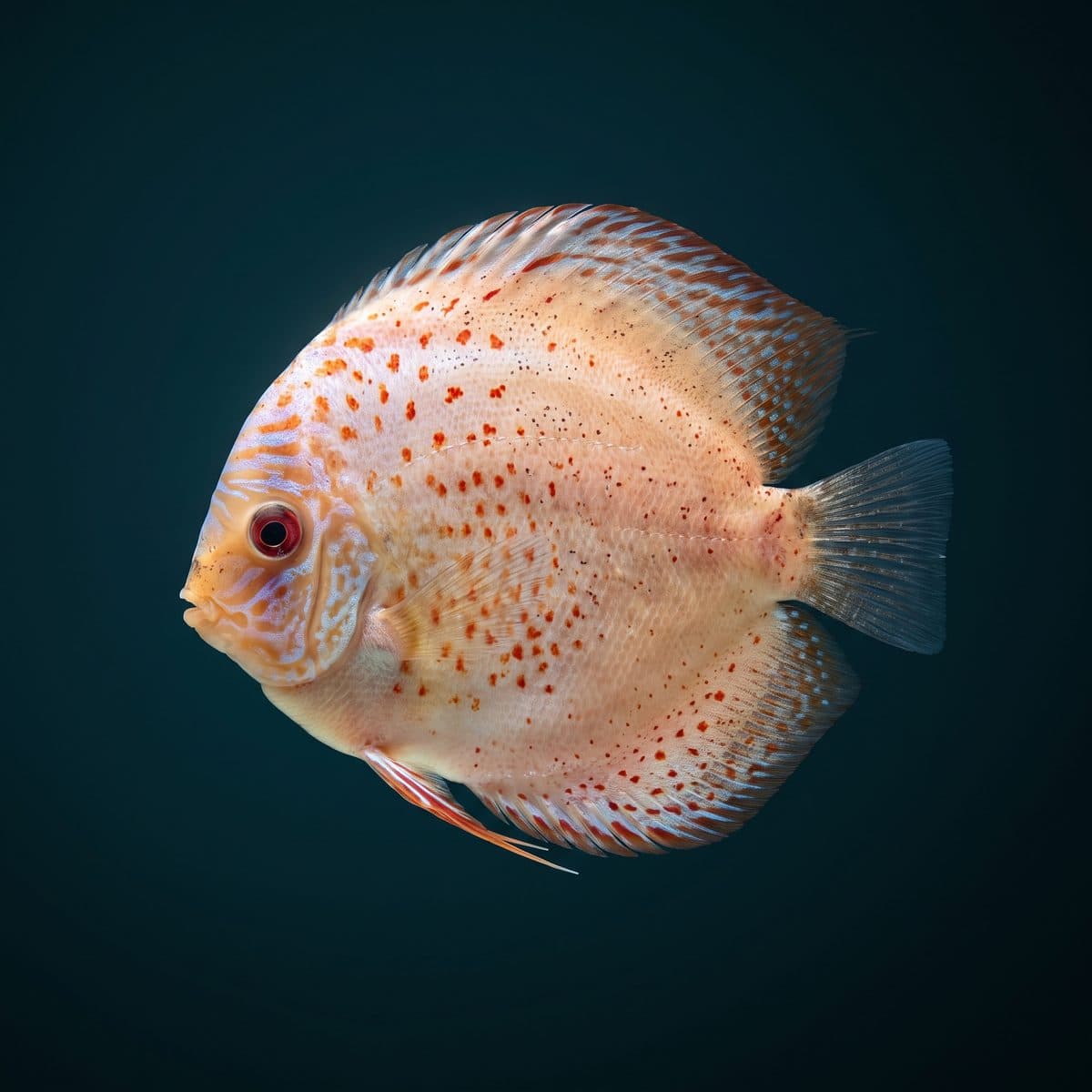
Pigeon Blood Discus
Symphysodon aequifasciatus
¥14,203〜Get a quote
Symphysodon aequifasciatus
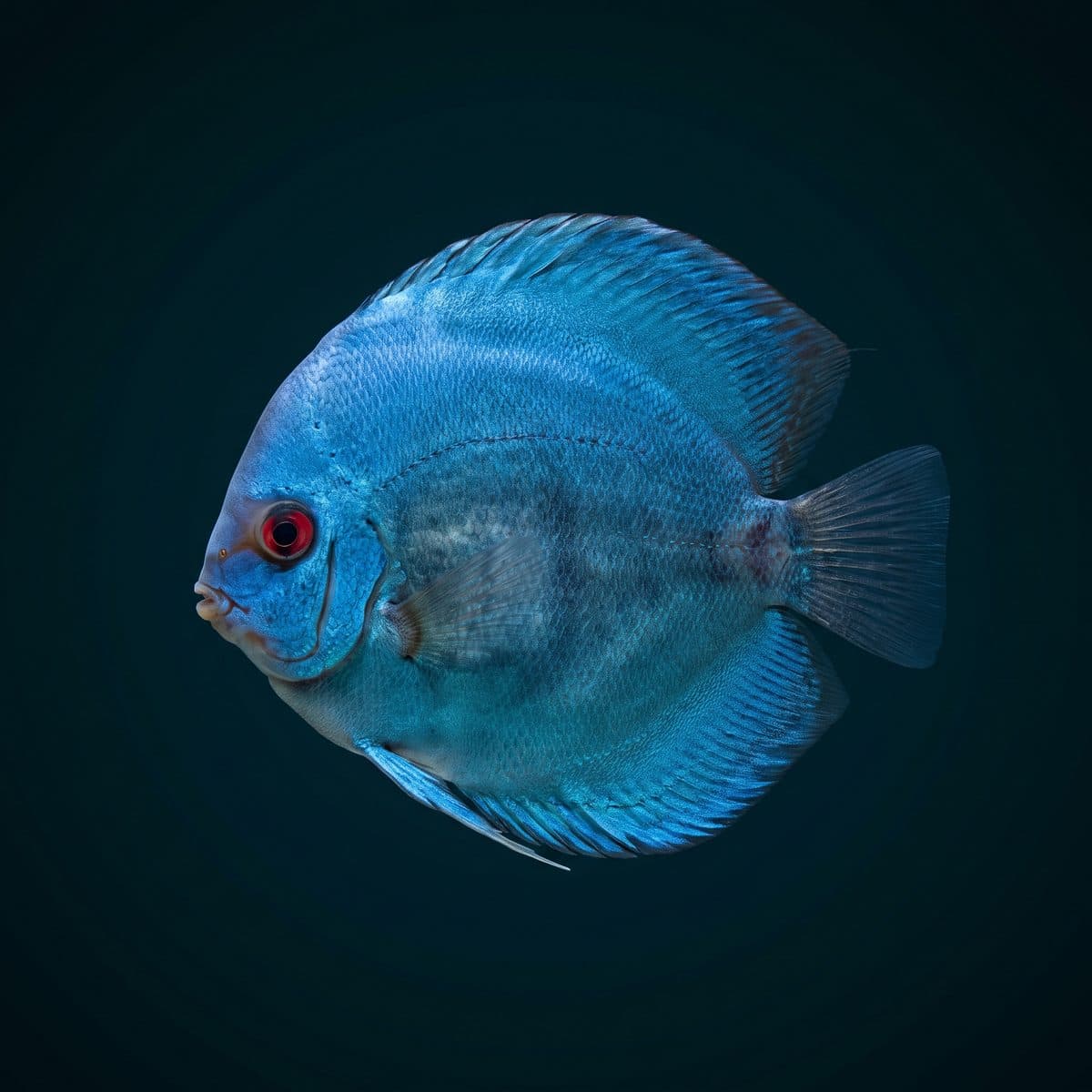
The Blue Diamond Discus is the pinnacle of solid-color discus breeding — a fish whose entire body radiates a uniform, electric cobalt blue that appears almost luminescent under proper aquarium lighting. Symphysodon aequifasciatus in its Blue Diamond form represents decades of selective breeding that has isolated and amplified the blue pigment while suppressing the natural barring and patterning that characterizes wild discus. The result is a disc-shaped fish of almost surreal beauty — a living gemstone that justifies its name with every viewing. The Fish Collection sources our Blue Diamond Discus from established Asian and European breeding facilities that maintain strict quality standards for color uniformity, body shape, and fin symmetry.
Insulated, oxygen-packed transit · live-arrival guaranteed
Tank size
55+ gallons
性格
Peaceful
食性
Omnivore
Water
82–88°F · pH 6–7
Tell us what you're dreaming of — we'll reply with a price tailored to you.
Happy together
Not sure if this fish is right for you?
Our team will happily help you choose.
The Blue Diamond Discus is the pinnacle of solid-color discus breeding — a fish whose entire body radiates a uniform, electric cobalt blue that appears almost luminescent under proper aquarium lighting. Symphysodon aequifasciatus in its Blue Diamond form represents decades of selective breeding that has isolated and amplified the blue pigment while suppressing the natural barring and patterning that characterizes wild discus. The result is a disc-shaped fish of almost surreal beauty — a living gemstone that justifies its name with every viewing. The Fish Collection sources our Blue Diamond Discus from established Asian and European breeding facilities that maintain strict quality standards for color uniformity, body shape, and fin symmetry.
What distinguishes a premium Blue Diamond Discus from an ordinary blue discus is the completeness and uniformity of the coloration. A true Blue Diamond shows no stress bars, no residual patterning, and no color gradation — the same intensity of blue from head to tail, gill plate to dorsal fin. The disc shape should be nearly circular when viewed from the side, with proportional finnage that frames the body without appearing overdeveloped. Our specimens are selected against these criteria under multiple lighting conditions, because a fish that looks solid blue under actinic lighting but reveals hidden bars under white light is not a genuine Blue Diamond.
Discus keeping is often described as the summit of freshwater fishkeeping, and the description is not entirely marketing hyperbole. These are fish that reward precise water management with breathtaking beauty and punish neglect with rapid deterioration. Temperature must be maintained between 82 and 88 degrees Fahrenheit — warmer than the vast majority of tropical fish, and the single most common mistake made by new discus keepers is running their tank too cool. A stable 84 to 86 degrees is the sweet spot. pH should be between 6.0 and 7.0, and water must be soft — hardness below 8 dGH is essential. Many successful discus keepers use reverse-osmosis water remineralized to target parameters.
Tank size for a group of discus starts at 55 gallons for a small group of five to six juveniles, with 75 to 100 gallons being more appropriate for adult groups. Discus are social fish that must be kept in groups — solitary specimens become stressed, lose color, and often fail to thrive. A group of six or more in a bare-bottom or fine-sand tank with minimal decoration is the classic discus setup, though many keepers successfully maintain discus in planted aquariums with careful attention to temperature and water chemistry.
Diet should be high-quality and varied. Discus-specific granules, frozen bloodworms, brine shrimp, beef heart preparations, and white worms form the core rotation. Feed three to four times daily for juveniles to promote growth, tapering to twice daily for adults. Our specimens are eating frozen and prepared foods enthusiastically. The Fish Collection ships all discus in insulated, temperature-controlled containers with our live arrival guarantee.
よくある質問
専門家リソース
種別ガイド
The Blue Diamond Discus is a selectively bred colour morph of the common Discus (Symphysodon aequifasciatus), prized for its solid, luminous cobalt-blue body free of the vertical stress bars typical of wild-type Discus. Widely considered the "king of the aquarium," Discus demand warm, pristine water, frequent feeding, and a calm social environment. This guide covers every element of Blue Diamond Discus husbandry — water chemistry, tank design, diet protocols, breeding, and disease prevention — drawing on The Fish Collection's decades of experience sourcing and maintaining show-quality Discus.
ガイド全文を読む →飼育ガイド
A precision-focused guide to the water chemistry and tank configuration requirements for keeping Discus, covering the notoriously strict parameter ranges, RO water systems, temperature stability, and ongoing maintenance protocols.
飼育ガイドを読む →こちらもおすすめ
¥17,940〜
Indicative price