Pufferfish Feeding Fundamentals
Pufferfish are among the most intelligent and interactive fish in the aquarium hobby — they recognise their keepers, beg for food, and display distinct personalities. But that intelligence comes paired with demanding dietary needs that no other group of aquarium fish shares. Feed a pufferfish incorrectly, and you will face beak overgrowth, malnutrition, organ failure, or a fish that simply refuses to eat.
The core principle is simple: pufferfish must eat hard-shelled food regularly to maintain their beak. Everything else — frozen foods, market seafood, occasional treats — is supplementary. Neglect the beak, and you will eventually need a veterinarian with a pair of cuticle nippers and a sedation protocol. Or you will lose the fish.
The Beak: Why Diet Matters More Than You Think
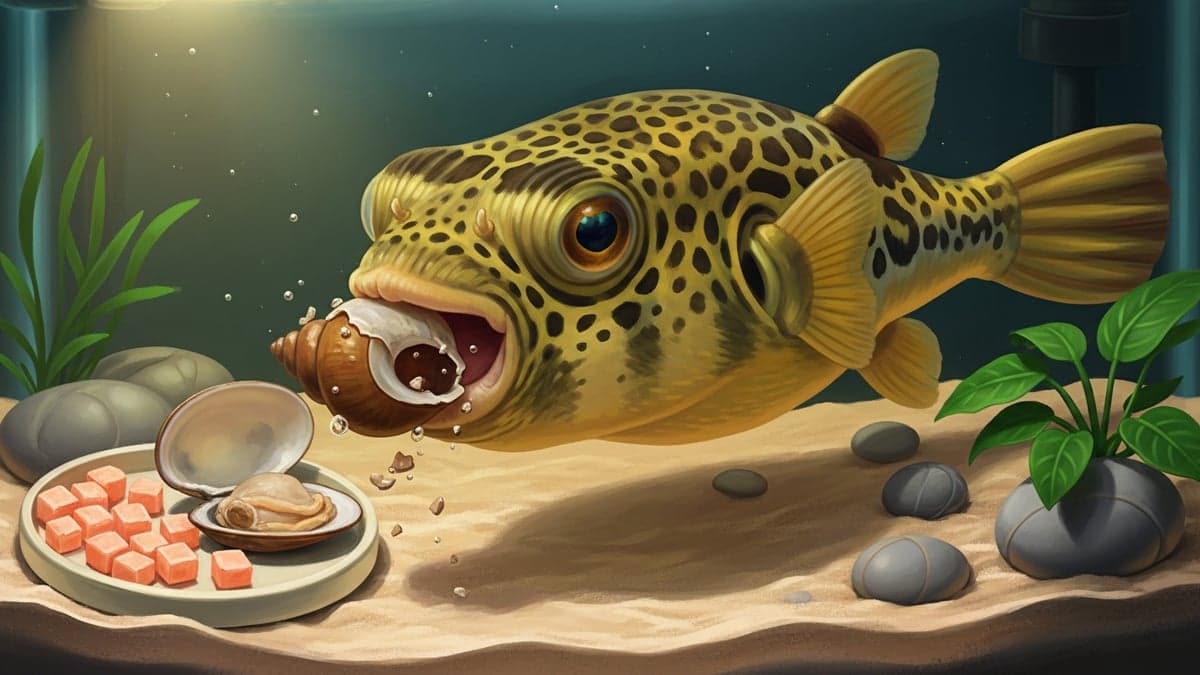
Pufferfish possess a unique dental structure: four fused teeth (two upper, two lower) that form a beak-like plate. This beak grows continuously throughout the fish's life — much like rodent incisors. In the wild, constant crushing of snails, clams, and crustaceans wears the beak at the same rate it grows, maintaining a functional length.
In captivity, keepers who feed only frozen or soft foods eliminate the mechanical wear. The beak grows unchecked, eventually preventing the fish from opening its mouth to eat at all. This is a slow, agonising process — the fish starves over weeks while its keeper watches, often unaware of the cause until it is too late.
The solution is prevention: offer hard-shelled food at least 3–4 times per week for adults, and daily for juveniles whose beaks grow faster. Ramshorn snails, Malaysian trumpet snails, small clams, and crayfish are the best options. The satisfying "crunch" you hear when a pufferfish crushes a snail is the sound of proper husbandry.
Species-Specific Diets
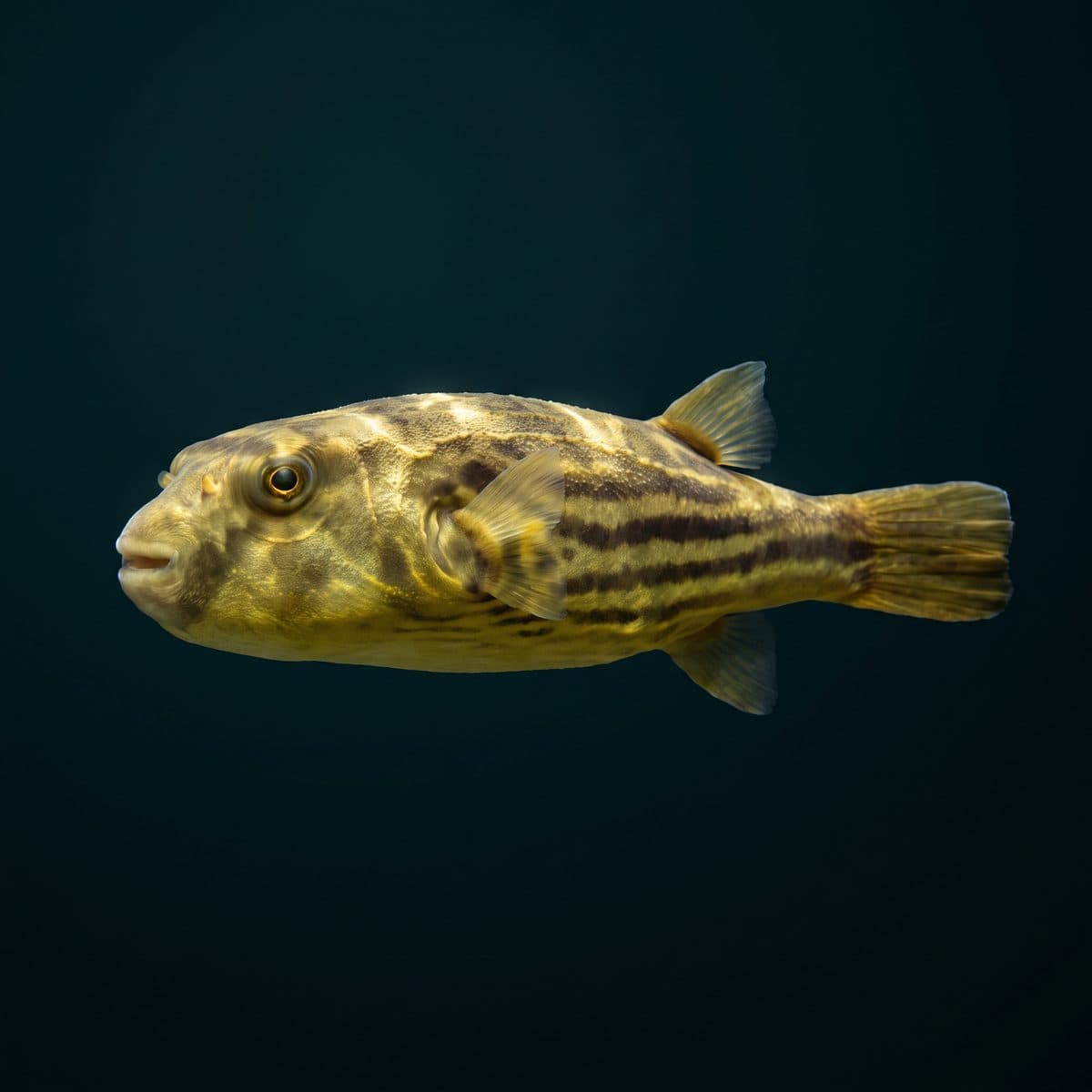
Fahaka Puffer (Tetraodon lineatus)
The Fahaka is a large (up to 45 cm / 18 in), aggressive freshwater puffer with a powerful bite. It can crack cherry-stone clams and crayfish carapaces without difficulty.
- Staple (60 %): Ramshorn snails, pond snails, Malaysian trumpet snails, small clams (littleneck or manila), blue mussels (shell-on)
- Supplementary (30 %): Whole market shrimp (shell-on), frozen silversides, earthworms, crayfish
- Treats (10 %): Frozen bloodworms, cockles, squid strips
- Feeding frequency: Every other day for adults. Fahaka are prone to obesity — a slight concavity behind the eyes indicates proper weight; a rounded profile suggests overfeeding.
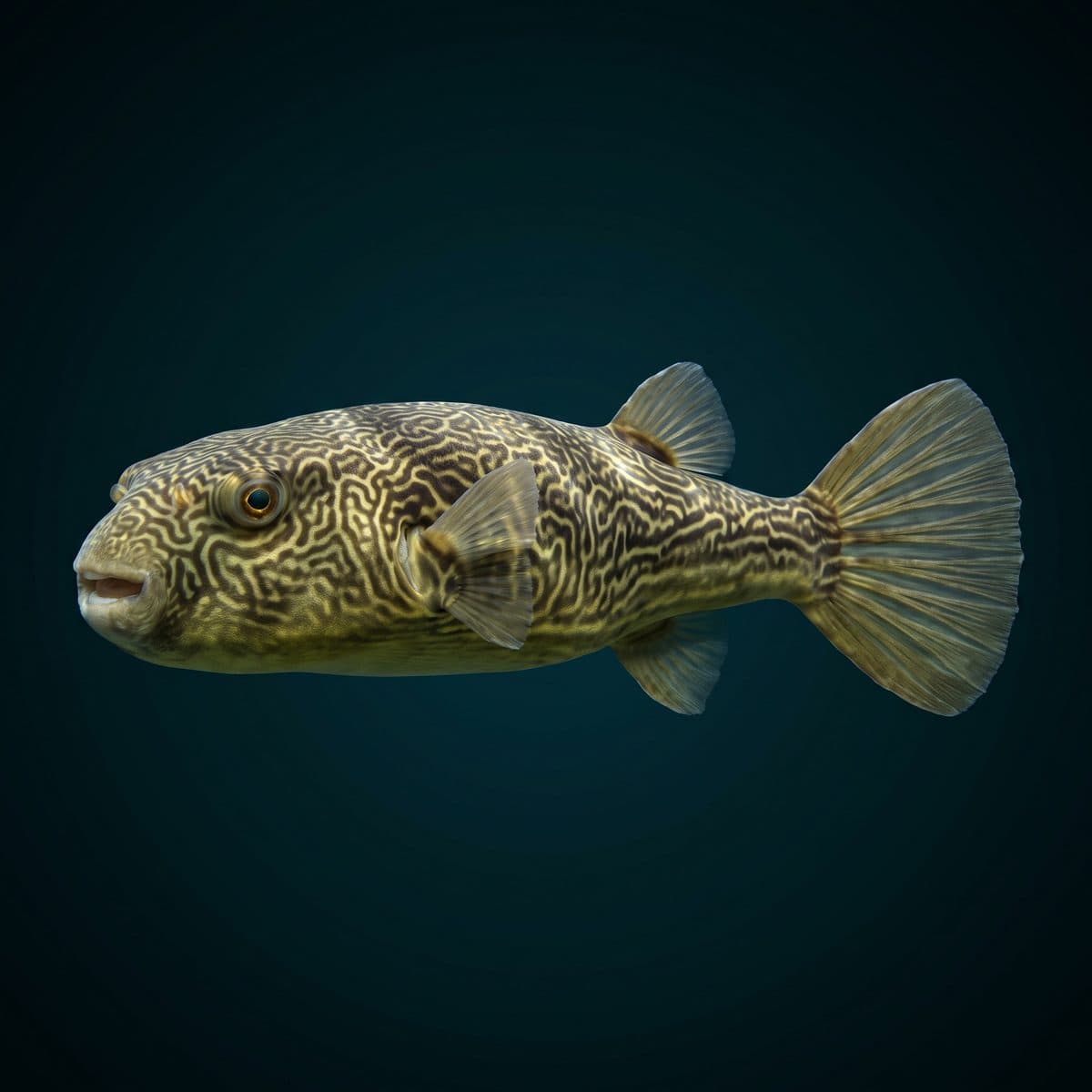
Mbu Puffer (Tetraodon mbu)
The Mbu is the largest freshwater pufferfish, reaching 67 cm (26 in) and requiring a 500+ gallon tank. Its dietary needs are substantial — an adult Mbu can consume a dozen large snails in a single feeding session.
- Staple (60 %): Large pond snails, apple snails, clams, blue mussels, whole crayfish
- Supplementary (30 %): Whole prawns (shell-on), frozen smelt, earthworms, green beans (blanched — Mbu puffers are one of the few pufferfish that accept vegetable matter)
- Treats (10 %): Crab legs, squid, cockles
- Feeding frequency: Every other day for adults. Due to the Mbu's enormous appetite, maintaining a snail-breeding colony is practically essential (see Culturing Live Food below).
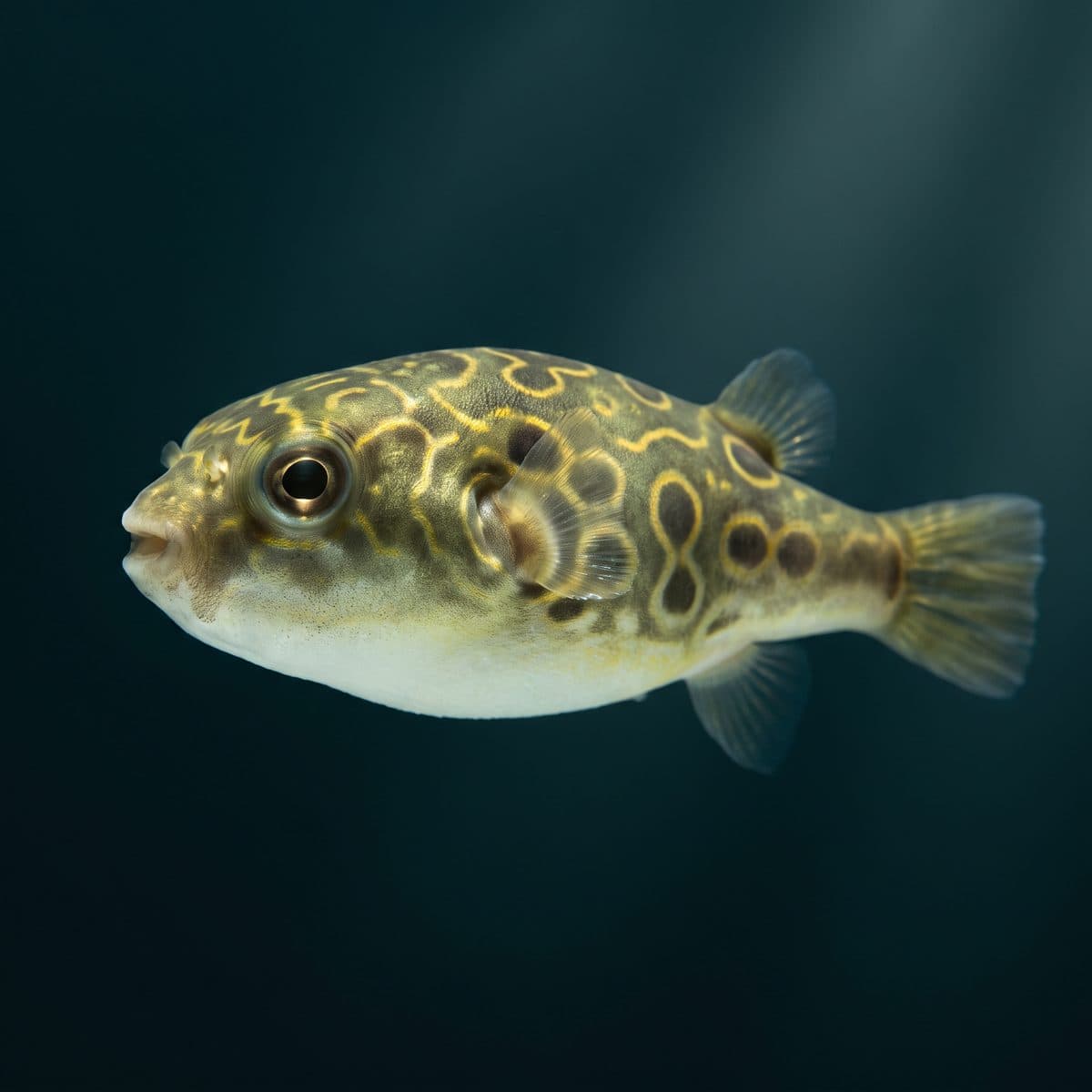
Figure Eight Puffer (Dichotomyctere ocellatus)
A small brackish species (8 cm / 3 in max), the Figure Eight requires specific gravity of 1.005–1.008 and smaller food items proportional to its size.
- Staple (60 %): Small ramshorn snails, bladder snails, frozen shell-on brine shrimp
- Supplementary (30 %): Frozen bloodworms, frozen mysis shrimp, small pieces of mussel and clam
- Treats (10 %): Live blackworms, daphnia
- Feeding frequency: Daily for juveniles, every other day for adults. Small portions — Figure Eights are easily overfed.
Pea Puffer (Carinotetraodon travancoricus)
The smallest pufferfish in the hobby at 2.5 cm (1 in), the Pea Puffer is a freshwater species from India. Despite its size, it is an aggressive micro-predator with a pronounced beak.
- Staple (50 %): Baby ramshorn snails, bladder snails, small Malaysian trumpet snails
- Supplementary (40 %): Frozen bloodworms (thawed, individual worms offered on a feeding stick), live blackworms, frozen daphnia
- Treats (10 %): Live brine shrimp, grindal worms
- Feeding frequency: Daily. Pea Puffers have a high metabolic rate and can lose condition quickly if underfed. Offer small amounts twice daily if possible.
Best Foods for Pufferfish
Hard-Shelled Foods (Beak Maintenance)
- Ramshorn snails: The gold standard. Easy to breed, appropriate for all puffer sizes, and eagerly accepted. Culture a colony in a separate container (see below).
- Malaysian trumpet snails (MTS): Harder shells than ramshorns — excellent for larger puffers. Their burrowing habit encourages natural hunting behaviour.
- Blue mussels: Available frozen at most supermarkets. Offer half-shell for small puffers, whole for Fahaka and Mbu. Rich in protein and omega-3 fatty acids.
- Littleneck clams: Tougher than mussels — ideal for large puffers that need maximum beak wear. Open slightly with a knife to give smaller puffers access.
- Crayfish: Whole crayfish provide both shell material and high-protein meat. Source from pesticide-free waters or breed your own. Appropriate for Fahaka, Mbu, and other large species.
- Cockles: Small bivalves available frozen. Good intermediate option between mussels and clams.
Supplementary Foods
- Frozen shrimp (shell-on): Market prawns with shells provide some beak wear plus excellent nutrition. Remove the head for smaller species.
- Frozen bloodworms: High in protein, eagerly accepted by all species. Use as a supplement, not a staple — bloodworms alone are nutritionally incomplete.
- Frozen mysis shrimp: Superior nutritional profile to brine shrimp, with higher protein and omega-3 content. Excellent for small to medium puffers.
- Earthworms: Chopped for small puffers, whole for large species. Extremely nutritious and readily accepted. Source from pesticide-free garden soil or purchase from a bait supplier.
- Squid: Cut into strips appropriate for the puffer's mouth size. High in taurine, which supports cardiac health.
Foods to Avoid
- Flake food and pellets: Pufferfish rarely accept them, and they provide no beak wear. Not suitable as any part of the diet.
- Feeder fish (goldfish, rosy reds): High in thiaminase (destroys vitamin B₁), carry parasites, and provide no shell material for beak maintenance. The risks far outweigh any convenience.
- Freeze-dried foods: Cause bloating if not pre-soaked and lack the nutritional value of frozen or live alternatives.
- Mammalian meat: Beef heart, chicken, or other mammalian protein is too fatty and difficult for pufferfish to digest. Causes fatty liver disease with repeated feeding.
Feeding Schedule by Life Stage
- Juvenile (under 5 cm / 2 in): Feed daily. Alternate between snails, frozen bloodworms, and frozen mysis. Small, frequent meals — juveniles have fast metabolisms and empty stomachs quickly. Offer as much as the fish consumes in 3–5 minutes, then remove uneaten food.
- Sub-adult (5–15 cm): Feed daily to every other day, depending on species and growth rate. Increase hard-shelled food to at least 50 % of the diet. This is the critical beak-formation period — establish good shell-crushing habits now.
- Adult (species-dependent maximum size): Feed every other day for most species. Large species (Fahaka, Mbu) can be fed every 2–3 days. Monitor body condition — a slight concavity behind the eyes and a streamlined belly indicate correct weight. A rounded, distended belly indicates overfeeding.
Fasting days: One fast day per week (no food at all) is beneficial for adult pufferfish. It mimics natural feeding irregularity and allows the digestive system to clear completely. Do not fast juveniles.
Beak Trimming: When Diet Is Not Enough
If a pufferfish's beak becomes overgrown despite a shell-based diet — or if you have rescued a fish with an already overgrown beak — manual trimming is necessary. This is a stressful procedure for both fish and keeper and should be treated as a last resort, not routine maintenance.
Procedure overview:
- Sedate the fish in a clove-oil bath (4–5 drops per litre of tank water). Wait until the fish loses equilibrium and gill movement slows to a steady, relaxed rate (5–10 minutes).
- Gently hold the fish in a wet towel, exposing the mouth.
- Using sterilised cuticle nippers, trim the beak tips back to a functional length — enough that the fish can open its mouth fully. Do not over-trim; cutting into the live tissue causes bleeding and infection risk.
- Return the fish to clean, aerated tank water. Recovery from sedation typically takes 10–20 minutes.
- Monitor for 48 hours for signs of infection at the trim site. Add a broad-spectrum antibacterial (Seachem StressGuard or equivalent) to the water as a precaution.
After trimming, immediately transition to a snail-heavy diet to prevent regrowth from outpacing wear. If you are uncomfortable performing this procedure, consult an aquatic veterinarian.
Culturing Live Food at Home
Maintaining a snail colony is the single most practical step you can take as a pufferfish keeper. A self-sustaining colony eliminates ongoing food costs and ensures a constant supply of fresh, disease-free snails.
Ramshorn snail colony setup:
- Use a 10–20 gallon container (a plastic storage tub works fine — no need for a glass aquarium).
- Add a sponge filter for gentle biological filtration and aeration.
- Substrate: thin layer of gravel or bare bottom.
- Lighting: ambient room light is sufficient. Snails are not light-dependent.
- Feed the snails blanched vegetables (zucchini, cucumber, spinach), algae wafers, and fish food flakes. Remove uneaten food after 24 hours.
- Temperature: room temperature (20–26 °C) is fine. Warmer temperatures accelerate reproduction.
- A starter colony of 20–30 ramshorn snails will produce hundreds within 6–8 weeks. Harvest snails as needed by dropping in a piece of vegetable overnight — snails will congregate on it for easy removal.
For larger puffers (Fahaka, Mbu), also consider culturing crayfish. Dwarf crayfish (Cambarellus spp.) breed readily in a 20-gallon setup with plenty of hiding spots (PVC pipes, clay pots). They reach feeding size (2–3 cm) in approximately 3 months.
Nutritional Supplements
A varied diet covers most nutritional bases, but supplementation fills gaps — particularly for captive pufferfish that lack access to the full biodiversity of wild food sources.
- Vitamin soak: Once weekly, soak frozen foods in a fish-specific vitamin supplement (Vita-Chem, Selcon, or equivalent) for 10 minutes before feeding. This delivers vitamins A, C, D₃, and E plus omega-3 fatty acids directly through the food.
- Garlic extract: A natural appetite stimulant and mild antiparasitic. Soak food in fresh garlic juice (one crushed clove per tablespoon of water) once weekly. Particularly useful for picky eaters or fish recovering from illness.
- Calcium: Essential for beak and skeletal health. Shell-on foods provide calcium naturally; for puffers that refuse shell foods, add a cuttlebone piece to the tank. It will slowly dissolve, raising calcium levels.
Pufferfish are among the most rewarding aquarium fish to keep — their intelligence and personality are unmatched. Feed them correctly, and they will thrive for years. Browse The Fish Collection's pufferfish collection for available specimens, and reach out to our team if you need advice tailoring a feeding programme to your specific species.