Why Pond Design Matters for Koi
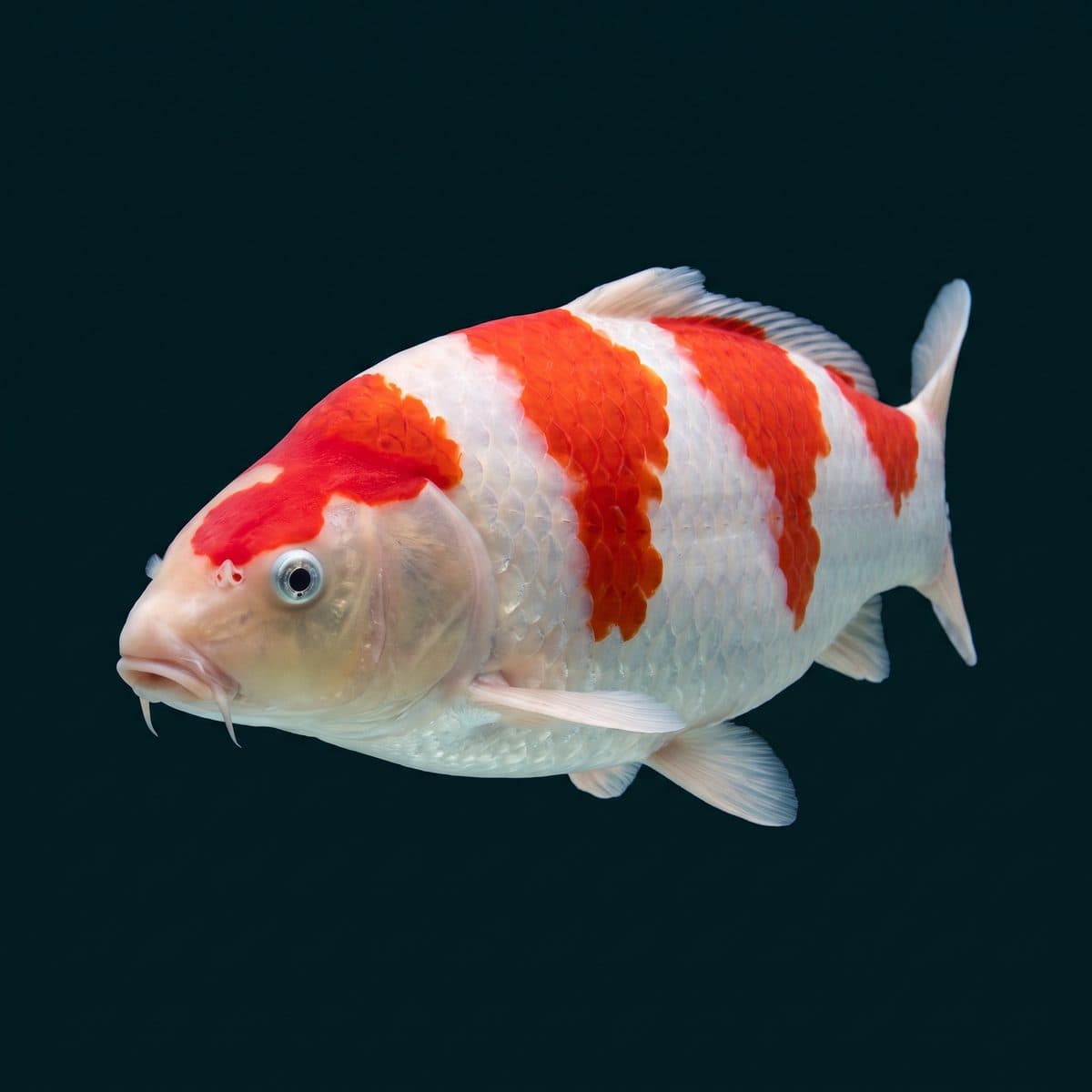
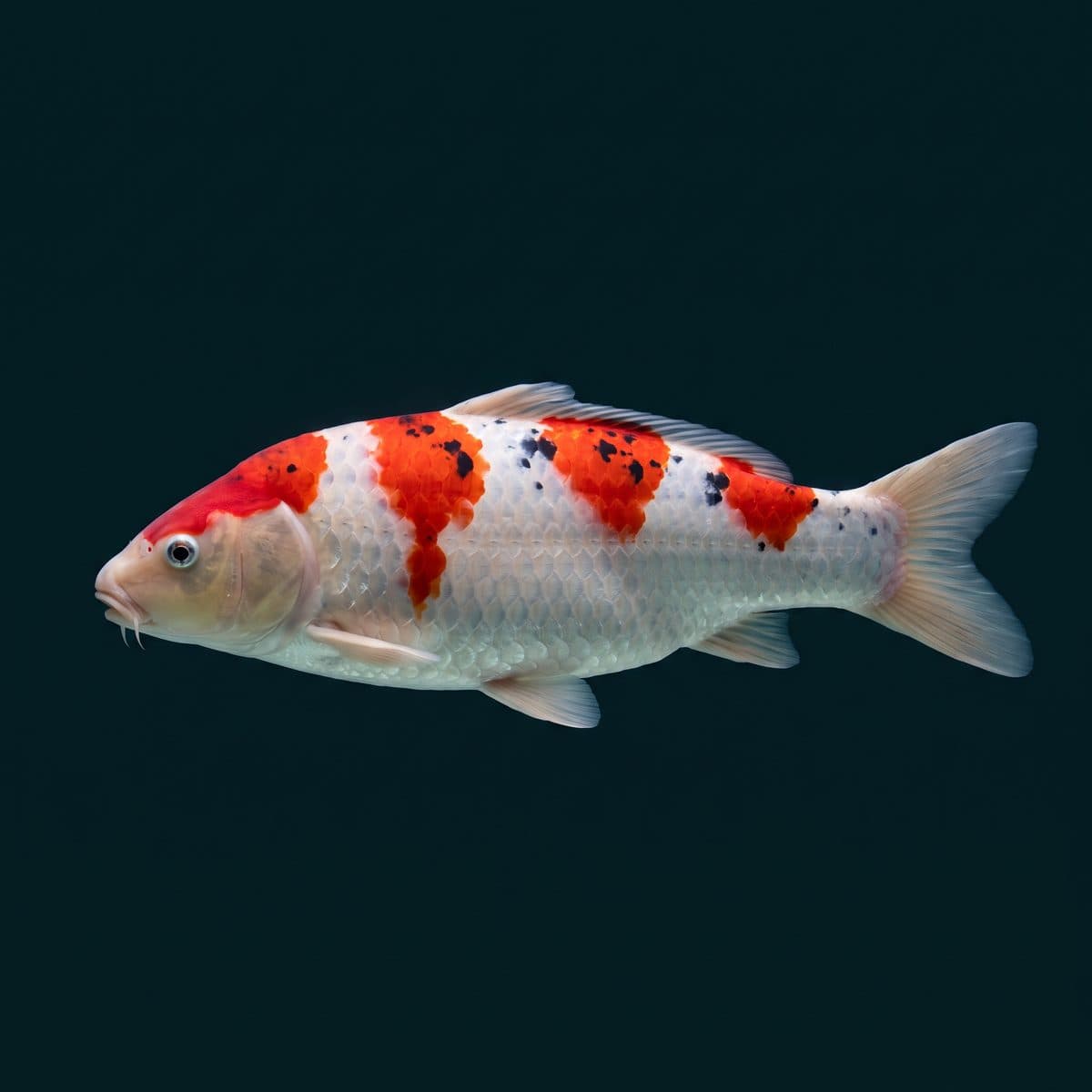
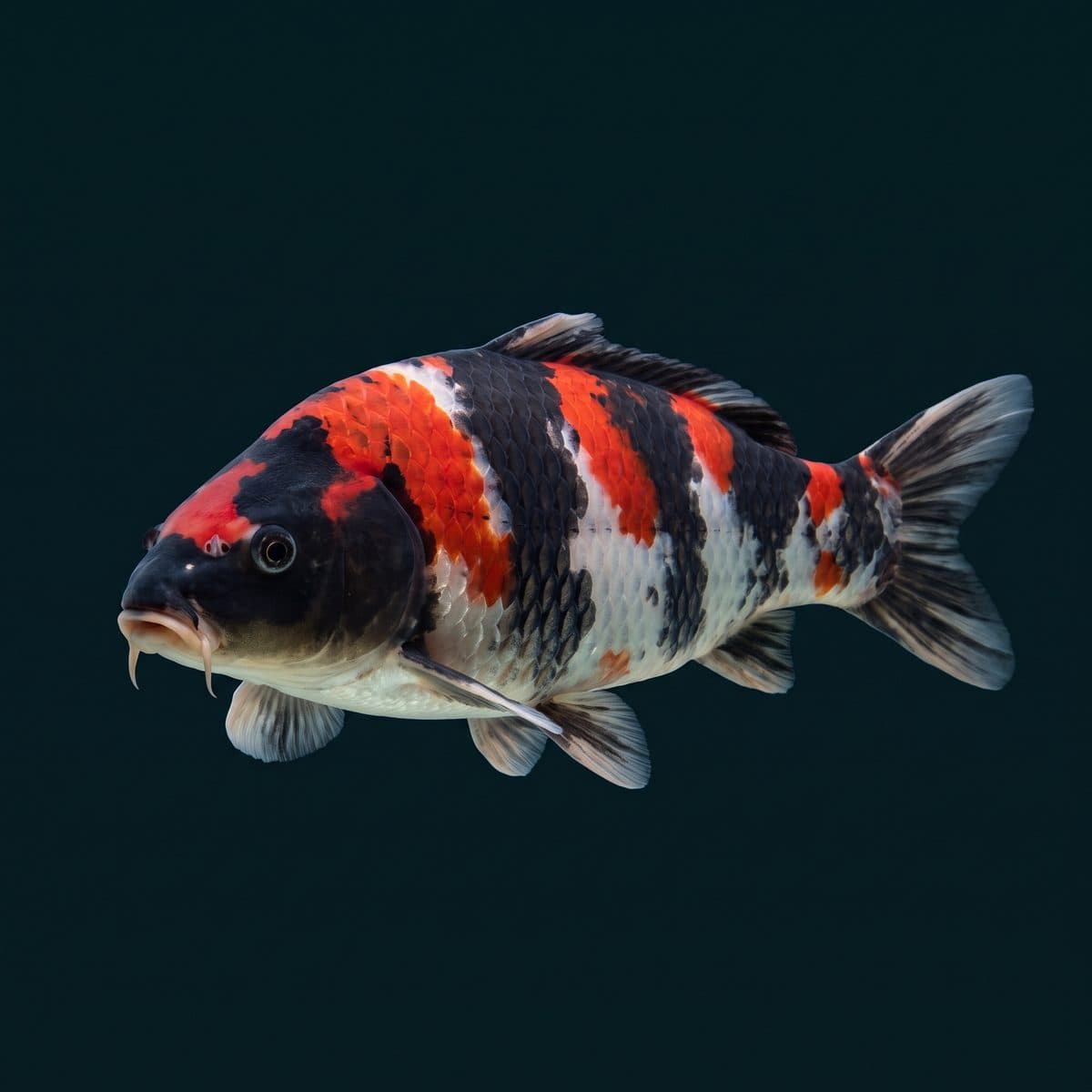
Koi (Cyprinus carpio) are long-lived, large-bodied fish that can reach 60–90 cm (24–36 in) and live 25–35 years under optimal conditions — with exceptional specimens surpassing 50 years. They are not goldfish. A pond that is adequate for a few comets will fail catastrophically when stocked with koi, because koi produce three to five times the waste of similarly sized goldfish and require proportionally more filtration capacity, dissolved oxygen, and swimming volume.
The pond you build today must accommodate koi at their adult size, not the 10 cm juveniles you stock it with. I have consulted on hundreds of koi pond projects, and the single most common regret among pond keepers is building too small. Excavation and plumbing are done once — building it right the first time costs marginally more than building it wrong and having to rebuild in three years when your koi outgrow the space.
Pond Size and Depth
Calculating the Right Volume
The absolute minimum for a koi pond is 1,000 gallons (3,785 litres). This volume supports 2–4 adult koi with adequate filtration, though 2,000–3,000 gallons is a far more practical starting point. The standard guideline is 250 gallons per adult koi — meaning a 1,000-gallon pond should hold no more than 4 mature fish. Overstocking is the leading cause of chronic water-quality problems in koi ponds.
Larger volumes also provide dramatically better thermal stability. A 500-gallon pond in direct sunlight can swing 5–8 °F in a single day; a 3,000-gallon pond with partial shading may fluctuate only 1–2 °F. Koi tolerate a wide temperature range (35–85 °F) but are stressed by rapid changes — volume is your buffer against temperature shock.
Depth for Overwintering
If you live in a climate where winter temperatures drop below freezing, pond depth is not optional — it is the difference between live koi and dead koi. A minimum depth of 3–4 feet (90–120 cm) is required for overwintering. In USDA hardiness zones 5 and below, 4 feet is strongly recommended.
The principle is simple: ice forms on the surface, but water at the bottom of a sufficiently deep pond remains at approximately 4 °C (39 °F) — the temperature at which water reaches maximum density. Koi enter torpor (a hibernation-like state of reduced metabolism) at the bottom of the pond and survive the winter in this zone. If the pond is too shallow, the entire water column can freeze or cool to a lethal temperature, killing the fish.
Even in mild climates (zones 8–10), a minimum depth of 3 feet is recommended for predator protection and thermal stability. Shallow ponds are easy targets for herons, raccoons, and cats.
Construction Methods
Liner Ponds (EPDM / RPE)
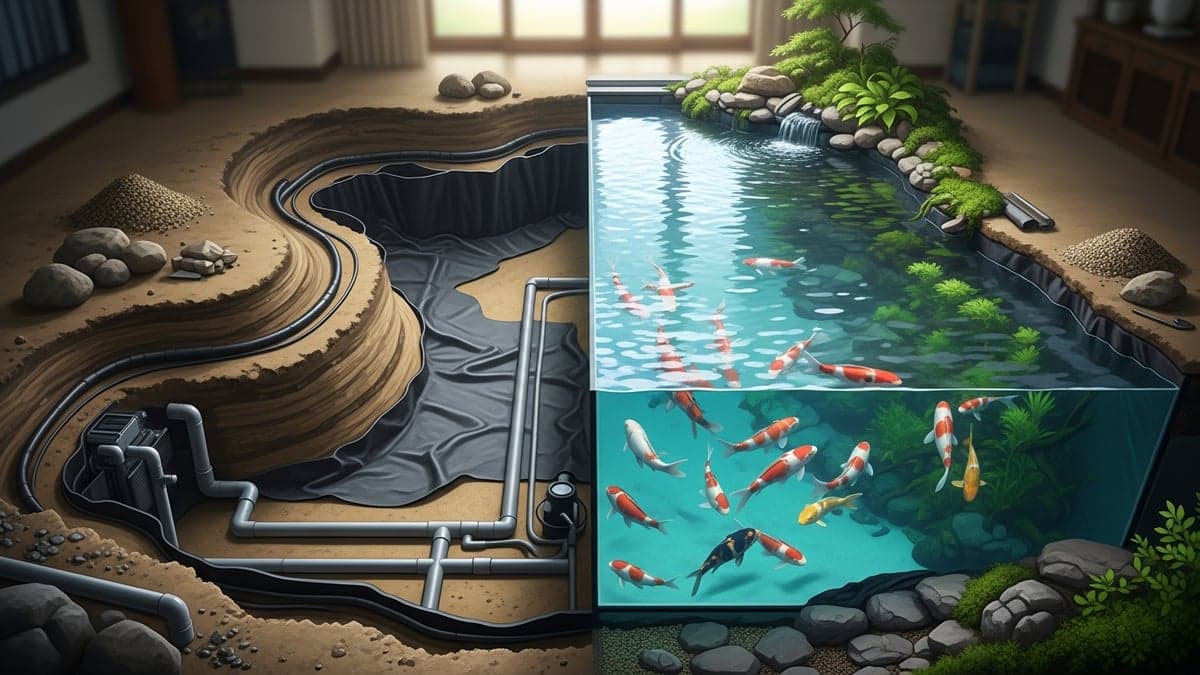
Flexible liners are the most popular construction method for koi ponds. They are cost-effective, allow custom shapes, and are relatively straightforward to install.
- EPDM (ethylene propylene diene monomer): The industry standard. EPDM liners are 45 mil (1.14 mm) thick, fish-safe, UV-resistant, and flexible enough to conform to complex excavation shapes. A quality EPDM liner carries a 20-year warranty and lasts 30+ years in practice. Ensure you purchase fish-safe EPDM — roofing-grade EPDM may contain fungicides that are toxic to aquatic life.
- RPE (reinforced polyethylene): Lighter and more puncture-resistant than EPDM, but less flexible. RPE liners are excellent for formal, geometric ponds where sharp angles and flat surfaces are the design intent. They are also thinner (20–30 mil) without sacrificing strength, making handling easier during installation.
Under any flexible liner, install a geotextile underlayment (300+ g/m²) to protect against root penetration and sharp stones. This is not optional — a single puncture in a 3,000-gallon pond means thousands of litres of water loss and potential fish death.
Preformed Ponds
Preformed fibreglass or polyethylene shells are available in sizes up to approximately 500 gallons. For koi, they are almost always too small. A preformed pond can serve as a quarantine facility or a hospital tank, but it is not a suitable permanent home for adult koi. If budget or space constraints limit you to preformed options, consider goldfish instead.
Concrete and Fibreglass
For serious koi keepers, concrete (shotcrete or poured) with a fibreglass or pond-safe paint coating is the premium option. Concrete ponds offer unlimited design flexibility, integrate bottom drains and return jets directly into the structure, and last indefinitely with proper maintenance.
The downsides are cost ($15,000–$50,000+ depending on size and finish) and construction complexity — concrete ponds require professional installation, proper curing (28 days minimum before filling), and pH neutralisation (new concrete leaches calcium hydroxide, raising pH to 10+). Apply a pond-safe epoxy or fibreglass coating to seal the surface and eliminate pH leaching.
Filtration System
Koi produce enormous quantities of waste — far more than most pond keepers anticipate. A single adult koi can produce 200–300 mg of ammonia per day. Multiply that by a pond of 8–10 fish, and you need an industrial-grade filtration system to maintain water quality. The filtration must address three distinct needs: mechanical, biological, and UV clarification.
Mechanical Filtration
Mechanical filtration removes solid waste particles — fish faeces, uneaten food, decomposing plant matter, and suspended sediment — before they break down into ammonia. In a koi pond, this is typically achieved through:
- Bottom drain and settlement chamber: A gravity-fed bottom drain (110 mm / 4-inch) pulls debris-laden water from the pond floor into a settlement chamber where heavy solids settle out. The settlement chamber is flushed periodically (daily in heavy-feeding season) to purge accumulated sludge.
- Sieve or drum filter: Water passes through a fine sieve (typically 200–300 micron) that traps particulate matter. Rotating drum filters automate this process — the drum turns continuously, and a spray bar washes captured solids into a waste drain. Drum filters are the premium option for large ponds (2,000+ gallons) and significantly reduce manual maintenance.
- Brush or mat filters: Banks of filter brushes or Japanese matting in a flow-through chamber trap suspended particles. Effective but require regular manual cleaning. Best suited for smaller ponds or as a pre-filter stage before biological media.
Biological Filtration
Biological filtration converts toxic ammonia to nitrite, then to relatively harmless nitrate, via colonies of nitrifying bacteria (Nitrosomonas and Nitrospira). This is the most critical filtration stage — without adequate biological capacity, ammonia spikes will kill your koi.
Effective biological media for koi ponds:
- Moving-bed biofilm reactor (MBBR): K1 or similar buoyant media kept in constant motion by aeration. The tumbling action provides oxygen to bacteria on all surfaces and prevents clogging. MBBRs offer the highest biological capacity per unit volume and are self-cleaning. The gold standard for serious koi filtration.
- Static media (sintered glass, ceramic rings, lava rock): Placed in a flow-through chamber, these high-surface-area media host bacterial colonies in their porous structure. Effective but require periodic rinsing (in pond water, never tap water) to prevent clogging with organic sludge.
- Shower filters / trickle towers: Water is sprayed or dripped over media exposed to air, maximising oxygen contact for aerobic bacteria. Highly efficient but require a pump with sufficient head pressure to lift water to the top of the tower.
Size your biological filtration for the maximum stocking density you intend to reach — not your current fish count. Bacteria colonise media gradually, and adding fish faster than the biofilter can adapt causes ammonia spikes.
UV Clarification
A UV clarifier passes pond water past a germicidal UV-C lamp, destroying free-floating algae cells that cause green-water blooms. It does not replace filtration — it supplements it. Size the UV unit at 1 watt per gallon of flow rate (e.g., a 40-watt UV unit for a pump flowing 40 gallons per minute). Replace the UV lamp annually — output degrades significantly after 8,000–10,000 hours of use even if the lamp still illuminates.
UV clarification does not affect string algae (blanketweed), which attaches to surfaces and is not free-floating. String algae is managed through manual removal, barley straw extract, and balanced planting.
Aeration
Koi are oxygen-hungry fish, particularly at warmer temperatures when dissolved oxygen drops and metabolic demand increases. A well-aerated koi pond should maintain dissolved oxygen above 7 mg/L at all times — below 5 mg/L, koi become visibly stressed (gasping at the surface); below 3 mg/L is an emergency.
Aeration methods:
- Air pump and diffuser stones: A linear diaphragm air pump (Hakko, Medo, or equivalent) connected to weighted air stones placed on the pond floor. The rising bubble column circulates water and introduces atmospheric oxygen. Run aeration 24/7 — it is not optional.
- Waterfall or stream return: Returning filtered water via a waterfall provides excellent gas exchange as the water tumbles over rocks. A waterfall alone may provide sufficient aeration for smaller ponds (under 2,000 gallons) in cooler climates.
- Venturi injectors: Installed on the return plumbing, these devices draw air into the water stream using the Venturi effect. Effective but can be noisy and require periodic cleaning.
In winter, aeration serves a second critical function: keeping a hole open in the ice surface for gas exchange. Without an opening, toxic gases (carbon dioxide, hydrogen sulphide) accumulate under the ice and suffocate the fish. Run at least one air stone through winter, positioned to create surface agitation at one point — not to heat the pond, but to prevent the surface from freezing solid at that location.
Plumbing and Pumps
Koi pond plumbing should be designed for gravity-fed flow wherever possible. The ideal configuration:
- Bottom drain(s): One 110 mm (4-inch) gravity-fed bottom drain per 1,000–1,500 gallons of pond volume. The drain feeds directly into the first filtration stage via a 110 mm pipe with minimal elbows (each 90° elbow adds friction loss equivalent to approximately 1 metre of straight pipe).
- Skimmer: A surface skimmer removes floating debris (leaves, pollen, dust) before it sinks and decomposes. Position on the downwind side of the pond for maximum efficiency.
- External pump: An energy-efficient external pump (not submersible — external pumps last longer, are easier to service, and consume less electricity) sized for the total system turnover. Target a full pond volume turnover every 1–2 hours. For a 3,000-gallon pond, a pump delivering 1,500–3,000 GPH is appropriate.
- Return jets: Multiple return jets positioned to create a gentle circular current in the pond. This sweeps debris toward the bottom drain and provides exercise for the koi. Avoid creating a whirlpool effect — the current should be gentle, not a washing machine.
Use Schedule 40 PVC pipe for all plumbing. Ensure all joints are solvent-welded (not push-fit) and pressure-tested before burying. A leak in buried plumbing is a nightmare to locate and repair. Include ball valves on all intake and return lines for maintenance isolation.
Aquatic Plants
Plants serve multiple functions in a koi pond: nutrient absorption (competing with algae for nitrate and phosphate), shade, oxygenation, and aesthetic beauty. The challenge is that koi eat plants — voraciously. Unprotected lilies and marginals will be shredded within days.
Strategies for keeping plants with koi:
- Marginal shelf with plant pockets: Build a shallow shelf (15–20 cm deep) around part of the pond perimeter and plant hardy marginals (iris, marsh marigold, pickerel weed) in mesh baskets topped with large river rock to prevent koi from uprooting them.
- Floating plant barriers: Use plastic grid panels to cordon off a section of the pond surface for floating plants (water hyacinth, water lettuce). Koi cannot reach through the barrier to eat the roots.
- Separate planted filtration bog: Divert a portion of the return flow through a gravel-filled bog planted with watercress, water mint, and other nutrient-hungry species. The bog acts as a natural biofilter and is physically separated from the koi.
- Water lilies (Nymphaea): Hardy water lilies can survive koi predation if planted in large, heavy containers (50+ litres) topped with large cobblestones the koi cannot move. Their floating pads provide essential shade — aim for 30–50 % surface coverage to reduce algae growth and protect fish from UV exposure and predators.
Predator Protection
Koi ponds are magnets for predators. Herons, kingfishers, raccoons, cats, otters, and even ospreys view a koi pond as an easy buffet. A single great blue heron can consume every fish in a 1,000-gallon pond in a single morning visit.
Effective deterrents:
- Pond netting: The most reliable method. A taut net (mesh size 2–3 cm) stretched over the entire pond surface prevents aerial predators from reaching the water. Not the most aesthetic solution, but highly effective. Many keepers deploy netting only during high-risk seasons (spring and autumn, when herons are most active).
- Electric fence: A low-voltage (12 V) electric fence wire running 10–15 cm above ground level around the pond perimeter deters ground predators (raccoons, cats, foxes). This is the gold standard for mammalian predator protection in many koi-keeping regions.
- Pond depth: A pond depth of 4+ feet makes it difficult for wading predators (herons) to stand in the water and strike. Steep sides with no shallow ledges eliminate wading access entirely.
- Koi shelters: Submerged pipes, tunnels, or purpose-built fish caves provide refuge for koi when a predator approaches. Koi learn to use these shelters instinctively after a single scare event.
- Motion-activated deterrents: Scarecrow sprinklers and ultrasonic devices provide supplementary deterrence but should not be your sole defence. Herons habituate to them within 2–3 weeks.
Seasonal Maintenance
Koi ponds require active management through the seasons. The maintenance cycle follows the fish's metabolic rhythm:
- Spring (water temperature rising above 10 °C / 50 °F): Resume feeding with easily digestible wheatgerm-based food. Begin filter start-up — if biomedia was shut down over winter, bacterial colonies will have reduced significantly and need 2–4 weeks to re-establish. Perform a partial water change (10–20 %) to dilute accumulated winter waste. Inspect all equipment, replace UV lamps, and clean pump impellers.
- Summer (15–25 °C / 59–77 °F): Peak feeding season. Feed high-protein growth food 2–3 times daily. Monitor ammonia and nitrite weekly — biofilter demand is highest during this period. Top off water lost to evaporation (dechlorinate all additions). Clean mechanical filtration frequently — daily flushing of settlement chambers may be necessary.
- Autumn (water temperature dropping below 15 °C / 59 °F): Transition to wheatgerm food as metabolisms slow. Install pond netting to catch falling leaves — decomposing leaves release tannins, consume oxygen, and spike ammonia. Reduce feeding frequency as temperature drops. Below 10 °C, cease feeding entirely — koi cannot digest food at these temperatures and undigested food in the gut causes bacterial infection.
- Winter (below 10 °C / 50 °F): No feeding. Reduce filtration flow (but maintain circulation and aeration). Ensure at least one area of the pond surface remains ice-free for gas exchange. Monitor for ice dams in plumbing. If using a de-icer, choose a thermostat-controlled floating heater rated for your pond size — it maintains a small ice-free zone, not the entire surface temperature.
Winter Care and Overwintering
Overwintering koi in temperate and cold climates is the most anxiety-inducing aspect of koi keeping for new pond owners, but it is straightforward if the pond is properly designed.
Key principles:
- Depth is your insurance. A 4-foot-deep pond provides a 4 °C (39 °F) zone at the bottom that remains stable regardless of surface conditions. Koi settle here in torpor and barely move until spring.
- Do not break ice by striking it. The shockwave from hammering on ice can stun or kill koi in torpor. If you need to open a hole, pour boiling water on the surface or use a floating pond heater/de-icer.
- Maintain aeration. Run at least one air stone at a shallow angle (not on the bottom — you do not want to disturb the warm stratified water layer where the koi are resting). The purpose is gas exchange at the surface, not oxygenation of the entire water column.
- Never feed below 10 °C (50 °F). Koi cannot metabolise food at this temperature. Undigested food rots in the gut, causing fatal bacterial infections. This is non-negotiable.
- Reduce pump flow. Excessive circulation in winter disrupts the thermal stratification that keeps the pond bottom at 4 °C. Reduce your pump to 50 % flow or switch to a smaller winter pump.
In extreme climates (zones 3–4, where ponds can freeze to 3+ feet), consider moving koi indoors to a holding tank for winter. A 300-gallon stock tank in a garage with filtration and aeration provides a controlled environment that eliminates overwintering risk entirely.