Why Water Parameters Matter for Cichlids
Cichlids are the most diverse family of freshwater fish on the planet — over 3,000 described species spanning four continents. That diversity means there is no single "cichlid water parameter" — a Mbuna from Lake Malawi and a Discus from the Amazon require water conditions so different they might as well be different phyla. Keeping either in the other's parameters would cause chronic stress, immune suppression, and premature death.
The non-negotiable rule of cichlid keeping is this: match your water to your species, not the other way around. Do not buy a Discus because you like how it looks and then hope your alkaline tap water will be "close enough." Either adjust your water to the fish's requirements or choose a species that thrives in your natural water chemistry. The second option is often the wiser one.
This guide provides exact parameter ranges for every major cichlid group, along with practical methods for achieving and maintaining them.
African Rift Lake Cichlids
The East African Rift Lakes — Malawi, Tanganyika, and Victoria — are among the most alkaline freshwater bodies on Earth. Cichlids from these lakes have evolved over millions of years in hard, mineral-rich water and cannot tolerate soft, acidic conditions.
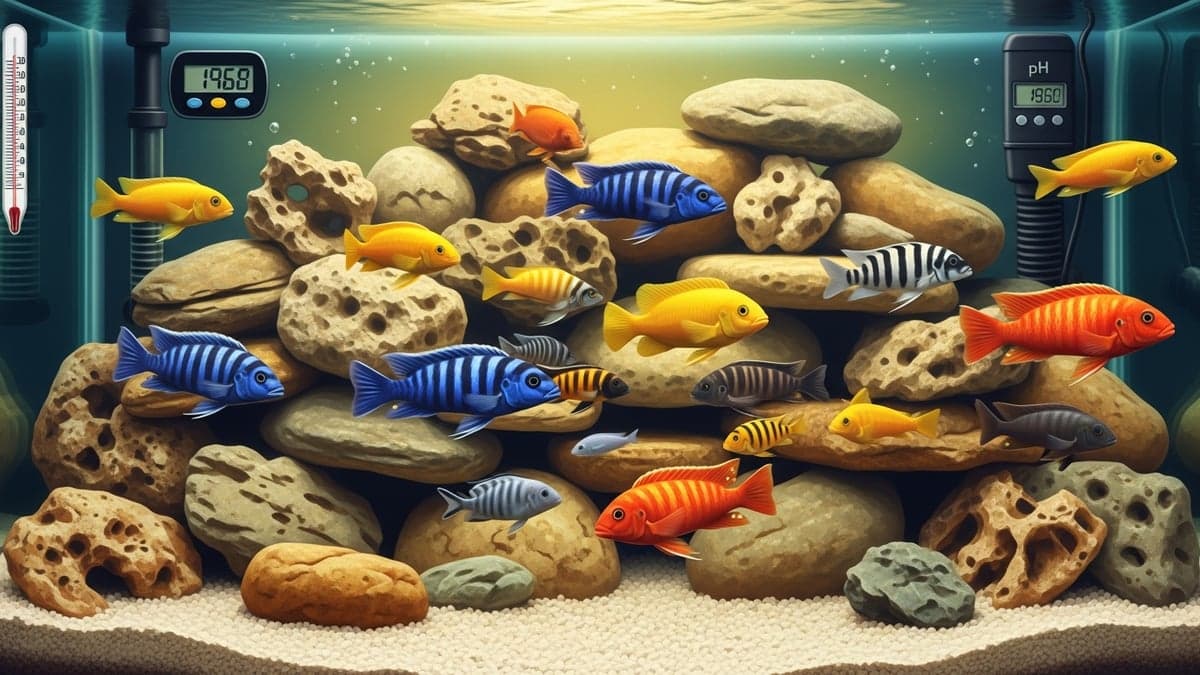
Lake Malawi (Mbuna, Peacock, Haps)
Lake Malawi is the most popular source of African cichlids in the hobby. Its water is remarkably stable, which means Malawi cichlids are particularly intolerant of fluctuations.
- pH: 7.8–8.6 (lake average: 8.3)
- GH: 12–18 dGH
- KH: 10–14 dKH
- Temperature: 24–28 °C (76–82 °F). Mbuna prefer the lower end (24–26 °C); Peacocks and Haps tolerate the full range.
- TDS: 200–350 ppm
- Ammonia / Nitrite: 0 ppm
- Nitrate: Below 20 ppm (Malawi cichlids are less sensitive to nitrate than South American species, but lower is always better)
Malawi cichlids produce heavy bioload due to their aggression-driven metabolism and herbivorous grazing. Overstock intentionally (1 fish per 3–5 gallons for Mbuna) to spread aggression, and compensate with robust filtration rated for 8–10× turnover.
Lake Tanganyika (Frontosa, Shell Dwellers, Tropheus)
Lake Tanganyika is deeper, older, and even more alkaline than Malawi. Its cichlids include some of the hobby's most fascinating species — from the regal Frontosa to the tiny shell-dwelling Neolamprologus multifasciatus.
- pH: 8.0–9.2 (lake average: 8.6–9.0)
- GH: 14–20 dGH
- KH: 14–18 dKH
- Temperature: 24–27 °C (75–80 °F). Tanganyikan cichlids prefer slightly cooler water than Malawi species.
- TDS: 350–550 ppm
- Ammonia / Nitrite: 0 ppm
- Nitrate: Below 10 ppm. Tropheus in particular are extremely sensitive to nitrate accumulation — levels above 20 ppm trigger the infamous "Tropheus bloat."
Tanganyikan water is the hardest to replicate from soft tap water sources. Crushed coral substrate, limestone rock, and Rift Lake buffer salts are typically required (see pH adjustment section below).
Lake Victoria
Lake Victoria cichlids are less commonly kept but deserve mention — many species are critically endangered due to Nile Perch introduction and eutrophication, and captive breeding programmes in the hobby play a genuine conservation role.
- pH: 7.5–8.5
- GH: 8–14 dGH
- KH: 8–12 dKH
- Temperature: 24–28 °C (76–82 °F)
- TDS: 150–300 ppm
Victoria cichlids are generally more adaptable to parameter variation than Malawi or Tanganyikan species, but the same stability principles apply.
South American Cichlids
South American cichlids originate from a completely different hydrochemistry: the Amazon basin, Orinoco watershed, and their tributaries. These waters are typically soft, acidic, and warm — often stained dark brown with tannins from decaying vegetation (blackwater habitats).
Discus (Symphysodon spp.)
Discus are the most parameter-sensitive cichlids in the hobby. They demand pristine water and punish neglect with disease, colour loss, and death. If you are not prepared to commit to their requirements, choose a different fish.
- pH: 5.5–6.8 (wild-caught require the lower end; captive-bred strains tolerate up to 7.0)
- GH: 1–4 dGH
- KH: 1–3 dKH
- Temperature: 28–30 °C (82–86 °F). This is notably warmer than most tropical fish — tankmate selection must account for this.
- TDS: 50–150 ppm
- Ammonia / Nitrite: 0 ppm (Discus are exceptionally sensitive to ammonia — even 0.25 ppm causes gill irritation and clamped fins)
- Nitrate: Below 10 ppm, ideally below 5 ppm. This often means 30–50 % water changes twice weekly for heavily stocked Discus tanks.
An RO/DI system is virtually mandatory for Discus keeping unless your tap water is naturally soft and acidic. Remineralise RO water with a Discus-specific buffer (Seachem Discus Buffer + Equilibrium, or equivalent) to achieve your target parameters. Browse The Fish Collection's Discus collection for premium captive-bred specimens.
Oscars, Geophagus, and Eartheaters
These are the more adaptable South Americans — robust fish that tolerate a wider parameter range while still preferring soft, acidic conditions.
- pH: 6.0–7.5
- GH: 4–12 dGH
- KH: 3–8 dKH
- Temperature: 24–28 °C (76–82 °F)
- TDS: 100–300 ppm
- Nitrate: Below 30 ppm (Oscars are hardier than Discus but still sensitive to prolonged elevated nitrate)
Oscars produce enormous bioload for their body size — a single adult Oscar generates as much waste as 10–15 community fish. Oversized filtration (10–12× turnover) and 30 % weekly water changes are baseline maintenance. See The Fish Collection's Oscar collection for available specimens.
Rams and Apistogramma
German Blue Rams (Mikrogeophagus ramirezi) and Apistogramma species are dwarf cichlids from South American streams and creeks. They are among the most parameter-sensitive freshwater fish after Discus.
- pH: 5.0–6.5 (Apistogramma; many species breed only below pH 6.0) / 6.0–7.0 (Rams)
- GH: 1–5 dGH
- KH: 0–3 dKH
- Temperature: 27–30 °C (80–86 °F) for Rams; 24–28 °C for most Apistogramma
- TDS: 30–100 ppm
These fish thrive in blackwater setups with Indian almond leaves, peat filtration, and subdued lighting. The tannin-rich water also has mild antifungal and antibacterial properties, reducing disease incidence.
Central American Cichlids
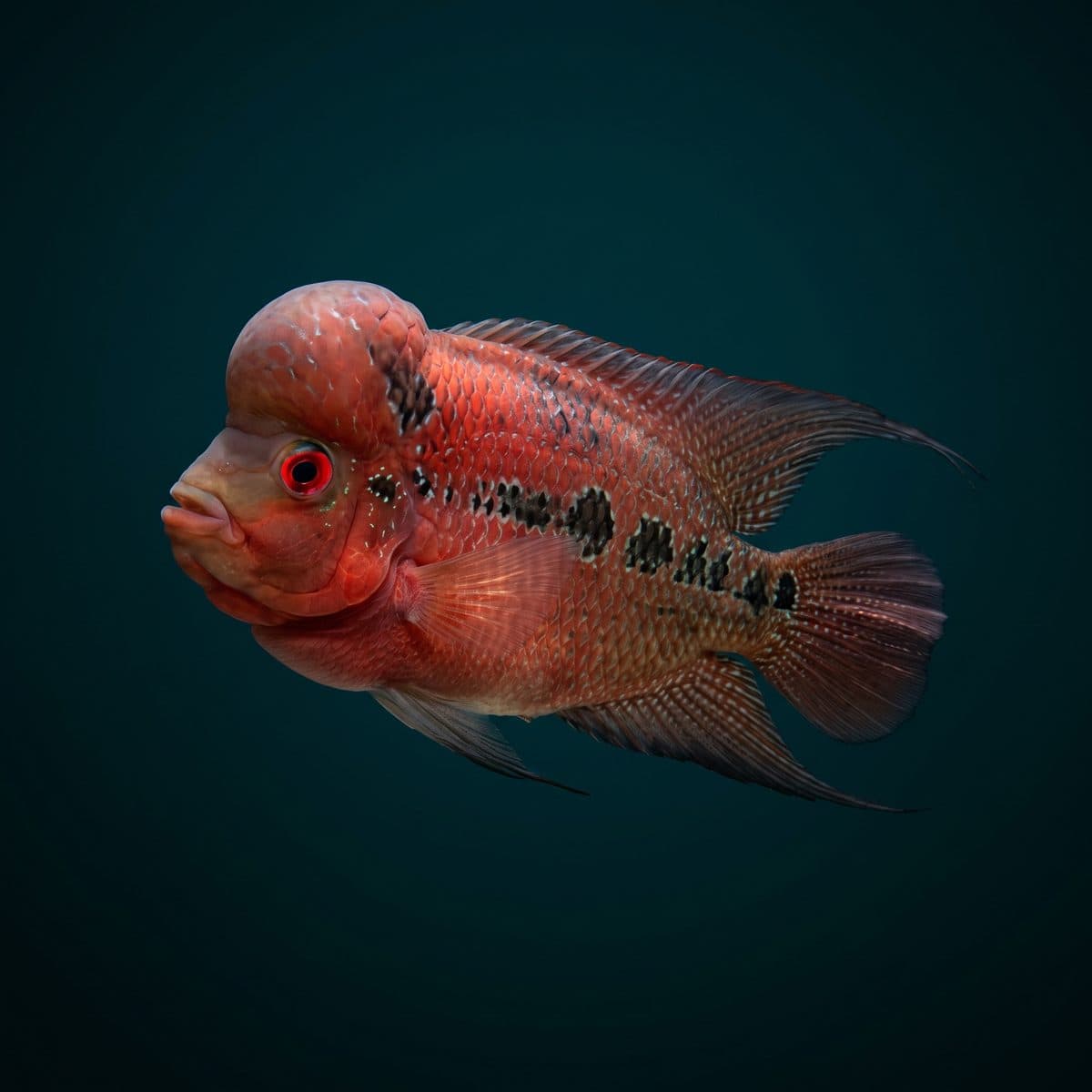
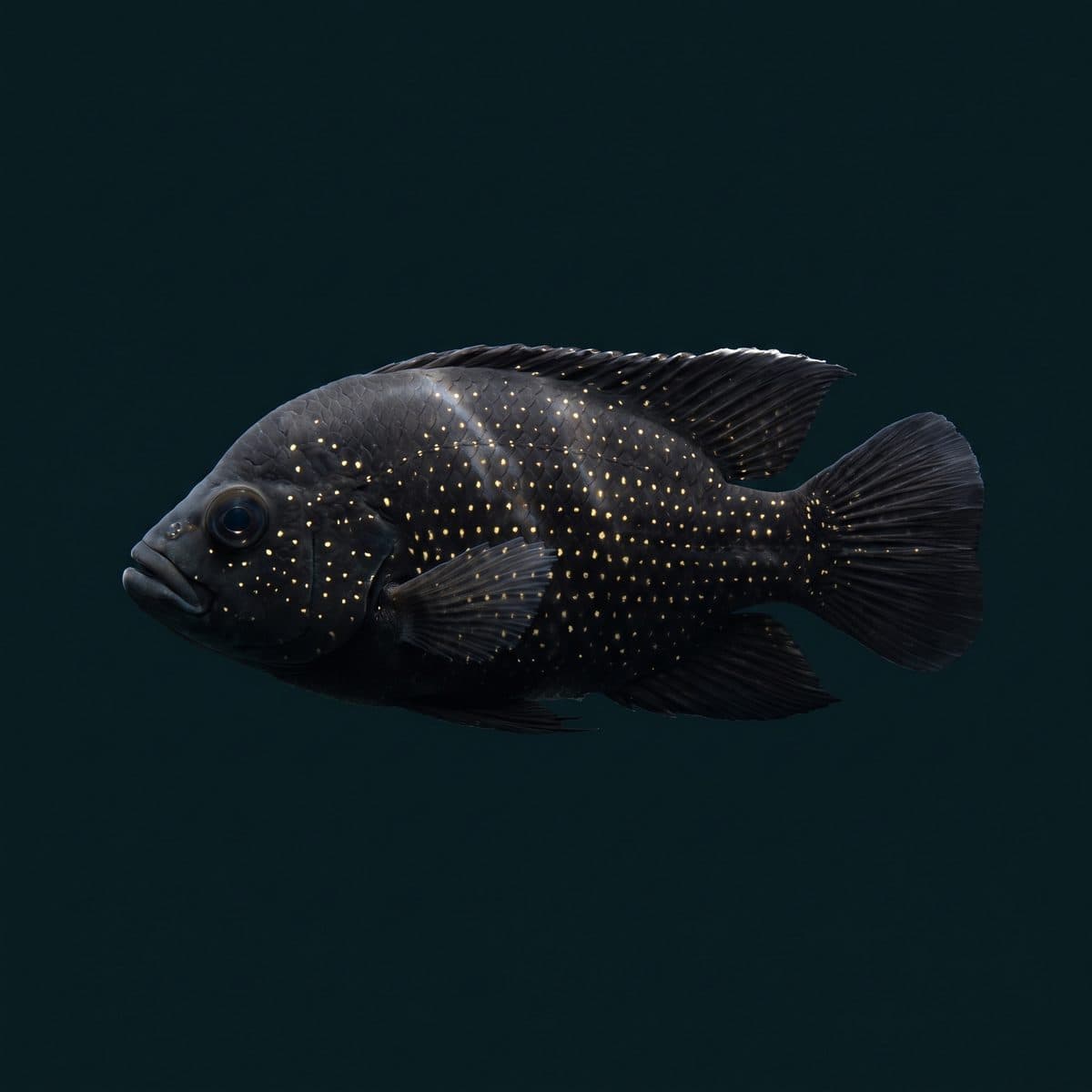
Central American cichlids — Flowerhorn (hybrid), Jack Dempsey, Firemouth, Convict — originate from moderately hard, slightly alkaline rivers and lakes. They are among the most adaptable cichlids, tolerating a wide parameter range.
- pH: 7.0–8.0
- GH: 8–15 dGH
- KH: 6–12 dKH
- Temperature: 24–30 °C (76–86 °F). Flowerhorns prefer 28–31 °C for optimal colour and kok development.
- TDS: 150–400 ppm
- Nitrate: Below 30 ppm
Most North American and European tap water falls within acceptable Central American cichlid parameters without adjustment, making them excellent choices for keepers who prefer not to modify their water chemistry. The Fish Collection's cichlid collection includes premium Flowerhorn and other Central American species.
Adjusting pH Safely
The cardinal rule of pH adjustment: change slowly. A sudden pH shift of more than 0.3 units in a 24-hour period can kill fish or trigger fatal osmotic stress. Always adjust over days or weeks, never hours.
Raising pH (for African Cichlids)
- Crushed coral substrate: The simplest method. Use as the primary substrate (2–3 cm depth) or in a media bag in the filter. It slowly dissolves, raising pH to 7.8–8.2 and buffering KH. Self-regulating — dissolution slows as pH rises.
- Limestone / Texas holey rock: Decorative and functional. Leaches calcium carbonate into the water, raising pH, GH, and KH simultaneously.
- Rift Lake buffer salts: Commercial products (Seachem Malawi/Victoria Buffer, Tanganyika Buffer) provide precise pH targeting. Dissolve in replacement water before adding to the tank — never dose directly into a tank containing fish.
- Baking soda (sodium bicarbonate): Raises KH directly, which stabilises and raises pH. Use 1 teaspoon per 20 litres to raise KH by approximately 1 dKH. Dissolve fully before adding.
Lowering pH (for South American Cichlids)
- RO/DI water: The most reliable method. Blend RO water with tap water to reduce GH, KH, and TDS, which naturally lowers and destabilises pH (then stabilise at your target using appropriate buffers).
- Indian almond leaves (Terminalia catappa): Release tannins and humic acids that lower pH naturally. Use 1 large leaf per 40 litres. Replace as they decompose (every 2–3 weeks). Also provide antimicrobial benefits.
- Peat moss: Place in a media bag in the filter. Releases tannins and acids that lower pH to 5.5–6.5 depending on quantity. Replaces every 4–6 weeks. Stains water amber — desirable in blackwater setups, less so in display tanks.
- CO₂ injection: Lowers pH by forming carbonic acid. Effective and precise but requires monitoring — excessive CO₂ drops pH dangerously and can suffocate fish. Only recommended for experienced keepers with pH controllers.
Avoid: "pH Up" and "pH Down" chemical products. These provide temporary adjustment without addressing the underlying KH buffer, causing pH to bounce unpredictably — more dangerous than a stable pH that is slightly outside the ideal range.
Hardness Adjustment (GH and KH)
GH (general hardness) measures dissolved calcium and magnesium — essential minerals for bone development, egg formation, and osmoregulation. KH (carbonate hardness) measures bicarbonate concentration — the water's buffering capacity against pH swings.
- To increase GH: Add Seachem Equilibrium (or equivalent) to replacement water. Dose at 1 tablespoon per 80 litres to raise GH by approximately 3 dGH. Crushed coral and limestone also raise GH passively.
- To increase KH: Add sodium bicarbonate (baking soda) at 1 teaspoon per 20 litres per 1 dKH increase. Or use commercial KH buffer products.
- To decrease GH and KH: Blend tap water with RO/DI water. For example, if your tap water is 15 dGH and you need 5 dGH, mix 1 part tap to 2 parts RO.
Always adjust replacement water before adding it to the tank during water changes. Pre-mix in a separate container, test parameters, and only add to the aquarium once values match the display tank.
Temperature Management
Temperature stability is as important as hitting the correct range. A 2 °C fluctuation within a day stresses cichlids and suppresses immune function — opening the door to ich, bacterial infections, and parasitic outbreaks.
- Use a titanium heater with an external digital controller (Inkbird ITC-308 or equivalent). Never rely on a heater's built-in thermostat alone — they drift and can fail in the "on" position, cooking the tank.
- For tanks above 200 gallons, use two heaters (each rated for 50–60 % of the total volume) placed at opposite ends. This provides even heat distribution and redundancy.
- Mount a digital thermometer at the opposite end of the tank from the heater to measure the true ambient temperature, not the heated output.
- During water changes, pre-heat replacement water to within 1 °C of the tank temperature. Large volumes of cold water during a change are a common trigger for ich outbreaks in cichlids.
Monitoring and Testing Protocol
You cannot manage what you do not measure. The following testing schedule is the minimum for cichlid systems:
- Twice weekly: Ammonia, nitrite, nitrate, pH. Use liquid reagent test kits (API Master Kit or equivalent) — test strips are inaccurate and unreliable.
- Weekly: GH, KH, temperature (verify digital readings against a reference thermometer monthly).
- Monthly: TDS (using a digital TDS meter), calibrate pH meter with buffer solutions (4.0 and 7.0).
Record results in a logbook or spreadsheet. Trends reveal problems before crises: a slow upward nitrate drift over 4 weeks indicates declining filter performance or overfeeding. A gradual pH drop signals KH depletion. Catching these trends early prevents livestock losses.
Water Change Protocol for Cichlids
Weekly water changes are the single most important maintenance task. No amount of filtration eliminates the need for fresh water — filters convert toxins but do not remove them from the system.
- African Cichlids: 20–30 % weekly. Match replacement water to tank parameters (pH, GH, KH, temperature) before adding.
- Discus: 30–50 % twice weekly for bare-bottom grow-out tanks. 25–30 % twice weekly for display tanks. Discus produce growth-inhibiting hormones that accumulate in the water — frequent changes are essential for healthy development.
- Oscars / Large South Americans: 30 % weekly minimum. These high-bioload fish benefit from larger changes (40–50 %) if parameter matching is precise.
- Dwarf Cichlids (Rams, Apistos): 15–20 % weekly. Smaller, more frequent changes prevent parameter swings in the soft, low-KH water these fish require.
Use a gravel vacuum during changes to remove mulm from substrate interstices. In bare-bottom Discus tanks, siphon directly from the bottom to remove all visible waste.
Common Parameter Mistakes
- Mixing African and South American cichlids. Their parameter requirements are diametrically opposed. There is no compromise pH that satisfies both — one group will always be stressed. Do not attempt this combination.
- Chasing a specific pH number. A stable pH of 7.5 is better for your Discus than a pH that swings between 6.0 and 7.0 daily because you are over-dosing pH-lowering products. Stability first, precision second.
- Ignoring KH. Low KH (below 2 dKH) makes pH dangerously unstable. Even in soft-water setups, maintain minimum KH to prevent overnight pH crashes caused by CO₂ accumulation.
- Using untreated tap water. Chloramine (used in most municipal water supplies) is lethal to fish and also kills beneficial filter bacteria. Always dechlorinate with a quality conditioner (Seachem Prime or equivalent) before adding to the tank.
- Temperature-mismatched water changes. Adding cold replacement water triggers ich in cichlids with remarkable reliability. Pre-heat all replacement water to within 1 °C of the tank.
- Testing only when problems arise. By the time fish show visible symptoms, parameters have usually been off for days or weeks. Routine testing catches problems before they become emergencies.
Understanding and maintaining correct water parameters is the foundation of cichlid keeping. Get the water right, and everything else — health, colour, breeding behaviour — follows naturally. The Fish Collection's cichlid collection includes species from every major group discussed above, each shipped with species-specific care sheets. Reach out to our team for personalised parameter advice before your purchase.