Betta Breeding Overview
Betta breeding is one of the most rewarding — and most demanding — projects in the freshwater hobby. The spawning process itself is dramatic: the male builds an elaborate bubble nest, wraps his body around the female in a nuptial embrace, and tenderly carries each fertilised egg to the nest. The challenge is not spawning (Bettas breed readily) but managing the aftermath: a single spawn can produce 50–300 fry that need intensive care, live foods, frequent water changes, and eventually individual housing for aggressive males.
Before breeding, answer honestly: do you have a plan for 100+ juvenile Bettas? Can you commit to daily feedings of live food for 8+ weeks? Do you have 20–50 individual containers for male juveniles? Betta breeding is a project, not an impulse — plan thoroughly before starting.
Pair Selection
Select healthy, vigorous fish from reputable breeders (not pet shops, where genetic history is unknown):
- Age: 4–12 months is the ideal breeding age. Younger fish may not be sexually mature; older fish (18+ months) have declining fertility.
- Health: No signs of disease, full colour, active appetite, intact fins. Never breed sick or recovered fish — recovery diverts energy from reproductive fitness.
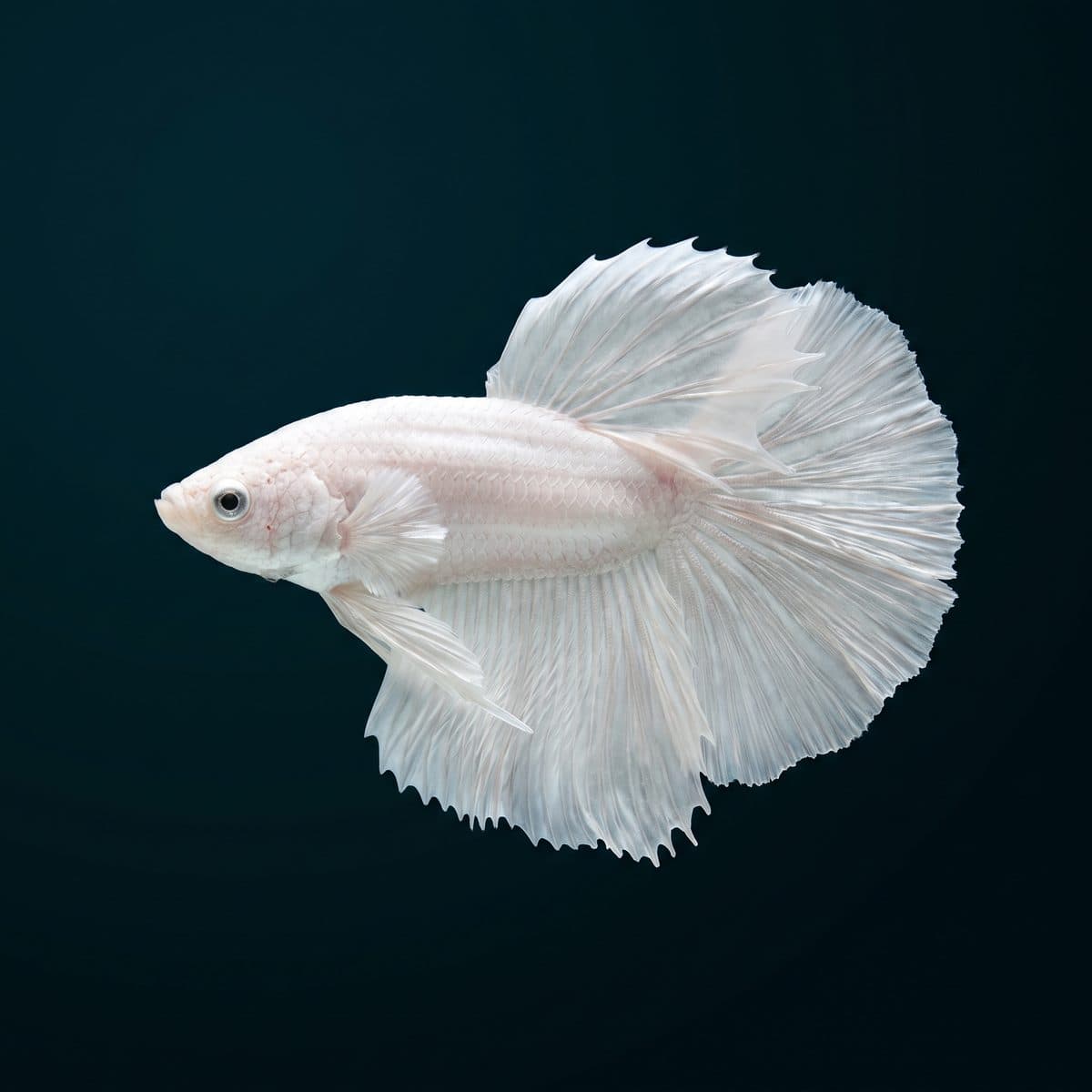
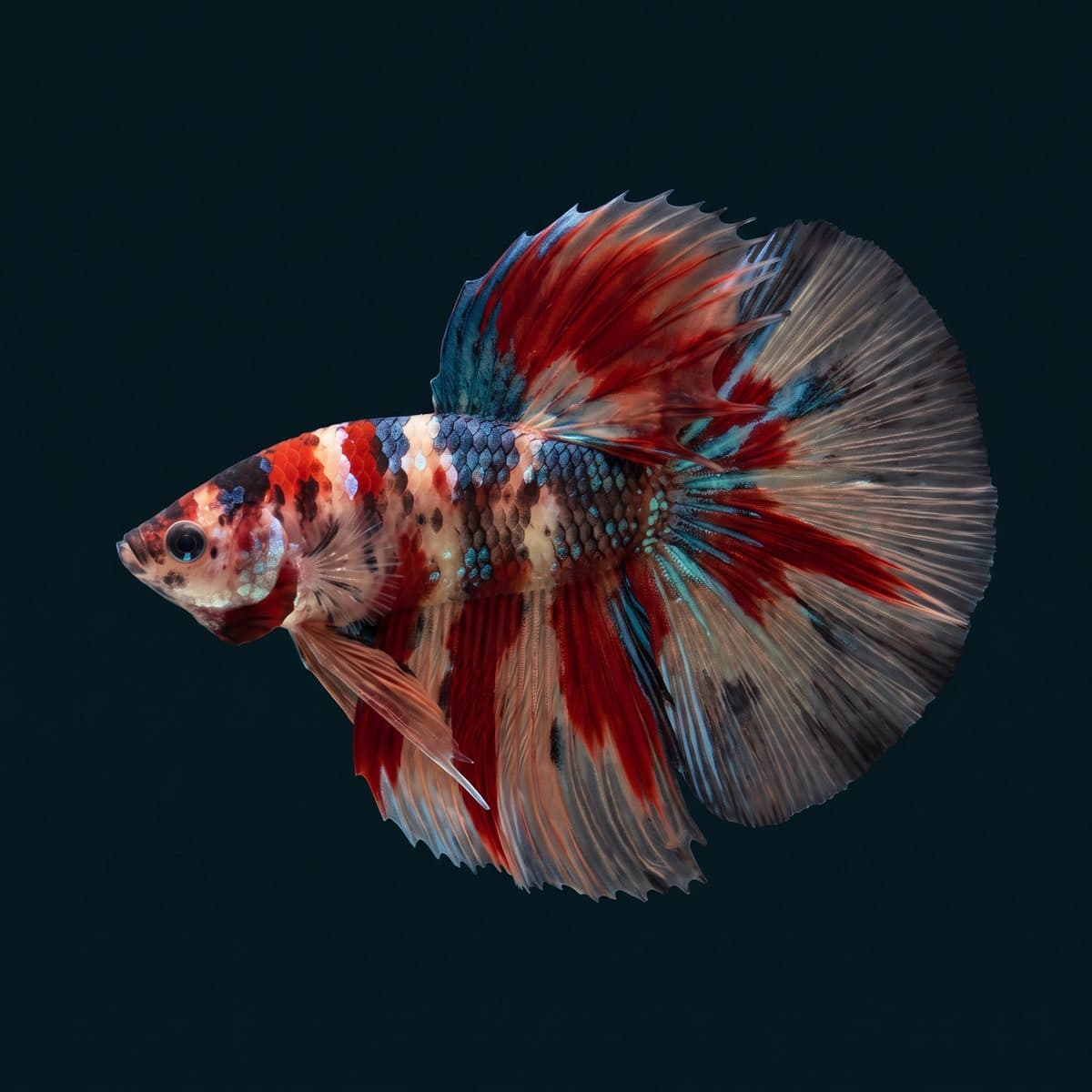
- Genetics: If breeding for specific traits (colour, fin type), research the genetics of your target variety. Halfmoon × Halfmoon produces Halfmoon offspring; crossing different tail types produces unpredictable results.
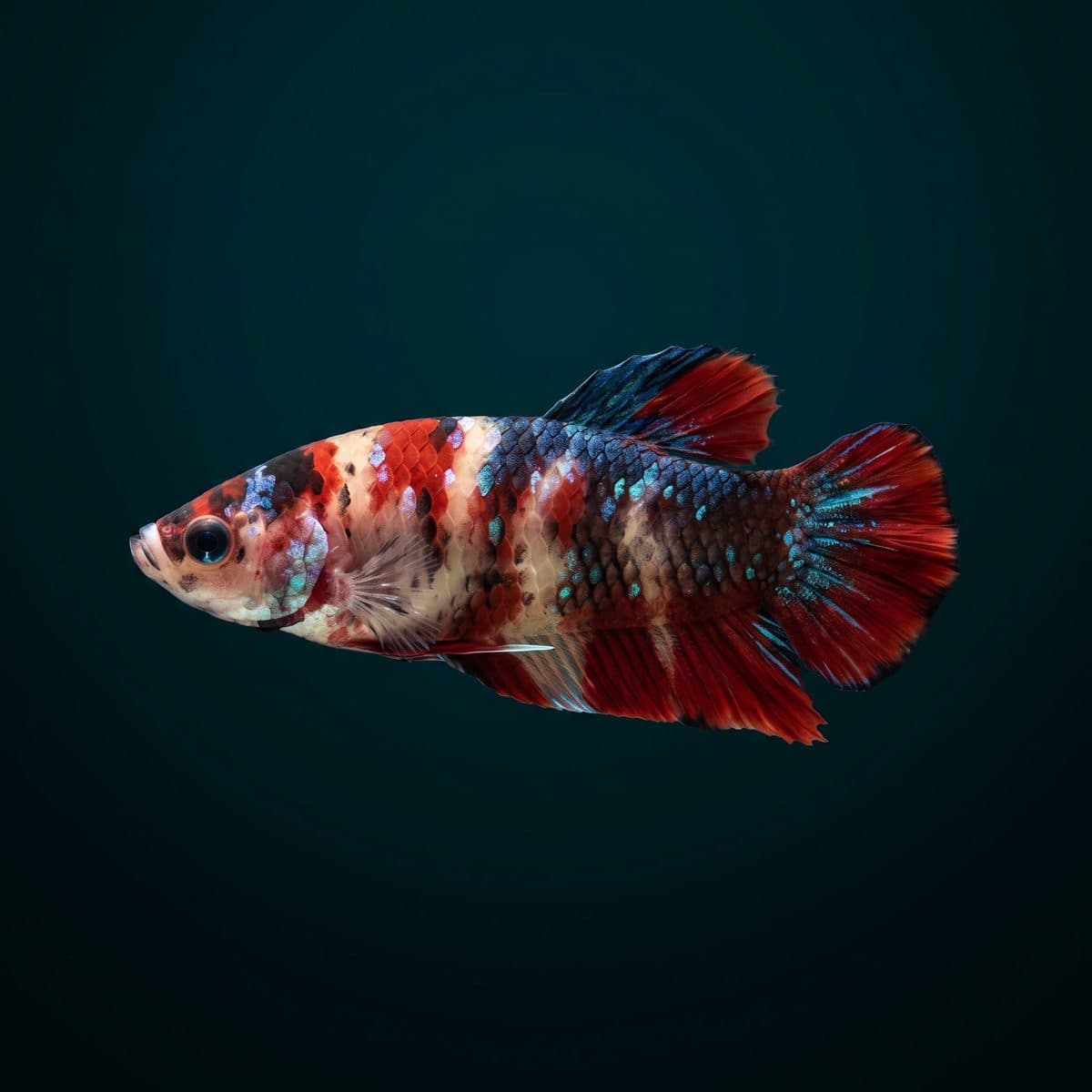
- Female readiness indicators: Vertical breeding stripes on the body (pale vertical bars on a darker body), visible ovipositor (a white spot protruding just anterior to the anal fin), and a plump belly indicating egg development.
Conditioning Protocol
Condition male and female separately for 2–4 weeks before breeding:
- Feed high-protein live and frozen foods: bloodworm, brine shrimp, daphnia, wingless fruit flies, and mosquito larvae. Feed 2–3 times daily.
- Maintain pristine water quality: 0 ppm ammonia/nitrite, water changes every 2–3 days.
- Temperature at 78–80 °F (26–27 °C) in conditioning tanks.
- The female's belly should become visibly round with eggs. Breeding stripes may appear.
- The male should be building bubble nests regularly — a sign of hormonal readiness.
Breeding Tank Setup
- Tank: 10–20 gallons. Larger is better for water quality stability during the fry phase.
- Water level: 4–6 inches (10–15 cm). Shallow water reduces the distance fry must travel to the surface to breathe (Betta fry develop the labyrinth organ over the first few weeks).
- Temperature: 80 °F (27 °C) via adjustable heater.
- No filter during spawning. Current destroys the bubble nest and scatters eggs. After fry become free-swimming (day 3–4), add a gentle sponge filter with minimal airflow.
- Bare bottom: Fallen eggs are visible on a bare bottom, allowing the male to retrieve them easily.
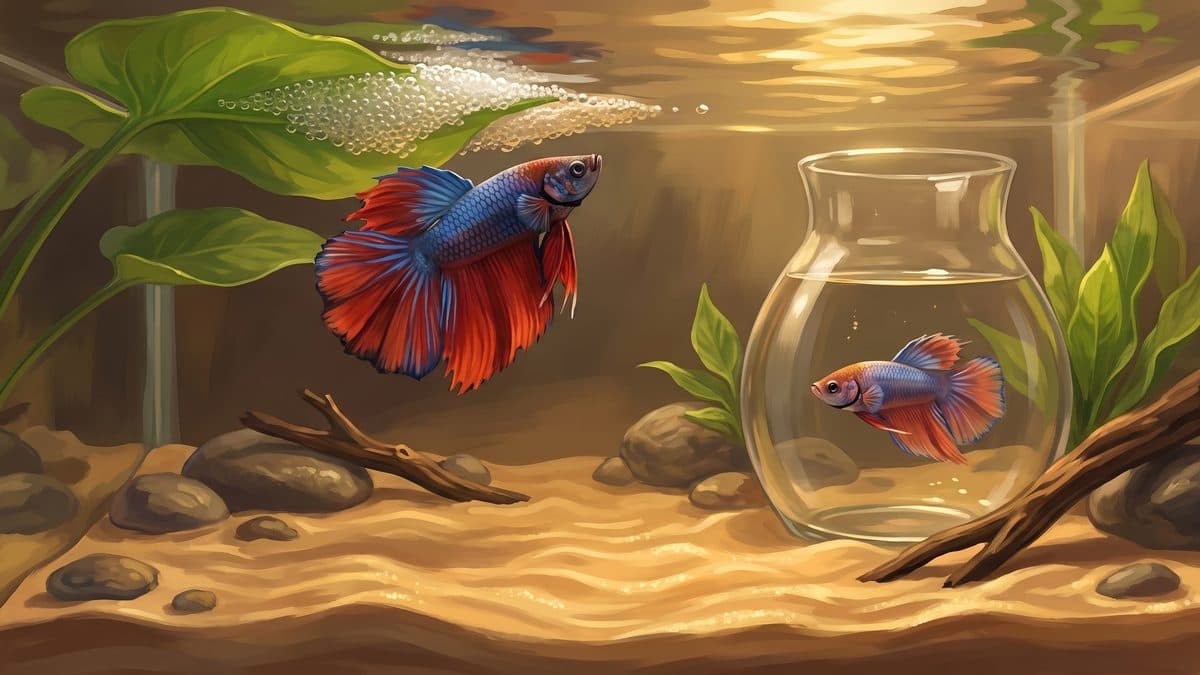
- Nest anchor: Float a piece of Indian almond leaf, styrofoam cup half, or bubble wrap on the surface. The male builds his bubble nest beneath this anchor.
- Hiding spots for female: Dense clumps of Java Moss or plastic plants provide refuge for the female during introduction — the male can be aggressive before accepting her.
- Lid: Tight-fitting, as fry need warm, humid air above the water surface for labyrinth organ development.
Introduction and Bubble Nest
Place the male in the breeding tank and allow him to settle for 24 hours. Then introduce the female in a clear container (hurricane glass, chimney, or clear plastic container with small holes for water circulation) placed inside the breeding tank. The male can see the female but cannot reach her.
The male will typically:
- Flare intensely at the female, displaying his fins.
- Begin building or intensifying his bubble nest — a raft of mucus-coated air bubbles on the surface beneath the nest anchor.
- Swim back and forth between the nest and the female, displaying.
The female will show her readiness by:
- Displaying vertical breeding stripes.
- Angling her head downward (a submissive posture).
- Swimming toward the male rather than away when he displays.
When the bubble nest is substantial (at least 5 cm in diameter, multi-layered) and the female shows clear readiness signs (usually after 1–3 days), release the female into the main breeding tank.
The Spawning Embrace
After release, there may be initial chasing and minor fin damage — this is normal courtship behaviour. If the male attacks the female severely (drawing blood, causing significant fin damage), separate them and try again in a few days.
When both fish are ready, they converge beneath the bubble nest. The male wraps his body around the female in a U-shaped nuptial embrace, squeezing eggs from her body while simultaneously releasing sperm. The female releases 5–30 eggs per embrace, which sink toward the bottom. Both fish may appear temporarily stunned after each embrace.
The male recovers first and immediately begins collecting fallen eggs in his mouth, carrying them to the bubble nest and embedding them among the bubbles. The female may assist by collecting eggs, or she may eat them — individual behaviour varies. The embrace-and-collect cycle repeats over 2–6 hours, producing 50–300 eggs in total.
Remove the female immediately after spawning ends (when the male begins aggressively chasing her away from the nest). The male becomes intensely protective and will injure or kill the female if she remains. Return her to her conditioning tank for rest and recovery.
Egg Care
The male tends the nest alone for 24–48 hours:
- He retrieves fallen eggs and returns them to the nest.
- He repairs bubble nest holes.
- He fans the eggs with his pectoral fins for oxygenation.
- He removes and eats unfertilised or fungused eggs (which turn white).
Do not disturb the male during this period. Keep the room quiet, the light dim, and do not approach the tank unnecessarily. Stressed males eat the entire clutch.
Eggs hatch in 24–48 hours at 80 °F. Newly hatched fry appear as tiny tails hanging vertically from the bubble nest, sustained by their yolk sac. Over the next 24–48 hours, they develop the ability to swim horizontally and become free-swimming.
Remove the male once fry are free-swimming (swimming horizontally and no longer falling from the nest). Some males continue to tend fry; others begin eating them. Removing the male at the free-swimming stage is the safest timing.
Fry First Foods
Betta fry are tiny — 2–3 mm — and can only eat microscopic first foods:
- Days 1–5 (free-swimming): Infusoria (paramecium cultures), vinegar eels, or commercial liquid fry food (Hikari First Bites). Infusoria is the gold standard — culture it in advance by placing a lettuce leaf in a jar of tank water in a sunny window 5–7 days before the expected hatch date.
- Days 5–14: Newly hatched brine shrimp (BBS / Artemia nauplii). Hatch daily using a brine shrimp hatchery. BBS is the primary growth food for Betta fry — without it, growth is severely stunted. Feed 2–3 times daily.
- Days 14–28: Continue BBS. Begin introducing micro worms and crushed freeze-dried foods.
- Days 28+: Transition to finely crushed pellets (Northfin Betta Bits, ground to powder), frozen baby brine shrimp, and frozen daphnia.
Water quality is critical during the fry phase. With no filter (initially) and heavy feeding, ammonia spikes are a constant threat. Perform gentle water changes (10–15 % daily) using airline tubing to siphon from the bottom, taking care not to suck up fry. Keep the lid tight — fry need warm, humid air above the water surface for labyrinth organ development (weeks 3–6).
Grow-Out and Jarring
At 6–8 weeks, the fry are large enough to eat crushed pellets and frozen foods. Growth rates diverge — some fry grow faster than others. At 8–12 weeks, male aggression emerges:
- Identify aggressive males by their flaring behaviour and chasing.
- Separate aggressive males into individual containers — pint jars, divided tanks, or individual 1-gallon containers with daily water changes.
- Female fry can usually remain together in a grow-out tank, though monitor for aggression.
- Continue feeding 2–3 times daily with high-quality pellets and frozen foods.
- Perform daily water changes in individual containers (25–50 %) and regular changes in the grow-out tank.
This "jarring" phase is the most labour-intensive part of Betta breeding. A spawn of 200 fry may produce 80–100 males requiring individual housing, each needing daily feeding and water changes. This is why planning rehoming outlets (local fish stores, online sales, hobbyist groups) before breeding is essential.
Betta breeding produces some of the most beautiful fish in the freshwater hobby. The genetic diversity in a single spawn — variations in colour, fin shape, and patterning — makes each batch unique. But the commitment is substantial: plan for the fry before you plan the spawn. For complete Betta care, see our Betta care guide.