Flowerhorn Pricing Overview
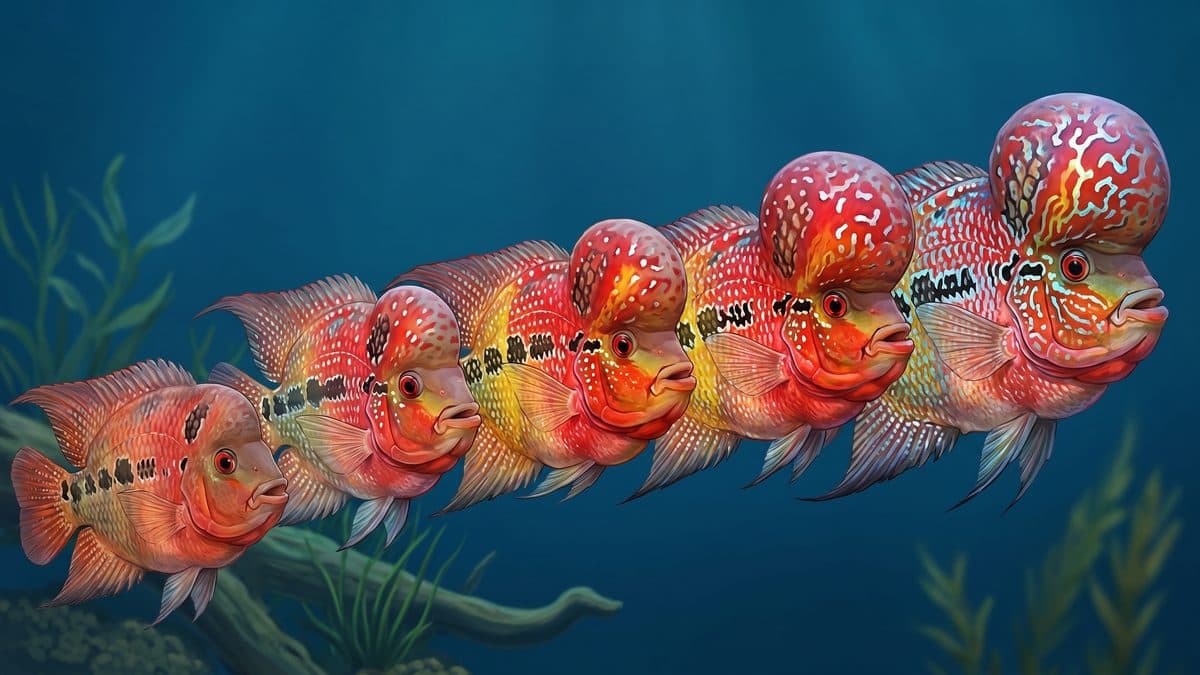
The Flowerhorn cichlid is a man-made hybrid that has become one of the most valuable freshwater fish in the world. Created in Malaysia in the late 1990s by crossing Central and South American cichlid species (primarily Amphilophus citrinellus, A. trimaculatus, and Vieja synspila), Flowerhorns were selectively bred for three traits: an enormous nuchal hump (kok), vivid coloration, and iridescent "pearl" scales covering the body.
In Asian markets — particularly Malaysia, Thailand, Vietnam, and China — Flowerhorns carry cultural significance as feng shui fish believed to bring prosperity. This cultural demand, combined with the difficulty of breeding top-quality specimens, drives prices that can rival luxury goods. A pet-grade Flowerhorn costs less than dinner out; a Grand Champion can cost more than a luxury car.
Price Ranges by Grade
Pet-Grade Flowerhorns ($20–$80)
The most affordable Flowerhorns are mass-produced fish from commercial farms:
- Juvenile culls (2–3 inches): $20–$40. Young fish from commercial breeding operations that do not show exceptional promise. Colour and kok development are uncertain at this size.
- Standard adult pet-grade: $40–$80. Fish with moderate colour, small to medium kok, and minimal pearling. Perfectly suitable as impressive pet fish — they still display the bold personality and interactivity that make Flowerhorns popular.
- Common strains: Regular Zhen Zhu (Pearl), Kamfa culls, and mixed hybrids populate this tier. Many pet stores carry these.
Pet-grade Flowerhorns are still stunning fish by any standard. A $50 Flowerhorn with a moderate kok and decent colour will impress anyone who is not a competition judge.
Mid-Grade Flowerhorns ($100–$500)
Mid-grade fish show clear quality above the average but lack the perfection needed for competition:
- Zhen Zhu (Pearl): $100–$300. Good pearl coverage across the body, moderate kok, warm red or orange base colour. The most common show-type strain.
- Kamfa: $150–$500. Square body shape, eye-catching colours, water-head kok (softer, more bulbous). Kamfa are judged on different criteria than Zhen Zhu and have a dedicated following.
- Golden Monkey / Golden Base: $100–$400. Yellow-gold base colour with red accents. Popular in Asian markets for feng shui associations with gold and wealth.
- Thai Silk / Titanium: $100–$350. Metallic blue-silver body with minimal patterning. Unique look that diverges from the traditional red Flowerhorn aesthetic.
High-Grade and Show-Potential ($500–$5,000)
Fish in this range are hand-selected for competition potential:
- Show-grade Zhen Zhu: $500–$2,000. Prominent, symmetrical hard kok, intense red coloration, extensive pearling covering 70%+ of the body, and perfect body symmetry.
- Show-grade Kamfa: $800–$3,000. Massive water-head kok, square proportions, vivid colour, and strong facial markings. Top Kamfa specimens are among the most valuable Flowerhorns.
- King Kamfa: $1,000–$5,000. The elite Kamfa variant with extreme kok development, wraparound pearling, and intense red or multi-colour body. Very difficult to produce consistently.
- Proven breeding pairs: $1,000–$5,000. A male and female that have successfully produced high-quality offspring. Breeding pairs from known bloodlines are highly valued.
Competition Champions ($5,000–$60,000+)
The pinnacle of Flowerhorn value:
- Regional competition winners: $5,000–$15,000. Fish that have placed at local or regional Flowerhorn shows in Malaysia, Thailand, or Vietnam.
- National competition winners: $15,000–$40,000. Winners at major national events carry extreme prestige and demand.
- Grand Champions: $30,000–$60,000+. The absolute peak. Grand Champions at premier events like the Malaysian Flowerhorn Competition or Aquarama have sold for $60,000 or more. These fish represent the pinnacle of selective breeding — perfect kok, flawless colour, complete pearling, and impeccable body proportions.
Flowerhorn Price Comparison Table
- Juvenile cull | 2–3 inches: $20–$40
- Pet-grade adult | 5–8 inches: $40–$80
- Mid-grade Zhen Zhu | 6–10 inches: $100–$300
- Mid-grade Kamfa | 6–10 inches: $150–$500
- Show-grade Zhen Zhu | 8–12 inches: $500–$2,000
- Show-grade Kamfa | 8–12 inches: $800–$3,000
- King Kamfa | 10–14 inches: $1,000–$5,000
- Competition winner | 10–14 inches: $5,000–$40,000
- Grand Champion | 10–14 inches: $30,000–$60,000+
What Affects Flowerhorn Prices
- Kok (nuchal hump): The single biggest price driver. A massive, symmetrical, well-proportioned kok can multiply a fish's value by 10x or more. Hard koks (firm, permanent) are valued in Zhen Zhu types; water-head koks (soft, gelatinous) are valued in Kamfa types.
- Colour intensity: Deep, saturated red is the most prized colour. Fish with uniform red coverage from head to tail command premiums. Orange, yellow, and multi-colour variants have their own market segments.
- Pearling: The iridescent, metallic scales that cover the body. Complete pearling (covering flanks, face, and even fins) dramatically increases value. Pearl quality is judged on brightness, density, and uniformity.
- Body shape: A compact, thick, symmetrical body with proportional fins is essential. Elongated or asymmetrical fish are heavily discounted regardless of other traits.
- Markings: Some collectors value specific markings — particularly characters resembling Chinese or Arabic script on the flanks, which are believed to be auspicious.
- Bloodline: Fish from documented breeding lines with a history of producing champions command higher prices than fish of unknown origin.
- Age and maturity: Flowerhorn kok development continues until age 2–3. Fully mature fish with confirmed kok size are worth more than juveniles with uncertain development.
Where to Buy Flowerhorn Cichlids
- Specialist online retailers: The Fish Collection offers graded Flowerhorn specimens with detailed photos showing kok development, pearling, and colour. This is the most convenient option for buyers outside Asia.
- Asian breeders and farms: Malaysia, Thailand, and Vietnam are the global centres of Flowerhorn breeding. Direct purchase offers the widest selection but requires international shipping arrangements.
- Flowerhorn-specific forums and groups: Dedicated communities on Facebook, forums like MonsterFishKeepers, and Instagram breeders connect buyers with quality specimens.
- Aquarium shows: Major events in Asia frequently feature Flowerhorn competitions with fish for sale. Western shows like Aquashella occasionally feature Flowerhorn vendors.
- Local fish stores: Some specialist cichlid shops carry mid-grade Flowerhorns. Selection is typically limited compared to online sources.
Is It Worth the Investment?
Flowerhorns offer exceptional value at every price point. A $50 pet-grade Flowerhorn is one of the most interactive, personality-rich fish available — they recognise their owners, beg for food, and display constantly. A $500+ show-grade specimen is a genuine conversation piece that rivals saltwater fish for visual impact at a fraction of the system cost.
The setup is straightforward: a 75-gallon tank (Flowerhorns are aggressive and best kept alone), canister filter, heater set to 28–31 degrees C, and minimal decoration. Total equipment cost: $300–$600. Flowerhorns are hardy, disease-resistant, and eat readily — maintenance is far simpler than discus or stingrays.
For the investment-minded, breeding quality Flowerhorns can be profitable. A proven pair producing even a few high-grade offspring per spawn can generate significant returns. However, breeding requires space (multiple grow-out tanks), expertise in selection, and patience. Browse The Fish Collection's cichlid selection for available Flowerhorn specimens.