Overview
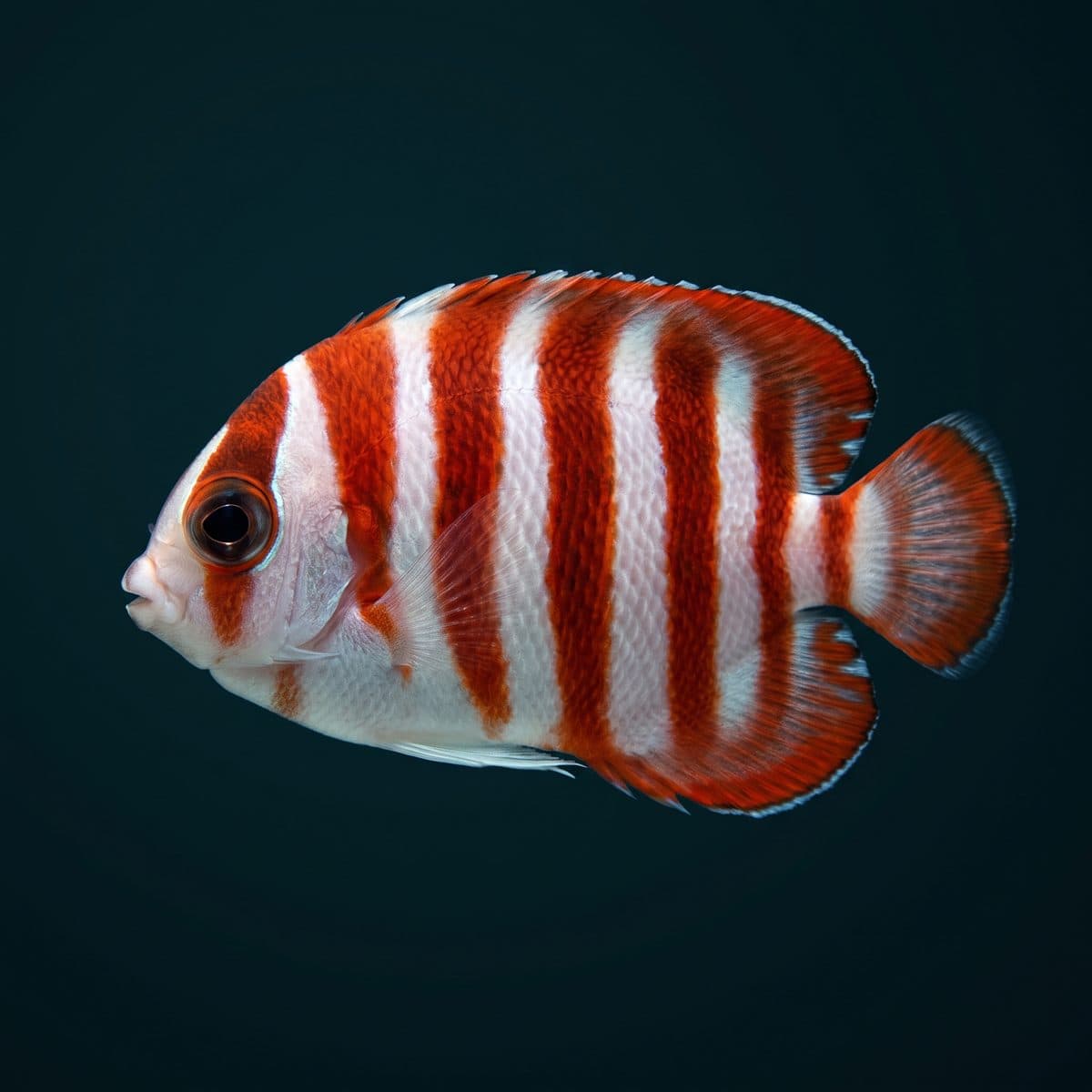
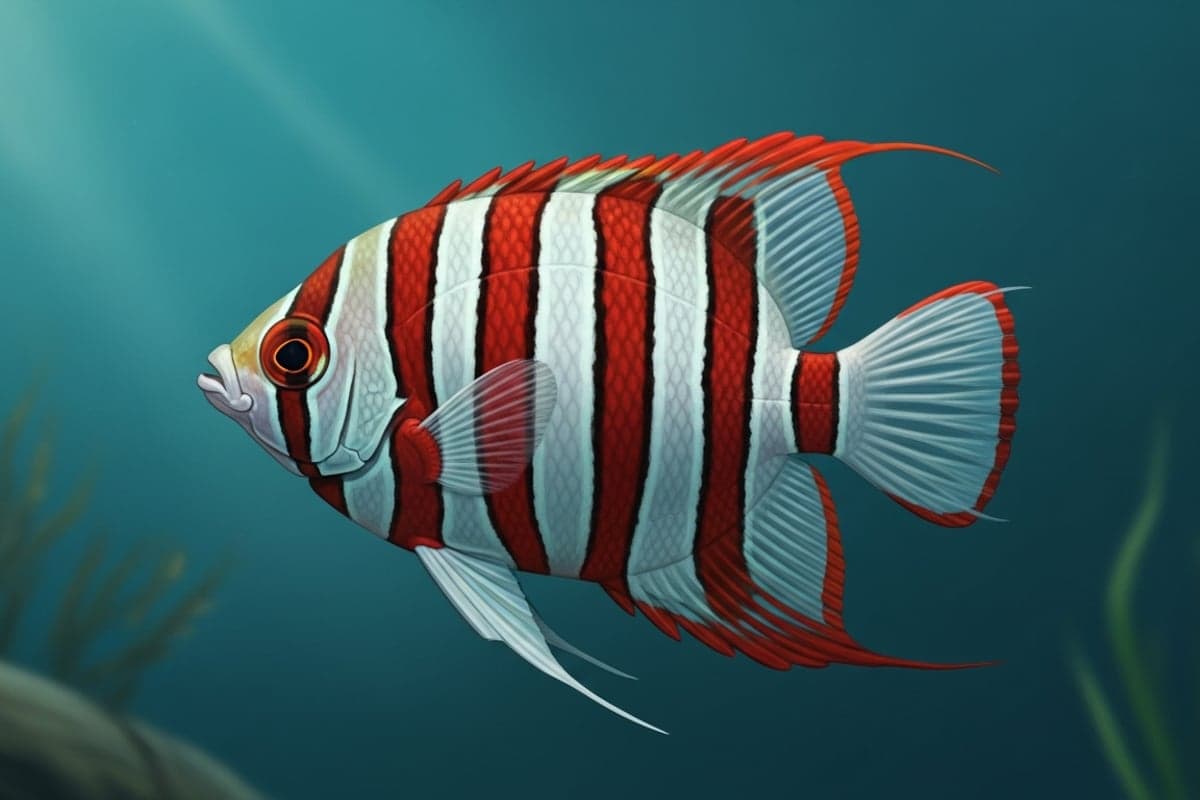
The Peppermint Angelfish (Centropyge boylei) is a deepwater dwarf angelfish first described by Pyle and Randall in 1992 from specimens collected at Rarotonga, Cook Islands. Its vivid alternating bands of orange-red and white — reminiscent of a peppermint sweet — make it instantly recognisable and utterly unlike any other member of the Centropyge genus. At a maximum size of just 7 cm, it is physically small but carries an outsized reputation as the most exclusive marine aquarium fish in existence.
The species' extreme depth range (55–120 metres) places it firmly in the mesophotic zone, where collection requires technical mixed-gas diving with extensive decompression obligations. Only a handful of collectors worldwide possess the skills, permits, and equipment to safely bring specimens to the surface. The Waikiki Aquarium in Honolulu has maintained a Peppermint Angelfish since 2012, providing the longest-running dataset on captive care. A small number of private collectors — estimated at fewer than ten globally — have successfully kept specimens long-term.
The Fish Collection has facilitated the sale of two Peppermint Angelfish since 2018, both sourced through licensed Cook Islands collectors and accompanied by full chain-of-custody documentation. This guide represents our compiled knowledge from those transactions, supplemented by data shared by institutional and private keepers.
Natural Habitat
Centropyge boylei is known from the Cook Islands (particularly Rarotonga and Aitutaki) and possibly Tonga and the Society Islands, though confirmed records are limited due to the difficulty of surveying its depth range. It inhabits steep outer reef walls and drop-offs, typically found in caves, overhangs, and crevices on hard coral substrate between 55 and 120 metres depth.
At these depths, water temperature is significantly cooler than the shallow reef — typically 20–24 °C — and light levels are reduced to approximately 1–5% of surface intensity. The prevailing spectrum is heavily blue-shifted, with virtually no red or green light penetrating below 60 metres. The fish's red and white colouration, which appears so striking to us, likely serves as cryptic camouflage at depth, where red wavelengths are absorbed and the fish would appear dark or muted against the reef.
Current exposure at these depths is moderate to strong, driven by deep oceanic swells passing over the reef wall. The substrate supports a community of deep-reef sponges, non-photosynthetic corals, and encrusting algae that form the primary diet of mesophotic Centropyge species.
Tank Requirements
Tank Dimensions & Aquascaping
Despite its small adult size, a Peppermint Angelfish should be housed in a minimum 75-gallon (285 L) aquarium. This recommendation is driven not by swimming space but by the need for a mature, biologically stable environment with ample live rock for grazing and hiding. A 90–120 gallon system is preferable, particularly if housing other fish.
Aquascaping must prioritise caves, overhangs, and shaded retreat areas. Stack live rock to create multiple cave systems with entrances just large enough for the angelfish (3–5 cm openings). The Peppermint Angelfish is a retiring species that will spend much of its time in or near cover, particularly during the first weeks in captivity. Without adequate hiding spots, chronic stress will suppress feeding and immune function.
A deep sand bed (10–12 cm) of fine aragonite sand provides additional microfaunal food sources and supports the cool, stable conditions this species prefers. The sand bed should be well-established (6+ months) with an active population of copepods, amphipods, and micro-worms.
Filtration & Flow
A moderate flow regime — 10–15× tank volume turnover per hour — replicates the deep-reef conditions the Peppermint Angelfish favours. Avoid laminar blast-style flow directed at the fish's preferred shelter areas; instead, use randomised wave patterns from gyre-style pumps. A protein skimmer rated for 1.5× system volume and a refugium with Chaetomorpha are standard filtration recommendations.
A chiller is almost certainly required. Maintaining 21–24 °C in a typical room-temperature environment means the aquarium must be actively cooled. Size the chiller for your full system volume plus a 20% safety margin. An inline titanium chiller on the sump return is the most efficient configuration.
Lighting
This is the single most important environmental consideration. Peppermint Angelfish come from a light-deprived environment and are photophobic in captivity. The display tank should provide shaded zones where PAR readings at the rock surface do not exceed 50 µmol. A standard reef lighting setup (200–400 µmol at the sandbed) is far too intense unless the aquascaping creates deep caves where the angelfish can retreat entirely from the light cone.
Dedicated Peppermint Angelfish systems often use low-wattage blue LED strips (420–460 nm) at 10–20% intensity on a 10-hour photoperiod with extended dawn/dusk ramps (90+ minutes each). The deep blue spectrum replicates the mesophotic light environment and reduces photostress while still allowing the keeper to observe the fish.
Water Parameters
- Temperature: 21–24 °C (70–75 °F). This is cooler than standard reef parameters (24–26 °C) and is non-negotiable. Exceeding 25 °C chronically will shorten the fish's lifespan.
- Salinity: 1.025–1.026 sg (35 ppt).
- pH: 8.1–8.4.
- Alkalinity: 7–9 dKH.
- Calcium: 400–440 ppm.
- Magnesium: 1,280–1,350 ppm.
- Ammonia / Nitrite: 0 ppm — always.
- Nitrate: <5 ppm. Mesophotic species are adapted to ultra-low nutrient environments.
- Phosphate: <0.03 ppm.
Water changes of 10% weekly using temperature-matched, RO/DI-based synthetic seawater are recommended. The cool operating temperature means the chiller must have sufficient capacity to maintain temperature during and after water changes — adding 20 litres of 22 °C water to a 300 L system will not cause significant fluctuation, but adding 60 litres of 25 °C water will.
Acclimation Protocol
Acclimation of a deepwater species demands extraordinary care. Specimens arriving from the collector have already undergone a slow decompression process during collection (staged ascent over 12–24 hours), but shipping stress compounds the challenge. Follow this protocol:
- Dim all room and tank lights. Work in near-darkness.
- Float the sealed bag for 20 minutes to equalise temperature.
- Open the bag and begin a drip acclimation at 2 drops per second, targeting a 90–120 minute acclimation period.
- Test the bag water and your tank water for temperature, salinity, and pH. All three must be within 0.2 units / 0.001 sg / 0.5 °C before transfer.
- Net the fish gently and release into the quarantine tank. Do not add shipping water.
- Leave lights off for a minimum of 48 hours. Offer food (live brine shrimp nauplii) after 24 hours but do not be alarmed if the fish does not eat for 3–5 days.
Diet & Feeding
Peppermint Angelfish are omnivorous grazers with a strong preference for sponge material, tunicates, and encrusting algae. In captivity, weaning onto prepared foods is the primary husbandry challenge. Successful long-term keepers report the following diet progression:
- Week 1–2 (quarantine): Live enriched brine shrimp (Artemia nauplii gut-loaded with Selcon and Spirulina) offered 3–4 times daily in small quantities near the fish's preferred hiding spot.
- Week 2–4: Introduce frozen mysis shrimp (PE Mysis, Hikari Mysis) alongside the live brine shrimp. Soak in Vitachem and garlic extract (Brightwell Garlic Power) to stimulate feeding response.
- Week 4+: Gradually replace live foods with frozen preparations: LRS Fish Frenzy, Rod's Food Original, and sponge-based angelfish preparations (Ocean Nutrition Formula Two with sponge, or Two Little Fishies Julian Sprung's SeaVeggies).
- Long-term maintenance: Frozen mysis, enriched brine shrimp, finely chopped market shrimp, sponge-based angel preparations, and live copepods from the refugium. Feed 2–3 small meals per day rather than one large feeding.
A thriving copepod and amphipod population in the live rock and refugium provides constant supplemental nutrition. Consider seeding the system with Tisbe and Tigriopus copepod cultures every 2–3 months.
Behaviour & Temperament
Peppermint Angelfish are shy, retiring fish — a behavioural profile consistent with deep-reef dwelling species that rely on cryptic camouflage rather than speed to avoid predation. In captivity, expect the fish to spend considerable time within the rockwork, particularly during the first 1–3 months. Over time, as the fish becomes accustomed to the keeper's presence and feeding schedule, it will venture out more frequently, though it will never be a bold, front-of-tank swimmer like a clownfish or tang.
They are not aggressive toward other fish but can be territorial toward congeneric Centropyge species in small tanks. Intraspecific aggression (two Peppermint Angelfish together) is essentially untested in captivity due to the extreme rarity and cost of specimens, and we strongly advise against attempting it.
Compatible Tank Mates
Tank mates must be chosen with the Peppermint Angelfish's timidity in mind. Avoid aggressive feeders that will outcompete it at mealtimes and boisterous species that will stress it.
- Ideal: Small, peaceful reef fish — Firefish (Nemateleotris magnifica), Royal Gramma (Gramma loreto), Banggai Cardinalfish (Pterapogon kauderni), small fairy wrasses (Cirrhilabrus spp.).
- Acceptable: Peaceful clownfish pairs (Amphiprion ocellaris), small gobies (Gobiodon, Trimma), Mandarin Dragonets (Synchiropus splendidus — only in systems with robust pod populations).
- Avoid: Large tangs, triggerfish, large wrasses (Thalassoma, Halichoeres), dottybacks (Pseudochromis), hawkfish, and any fish that may bully or outcompete the angelfish for food.
Breeding
No confirmed captive breeding of Centropyge boylei has been recorded. Like other Centropyge species, it is presumed to be a protogynous hermaphrodite — all individuals mature as females, with the dominant fish in a social group transitioning to male. Spawning in congeners involves a dusk courtship ascent with pelagic egg release.
Given that captive populations number in the single digits worldwide, breeding efforts remain aspirational. Researchers at the Waikiki Aquarium have expressed interest in pairing their specimen but acquiring a second fish has proven logistically and financially challenging. Any breakthrough in captive propagation would be a landmark event in marine aquaculture.
Common Health Issues
Decompression Stress
The most significant health risk is decompression-related injury sustained during collection. Responsible collectors employ a slow, staged ascent over 12–24 hours, allowing the fish's swim bladder to gradually adjust to decreasing pressure. Poorly collected specimens may exhibit swim bladder overinflation, buoyancy disorders, or internal haemorrhaging. Always source from collectors with documented slow-ascent protocols.
Other health concerns mirror those of dwarf angelfish generally: marine ich (Cryptocaryon irritans), marine velvet (Amyloodinium ocellatum), and bacterial infections secondary to handling stress. A 30-day quarantine with prophylactic copper treatment (1.5–2.0 ppm — use the lower end for this delicate species) or a hyposalinity protocol (1.009 sg for 4 weeks) is advisable. Monitor carefully for signs of copper sensitivity — rapid breathing, loss of colour, or erratic swimming — and reduce concentration if observed.
Long-term, nutritional deficiency is the primary health risk. A Peppermint Angelfish that is not eating a varied, vitamin-enriched diet will gradually lose colour intensity and condition. The feeding protocols described above, combined with a biologically rich reef environment, are the best preventive medicine.