Overview
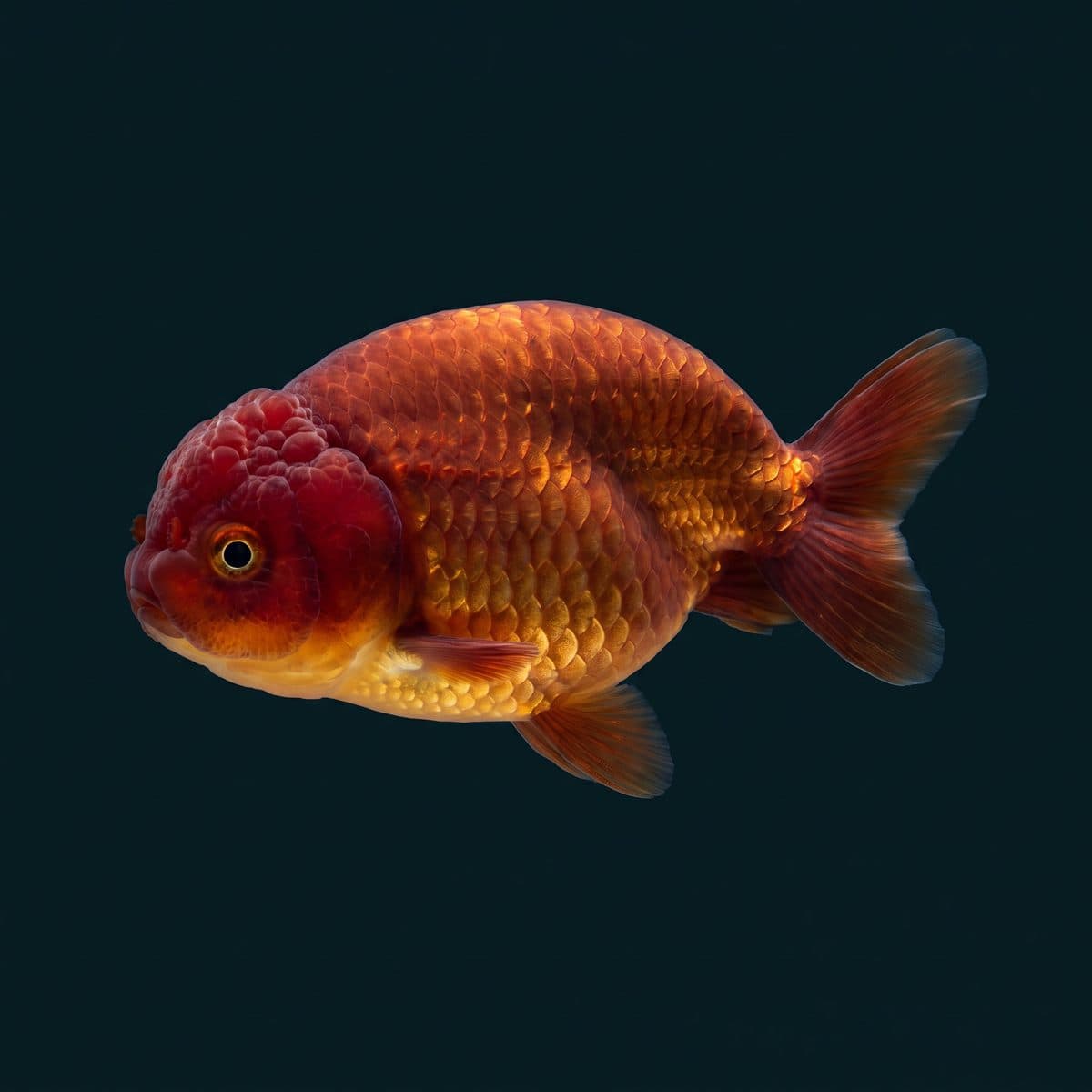
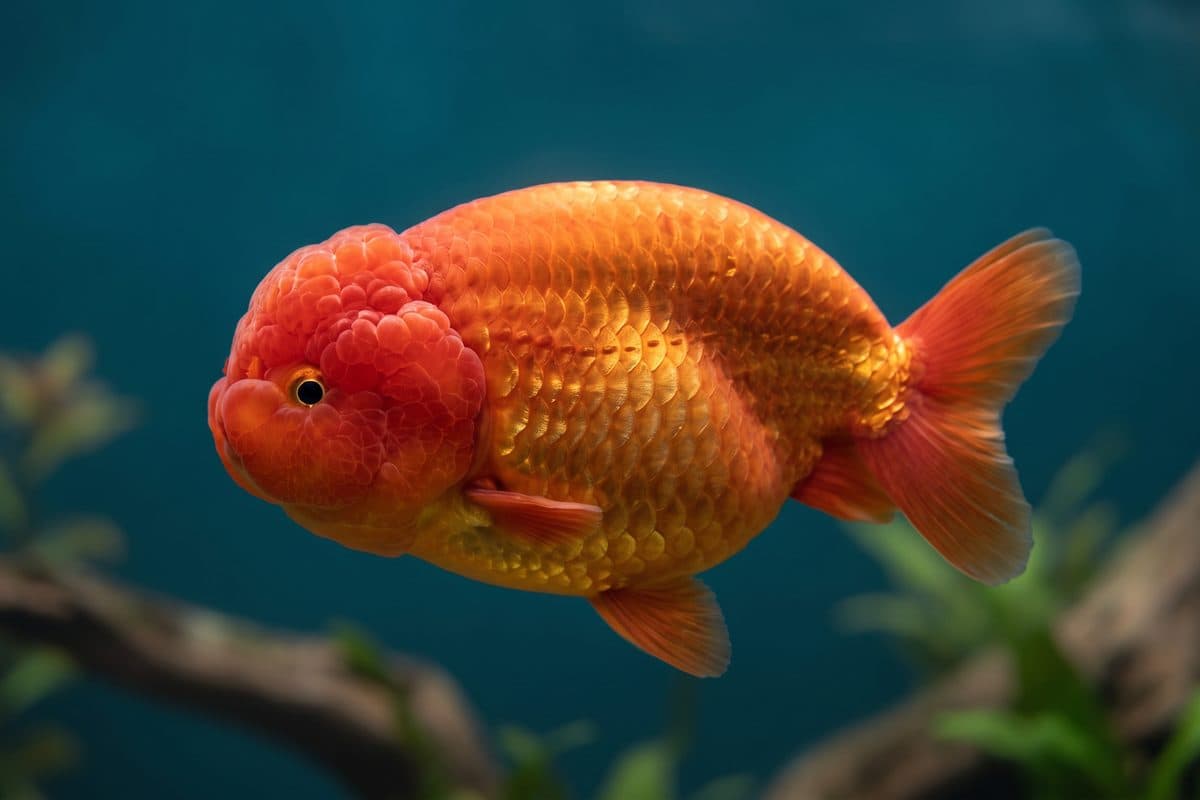
The Lionhead goldfish is the Chinese progenitor of the more widely known Japanese Ranchu. Developed during the Ming Dynasty (14th–17th century), the Lionhead was bred to display maximum wen development — a fleshy, lumpy head growth that covers the cranium, cheeks, and gill plates, creating a "lion's mane" effect when viewed from above. Combined with the characteristic absence of a dorsal fin, the Lionhead presents a unique silhouette that is instantly recognisable to goldfish enthusiasts.
While the Ranchu has achieved greater international popularity, the Lionhead retains a devoted following, particularly in China, where it is judged by different aesthetic standards than the Ranchu. Chinese Lionhead judging emphasises wen volume, symmetry, and fullness — the ideal Lionhead's wen should be massive, covering the entire head and extending down the cheeks and gill covers in a uniform, rounded profile.
Lionhead vs Ranchu
The Lionhead and Ranchu are closely related and frequently confused. Key differences:
- Back profile: The Ranchu has a more pronounced curved back (the "tuck" where the back meets the tail peduncle should be sharp and well-defined). The Lionhead has a straighter, less dramatically curved back.
- Wen development: The Lionhead is bred for maximum wen coverage — ideally the entire head, cheeks, and gill plates are covered. Ranchu wen standards vary by lineage but generally prioritise shape and proportion over sheer volume.
- Body shape: Ranchu tend to be more egg-shaped and compact; Lionheads may be slightly longer-bodied.
- Tail: Ranchu tails are typically more splayed and viewed from above (top-view judging is traditional in Japan). Lionhead tails may be more flowing and are traditionally judged from the side.
In practice, the varieties have been interbred extensively, and many commercially available "Lionhead" goldfish are Lionhead-Ranchu crosses. True Chinese Lionheads with classic breed characteristics are less common in the Western hobby than Ranchu.
Appearance
Key physical characteristics:
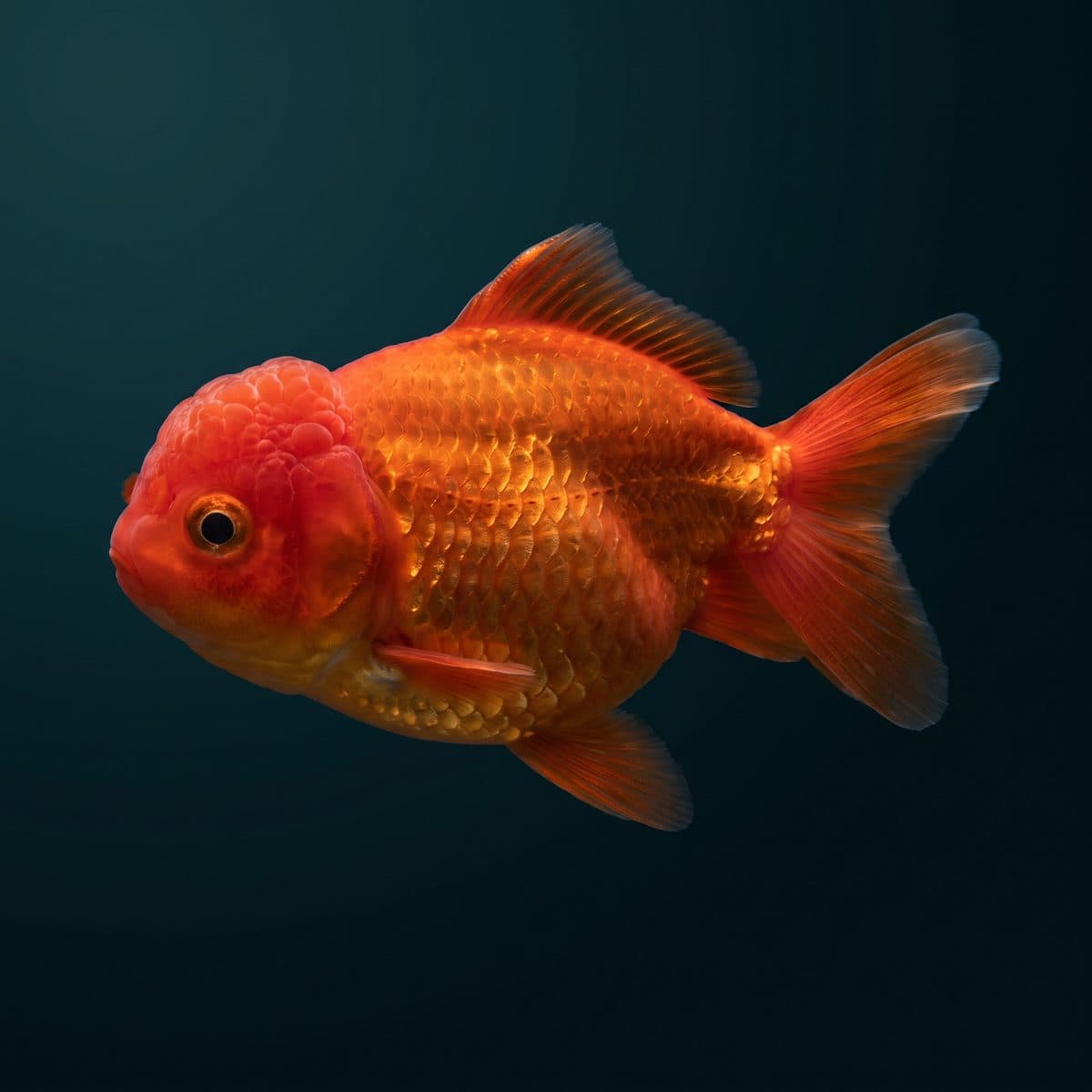
- No dorsal fin: The smooth, clean back is a defining breed requirement. Any trace of dorsal fin is a disqualification in competition.
- Full wen: Covers the cranium (top of head), cheeks, and ideally the gill covers. The wen should be symmetrical, full, and have a "raspberry" or "cauliflower" texture.
- Body: Deep, round, and slightly elongated compared to the Ranchu.
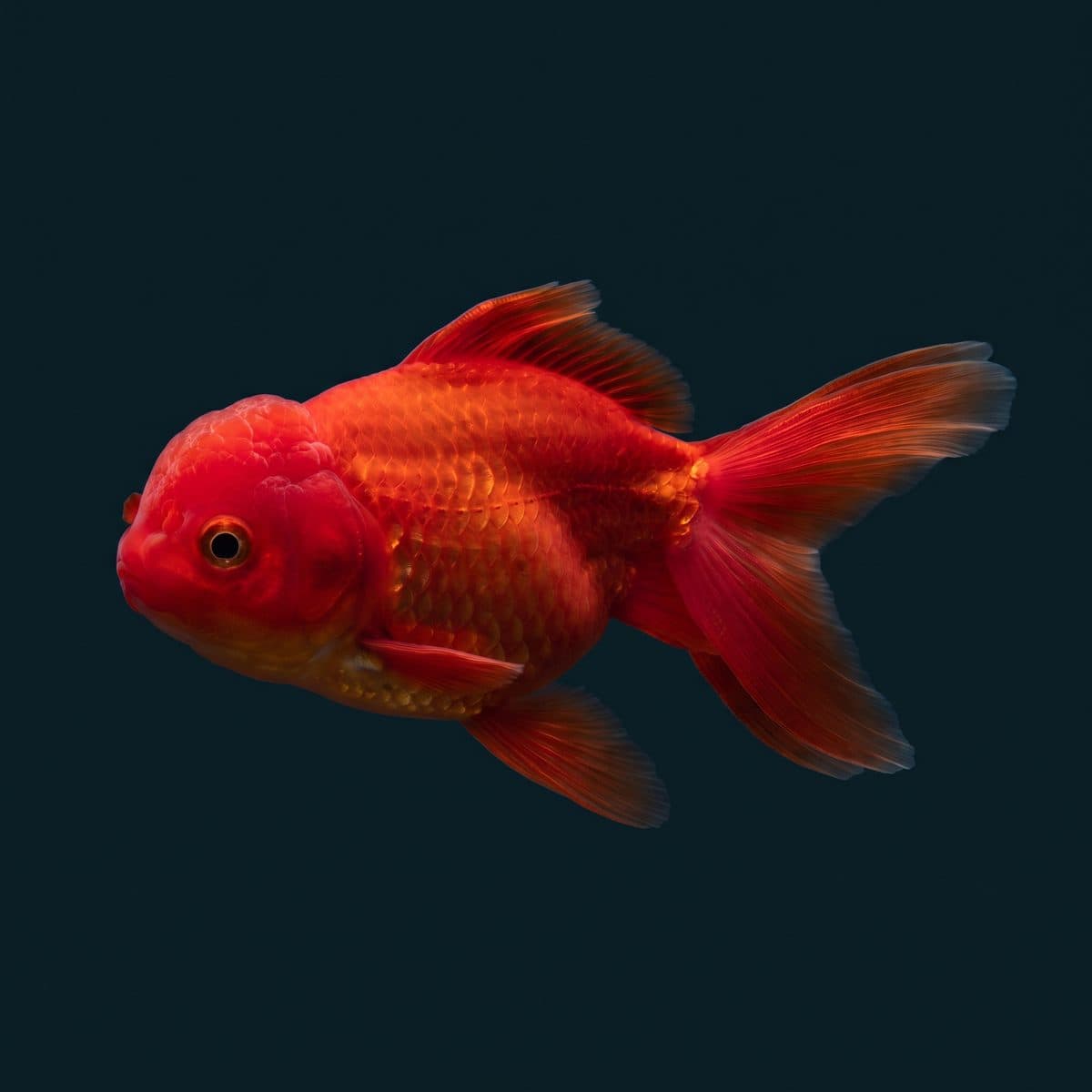
- Tail: Double (split) caudal fin, held open and flowing.
- Colours: Red, red-and-white, black, calico, blue, chocolate, and panda (black and white). Red and red-and-white are the most traditional and popular.
Tank Requirements
- Tank size: 30 gallons (114 L) minimum for one Lionhead; add 10–15 gallons per additional fish.
- Water flow: Gentle. Lionheads are poor swimmers due to the absence of a dorsal fin, which functions as a stabiliser. Strong currents exhaust them and can cause stress. Use a sponge filter or baffle the output of canister/HOB filters.
- Substrate: Smooth sand — no sharp gravel that could injure the wen.
- Décor: Smooth, rounded surfaces only. Avoid sharp edges, rough rocks, and narrow spaces where the wen could get snagged or scraped.
Water Parameters
- Temperature: 65–75 °F (18–24 °C).
- pH: 6.5–7.5.
- Ammonia/Nitrite: 0 ppm — critical for wen health.
- Nitrate: Below 20 ppm.
Water quality is paramount for Lionheads. The wen is susceptible to bacterial and fungal infection in poor water conditions. Weekly 30–50% water changes are essential.
Diet & Feeding
Identical dietary recommendations to the Oranda (see our Oranda Goldfish guide): sinking pellets or gel food as a staple, supplemented with frozen bloodworms, brine shrimp, and blanched vegetables. Sinking foods are essential — Lionheads' poor swimming ability makes surface feeding stressful and increases air ingestion.
High-protein diets promote wen growth. Spirulina and astaxanthin supplements enhance colour intensity.
Wen Care
The same wen care principles apply as for Orandas, with the additional consideration that Lionheads are bred for maximum wen development, meaning overgrowth issues are more common:
- Vision obstruction: Lionhead wens frequently grow to the point where they partially or fully cover the eyes. This reduces the fish's ability to find food and navigate. Wen trimming may be necessary — carefully cutting away wen tissue from around the eyes using clean, sharp scissors. The procedure causes no lasting harm but should be researched thoroughly before attempting.
- Infection prevention: Pristine water quality, smooth substrate, and rounded décor prevent wen damage and subsequent infection.
- Regular inspection: Check the wen weekly for white patches (fungal), redness (bacterial), or unusual texture changes.
Swimming Ability Considerations
Without a dorsal fin, Lionheads lack the stability that other goldfish varieties enjoy. They tend to wobble, roll slightly, and struggle in current. This is normal breed behaviour, not a sign of illness. Practical implications:
- Keep water flow gentle — sponge filters or baffled outlets.
- Only house with equally slow-swimming varieties (Ranchu, other Lionheads, Bubble Eyes, Celestial Eyes).
- Ensure food reaches the fish — scatter sinking pellets rather than dumping in one spot, so all fish can access food without having to compete with faster swimmers.
- Avoid deep tanks — Lionheads may struggle to reach food at the bottom of tall tanks. Standard rectangular proportions work best.
History & Cultural Significance
The Lionhead carries more history than almost any fish in the hobby. Selective breeding of Carassius auratus from wild grey Prussian carp began in China well over a thousand years ago, and by the Ming Dynasty (roughly the 14th–17th centuries) breeders had fixed the dorsal-less, heavily wenned form we now call the Lionhead. It was prized in imperial China, kept in ceramic bowls and garden ponds and bred toward an ideal that emphasised a full, rounded head of wen resembling a lion's mane — hence the name.
That cultural lineage still shapes how the fish is judged today. In China, the Lionhead is traditionally viewed from above, the way it would have been admired in a courtyard bowl, and the standards reward wen volume, symmetry, and a smooth back. When Chinese stock reached Japan, breeders there refined it into the Ranchu along slightly different lines, but the Lionhead remained its own revered variety.
Knowing this heritage is more than trivia — it explains why Lionheads look and swim the way they do. Centuries of breeding for a massive wen and no dorsal fin created a fish that's beautiful but functionally compromised, and that trade-off is the root of nearly every care consideration in this guide. You're keeping a living piece of centuries-old craft, and it needs conditions that account for how far it's been bred from its wild ancestor.
Health & Common Problems
Lionheads are more delicate than single-tailed goldfish, and most of their health issues trace back to two features: the wen and the missing dorsal fin. Keep an eye out for:
- Wen infections: The folded, spongy wen traps debris and bacteria. Redness, white cottony patches, or a foul look mean bacterial or fungal infection — increase water changes and treat promptly. Pristine water is the best prevention.
- Swim bladder and buoyancy problems: The round body compresses the swim bladder, and gulping air worsens it. Feed pre-soaked sinking foods, include blanched peas, and fast a day a week to keep digestion moving.
- Ich and flukes: Common goldfish parasites, usually appearing after chilling or stress. Treat with heat and appropriate medication; goldfish tolerate most treatments well.
- Vision-related starvation: When the wen overgrows the eyes, the fish struggles to find food and can slowly lose condition. Scatter-feed so it can find food by scent, and consider careful wen trimming if it's badly obstructed.
None of this is exotic — it's the predictable downside of an extreme body shape. Stable, clean water in the 65–75 °F range, a fibre-rich diet, gentle flow, and weekly observation of the wen and swimming will keep a Lionhead healthy for 10–15 years.
Breeding
Lionheads breed the same way all goldfish do, and it's very achievable at home if you want to try. Spawning is triggered by a seasonal warm-up: condition a mature group over winter at cooler temperatures, then raise the water gradually from around 60 °F to 70–74 °F in spring while feeding richly on protein. Males develop small white breeding tubercles on the gill covers and pectoral fins and chase the rounder, egg-laden females, usually in the early morning.
The females scatter sticky eggs onto plants or spawning mops, and since the adults will happily eat them, you'll need to remove either the eggs or the parents right after spawning. Eggs hatch in 4–7 days depending on temperature, and the fry can be started on infusoria and liquid fry food before graduating to baby brine shrimp.
Here's the catch specific to this variety: breeding true Lionheads is an exercise in selection. Wen development and the dorsal-less back are variable, so only a fraction of any spawn will show good wen coverage and a clean back — the rest are grown out as pets. Serious Lionhead breeding is a long, patient game of picking the best from each generation, which is exactly why top show-quality fish command the prices they do.
Choosing a Quality Lionhead
Whether you want a show contender or just a healthy pet, a few minutes of assessment pays off. Start with health, not looks: the fish should be active, upright, and swimming with reasonable control, with clear eyes, fins that aren't clamped, and no red streaks, ulcers, or cottony patches on the body or wen.
For quality, the back is the first thing to check — it should be smooth and completely free of any dorsal fin or stray spikes, curving cleanly from head to tail. The wen should be developing evenly across the head; in young fish it may still be modest, but it should look symmetrical rather than lopsided. A good Lionhead has a deep, rounded body, a level swimming posture, and a tail that's held open and matched left to right.
Be realistic about age and development, though. Wen doesn't fully come in until 2–3 years, so a young Lionhead is partly a gamble on genetics — buying from a breeder with quality parent stock is the best way to predict how it'll mature. And always weigh conformation against health: a perfectly shaped fish that's struggling to swim or nursing an infected wen is a worse buy than a slightly plainer fish in robust condition.
Is a Lionhead Right for You?
The Lionhead is a connoisseur's goldfish — beautiful, historic, and full of character, but genuinely more demanding than the average fancy variety. Here's the honest breakdown.
A Lionhead is a good match if you:
- Can provide a 30+ gallon tank with gentle flow and smooth, rounded décor.
- Are willing to keep water pristine and feed a careful, fibre-rich, sinking diet.
- Will monitor the wen for infection and overgrowth, and trim it if needed.
- Appreciate a slow, peaceful fish and will keep only equally slow tank mates.
Consider another variety if you:
- Want a hardy, forgiving beginner goldfish — a Ryukin or Fantail is more robust.
- Keep fast single-tailed goldfish or a strong-current tank.
- Don't want to deal with wen care or potential swim bladder issues.
If you go in understanding the trade-offs of an extreme, dorsal-less, heavily wenned fish, the Lionhead rewards you with one of the most distinctive and endearing personalities in the goldfish world. It's not the fish to learn on, but for a keeper ready to meet its needs, it's deeply satisfying.