Easy
Denison Barb
Sahyadria denisonii
da 16,56 €Get a quote
Sahyadria denisonii
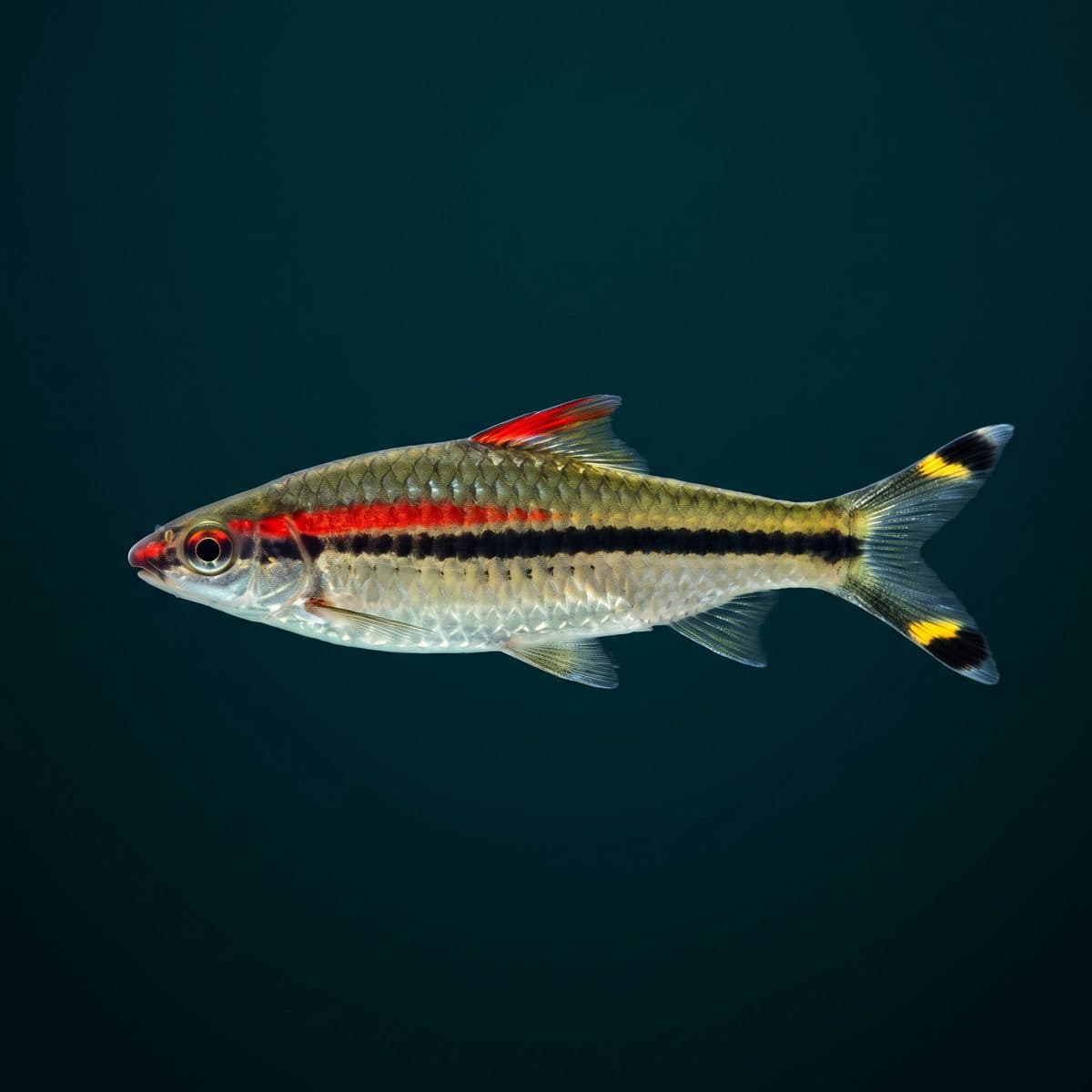
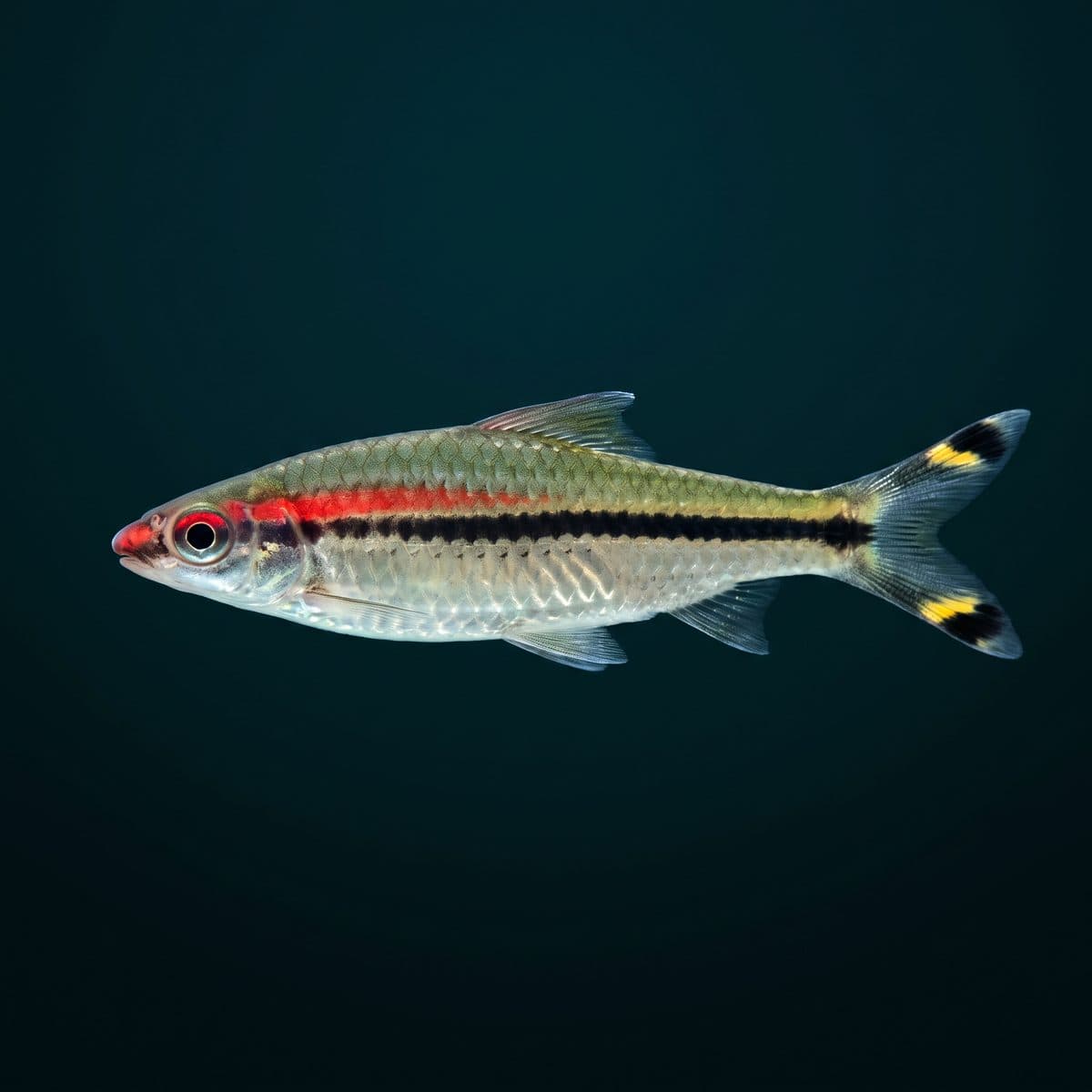
The Roseline Barb, also known as the Denison Barb or Red-Line Torpedo Barb, is widely regarded as one of the most beautiful and dynamic freshwater schooling fish available to aquarists. Sahyadria denisonii hails from the fast-flowing hill streams of the Western Ghats in Kerala, India — a biodiversity hotspot that has produced some of the hobby's most sought-after species. The fish displays a torpedo-shaped silver body bisected by a bold horizontal black stripe, topped by a brilliant scarlet line that runs from the snout through the eye to the midpoint of the body. The forked caudal fin is marked with striking yellow and black bars. In a school of six or more under proper lighting, the effect is spectacular.
Insulated, oxygen-packed transit · live-arrival guaranteed
Tank size
75+ gallons
Temperamento
Peaceful
Alimentazione
Omnivore
Water
64–77°F · pH 6.5–7.5
Tell us what you're dreaming of — we'll reply with a price tailored to you.
Happy together
Not sure if this fish is right for you?
Our team will happily help you choose.
The Roseline Barb, also known as the Denison Barb or Red-Line Torpedo Barb, is widely regarded as one of the most beautiful and dynamic freshwater schooling fish available to aquarists. Sahyadria denisonii hails from the fast-flowing hill streams of the Western Ghats in Kerala, India — a biodiversity hotspot that has produced some of the hobby's most sought-after species. The fish displays a torpedo-shaped silver body bisected by a bold horizontal black stripe, topped by a brilliant scarlet line that runs from the snout through the eye to the midpoint of the body. The forked caudal fin is marked with striking yellow and black bars. In a school of six or more under proper lighting, the effect is spectacular.
At The Fish Collection, we source our Roseline Barbs from captive-breeding programs that reduce pressure on wild populations, which have been listed as Endangered on the IUCN Red List due to overcollection and habitat degradation. Each fish is quarantined and conditioned on a varied diet before offering. Our specimens display intense coloration and robust body condition that distinguish captive-bred quality from mass-imported stock.
Housing Roseline Barbs requires a minimum 75-gallon aquarium — these are active, fast-swimming fish that need ample open space for schooling. A planted tank with a combination of open swimming lanes and densely vegetated areas provides ideal conditions. Moderate to strong water flow from a canister filter or powerheads replicates their natural hillstream habitat and encourages active swimming behavior. Substrate can be gravel or sand, with smooth river rocks and driftwood for natural aesthetics.
Water parameters should reflect the subtropical origin: temperature between 64 and 77 degrees Fahrenheit (cooler than most tropical community fish), pH of 6.5 to 7.5, and soft to moderate hardness. Roseline Barbs tolerate a range of conditions but show their best color and activity in clean, well-oxygenated water at temperatures below 76 degrees. They are excellent candidates for unheated or lightly heated aquariums in temperate homes.
Diet is omnivorous and straightforward: high-quality flake and pellet foods supplemented with frozen bloodworms, brine shrimp, daphnia, and blanched vegetables. Roseline Barbs are enthusiastic, active feeders that readily accept all offered foods. Feed two to three times daily in small portions. A well-fed school in a planted tank is one of the most satisfying displays in the freshwater hobby.
Domande Comuni
Risorse Specialistiche
Potrebbe Interessarti Anche
da 23 €
Indicative price