Overview
Groupers are a diverse family of marine predatory fish found in tropical and subtropical oceans worldwide. In the aquarium hobby, they are kept for their bold personalities, impressive predatory displays, and striking appearances. The primary challenge is size — most groupers grow large quickly and require substantial investment in tank space and feeding.
Popular Species
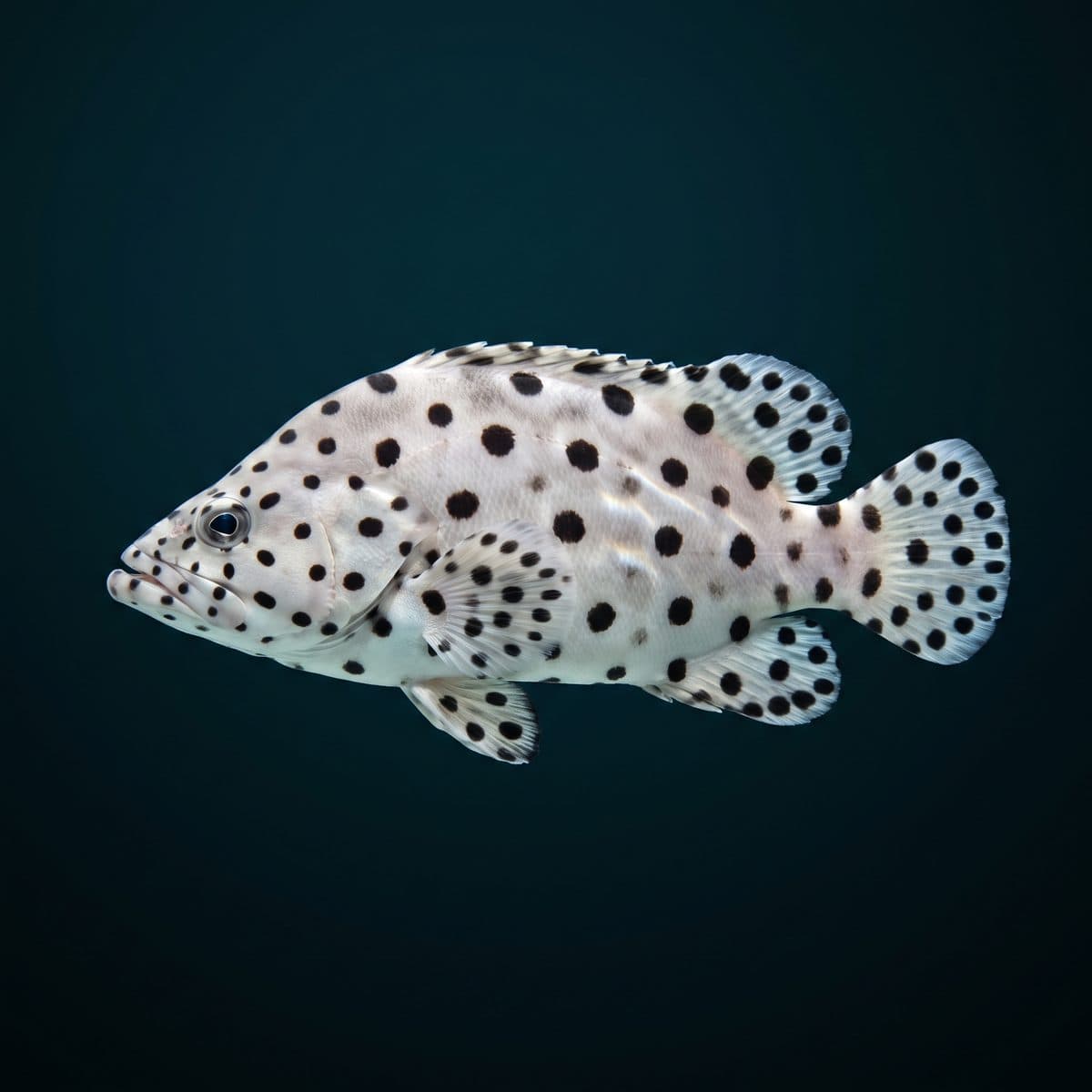
- Panther Grouper (Cromileptes altivelis) — white with black spots, grows to 28 in, starts adorably small but outgrows most tanks. Needs 200+ gallons.
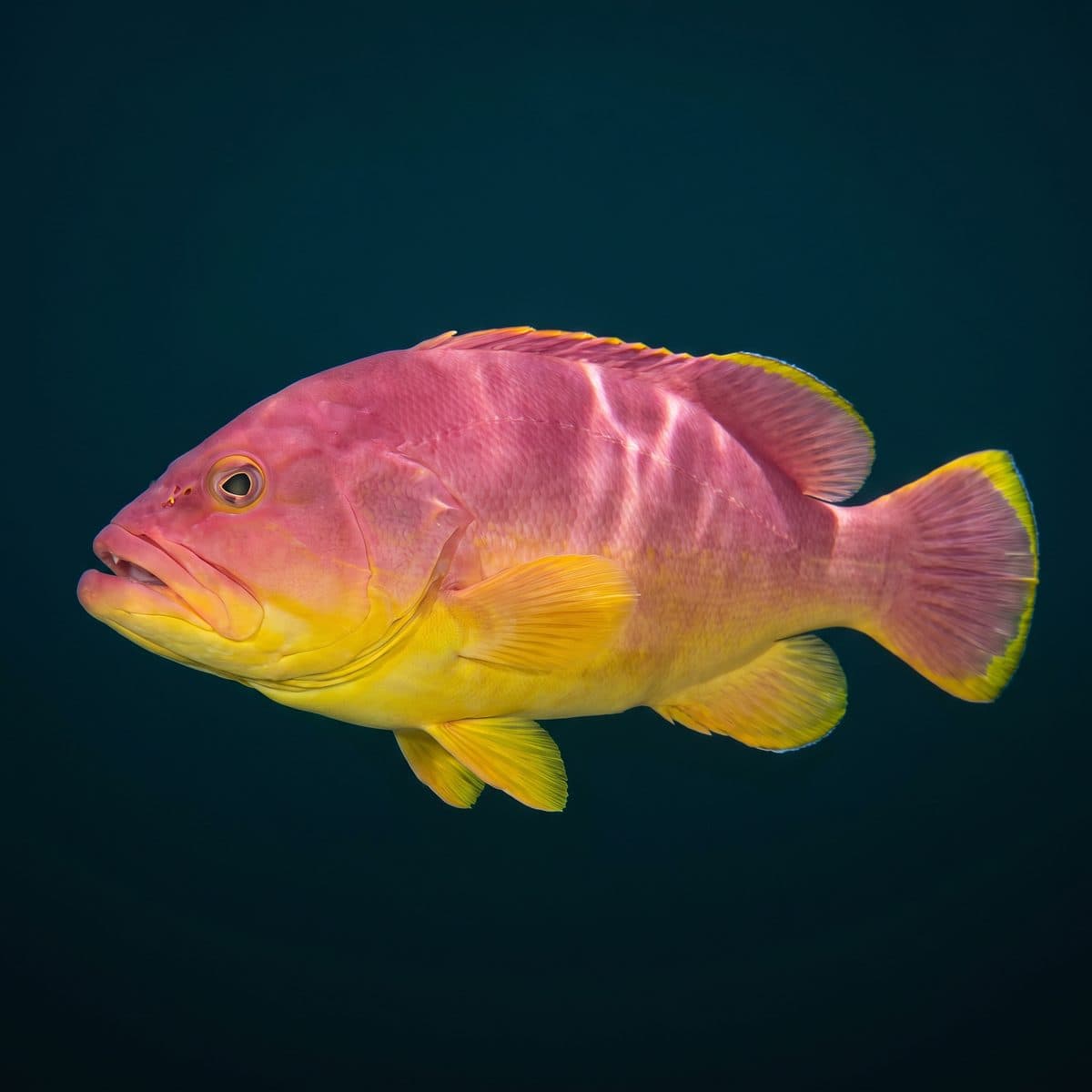
- Neptune Grouper (Cephalopholis igarashiensis) — ultra-rare deepwater species, vivid orange-pink, $6,000+, stays smaller (10 in). Needs 150+ gallons.
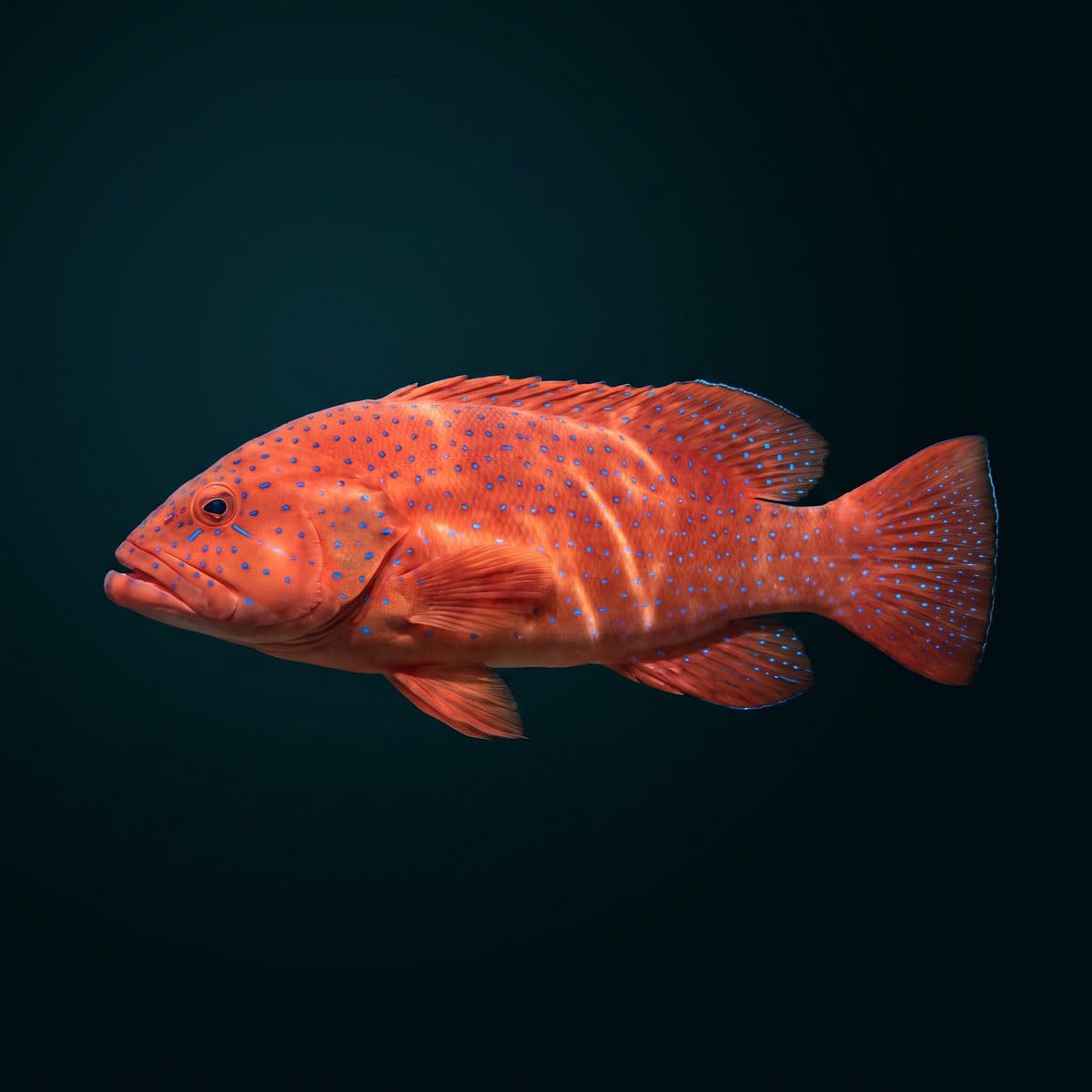
- Miniatus Grouper (Cephalopholis miniata) — bright red with blue spots, 18 in, 180+ gallons. One of the most colourful.
- Blue-Spotted Grouper (Cephalopholis argus) — 16 in, 150+ gallons, common and hardy.
Tank Requirements
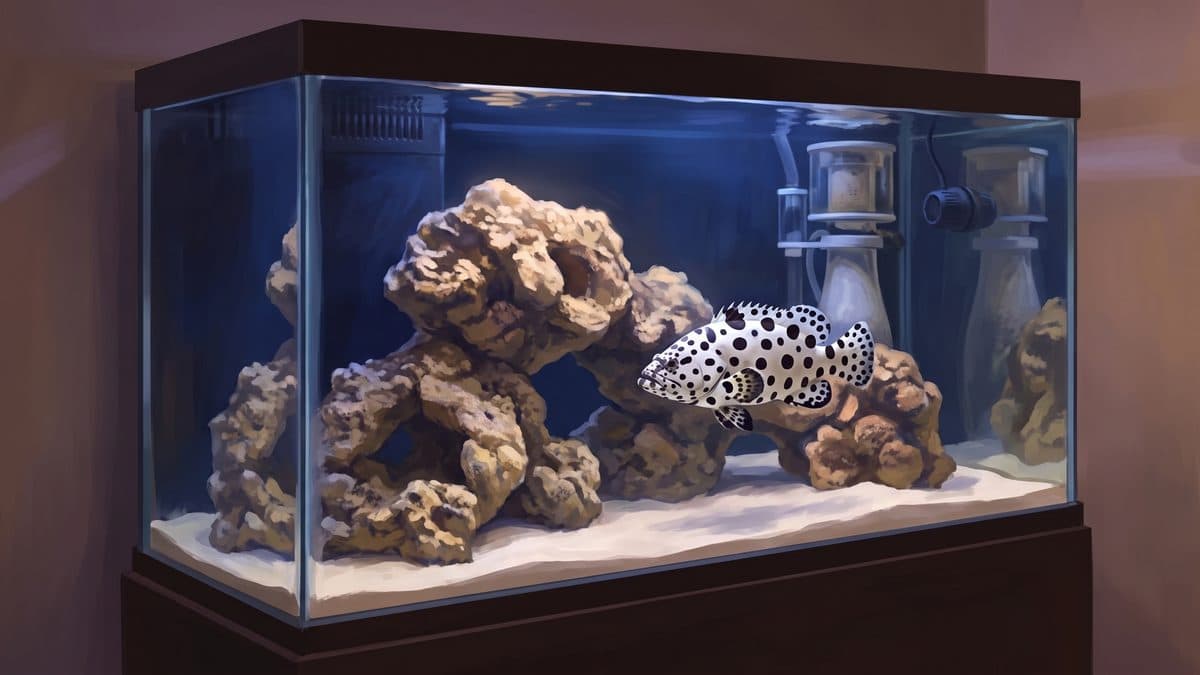
Groupers need large tanks with robust filtration. Most species are ambush predators that don't swim constantly, but they produce heavy waste. Provide caves and overhangs (live rock arrangements) for the grouper to claim as territory. A protein skimmer rated for double the tank volume is recommended. Ensure the tank lid is secure — groupers can jump when startled.
Water Parameters
- Temperature: 76–80 °F (some deepwater species like Neptune prefer 72–76 °F)
- pH: 8.1–8.4
- Salinity: SG 1.024–1.026
- Ammonia/Nitrite: 0 ppm
- Nitrate: Below 20 ppm
Neptune Groupers require cooler water (72–76 °F) due to their deepwater origin. Acclimation from depth must be performed by the collector — hobbyists purchase already-decompressed specimens.
Feeding
Groupers are voracious carnivores. Feed raw shrimp (shell-on), silversides, squid, clam, and high-quality marine pellets (New Life Spectrum, Hikari Marine). Feed every 2–3 days for adults. Groupers often learn to recognise their owner and may "beg" for food. Avoid overfeeding — groupers gain weight easily and fatty liver disease is a concern in captivity.
Tank Mates
Groupers will eat any fish that fits in their mouth — and their mouths are enormous relative to body size. Compatible tank mates must be at least 60% of the grouper's body length: large tangs, triggerfish, large wrasses, moray eels, and lionfish. Avoid small fish, ornamental shrimp, and delicate species. Groupers are generally not aggressive toward fish they can't eat.
Health Considerations
Groupers are generally hardy once established. Common issues include bacterial infections from poor water quality, parasites (treat with copper in a QT), and eye cloudiness from injury. Neptune Groupers are more delicate due to deepwater origin and require pristine water quality. All groupers should be quarantined for 4–6 weeks before display introduction.
Choosing the Right Grouper
Grouper regret is almost always size regret, so let's do the maths before the purchase. That adorable 3-inch Panther Grouper is the poster child: it hits 12 inches in about two years and keeps going past 20, which is why so many appear on rehoming forums attached to the phrase "outgrew my tank". If your display is a 120, the honest answer is that a Panther was never a candidate.
Better matches for realistic tanks: the Miniatus Grouper delivers spectacular colour at 18 inches in a 180-gallon, and the Blue-Spotted Grouper is hardy and manageable at 16 inches in a 150. The Neptune is a collector's fish with deepwater complications — cooler water (72–76 °F), subdued lighting, and a five-figure price — not anyone's first grouper.
At the store, run the predator checklist: a full (never hollow) belly, clear eyes, intact fins, alert perching in or near cover — groupers watch the room, they don't lie about listlessly — and a decisive strike on frozen food offered in front of you. A grouper that ignores food is telling you something. Believe it.
Aquascaping for an Ambush Predator
A grouper tank is built around one feature: the lair. Give the fish a cave or overhang big enough to back into fully, positioned with a clear view of open sand where the food arrives, and it will claim it within a day and organise its entire life around it. A grouper without a proper lair stays skittish and stress-darkened indefinitely.
- Lock down the rockwork. A startled grouper is a battering ram — epoxy or cable-tie the structure, because "carefully stacked" doesn't survive contact with a fish this size.
- Leave open sand up front as the feeding arena, keeping meals away from the rock and out of ambush range of tank mates.
- Moderate the lighting. Groupers colour up best and behave most naturally under subdued light; harsh reef-level intensity keeps them hidden.
- Oversize skimming and flow. Meaty feedings load the water fast — run a skimmer rated for at least double the tank volume plus strong circulation.
- Seal the lid. Startled groupers jump, and a fish this heavy hits the floor hard.
Feeding Schedule and Portion Control
Groupers are professional gluttons — opportunists that eat whenever the chance appears and beg with theatrical conviction long after they're full. Don't negotiate:
- Juveniles (under 6 in): Small meals daily — chopped shrimp, silversides, marine pellets.
- Sub-adults: Every other day, portions roughly the size of the fish's head.
- Adults: 2–3 substantial meals per week with genuine fast days between. The wild feast-and-fast rhythm keeps captive groupers leaner and longer-lived.
Rotate shell-on shrimp, squid, silversides, and clam with quality pellets, and soak frozen food in a vitamin supplement weekly. Two firm rules. First, no freshwater feeder fish — thiaminase and parasites make them the classic cause of mystery grouper deaths. Second, no fingers at feeding time: a grouper strike is an inhalation measured in milliseconds, and it does not distinguish between the silverside and the hand holding it. Tongs, always.
Quarantine and Acclimation
Some good news: groupers are among the easiest marine fish to quarantine. They're tough, they eat readily, and they tolerate treatment well — so there's no excuse to skip the step.
- Setup: 40–75 gallons depending on the fish, a cycled sponge filter, and a section of large PVC pipe as the security blanket. Expect the grouper to live inside the pipe for week one.
- Weeks 1–3: Feed up and observe, then run copper at therapeutic level — verified with a test kit, held for 14 days — to clear marine ich and velvet.
- Weeks 4–6: Praziquantel for flukes, then clean observation. Eating aggressively and showing normal ambush behaviour? Cleared for the display.
Once transferred, expect a few days of sulking deep in the rockwork — completely normal. A healthy grouper announces the end of its adjustment the same way every time: stationed at the front glass at feeding time, tracking your movements like it has been running the tank for years. From that day forward you don't really own a grouper — you have a standing appointment with one.