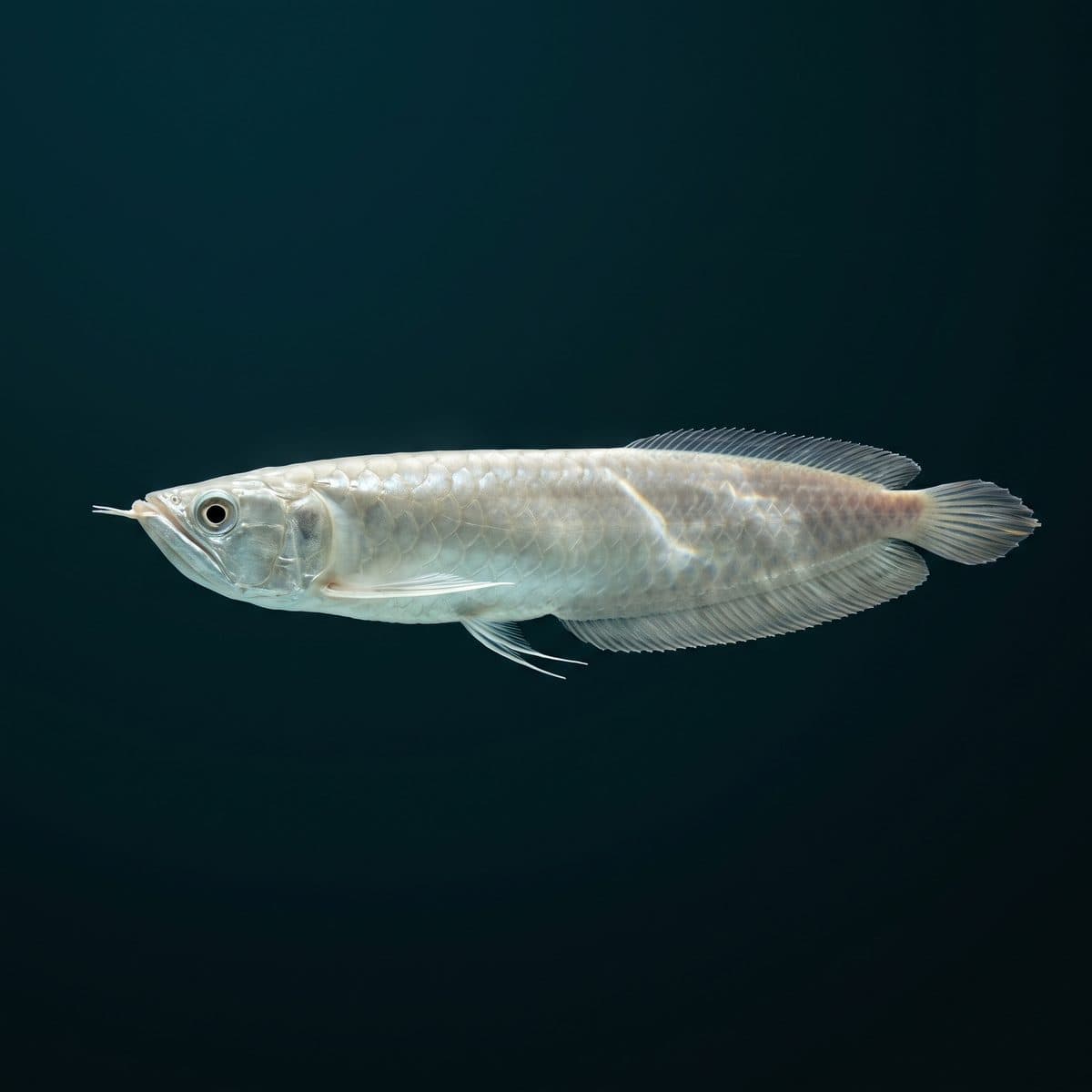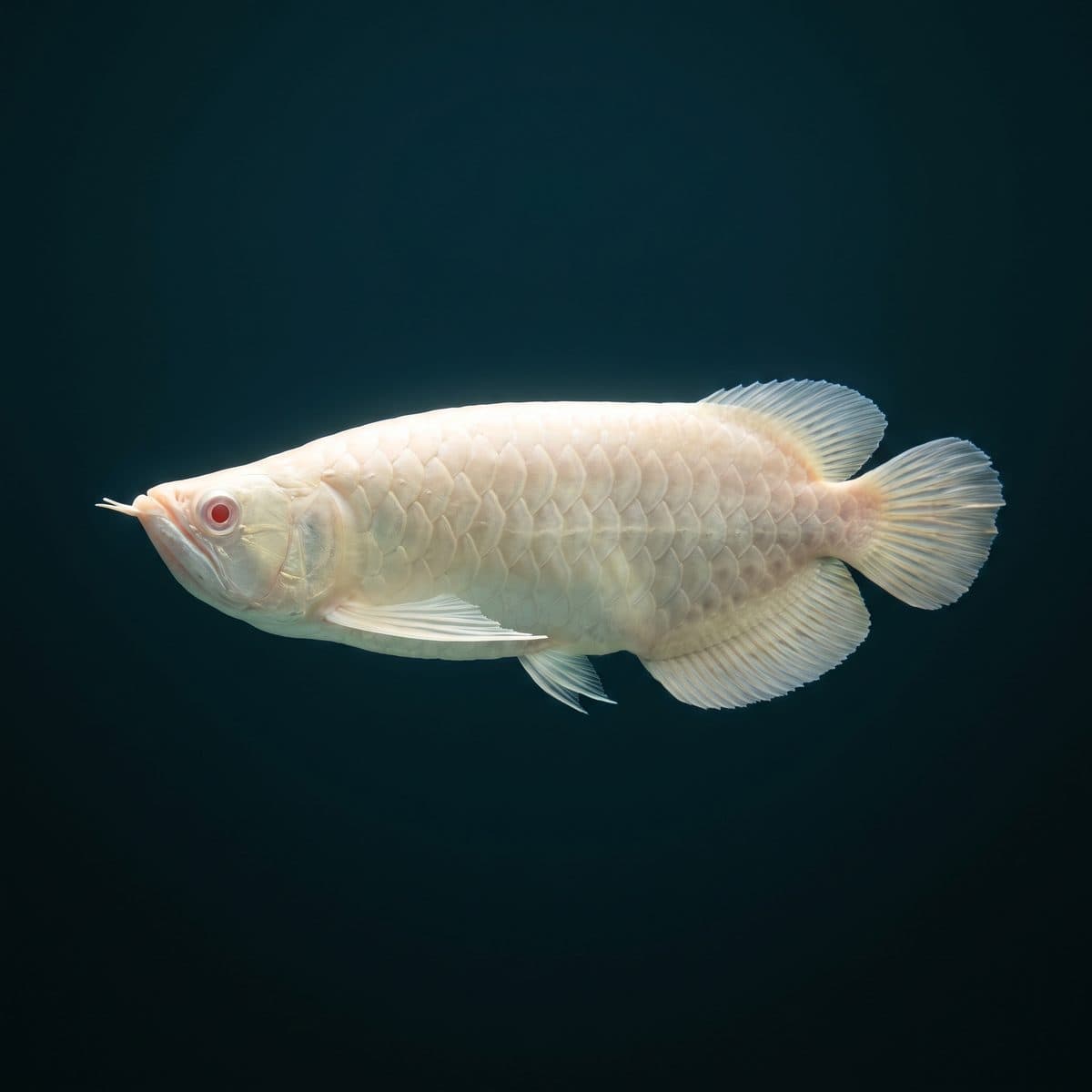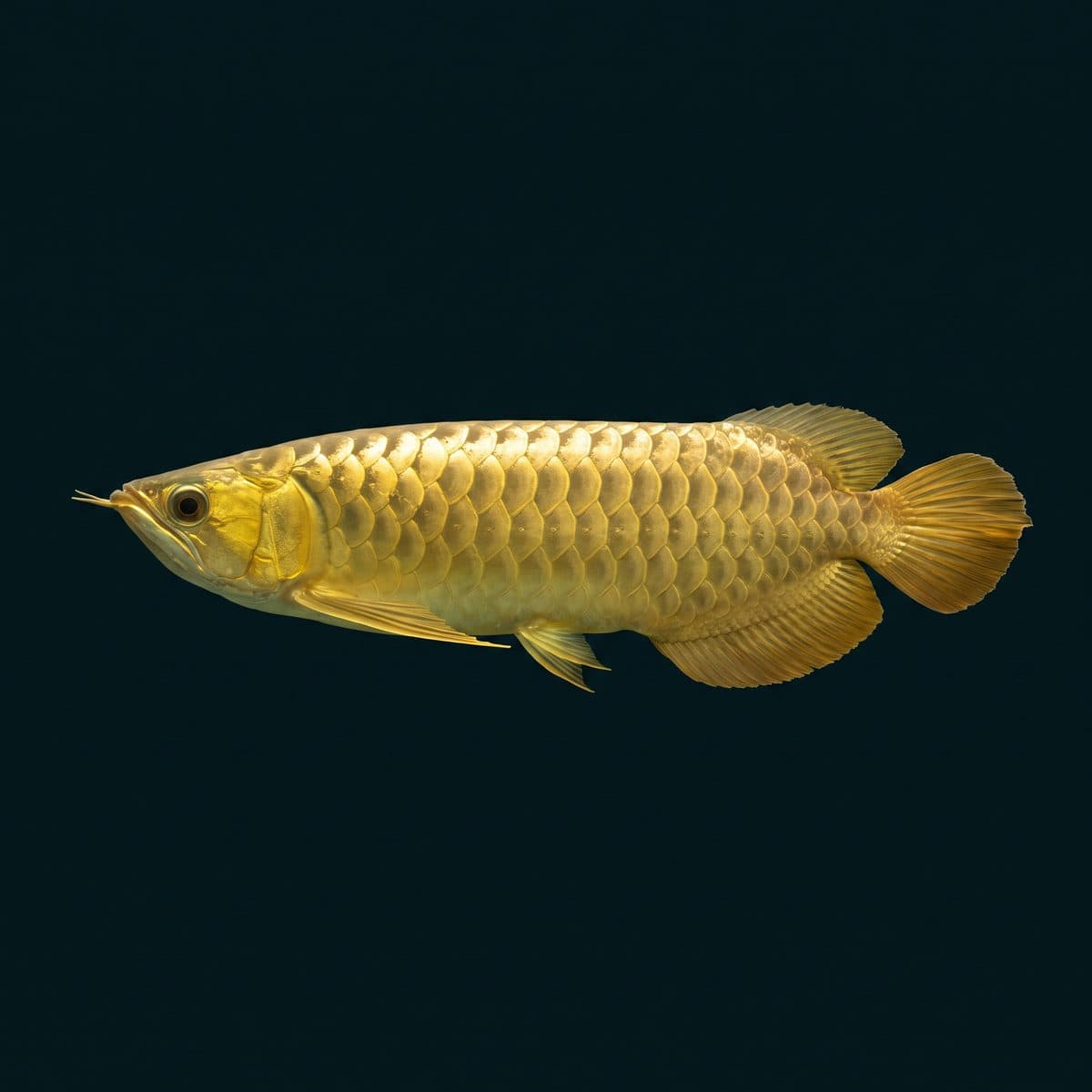
Why Tank Setup Matters for Arowana
Arowana are not forgiving fish. A Discus might tolerate a temporary parameter swing; an Arowana will develop drop eye, gill curl, or spinal deformity from chronic environmental stress — conditions that are difficult or impossible to reverse. The tank you build is not just a container; it is a life-support system that must maintain hospital-grade stability for a fish that may live 25 years and be worth more than the car in your driveway.
I have inspected hundreds of private Arowana setups over my career, and the pattern is consistent: fish kept in properly engineered systems display superior colour, natural behaviour, and longevity compared to those housed in hastily assembled tanks — regardless of the specimen's genetic quality. Infrastructure is everything.
Tank Dimensions and Material
Choosing the Right Dimensions
Adult Asian Arowana reach 60–90 cm (24–36 in). Silver Arowana grow even larger, regularly exceeding 100 cm (40 in). These are straight-line patrol swimmers — they pace the length of the tank continuously, turning at each end. If the tank is too short, the fish is forced into tight U-turns that, over months and years, cause permanent spinal curvature.
Minimum dimensions for Asian Arowana: 8 feet long × 3 feet wide × 2 feet tall (240 × 90 × 60 cm). This yields approximately 240 US gallons (900 litres). For Silver Arowana, extend to 10 × 4 × 2 feet (300 × 120 × 60 cm), approximately 400 gallons.
Width matters nearly as much as length. A tank narrower than 3 feet (90 cm) does not allow a full-sized Asian Arowana to turn comfortably — the fish's body length plus pectoral fin spread exceeds the available width, leading to fin damage and stress.
Height is the least critical dimension. Arowana are surface dwellers and rarely descend to the bottom third of the tank. Two feet (60 cm) is sufficient. Taller tanks waste volume that does not benefit the fish and increase hydrostatic pressure on the bottom panels.
Glass vs Acrylic for Arowana
At 240+ gallons, acrylic is the preferred material. It weighs approximately 50 % less than glass at equivalent volume, offers 17× greater impact resistance (critical for a fish that can slam into panels when startled), and provides better thermal insulation — reducing heater energy consumption by roughly 15 %.
The downside is scratch susceptibility. Arowana tanks typically use bare or fine-sand substrate, minimising abrasive contact during cleaning. Use only non-abrasive pads (melamine foam or microfibre) for algae removal on acrylic surfaces.
If glass is preferred for aesthetic reasons (higher optical clarity, scratch resistance), use low-iron (starphire) glass in minimum 19 mm thickness for the front panel. Standard float glass produces a green tint at this thickness that distorts the fish's true coloration.
Stand and Placement
A filled 240-gallon system with stand, sump, and equipment weighs approximately 1,200 kg (2,650 lbs). This load must be distributed across the floor — never placed on a single point. Steel or hardwood stands rated for at least 1,500 kg are standard. Verify your floor's load capacity, especially on upper storeys. Reinforced concrete slab (ground floor) is ideal.
Position the tank away from direct sunlight (promotes algae and temperature fluctuations), external doors (drafts cause temperature instability), and high-traffic areas (vibrations stress the fish). Leave at least 60 cm of clearance behind the tank for sump access and plumbing maintenance.
Lid Requirements
This cannot be overstated: Arowana jump. In the wild, they leap above the water surface to snatch insects and small animals from overhanging branches. In captivity, a startled Arowana can launch 30+ cm out of the water — more than enough to clear an open-top tank and land on the floor, usually resulting in fatal injury.
Your lid must be:
- Heavy enough to resist impact. A 5 kg minimum weight or a locking mechanism that secures the lid to the tank frame.
- Strong enough not to shatter. Standard 6 mm glass can crack from a full-force Arowana impact. Use 10 mm acrylic, polycarbonate, or aluminium-framed mesh.
- Ventilated. A completely sealed lid traps heat and CO₂. Mesh panels or ventilation slots prevent condensation and maintain gas exchange.
- Positioned with a 2–3 cm gap above the water surface to prevent barbel damage from the fish bumping the lid during normal surface patrol.
Substrate and Décor
Minimalism is the principle here. Arowana tanks should be clean, open, and free of obstructions.
Substrate options:
- Bare bottom: Easiest to clean, prevents food from falling into crevices, and eliminates substrate-borne bacteria. However, reflective bare bottoms are linked to drop eye in Arowana, as the fish fixates on its own reflection. Mitigate by using a dark-coloured or matte tank bottom (black acrylic, or a black vinyl wrap on the underside of a glass tank).
- Fine sand (1–2 mm grain): Provides a natural appearance and eliminates reflection. Use pool filter sand or aragonite-free river sand. Depth: 1–2 cm maximum — deeper beds trap detritus and create anaerobic pockets.
Décor: Large, smooth driftwood pieces are acceptable and provide visual interest without risk. Avoid sharp rocks, rough lava stone, or anything with protruding edges — a panicking Arowana will lacerate its scales on abrasive surfaces. Live plants are generally impractical; Arowana uproot them during feeding frenzies. If aesthetic planting is desired, use epiphytic species (Anubias, Java Fern) attached to driftwood above the substrate level.
Filtration System
Sump Design for Arowana
A sump is the only filtration approach adequate for a serious Arowana system. It adds water volume (improving parameter stability), houses all equipment out of the display tank, and allows staged filtration that addresses mechanical, biological, and chemical needs independently.
Recommended sump sizing: 30–50 % of the display tank volume. For a 240-gallon tank, use a 75–120 gallon sump. This sump should be divided into four chambers:
- Chamber 1 — Mechanical: Overflow drain empties into 200-micron filter socks (keep at least 4 in rotation, washing every 3 days). Below the socks, a drip tray with coarse foam (30 PPI) catches anything the socks miss.
- Chamber 2 — Biological: 10–15 litres of sintered-glass or ceramic biomedia (target 800+ m² surface area per litre). Water flows slowly through this chamber — baffle design should prevent channelling. Never clean more than 25 % of biomedia at one time.
- Chamber 3 — Chemical / Equipment: Activated carbon in a media reactor (replaced every 3 weeks), optional UV steriliser (25–40 W for 240 gallons), and probe holders for pH and temperature monitors.
- Chamber 4 — Return: Return pump rated for total system turnover of 8–10× per hour, accounting for head pressure loss. For a 240-gallon system with a 4-foot head height, a pump delivering 2,000+ GPH at zero head is appropriate (actual flow at 4 feet will be approximately 1,600–1,800 GPH).
Supplementary Filtration
Run a large canister filter (rated for 200+ gallons) in parallel with the sump. This provides redundancy — if the sump pump fails, the canister maintains biological filtration and water movement until you intervene. Fill the canister primarily with biomedia, not mechanical pads.
Consider adding a fluidised-bed reactor for additional biological capacity. These reactors use sand or K1 media in constant motion, providing exceptional surface area for nitrifying bacteria in a compact footprint.
Water Parameters and Conditioning
Target parameters for Asian Arowana:
- Temperature: 26–28 °C (79–82 °F)
- pH: 6.5–7.0
- General Hardness: 1–8 dGH
- Carbonate Hardness: 2–5 dKH (enough to buffer against pH crashes)
- Ammonia: 0 ppm
- Nitrite: 0 ppm
- Nitrate: Below 20 ppm (below 10 ppm preferred)
- TDS: 50–150 ppm
If your tap water does not match these parameters, invest in an RO/DI system ($150–$400). Blend RO water with tap water to reach your target GH and TDS. Remineralise pure RO water with a GH-boosting product (Seachem Equilibrium or equivalent) before adding it to the tank — pure RO water strips essential minerals and destabilises KH.
For colour enhancement in Super Red Arowana, some keepers maintain pH 6.0–6.5 using Indian almond leaves (Terminalia catappa), peat moss in the filter, or controlled blackwater extract dosing. Lower pH intensifies red and gold pigmentation, but stability always takes priority over hitting a specific number.
Lighting
Arowana lighting serves two purposes: visibility for the keeper and colour enhancement for the fish.
- Primary lighting: A full-spectrum LED unit (6,500 K) provides natural daylight rendering. Run for 8–10 hours daily on a timer with gradual ramp-up and ramp-down (30–60 minutes each) to simulate sunrise and sunset. Abrupt on/off lighting startles Arowana and triggers jumping.
- Tanning light: Many serious Arowana keepers use dedicated "tanning" LEDs — units with elevated red (620–660 nm) and warm-white (3,000 K) spectrums that intensify the fish's natural pigmentation. These are particularly effective on Super Red and Golden Crossback varieties. Run 4–6 hours daily during the midday period.
- Moonlight: A dim blue LED (1–2 watts) running overnight reduces stress and prevents the fish from being startled by sudden morning light activation.
Mount lights above the lid, not inside the canopy — Arowana can burn themselves on submerged or low-mounted fixtures during jumps.
Heating and Temperature Control
Use a titanium heater rated for your total system volume (display + sump). For a 240-gallon display with a 100-gallon sump, total volume is 340 gallons — use a heater rated for at least 400 watts, or two 300-watt units for redundancy.
Critical: use an external digital temperature controller (Inkbird ITC-308 or equivalent) rather than relying on the heater's built-in thermostat. Built-in thermostats drift over time and can cook your fish if they fail in the "on" position. The external controller acts as a kill switch, cutting power to the heater if temperature exceeds your set point by more than 1 °C.
Place the heater in the sump (not the display tank) to prevent the Arowana from burning itself on the element. Position the temperature probe in the display tank at the opposite end from the return outlet to measure the true ambient temperature.
Backup Power and Redundancy
An Arowana system worth $5,000–$500,000+ in livestock deserves power protection. A 4-hour outage can crash an unprotected system — oxygen depletion kills fastest, followed by temperature drop and filtration die-off.
- Minimum: Battery-operated air pump (USB-rechargeable models last 12+ hours). Keeps oxygen flowing when power fails.
- Recommended: A UPS (uninterruptible power supply) rated for 1,500–3,000 VA, connected to your return pump and heater. Provides 2–4 hours of runtime for essential equipment.
- Optimal: A whole-system generator (propane or natural gas, auto-start) for outages exceeding 4 hours. Critical in regions with unreliable grid power.
Test your backup systems quarterly. A battery that has degraded to 20 % capacity will not save your fish in a real outage.
Cycling the Tank Before Adding Arowana
No Arowana — regardless of price or source — should enter an uncycled tank. The fishless cycling protocol:
- Fill the tank and run all equipment (heater, filtration, circulation) for 24 hours to verify function and check for leaks.
- Add pure ammonia (reagent grade) to 2–4 ppm.
- Dose bottled nitrifying bacteria (Seachem Stability, Dr. Tim's One and Only, or equivalent) to accelerate colonisation.
- Test ammonia and nitrite daily with liquid reagent kits. Maintain ammonia at 2 ppm by re-dosing whenever it drops to zero.
- The cycle is complete when both ammonia and nitrite drop from 2 ppm to 0 ppm within 24 hours. Expect 4–6 weeks, potentially faster with bacterial supplements.
- Perform a 50 % water change to dilute accumulated nitrate before introducing the fish.
During cycling, verify that temperature, pH, and flow rates remain stable. Address any issues now — not after a $10,000 fish is in the water.
Final Setup Checklist
- Tank: 240+ gallons, 8 × 3 × 2 ft minimum, acrylic or low-iron glass
- Stand: steel or hardwood, rated 1,500+ kg, level to within 3 mm
- Lid: weighted/locking, 10 mm acrylic or polycarbonate, ventilated
- Substrate: bare dark bottom or fine sand (1–2 cm)
- Sump: 75–120 gallons, 4-chamber design
- Biomedia: 10–15 L sintered glass or ceramic (800+ m²/L)
- Return pump: 2,000+ GPH at zero head
- Canister filter: supplementary, rated 200+ gallons
- Heater: titanium, 400+ W with external controller
- Lighting: full-spectrum LED + tanning LED + moonlight
- Backup power: battery air pump + UPS minimum
- Water: conditioned to 26–28 °C, pH 6.5–7.0, GH 1–8 dGH
- Nitrogen cycle: complete (ammonia and nitrite 0 ppm within 24 hrs)
- Quarantine tank: 40+ gallons, cycled and ready
Once every item is checked, your system is ready to receive an Arowana. The Fish Collection ships all Arowana specimens with detailed acclimation instructions and offers post-sale support from our team of aquatic biologists. Build it right, and your Arowana will reward you for decades.