Arowana Breeding Overview
Arowana breeding is one of the most challenging undertakings in freshwater aquaculture. These ancient fish — members of the family Osteoglossidae — are slow to mature, difficult to sex, require massive facilities, and have a reproductive strategy (paternal mouthbrooding) that demands patience measured in months rather than days. The vast majority of captive-bred Arowana come from professional farms in Indonesia, Malaysia, and Singapore, where purpose-built ponds and decades of selective breeding expertise enable consistent production.
Hobbyist breeding is possible but extremely rare. It requires a commitment of years (waiting for maturity), substantial infrastructure (1,000+ gallon systems), and a willingness to accept failure — Arowana pairs may refuse to spawn for years despite ideal conditions. This guide covers both professional and hobbyist approaches. Browse our Arowana collection to see the results of expert captive breeding programmes.
Reproductive Biology
All Arowana species are paternal mouthbrooders — the male carries the fertilised eggs and developing fry in his buccal cavity (mouth) for 6–8 weeks. During this incubation period, the male does not eat. The eggs are among the largest of any freshwater fish — 10–15 mm in diameter, yolk-rich, and few in number (20–100 per spawn, depending on species and female size).
This reproductive strategy produces a small number of large, well-developed offspring rather than thousands of tiny fry. Each baby Arowana emerges from the father's mouth at 5–8 cm in length, fully formed, with a yolk sac that sustains it for an additional 1–2 weeks. This high parental investment per offspring is one reason Arowana are so valuable — and why breeding them is commercially significant.
Species-Specific Differences
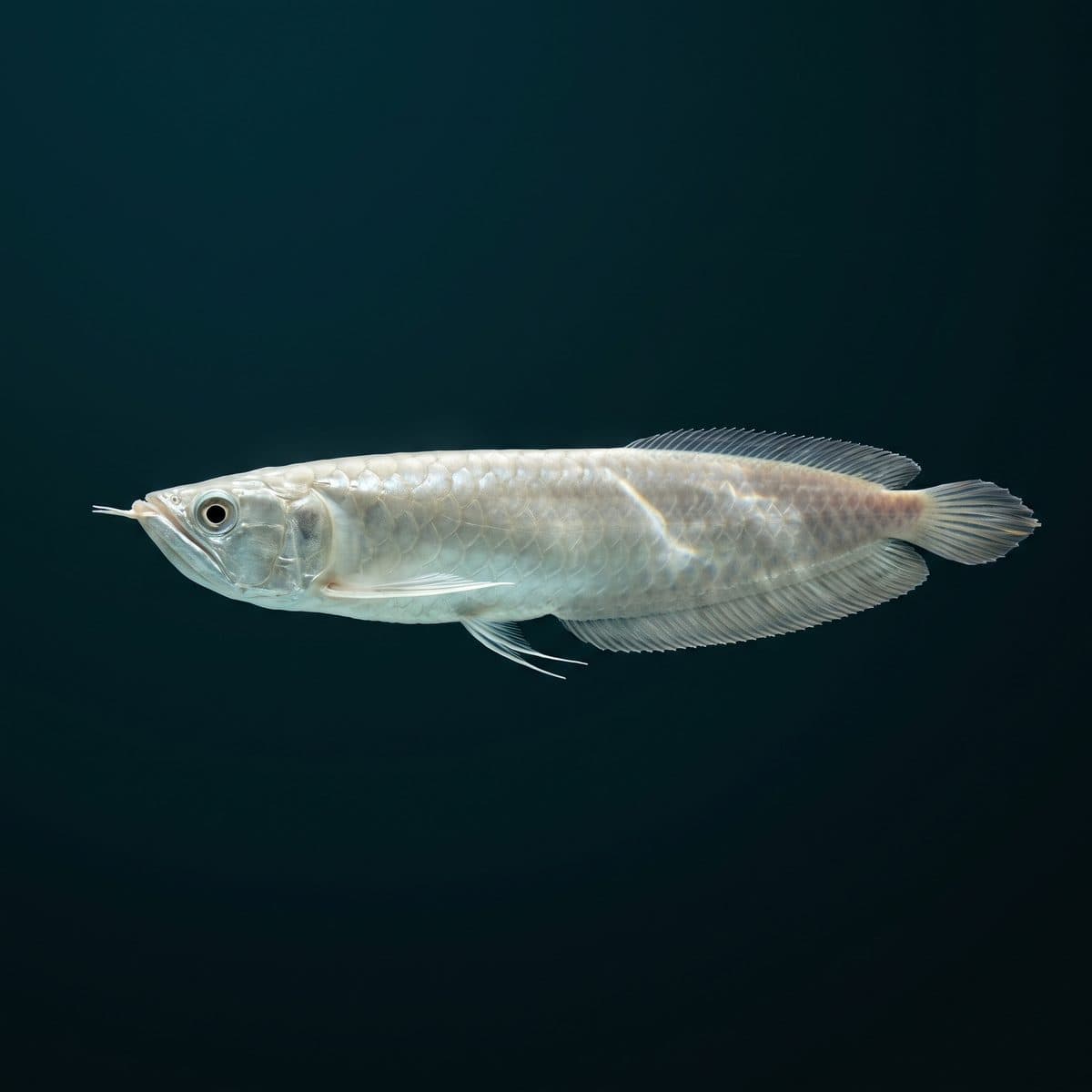
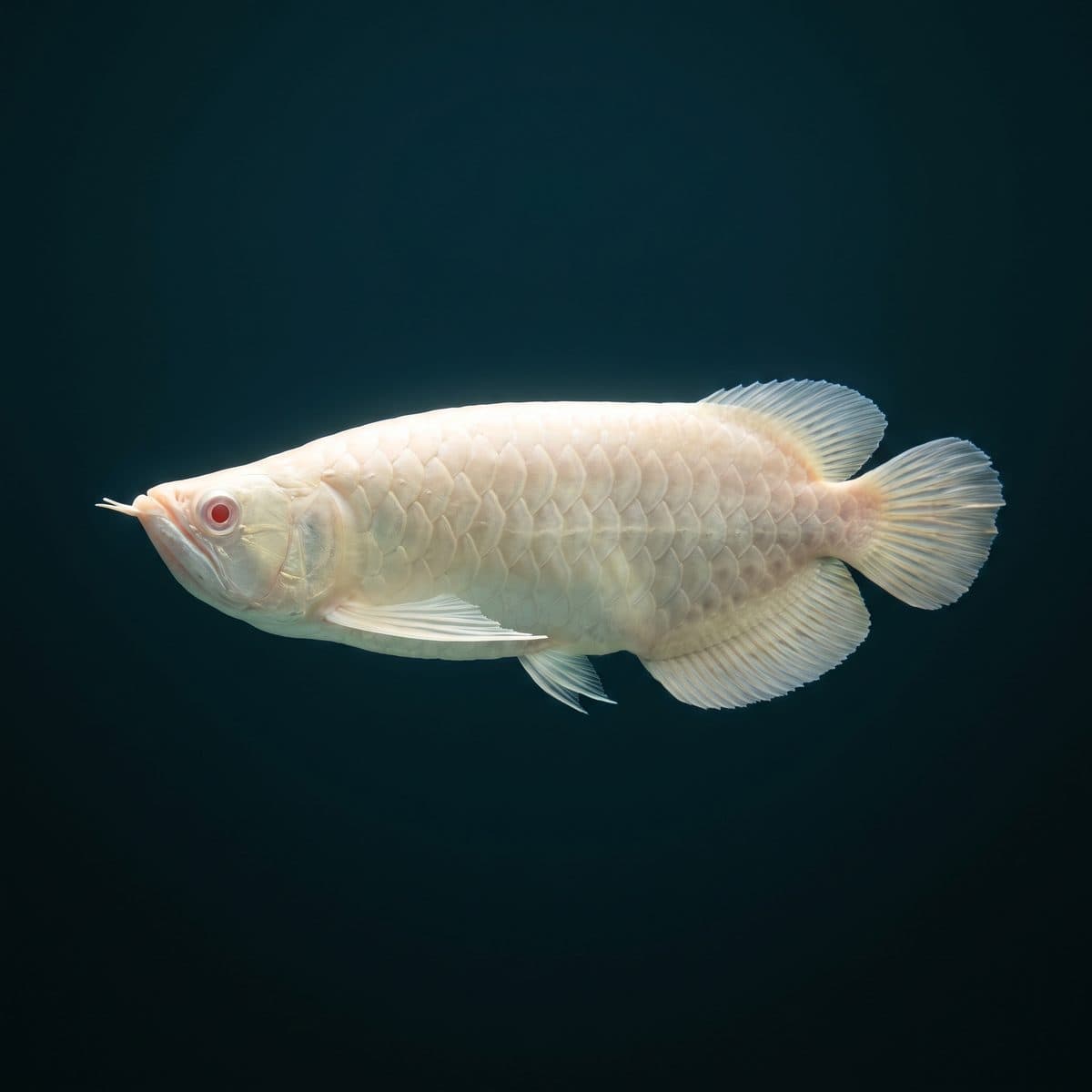
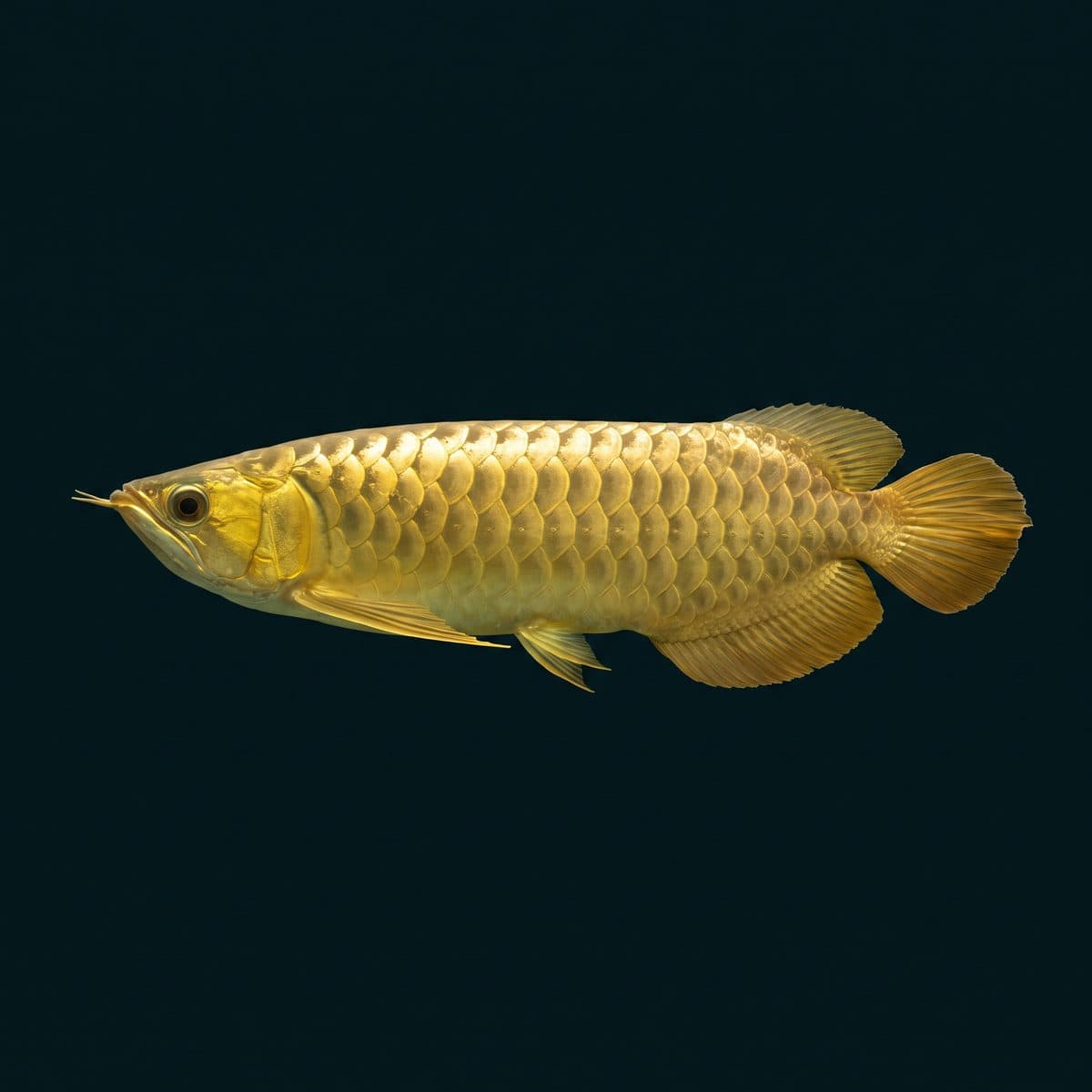
- Asian Arowana (Scleropages formosus): The most commercially bred species. Sexual maturity at 4–5 years. Clutch size 20–60 eggs. Incubation 6–8 weeks. Farm-bred in purpose-built ponds across Southeast Asia. CITES Appendix I listed — all traded specimens must be captive-bred and microchipped.
- Silver Arowana (Osteoglossum bicirrhosum): Breeds readily in large ponds. Sexual maturity at 3–4 years. Clutch size 50–100 eggs — larger than Asian species. Incubation 5–6 weeks. Easier to breed than Asian Arowana but requires significant pond infrastructure.
- Black Arowana (Osteoglossum ferreirai): More difficult to breed than Silver. Requires very soft, acidic water (pH 5.0–5.5). Clutch size 30–60 eggs.
- Jardini/Gulf Saratoga (Scleropages jardinii/S. leichardti): Australian species. Sexual maturity at 3–5 years. Clutch size 50–200 eggs. Incubation 4–6 weeks. Bred in Australian fish farms.
Sexing Arowana
Sexing Arowana is notoriously difficult, particularly in immature fish. No reliable external sexual dimorphism exists in juvenile Arowana. As fish mature, subtle differences emerge:
- Males: Tend to have a wider, more rounded jaw (adapted for mouthbrooding). The mouth may appear slightly larger relative to body size. In some species, males develop a more slender body profile.
- Females: Tend to have a deeper, rounder body profile, particularly when carrying eggs. The belly may appear subtly fuller.
- Professional sexing: At commercial farms, Arowana are sexed at 3–4 years of age via ultrasound examination or endoscopy — techniques that visualise the gonads directly. Some farms use blood hormonal assays. These methods are not available to most hobbyists.
The practical hobbyist approach: purchase a group of 6–8 juvenile Arowana (if you have the tank space — this requires a 2,000+ gallon system) and allow natural pair formation over 3–5 years. This is the same approach used by early Asian Arowana farms before modern sexing techniques were developed.
Breeding Setup
Pond Breeding (Preferred Method)
The most successful Arowana breeding occurs in outdoor or covered ponds:
- Pond size: Minimum 3,000–5,000 gallons for a single pair. Commercial farms use 10,000–50,000 gallon ponds housing 10–20 adults.
- Depth: 1.2–1.8 metres (4–6 feet). Arowana need depth for courtship circling behaviour.
- Water: Soft, acidic (pH 6.0–6.5, GH 2–6 dGH), warm (28–30 °C / 82–86 °F). Many Southeast Asian farms use natural rainwater, which is naturally soft and acidic.
- Filtration: Biological pond filtration with settlement chambers and bead or moving-bed biofilters. Water changes of 10–20 % weekly.
- Cover: Floating plants (water lettuce, water hyacinth) provide shade, reduce stress, and simulate natural habitat. Arowana are jumpers — ponds require netting or high walls.
Tank Breeding (Advanced)
Tank breeding Arowana is possible but significantly more difficult than pond breeding:
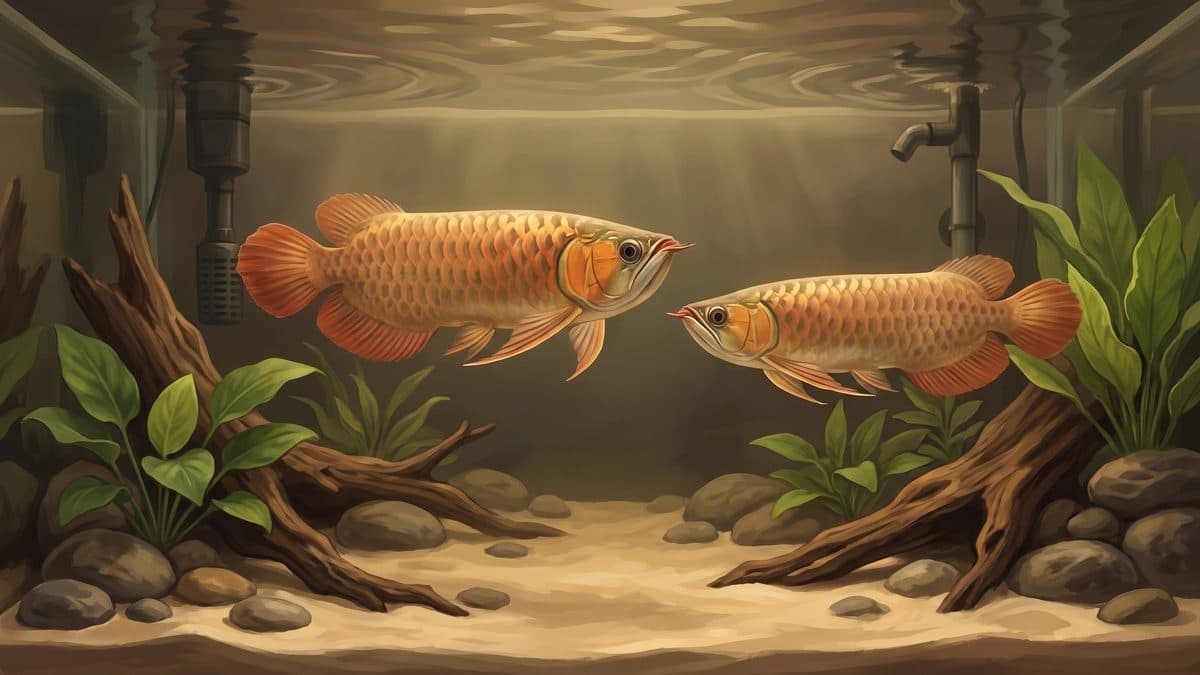
- Minimum tank: 1,000 gallons for Silver Arowana; 1,500+ gallons for Asian Arowana. The fish need space for courtship behaviour — circling, parallel swimming, and lateral displays.
- Tank shape: Round or oval tanks reduce stress (no corners for fish to wedge into during aggression). Many commercial hatcheries use round fibreglass tanks of 2,000–3,000 gallons.
- Minimal decoration: Bare bottom for hygiene. Dim lighting. Sponge filtration plus a sump for biological capacity.
- Single pair only: Do not attempt to breed Arowana in a community tank. The breeding pair requires isolation from conspecifics and other species.
Spawning Triggers
Arowana spawn seasonally in the wild, triggered by the onset of the rainy season. Captive breeding replicates these triggers:
- Large, cool water changes: Replace 30–50 % of pond/tank water with cooler, softer water (2–3 °C below tank temperature). This simulates monsoon rainfall — the most effective spawning trigger. Repeat 2–3 times weekly during the target breeding period.
- Reduced water level followed by refilling: Lower the water level by 20–30 % over a week, then rapidly refill with cool, soft water. This mimics the dry-season-to-wet-season transition.
- High-protein conditioning diet: Feed heavily with live or frozen shrimp, crickets, superworms, and fish fillets for 4–8 weeks before the target breeding period. Well-conditioned fish produce more eggs and are more responsive to environmental triggers.
- Barometric pressure changes: Many Arowana breeders report increased spawning activity during genuine rainstorms. Some farms leave ponds partially open to natural rainfall for this reason.
The Mouthbrooding Process
When a pair is ready to spawn, the courtship intensifies: the pair circles each other, the male displays with gill flaring and body undulations, and both fish may fast for several days before spawning. The female deposits eggs on the pond/tank bottom, and the male fertilises and immediately scoops them into his mouth.
During the 6–8 week incubation:
- The male's jaw distends visibly as the eggs develop. He does not eat during this period — any attempt to feed is ignored.
- Do not disturb the male. Stress can cause premature spitting of the eggs or fry, which typically results in their death.
- The male periodically "chews" — gentle jaw movements that circulate water over the eggs for oxygenation.
- At commercial farms, some breeders strip the eggs from the male's mouth at 3–4 weeks for artificial incubation, allowing the male to resume feeding sooner and potentially spawn again sooner. Artificial incubation requires tumbling the eggs in a gentle current of temperature-controlled, medicated water.
Fry are released from the mouth at 5–8 cm in length, with a visible yolk sac attached to the belly. The yolk sac is absorbed over 1–2 weeks, after which the fry begin actively feeding.
Fry Rearing
- Fry tank: Transfer fry to a dedicated 100–200 gallon grow-out tank with a sponge filter, heater (28–30 °C), and dim lighting. Bare bottom for hygiene.
- First foods (after yolk sac absorption): Small live foods — newly hatched brine shrimp (Artemia nauplii), Daphnia, and small crickets. Arowana fry are surface feeders from birth.
- Growth feeding (2–8 weeks): Transition to larger live foods — bloodworm, small earthworms, pinhead crickets. Feed 3–4 times daily.
- Transition to prepared foods (8+ weeks): Begin training onto floating pellets (Hikari Arowana Sticks or similar). Supplement with frozen and live foods.
- Water changes: 25 % daily in fry tanks to maintain zero ammonia and nitrite. Arowana fry are sensitive to water quality in their first months.
- Sorting: Separate fry by size at 4-week intervals. Larger fry will eat smaller siblings — Arowana are cannibalistic from a young age.
Commercial vs. Hobbyist Breeding
The reality of Arowana breeding:
- Commercial farms (Southeast Asia, Australia) operate pond systems of 10,000–50,000 gallons with dozens of adult Arowana. They have decades of lineage data, ultrasound sexing, and environmental control systems. Annual production ranges from hundreds to thousands of juveniles per farm. This is an industrial aquaculture operation.
- Hobbyist breeding is extraordinarily rare. The space requirements (1,000+ gallon dedicated breeding system), time investment (4–7 years to maturity), difficulty of sexing, and unpredictability of pair formation make it impractical for all but the most dedicated enthusiasts with purpose-built fish rooms. Fewer than a handful of documented hobbyist Arowana breeding successes exist worldwide.
If your goal is to breed Arowana, begin with Silver Arowana — they are the most prolific, the fastest to mature, and the most tolerant of captive breeding conditions. Asian Arowana breeding requires specialised facilities, CITES compliance documentation, and typically a partnership with an established farm. For Arowana care fundamentals, see our tank setup guide and feeding guide.