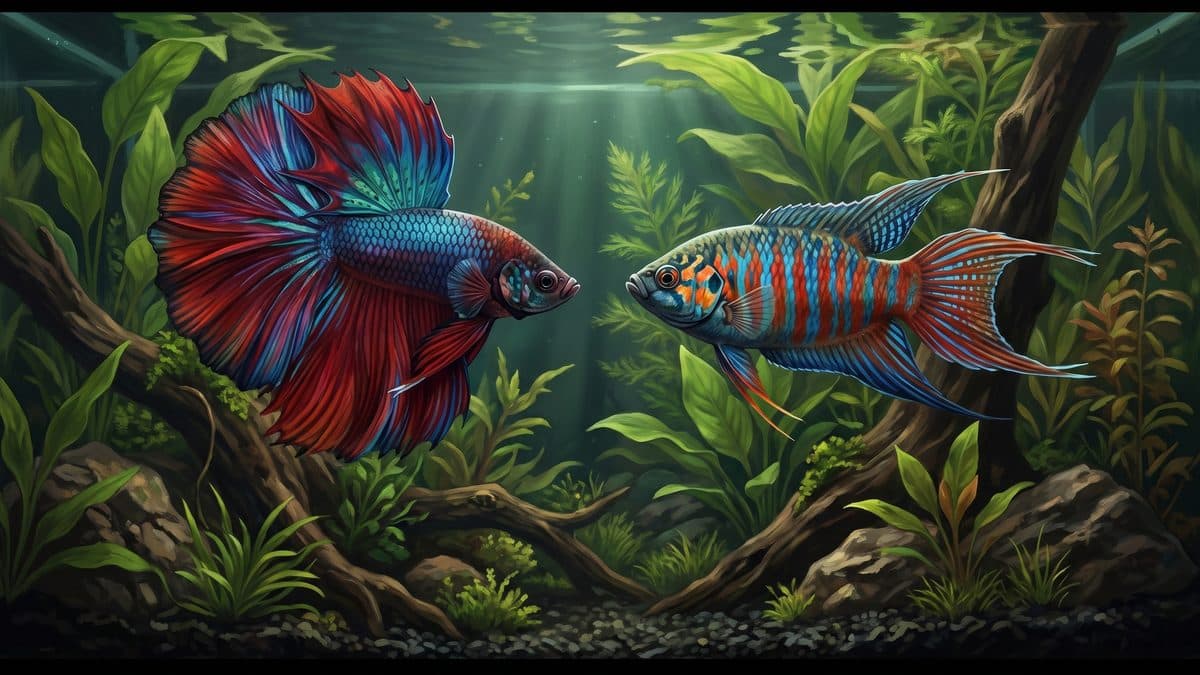
Betta vs Paradise Fish: Labyrinth Fish Face-Off
The Betta and the Paradise Fish share a remarkable biological feature — the labyrinth organ, which allows them to breathe atmospheric air directly from the surface. Both belong to the suborder Anabantoidei, both are visually striking, and both have reputations for aggression. Yet the Paradise Fish preceded the Betta in Western aquariums by decades and occupies a distinct niche that many modern hobbyists have overlooked.
This comparison explores why the Paradise Fish deserves renewed attention — and whether it might be the better choice for your specific setup.
Betta Overview
The Siamese Fighting Fish (Betta splendens) needs little introduction — it is arguably the most recognisable freshwater aquarium fish in the world. Native to the rice paddies and shallow waters of Thailand, Laos, and Cambodia, the wild Betta is a short-finned, dull-coloured fish bearing little resemblance to the spectacular domestic varieties bred for the pet trade. Centuries of selective breeding in Thailand, originally for fighting and later for ornamental beauty, have produced hundreds of tail types (Halfmoon, Crowntail, Plakat, Dumbo) and colour variants (solid, marble, galaxy koi, dragon scale).
Adult Bettas reach 6–7 cm body length (fins can double the visual size in long-finned varieties). They are tropical fish requiring heated water at 24–28 °C — room temperature in most homes is dangerously cold for them. Male Bettas are infamously aggressive toward other male Bettas and will fight to the death; however, they are typically peaceful toward unrelated community fish in appropriately sized tanks (10+ gallons).
Paradise Fish Overview
The Paradise Fish (Macropodus opercularis) holds a unique place in aquarium history: it was the first tropical fish successfully imported to Europe, arriving in France in 1869, 27 years before the founding of the first tropical fish breeding facility. For decades, it was the most popular aquarium fish in Europe, before being eclipsed by the Betta and other species in the 20th century.
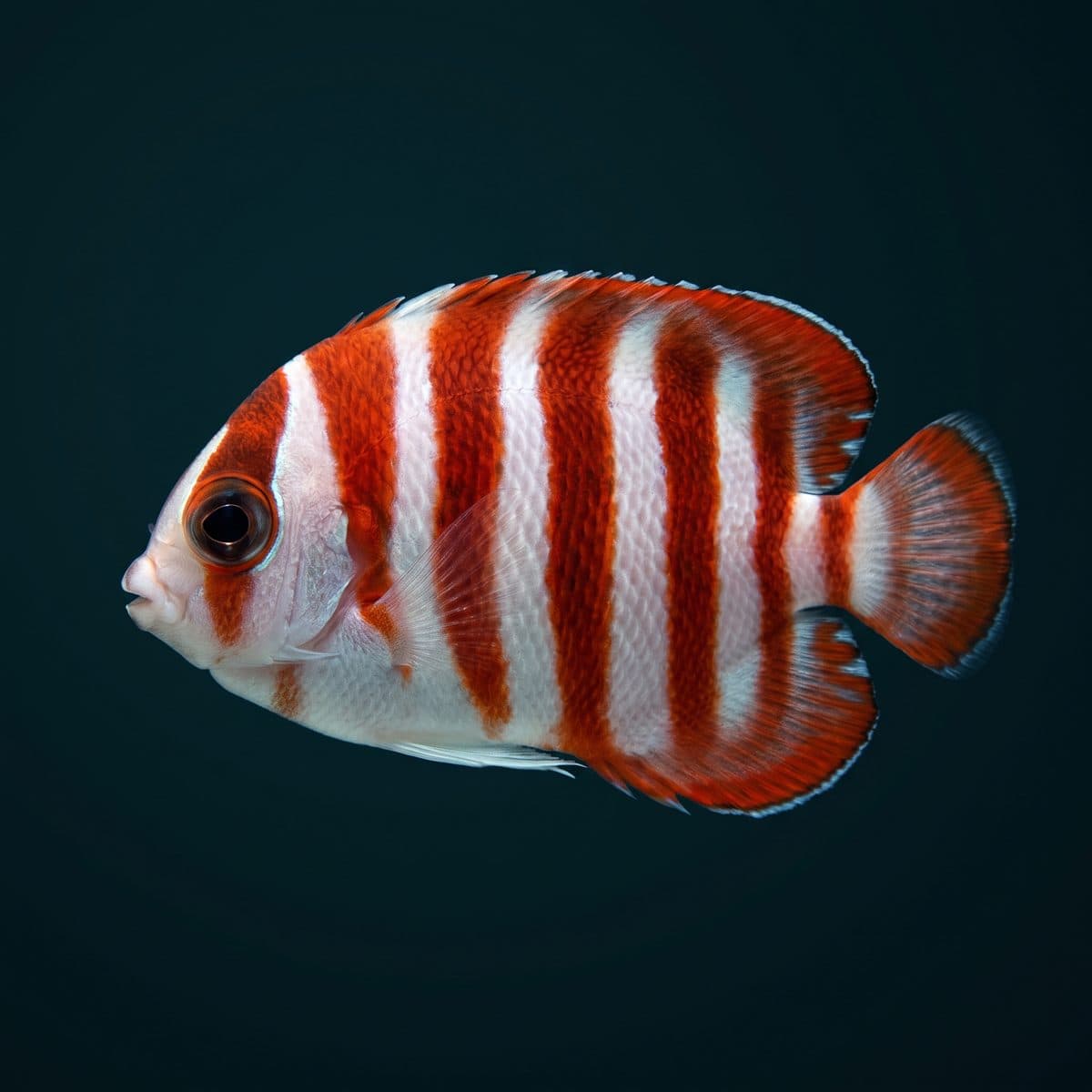
Native to East Asia — southern China, Taiwan, Vietnam, and parts of Korea — the Paradise Fish is strikingly beautiful in its own right. Males display alternating vertical bars of electric blue and fiery red-orange, with elongated, flowing finnage and a forked tail with extended filaments. Females are less vivid but still attractive. Adults reach 8–11 cm (3–4.5 inches), making them notably larger and more robust than Bettas.
The Paradise Fish's most remarkable trait is its cold tolerance. Unlike almost all other labyrinth fish, M. opercularis thrives in temperatures from 16–26 °C (60–79 °F) and can survive temporary dips to 10 °C. This makes it one of the very few "tropical" fish that genuinely does not require a heater in most temperate homes — a significant advantage for unheated rooms, garages, or seasonal fishrooms.
Other Macropodus species include M. ocellatus (Roundtail Paradise Fish, even more cold-tolerant) and M. erythropterus (Black Paradise Fish, a more tropical species). All share the genus's hardiness and assertive temperament.
Key Differences
Temperature Tolerance
This is the single most important practical difference. Bettas are strict tropicals — they need 24–28 °C at all times, and temperatures below 22 °C cause lethargy, immune suppression, and death. Paradise Fish thrive at 16–26 °C and tolerate temporary extremes down to 10 °C. This cold hardiness means Paradise Fish can be kept in unheated indoor tanks year-round in most temperate climates, in outdoor tub gardens during summer (and even mild winters), and in fishrooms where maintaining tropical temperatures in every tank is impractical.
Aggression Profile
Both fish are aggressive, but in different ways. Male Bettas direct their aggression almost exclusively at other male Bettas (and fish that resemble male Bettas — colourful, long-finned species). In a community tank with appropriate mates, a male Betta is usually peaceful. Paradise Fish are more broadly aggressive: males are territorial toward all tank mates, not just conspecifics. They will chase, fin-nip, and harass smaller or slower fish, and they are active predators of small invertebrates — dwarf shrimp, snails, and fry are all prey items. In a community, Paradise Fish require robust, fast-swimming tank mates (larger Danios, medium Barbs, larger Tetras) that can avoid or tolerate their assertiveness.
Colour Variety
Bettas win this category decisively. Hundreds of colour and fin combinations exist, with new varieties emerging annually from the global breeding community. Paradise Fish come in essentially three colour forms: the standard blue-and-red barred pattern, an albino (golden body with faint barring), and a melanistic (dark) variant. The wild-type pattern is beautiful but there is minimal variety. If collecting colour morphs is your interest, Bettas are the only choice.
Hardiness
Paradise Fish are significantly hardier than domestic Bettas. Their cold tolerance, disease resistance, and ability to thrive in a wide parameter range (pH 6.0–8.0, soft to hard water) make them nearly indestructible by aquarium fish standards. Domestic long-finned Bettas, by contrast, are prone to fin rot, velvet, ich, and swim bladder issues — partly due to the genetic fragility introduced by extreme selective breeding for finnage. Plakat (short-finned) Bettas are hardier than long-finned varieties but still do not match Paradise Fish resilience.
Quick Comparison Table
| Factor | Betta (Betta splendens) | Paradise Fish (Macropodus opercularis) |
|---|---|---|
| Adult Size | 6–7 cm (body) | 8–11 cm |
| Lifespan | 3–5 years | 6–8 years |
| Temperature | 24–28 °C (tropical, heater required) | 16–26 °C (no heater needed in most homes) |
| pH | 6.5–7.5 | 6.0–8.0 |
| Minimum Tank Size | 5 gal (solo male) | 20 gal (solo male or pair) |
| Male-to-Male Aggression | Lethal (fight to the death) | Severe (territorial, persistent fighting) |
| Community Aggression | Low (peaceful with appropriate mates) | High (chases and fin-nips most tank mates) |
| Colour Varieties | Hundreds (colour × tail type) | 3–4 (standard, albino, dark, blue) |
| Hardiness | Moderate (long-fin); Good (Plakat) | Excellent |
| Historical Significance | Bred in Thailand 700+ years; global pet trade staple | First tropical fish imported to Europe (1869) |
| Cost | $5–$30 (standard); $30–$300+ (rare) | $5–$15 |
Tank Requirements Comparison
Betta tank setup: A single male Betta thrives in a 5–10 gallon heated, filtered tank. A reliable heater set to 26 °C is essential — not optional. A gentle sponge filter provides biological filtration without creating currents that stress long-finned varieties. Décor should include resting spots near the surface (Betta leaves, floating plants, low driftwood), as long-finned Bettas tire easily and need places to rest without swimming to the surface. Plants (live or silk — never sharp plastic) provide cover and reduce stress. Lighting should be moderate; Bettas prefer shaded areas.
Paradise Fish tank setup: Despite their smaller retail size, Paradise Fish need more space than Bettas — a 20-gallon tank minimum for a single male, 30+ gallons for a pair or community. They are active, robust swimmers that use the full water column, unlike Bettas which tend to hover in the upper third. Filtration can be stronger than for Bettas; Paradise Fish tolerate and even appreciate moderate current.
Décor should include dense planting (real or silk), driftwood, and rock caves to break sight lines and provide territory boundaries. In community settings, abundant visual barriers are essential to manage the Paradise Fish's territorial aggression. No heater is needed in rooms that stay above 16 °C — this eliminates a common point of failure and equipment cost. Paradise Fish are excellent jumpers; a secure lid is mandatory.
For outdoor tub gardens in summer, Paradise Fish are ideal: a planted half-barrel or stock tank in a shaded location provides a natural, self-sustaining environment. They will control mosquito larvae, breed prolifically, and display full natural colour in outdoor sunlight. Bettas cannot survive outdoor conditions in any temperate climate.
Which Should You Choose?
Choose a Betta if:
- You want maximum colour variety and the ability to collect rare morphs
- You have limited space (5–10 gallon nano tank)
- You want a peaceful community option (with appropriate tank mates)
- You are willing to maintain a heater at 24–28 °C
- You prefer a calm, hovering fish with elegant finnage
Choose a Paradise Fish if:
- You want a hardy, low-maintenance labyrinth fish that does not require a heater
- You keep an unheated fishroom, garage tank, or outdoor seasonal setup
- You want a fish with fascinating historical significance — the original tropical aquarium fish
- You appreciate bold, assertive behaviour and are comfortable managing aggression
- You want a longer-lived, more robust fish than domestic Bettas
Our recommendation: The Betta remains the superior choice for nano tanks, colour collectors, and community-focused hobbyists. The Paradise Fish is the superior choice for unheated tanks, outdoor setups, and hobbyists who prioritise hardiness and longevity over colour variety. It is an underrated gem that deserves far more attention than it currently receives. For experienced hobbyists, a Paradise Fish species tank — a pair in a densely planted 30-gallon — is one of the most rewarding and low-maintenance setups in the hobby.