Overview
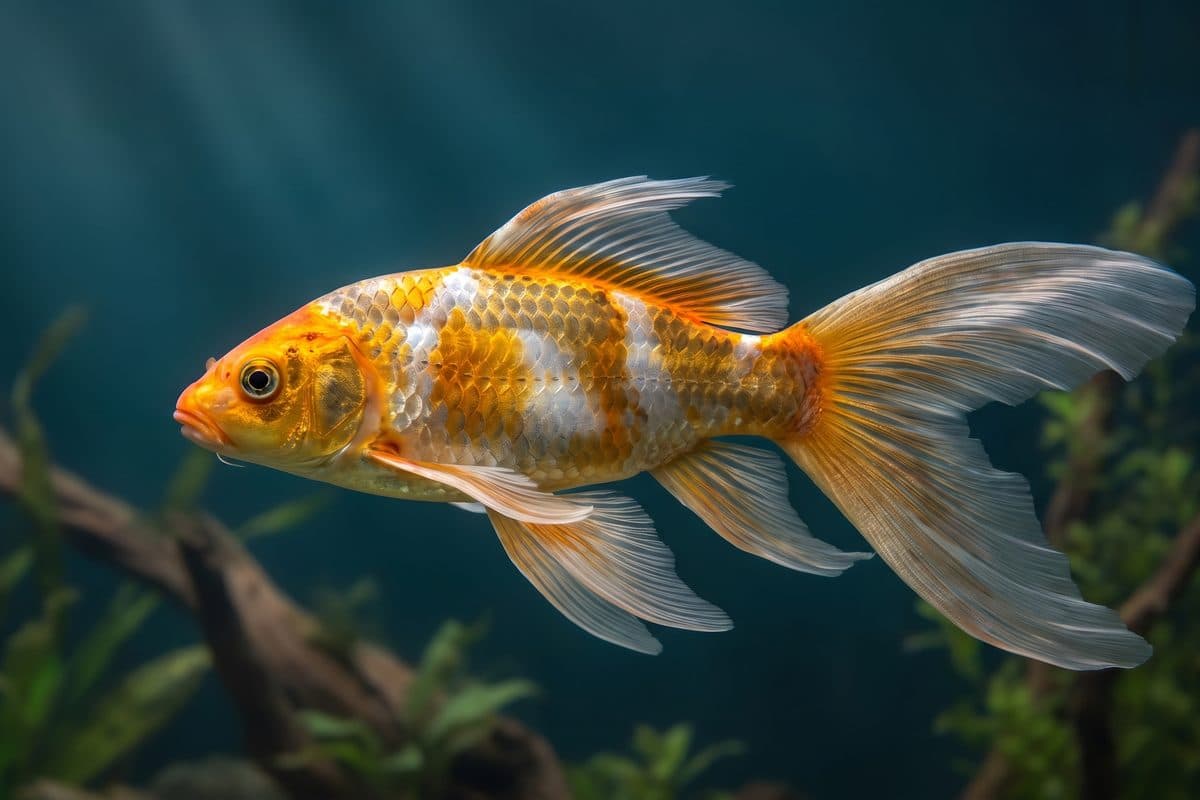
The Butterfly Koi story begins in the 1980s, when a population of wild carp with unusually long fins was discovered in Indonesia. Recognising the potential, breeders (primarily in Japan and the United States) crossed these long-finned carp with established Japanese koi varieties. The result was fish that combined the colour patterns and body shape of Nishikigoi with dramatically elongated finnage — pectoral, ventral, dorsal, anal, and caudal fins that flow and undulate like ribbons as the fish swims.
The effect is striking: a Butterfly Koi swimming through a clear pond appears to glide effortlessly, its flowing fins trailing behind like silk scarves in a breeze. This ethereal quality — combined with the full spectrum of traditional koi colour varieties — has made Butterfly Koi the fastest-growing segment of the Western koi market.
Origins & Genetics
The long-fin trait in Butterfly Koi is a genetically dominant characteristic inherited from the wild Indonesian carp parent. When a long-fin fish is crossed with a standard-fin koi, approximately 50% of the offspring display the long-fin phenotype. This makes the trait relatively easy to breed into any koi colour variety, which is why Butterfly Koi are now available in virtually every pattern: Butterfly Kohaku, Butterfly Sanke, Butterfly Showa, Butterfly Ogon, Butterfly Hariwake, and many more.
The long-fin gene also affects the barbels (the whisker-like sensory organs on either side of the mouth), which grow much longer and more prominent than standard koi barbels. In mature Butterfly Koi, the barbels can extend 5–10 cm (2–4 in) and curl gracefully as the fish moves.
Fin length is somewhat variable even among Butterfly Koi — some fish develop moderate fin extensions, while others develop dramatically elongated finnage that can equal or exceed their body length. Breeders select for maximum fin length and symmetry, but environmental factors (water quality, temperature, nutrition, and pond size) also influence fin development.
Appearance & Varieties
Butterfly Koi are available in every colour variety found in standard koi:
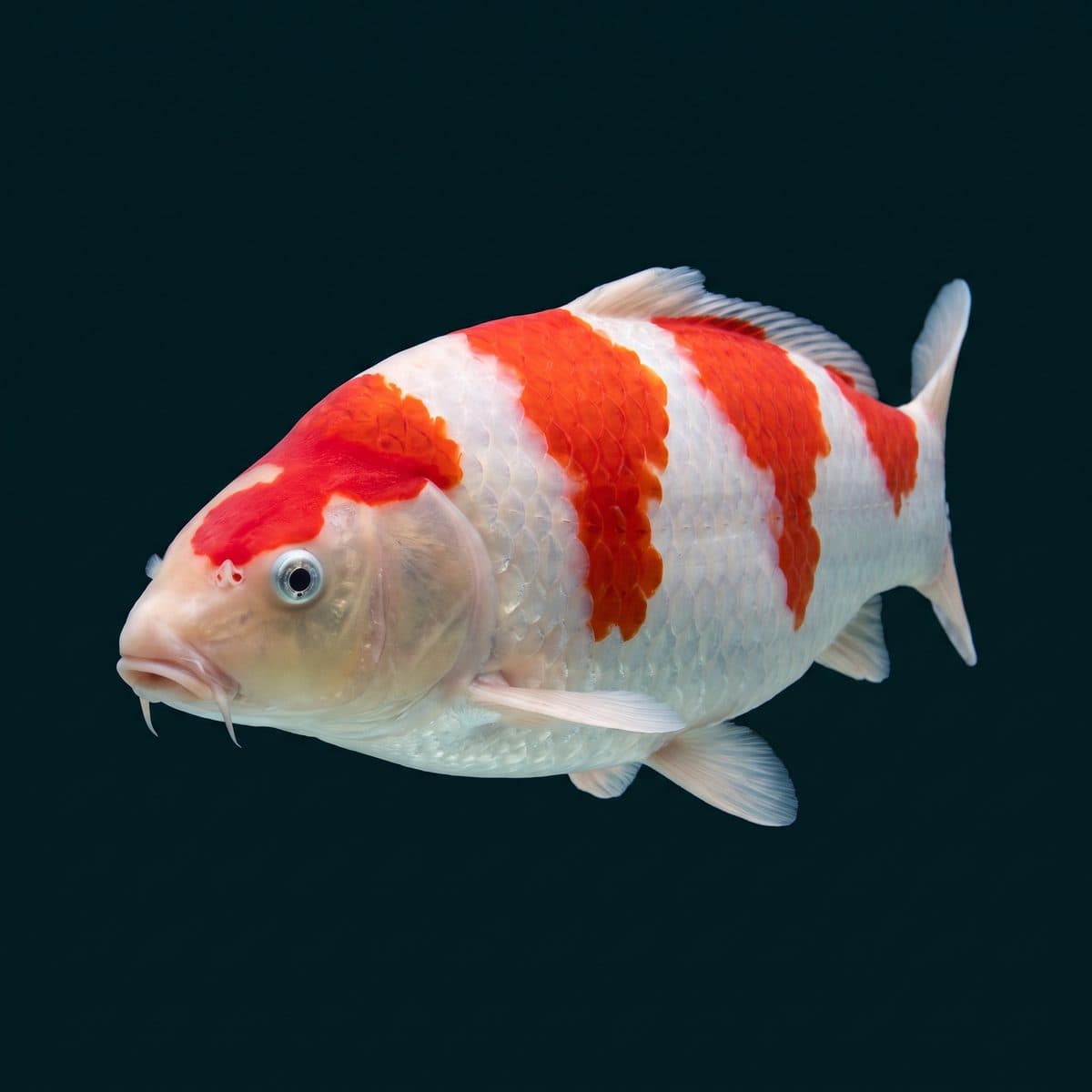
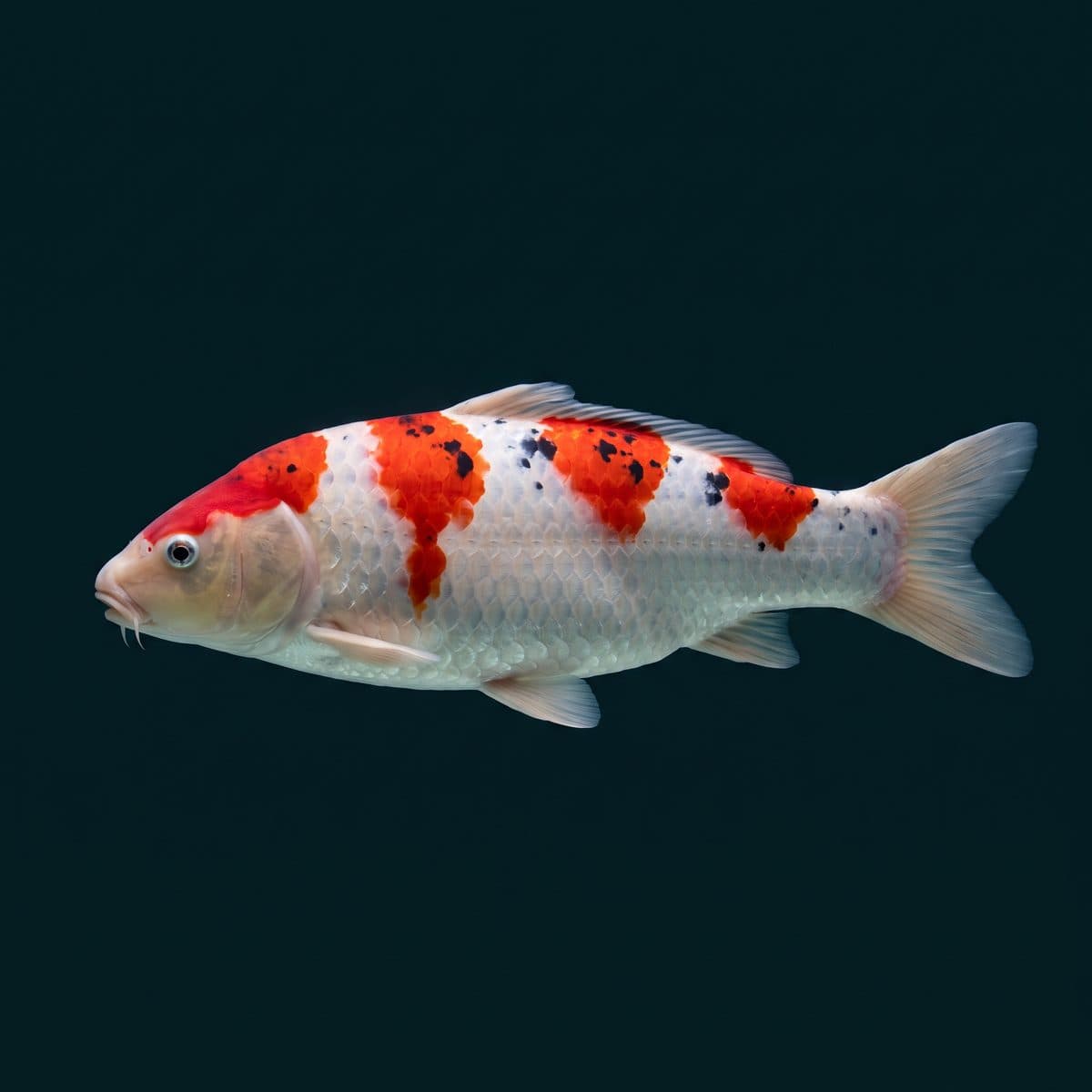
- Butterfly Kohaku: Red and white with flowing fins. Perhaps the most popular variety.
- Butterfly Ogon: Solid metallic gold or platinum with long fins — stunningly elegant.
- Butterfly Hariwake: Platinum base with metallic orange or gold pattern.
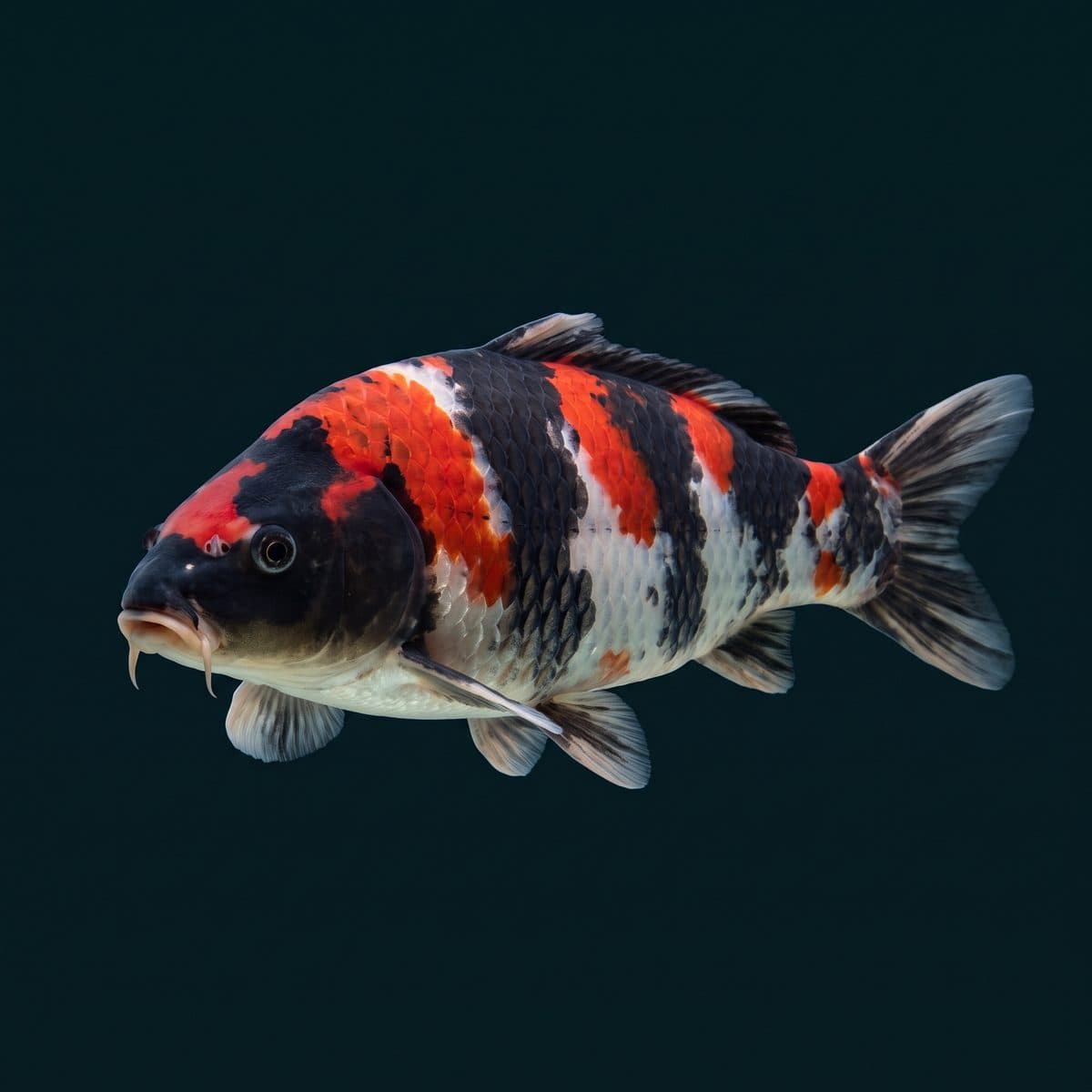
- Butterfly Sanke / Showa: Tri-colour varieties with the long-fin trait.
- Butterfly Soragoi: Solid grey-blue with long fins — understated and beautiful.
- Ghost Butterfly: Translucent/metallic single-colour varieties with ethereal fin extensions.
The most dramatic visual impact tends to come from metallic varieties (Ogon, Hariwake, Platinum) and from fish with very long, symmetrical fin extensions. The combination of metallic shimmer and flowing finnage creates an almost otherworldly appearance in clear water.
The Traditionalist Debate
Butterfly Koi occupy a unique position in the koi world: enormously popular with hobbyists, yet firmly rejected by the Japanese koi establishment. The All Japan Nishikigoi Promotion Association and most traditional Japanese koi shows do not recognise Butterfly Koi as true Nishikigoi, and they are excluded from competition. The reasoning: Nishikigoi are defined by specific body shape, scale structure, and proportion standards that Butterfly Koi do not meet. The long-fin gene introduces "foreign" genetics from wild carp, diluting the centuries of selective breeding that define each traditional variety.
Western koi shows have taken a more inclusive approach — many now include Butterfly categories alongside traditional varieties. The ZNA (Zen Nippon Airinkai — the global Japanese koi keeping association) permits Butterfly Koi in non-competitive exhibition categories.
The practical takeaway for buyers: if you are interested in competitive koi showing at the highest levels, standard-fin koi are the path. If you want beautiful fish for your pond that you and your family will enjoy, Butterfly Koi are spectacular and there is no practical disadvantage to choosing them.
Pond Requirements
Butterfly Koi have identical pond requirements to standard koi: 1,000+ gallons (3,785+ L) minimum, 4+ feet depth, multi-stage filtration, and adequate aeration. See our Koi Fish Complete Guide for comprehensive pond setup instructions.
One consideration specific to Butterfly Koi: their elongated fins are more susceptible to damage from sharp-edged rocks, rough pond liners, or aggressive tank mates. Ensure your pond's surfaces are smooth, avoid sharp-edged rockwork within the fish's swimming path, and monitor for fin damage from pond predators (herons, cats) or bullying from other koi.
Care & Feeding
Identical to standard koi care. High-quality koi pellets (30–40% protein during the growing season, lower-protein wheatgerm food below 60 °F), supplemented with fresh vegetables and colour-enhancing foods. Water parameters: 59–77 °F (15–25 °C), pH 7.0–8.5, ammonia/nitrite 0 ppm.
Some keepers report that Butterfly Koi tend to be slightly more cold-hardy and disease-resistant than highly line-bred standard varieties — likely due to the hybrid vigour (heterosis) introduced by the wild carp genetics. While anecdotal, this robustness is consistent with genetics principles and is another reason Butterfly Koi are popular with beginners.
Fin Health & Maintenance
The flowing fins are the Butterfly Koi's defining feature and the aspect of care that requires extra attention:
- Water quality: Poor water quality causes fin erosion faster in long-finned varieties because there is simply more fin tissue to be affected. Maintain low nitrate (<40 ppm, ideally <20) and zero ammonia/nitrite.
- Avoid fin damage: Remove any sharp objects from the pond. Check for fin tears during regular health inspections — minor tears heal naturally in clean water, but significant damage can become infected.
- Parasites: Fin parasites (flukes, lice) are more problematic on long-finned fish. Quarantine new arrivals and treat at the first sign of flashing, clamped fins, or visible parasites.
- Fin growth: Unlike some tropical long-finned fish whose fins stop growing, Butterfly Koi fins continue to elongate throughout the fish's life. Mature fish (5+ years) can develop truly spectacular finnage if maintained in optimal conditions.
Water Parameters at a Glance
Butterfly Koi need exactly the same water as standard koi — they're the same species, and the long fins don't change their chemistry needs. What the flowing finnage does change is how quickly poor water shows up as damage, so hitting these targets consistently matters even more than usual. Here's the quick reference:
| Parameter | Target range | Notes |
|---|---|---|
| Temperature | 59–77 °F (15–25 °C) | Active feeding range; tolerate near-freezing winters when dormant |
| pH | 7.0–8.5 | Stability matters more than a specific number |
| Ammonia | 0 ppm | Any reading is an emergency |
| Nitrite | 0 ppm | Any reading is an emergency |
| Nitrate | Below 40 ppm | Keep under 20 ppm for the best fin health |
| KH (carbonate hardness) | 100+ ppm | Buffers against pH crashes |
The one figure to obsess over is nitrate. Long fins mean more tissue exposed to whatever's dissolved in the water, and chronically high nitrate is a leading cause of fin erosion in Butterfly Koi. Big, regular water changes and generous biological filtration keep it down. Get these numbers stable and your Butterfly Koi will grow the long, undamaged fins that make the variety worth keeping.
Seasonal Pond Care
Like all koi, Butterfly Koi live by the seasons, and matching your care to the water temperature keeps them healthy year-round. In spring and summer, with the pond in the 68–77 °F range, they're growing and active — feed quality high-protein koi pellets a few times a day, run your filtration hard, and enjoy watching those fins develop.
As autumn cools the water, wind the feeding back and switch to a lower-protein, wheatgerm-based food that's easier to digest in cooler conditions. Once the pond drops below about 50 °F (10 °C), stop feeding entirely — a koi's digestion effectively shuts down in the cold, and undigested food in the gut can rot and cause serious harm. This is the single most important seasonal rule in koi keeping.
Through winter, koi become dormant, resting near the bottom where the water is warmest. A pond at least 4 feet deep gives them a stable refuge, and in freezing climates you'll want a floating de-icer or an air stone to keep a hole open in the ice for gas exchange — never smash the ice, as the shockwave stresses dormant fish. Come spring, resume feeding slowly and cautiously; fish emerging from dormancy have weakened immune systems and are at their most vulnerable to disease.
Health & Common Problems
Butterfly Koi are famously robust — many keepers find them a touch hardier than heavily line-bred standard koi, likely thanks to the hybrid vigour from their wild-carp ancestry. Still, they face the same core koi health issues, with a few extra risks tied to those long fins:
- Fin erosion and rot: The most fin-specific problem. Poor water quality frays and erodes the trailing edges of the fins; caught early and corrected with clean water, they usually regrow.
- Parasites: Flukes, ich, costia, and anchor worm all affect koi. Flukes in particular love long-finned fish. Flashing, rubbing, and clamped fins are the warning signs.
- Bacterial ulcers: Open sores that take hold after injury or in dirty water, needing prompt treatment.
- Koi Herpesvirus (KHV): A serious, often fatal virus active in warmer water. There's no cure, so quarantine is your only real defence.
The prevention playbook is the standard koi one, and it's very effective: quarantine every new fish for at least four weeks, keep the water pristine with strong filtration and low nitrate, remove sharp objects that could tear fins, and inspect your fish regularly. Do that, and a Butterfly Koi will live 25–35 years, its fins growing more spectacular with each one.
Choosing Quality Butterfly Koi
Butterfly Koi vary hugely in quality, and since much of their appeal is the finnage, there's a bit more to assess than with a standard koi. Start, as always, with health: pick a fish that swims strongly and evenly, with clear eyes, a good appetite, erect (not clamped) fins, and no ulcers, missing scales, or red streaking.
For the fins themselves, look for length, symmetry, and balance. The best Butterfly Koi have long, flowing fins that are even on both sides and proportionate to the body — all the fins should elongate together, not just the tail. Torn or stubby fins on a young fish may simply be damage that will regrow, but genuinely short or asymmetric finnage is a genetic limit that won't improve. The barbels should be long and graceful too, a nice indicator of good long-fin genes.
Then judge colour and body the way you would any koi: a strong, well-proportioned body, lustrous skin, and clean, well-defined colour. Metallic varieties like Butterfly Ogon and Hariwake show their quality in the brightness and evenness of the metallic sheen. Remember that fins keep growing for years, so a promising young fish with moderate fins and excellent health and body shape is often a better buy than a flashier but weaker one.