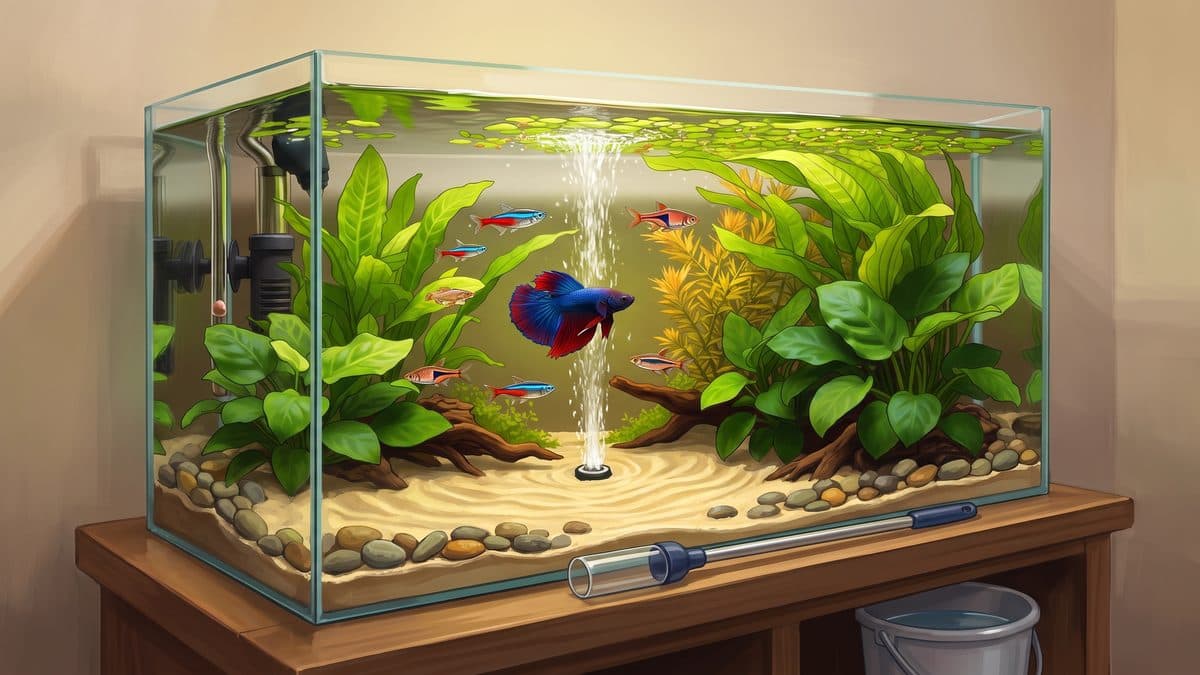
Prevention Over Cure
The most successful aquarists rarely treat disease — because they rarely encounter it. Disease prevention in aquariums is not about creating a sterile environment (which is impossible and undesirable) but about maintaining conditions in which fish immune systems function at peak capacity and pathogen loads remain below infectious thresholds. Every aquarium contains bacteria, fungi, and parasites. Whether these organisms cause disease depends almost entirely on the health and stress level of the fish.
This guide covers the six pillars of disease prevention: quarantine, water quality, nutrition, stocking, stress reduction, and biosecurity. Master these, and medication becomes a rare event rather than a regular intervention.
Quarantine as the Foundation
Quarantine is the single most impactful disease prevention practice. Thirty days of isolation for every new fish allows latent infections to manifest, prevents introducing pathogens to established tanks, and provides a controlled environment for prophylactic treatment. Our quarantine guide provides complete setup and protocol details.
Key quarantine principles:
- Every new fish, regardless of source, gets 30 days in quarantine.
- Prophylactic treatment with praziquantel (for flukes and worms) and metronidazole (for protozoa) during quarantine catches subclinical infections before they reach the display tank.
- Reset the quarantine clock after any treatment. The fish must be symptom-free for 30 days from the end of the last treatment.
- Never "just this once" skip quarantine. The single time you skip it will be the time a disease gets through.
Water Quality Management
Water quality is the immune system of the aquarium. When water is clean and parameters are stable, fish resist infection naturally. When water quality degrades, immune suppression occurs within hours, and opportunistic pathogens exploit the vulnerability.
Water Change Protocol
- Minimum standard: 25–30 % weekly water change with dechlorinated, temperature-matched water.
- Heavily stocked tanks: 30–50 % weekly, or two smaller changes per week.
- Discus and sensitive species: 30–50 % twice weekly is standard among serious keepers.
- Always vacuum the substrate during water changes to remove detritus, uneaten food, and organic waste that fuel bacterial and parasitic proliferation.
- Consistent schedule: Irregular water changes create parameter swings. A consistent day and time each week establishes a stable routine for both you and the fish.
Target parameters for disease prevention:
- Ammonia: 0 ppm (always, non-negotiable)
- Nitrite: 0 ppm (always, non-negotiable)
- Nitrate: below 20 ppm (below 10 ppm for sensitive species)
- pH: stable within the species' preferred range (consistency matters more than the exact number)
- Temperature: stable within ±1 °F of the set point
Test water weekly using a liquid test kit (API Freshwater Master Kit or equivalent). Liquid kits are more accurate and cost-effective per test than strips. See our water testing guide for detailed recommendations.
Filtration Maintenance
- Clean mechanical filter media (sponges, floss) monthly in used tank water — never under tap water, which kills beneficial bacteria.
- Never replace all filter media at once. Stagger replacements to preserve the bacterial colony.
- Ensure the filter provides adequate turnover: 4–6× tank volume per hour for community tanks, 8–10× for messy predator fish.
- A backup filter (second sponge or canister) provides insurance against mechanical failure. If one filter dies, the other maintains the nitrogen cycle while you repair or replace.
Nutrition and Immune Function
A varied, species-appropriate diet is the nutritional foundation of immune function. Fish fed a monotonous diet of cheap flake food develop nutritional deficiencies that manifest as poor colour, reduced resistance to disease, and shortened lifespan.
- High-quality staple: Species-specific pellets or granules with whole fish or insect meal as the first ingredient. Avoid foods where wheat flour, soy, or generic "fish meal" leads the ingredient list.
- Variety: Rotate between 3–4 food types throughout the week — pellets, frozen bloodworm, frozen brine shrimp, frozen daphnia, and occasional live foods.
- Garlic: Fresh garlic soaked into food (crush a clove into a small amount of tank water, soak pellets for 10 minutes) stimulates appetite and provides allicin, which has demonstrated antimicrobial properties in aquaculture research.
- Vitamins: A liquid fish vitamin supplement (Vitachem, Selcon) added to food once weekly provides vitamins C and E, both important for immune function.
- Avoid overfeeding: Uneaten food decomposes, spiking ammonia and fuelling bacterial growth. Feed only what fish consume in 2–3 minutes and remove leftovers promptly.
Stocking Density and Compatibility
Overcrowding is a disease accelerator. High stocking density concentrates waste, increases ammonia production, reduces oxygen availability, elevates stress hormones (cortisol), and increases physical contact between fish — which facilitates parasite transmission.
- Research the adult size and space requirements of every species before purchasing.
- The "one inch of fish per gallon" rule is a crude starting point — species-specific research is essential. A 10-inch Oscar produces more waste than ten 1-inch tetras.
- Incompatible tank mates (fin nippers, territorial aggressors, species with different temperature or pH requirements) create chronic stress that suppresses immune function. Species selection is a disease prevention decision.
Stress Reduction
Stress is the gateway to disease. Cortisol — the primary stress hormone in fish — directly suppresses immune cell activity, reduces mucus production (the first line of defence against parasites), and makes the fish physiologically vulnerable to every pathogen in the water.
Stress reduction strategies:
- Stable temperature: Use a reliable, adjustable heater and verify with a separate thermometer. Temperature swings of 3 °F or more within 24 hours trigger immune suppression.
- Adequate hiding spaces: Caves, driftwood, and dense plant cover allow subordinate fish to escape aggression. A tank with insufficient cover creates chronic territorial stress.
- Appropriate lighting: Many species prefer dim environments. Provide a gradual ramp-up/ramp-down photoperiod rather than sudden on/off lighting. 8–10 hours of light daily is sufficient for most planted tanks.
- Minimise disturbance: Locate the tank away from high-traffic areas, loud speakers, and direct sunlight. Avoid tapping the glass — vibrations stress fish significantly.
- Appropriate current: Match water flow to species preferences. Bettas need gentle flow; hillstream loaches need strong current. Inappropriate flow is a constant stressor.
Biosecurity Between Tanks
If you maintain multiple aquariums, cross-contamination between tanks is a significant disease vector:
- Dedicated equipment: Each tank should have its own net, siphon, and bucket. If sharing equipment is unavoidable, sterilise between uses (rinse in a dilute bleach solution — 1 part bleach to 10 parts water — then rinse thoroughly with dechlorinated water).
- Hand hygiene: Wash and dry hands between working on different tanks. Wet hands can transfer parasites, bacteria, and fungal spores.
- Quarantine tank isolation: Never share nets, siphons, or water between the quarantine tank and any display tank.
- Plant and decoration transfers: Dip plants and decorations in potassium permanganate (10 mg/L for 10 minutes) before moving between systems.
Early Detection: Daily Observation
Spend 2–5 minutes observing your fish during each feeding. This daily habit catches problems early when treatment is simplest:
- Behaviour: Note any changes in swimming pattern, appetite, interaction with tank mates, or activity level. A fish that suddenly hides, stops eating, or swims erratically is signalling a problem.
- Body condition: Look for clamped fins, spots, patches, discolouration, bloating, wasting, cloudy eyes, or fin erosion.
- Respiration: Rapid gill movement or surface gasping indicates oxygen deficiency or gill damage.
- Faeces: White, stringy faeces suggest internal parasites. Solid, coloured faeces are normal.
Early detection transforms a treatable problem into a minor inconvenience. Late detection often means fish losses and tank-wide treatment.
The Fishkeeper's Medicine Cabinet
Keep these on hand for immediate response when problems arise:
- Ich-X (Hikari): malachite green/formalin — for Ich and external protozoan parasites.
- PraziPro (Hikari): praziquantel — for flukes, tapeworms, and flatworms.
- Seachem Kanaplex: kanamycin — for bacterial infections (fin rot, columnaris, popeye).
- Seachem MetroPlex: metronidazole — for internal protozoa (Hexamita, Spironucleus) and hole-in-the-head.
- Seachem Focus: binding agent for mixing medications into food.
- Aquarium salt: pure sodium chloride — for mild bacterial infections and Ich support treatment.
- Indian almond leaves: natural tannin source with antibacterial and antifungal properties.
- API Freshwater Master Test Kit: ammonia, nitrite, nitrate, pH — for diagnosing water quality problems immediately.
Disease prevention is not glamorous. It is water changes, quarantine discipline, proper feeding, and daily observation. But the reward is an aquarium where fish display vibrant colour, natural behaviour, and long lifespans — and where the medicine cabinet collects dust because it is rarely needed.