Overview
Betta splendens — the Siamese fighting fish — is arguably the most recognisable freshwater aquarium fish on the planet. Native to the shallow rice paddies, floodplains, and stagnant waters of Thailand, Laos, Cambodia, and Vietnam, the wild betta is a modest, short-finned fish with muted colouration. Centuries of selective breeding, first for fighting prowess and later for ornamental beauty, have produced the spectacular array of forms available today.
The betta's defining anatomical feature is its labyrinth organ — a specialised respiratory structure that allows the fish to breathe atmospheric air directly. This adaptation evolved in response to the oxygen-depleted waters of its native habitat and is the reason bettas can survive in conditions that would kill most other fish. However, this survival capacity has been catastrophically misinterpreted by the pet industry: the fact that a betta can survive in a cup of stagnant water does not mean it should. A thriving betta requires a properly heated, filtered, and furnished aquarium.
At The Fish Collection, we source our bettas directly from specialist breeders in Thailand — the global epicentre of betta genetics — and ship them in insulated, individually packed containers to ensure they arrive in peak condition. From competition-grade Halfmoons to rare Galaxy Koi patterns, we curate specimens that represent the finest examples of this extraordinary species.
Wild Bettas vs Show Bettas
The genus Betta contains over 70 described species, and the distinction between wild bettas and domesticated show bettas is fundamental to understanding the hobby.
Wild bettas — species such as Betta imbellis (Peaceful Betta), Betta smaragdina (Emerald Betta), Betta mahachaiensis, and Betta hendra — are typically smaller, shorter-finned, and more subtly coloured than their domesticated cousins. They often display iridescent greens, blues, and reds that are visible only under certain lighting conditions. Wild bettas are generally less aggressive than B. splendens and can sometimes be kept in pairs or small groups in heavily planted tanks. They are prized by specialist hobbyists for their natural beauty and fascinating social behaviours.
Alien bettas are a particularly sought-after category: interspecific hybrids between wild species (typically B. smaragdina × B. splendens or B. stiktos × B. splendens) that display extraordinary iridescent colouration — often a metallic copper, green, or blue that covers the entire body and fins. Alien hybrids are fertile and can be selectively bred, producing striking fish that combine the hardiness of domesticated bettas with the metallic sheen of wild species.
Show bettas are the selectively bred B. splendens varieties that dominate the aquarium trade. Over centuries, Thai breeders have developed an extraordinary range of fin shapes, colour patterns, and body types that bear little resemblance to the wild ancestor. Show bettas are categorised primarily by tail type (discussed below) and colour pattern, with competition classes at International Betta Congress (IBC) and Thai betta shows numbering in the dozens.
Tail Types
Tail type is the primary classification system for show bettas. Each type has been selectively bred to emphasise specific fin characteristics:
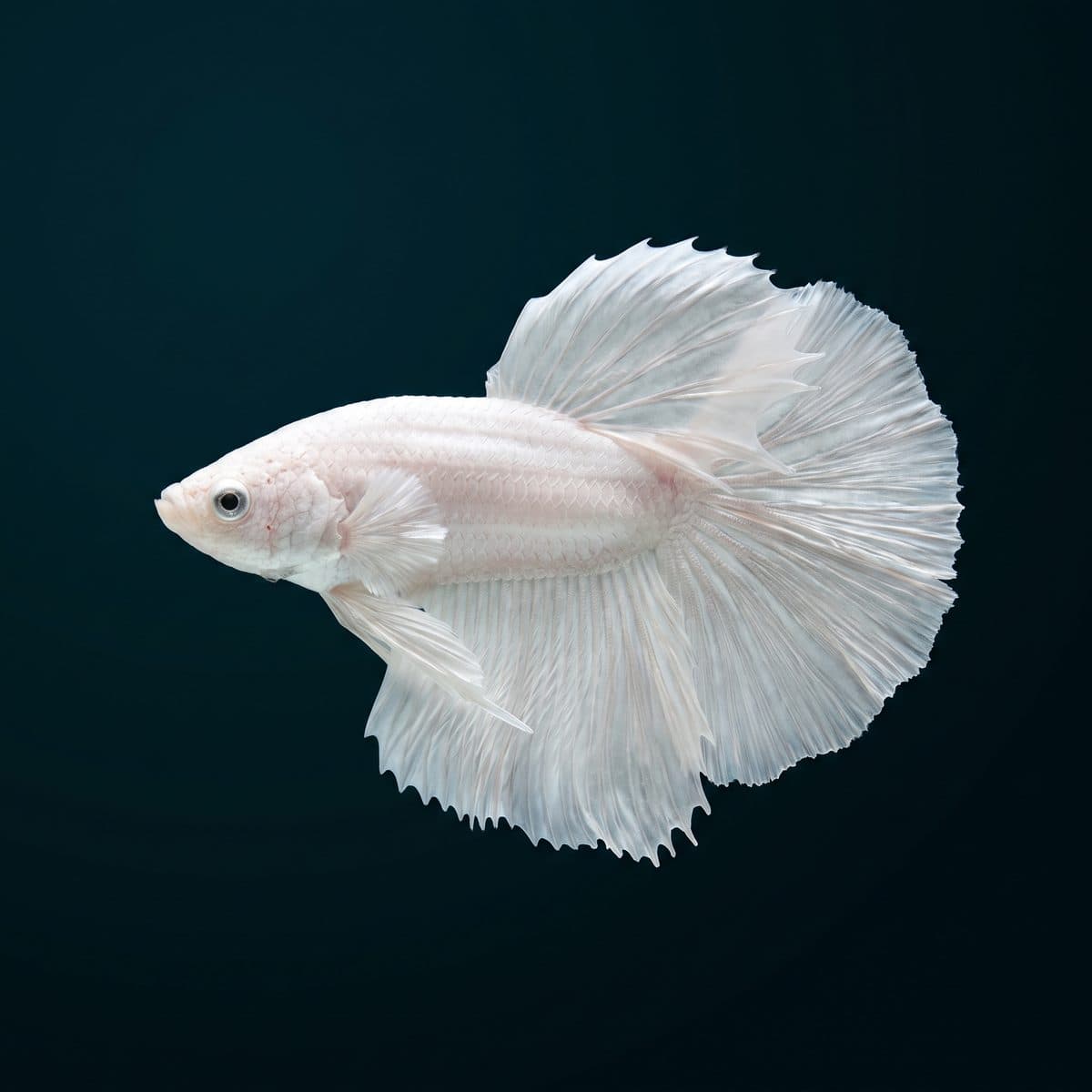
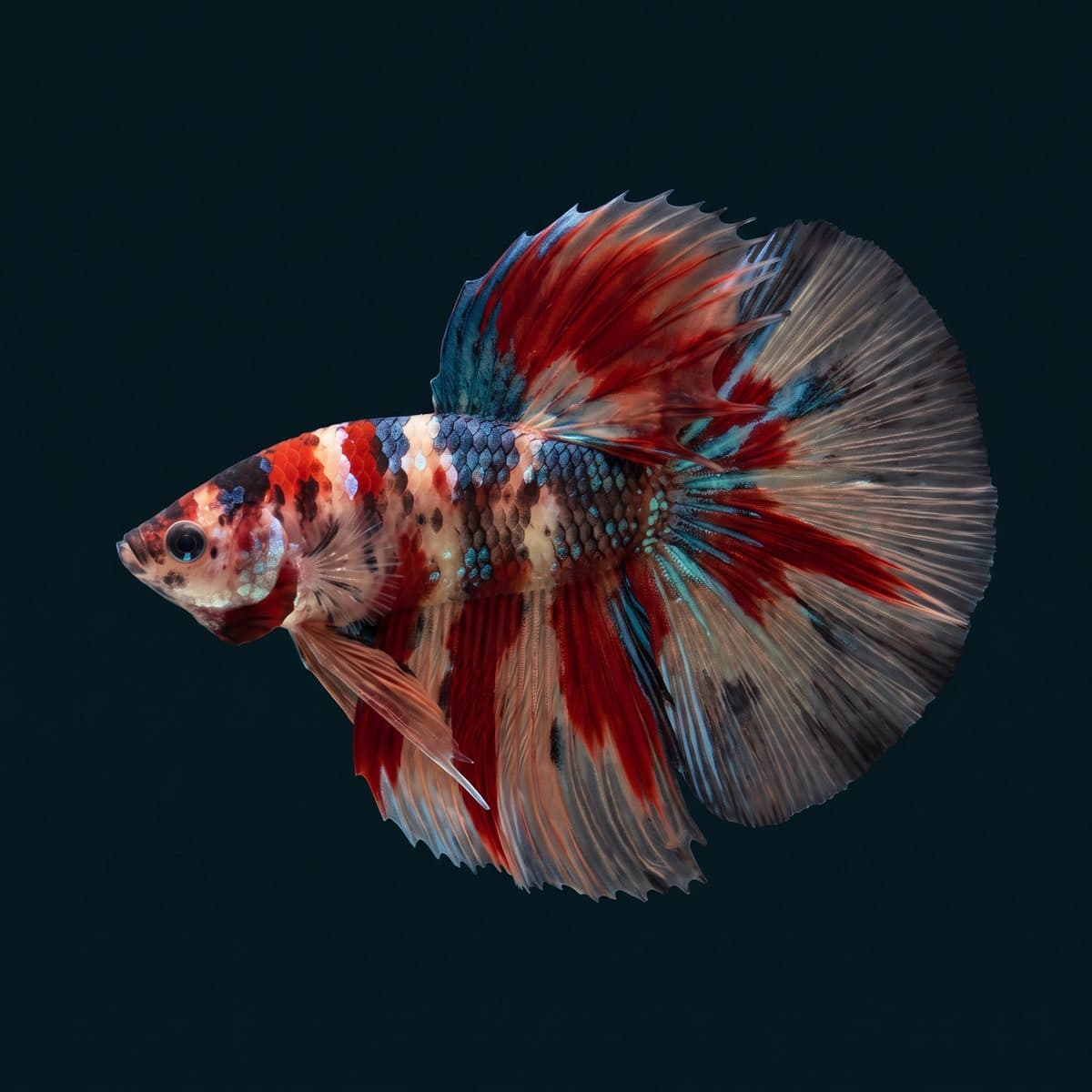
- Halfmoon (HM): The gold standard of betta finnage. The caudal fin spreads a full 180 degrees when flared, creating a perfect semicircle. Dorsal, anal, and caudal fins are large and symmetrical. Breeding true Halfmoons with consistent 180-degree spread, no ray crossing, and balanced symmetry is technically demanding.
- Crowntail (CT): Fin rays extend beyond the webbing, creating a dramatic spiked or fringed appearance. The reduction in webbing can vary from a single ray extension to deeply forked "double ray" or "cross ray" patterns. Crowntails are among the most visually striking bettas but are more prone to fin damage.
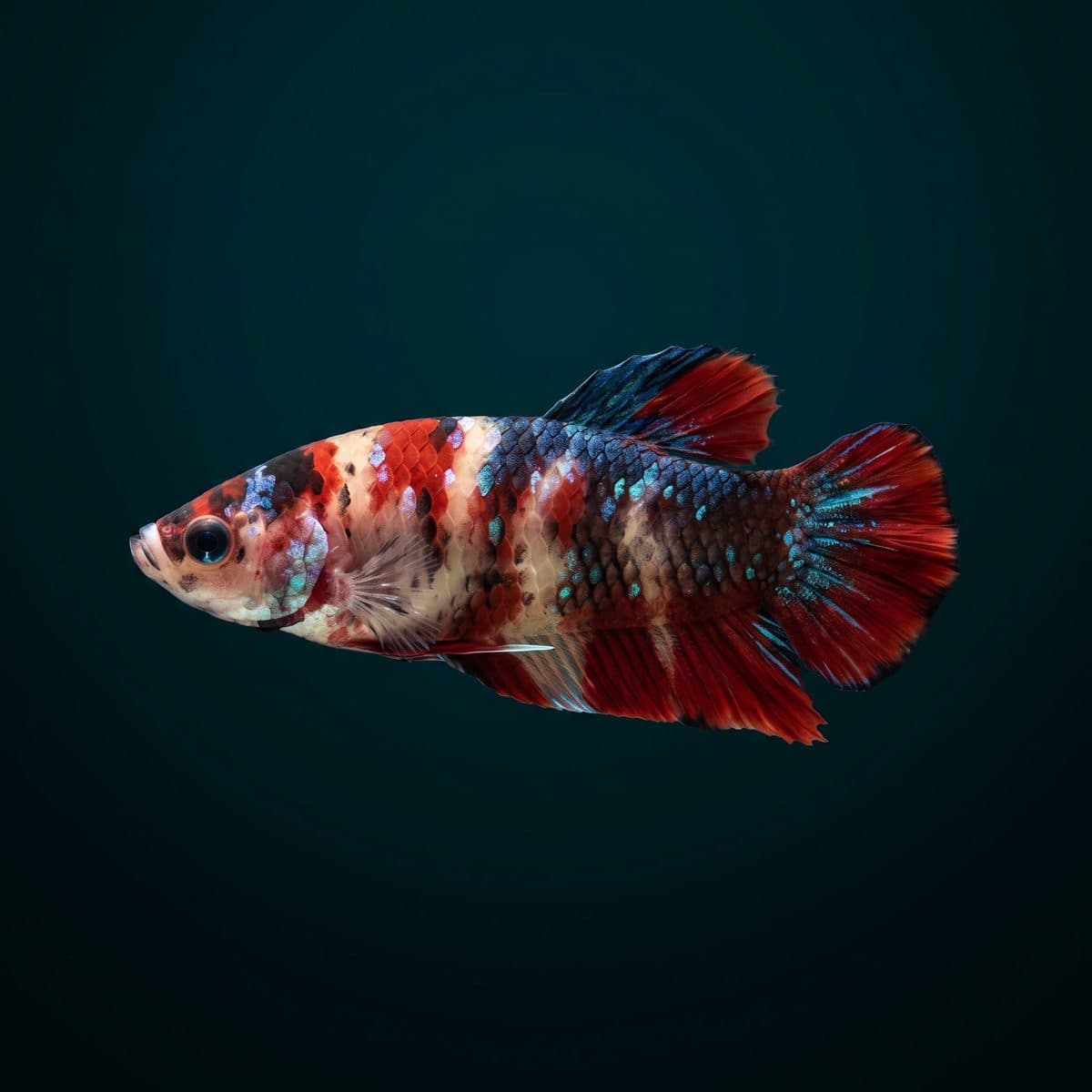
- Plakat (PK): Short-finned bettas closest to the wild form. Plakats are the traditional fighting form — strong, fast, and aggressive. In the show world, Plakats are judged on body shape, fin proportion, and colour intensity. They are generally hardier than long-finned varieties, less prone to fin rot, and more active swimmers. The Halfmoon Plakat (HMPK) combines the short fin of the Plakat with the 180-degree spread of the Halfmoon — a particularly popular and competitive form.
- Dumbo Ear (Big Ear / Elephant Ear): The pectoral fins are enormously enlarged, creating wing-like appendages that the fish fans as it swims. Dumbo bettas can occur in any tail type (Dumbo Halfmoon, Dumbo Plakat, etc.) and are prized for the graceful, almost avian quality of their movement. The enlarged pectoral fins do not impair swimming as severely as long caudal fins.
- Veiltail (VT): The most common tail type in the pet trade. The caudal fin droops downward in a long, flowing veil. While beautiful, Veiltails are not competitive in modern shows and are considered a "pet-quality" form by breeders. They are, however, perfectly wonderful companion fish for the casual hobbyist.
- Double Tail (DT): The caudal fin is split into two distinct lobes, creating a forked or split-tail appearance. Double Tails also have a notably wider dorsal fin. The gene is associated with a shorter body, which can cause spinal issues in poorly bred specimens.
- Rosetail / Feathertail: An extreme expression of the Halfmoon gene, where excessive branching of the fin rays creates a ruffled, rose-petal appearance. While visually spectacular, Rosetails often struggle to swim effectively under the weight of their fins and are prone to fin collapse and chronic fin rot. Many experienced breeders consider the Rosetail a form that has been pushed beyond the point of functional welfare.
Exotic Varieties
Beyond tail type, bettas are categorised by colour pattern. The most sought-after exotic varieties include:
- Galaxy Koi: A pattern combining the marble gene's colour-shifting properties with a koi-like distribution of red, black, white, and iridescent blue/galaxy scales. Galaxy Koi bettas display a kaleidoscopic pattern that continues to evolve throughout the fish's life. For detailed guidance, see our Galaxy Koi Betta Complete Guide.
- Samurai: A dramatic pattern featuring a metallic dragon-scale body overlaid with bold, high-contrast patches of black (often on the head and along the dorsal line) and deep red or copper. The Samurai pattern evokes traditional Japanese armour, with the dark scales serving as a "mask" over the metallic base.
- Alien Betta Hybrids: As described above — interspecific hybrids displaying full-body metallic iridescence in copper, green, blue, or steel. Alien bettas have become one of the fastest-growing segments of the premium betta market, with exceptional specimens commanding £50–£200.
- Dragon Scale: Thick, opaque, metallic-white scales cover the body, creating an armoured appearance. Dragon Scale bettas are striking but carry a genetic predisposition to tumour-like scale overgrowth and, critically, diamond eye — a condition where the thick scales grow over the eyes, causing partial or complete blindness. Ethical breeders are working to reduce diamond eye incidence, but buyers should be aware of this risk.
- Nemo / Candy: Multi-coloured patterns featuring bold patches of red, orange, yellow, black, and blue in a harlequin-like distribution. The Nemo pattern was developed by Thai breeders in the early 2020s and quickly became one of the most commercially popular exotic varieties.
- Copper / Metallic: Full-body metallic colouration in copper, gold, green, or steel blue. The metallic gene produces an intense reflective quality that makes these fish shimmer under aquarium lighting. Copper bettas are particularly popular and are the genetic foundation for many Alien hybrids.
Tank Setup
The minimum acceptable tank for a single betta is 5 gallons (19 litres). This is not a suggestion — it is the baseline for a healthy, active fish. Larger is always better; a 10-gallon (38 L) planted tank is the ideal single-betta setup, providing ample swimming space, stable water parameters, and room for live plants and hardscape.
The tank must be heated. Bettas are tropical fish that require a consistent 24–28 °C (76–82 °F). A small, adjustable heater (25–50 watts for a 5–10 gallon tank) is essential. Unheated tanks in temperate climates subject bettas to temperature fluctuations that suppress immune function and shorten lifespan. The widespread practice of keeping bettas in unheated bowls on desktops is a form of chronic neglect, however normalised it may be in the pet trade.
Filtration should be gentle. Bettas — particularly long-finned varieties — are poor swimmers that struggle against strong currents. A small sponge filter or a hang-on-back filter with an adjustable flow (or a pre-filter sponge to baffle the output) is ideal. The filter provides biological and mechanical filtration while maintaining the calm water bettas prefer.
Live plants are strongly recommended. Java fern, Anubias, Java moss, Amazon sword, and floating plants (Salvinia, Frogbit) provide cover, reduce stress, absorb nitrate, and create a natural environment that encourages the betta to display its full behavioural repertoire — including bubble-nest building, territory patrolling, and foraging. Avoid plastic plants with sharp edges, which can tear delicate fins.
A lid is mandatory. Bettas are jumpers, and an uncovered tank is an invitation to tragedy. Ensure the lid allows access to the surface — bettas must breathe atmospheric air regularly and cannot be denied access to the water surface.
Water Parameters
- Temperature: 24–28 °C (76–82 °F). Consistency is more important than hitting a specific number within this range. Temperature swings of more than 2 °C in 24 hours cause stress and immune suppression.
- pH: 6.5–7.5. Bettas are adaptable to a range of pH values, but stability is critical. If your tap water falls within this range, do not attempt to adjust it — the risk of pH instability from chemical buffers exceeds the benefit of a slightly lower pH.
- General Hardness (GH): 3–12 dGH. Bettas prefer soft-to-moderately-hard water but tolerate a wider range than many sources suggest.
- Ammonia / Nitrite: 0 ppm. Always. Cycle the tank fully before adding the fish.
- Nitrate: Below 20 ppm. Weekly 25% water changes with temperature-matched, dechlorinated water are the standard protocol.
Indian almond leaves (Terminalia catappa) or alder cones are a valuable addition to betta tanks. They release tannins that mildly lower pH, tint the water a natural amber, and possess antifungal and antibacterial properties. Many Thai breeders use them routinely, and the difference in fin health and colouration can be noticeable.
Diet & Feeding
Bettas are insectivores in the wild, feeding on mosquito larvae, small crustaceans, and aquatic insects at the water surface. In captivity, a high-quality diet should reflect this carnivorous preference:
- Staple (daily): High-protein betta pellets — Hikari Betta Bio-Gold, Northfin Betta Bits, or New Life Spectrum Betta Formula. Feed 3–5 pellets twice daily. These pellets should list whole fish or insect meal as the first ingredient, not wheat or soy filler.
- Supplementary (2–3 times per week): Frozen bloodworms, frozen brine shrimp, frozen daphnia, and freeze-dried tubifex worms. These provide variety and mimic the natural diet. Thaw frozen foods before feeding.
- Live foods (1–2 times per week, if available): Live brine shrimp, daphnia, wingless fruit flies, and mosquito larvae are the ultimate betta diet and will bring out the most vibrant colours and active behaviour. Live foods are particularly valuable when conditioning breeding pairs.
Fast one day per week to support digestive health. Bettas have small stomachs (roughly the size of their eye) and are easily overfed. Uneaten food fouls the water rapidly in small tanks. If the betta does not consume all offered food within two minutes, you are feeding too much.
Breeding
Betta breeding is accessible to dedicated hobbyists but demands preparation, space, and a plan for the offspring. A single spawning can produce 50–300 fry, all of which will need individual housing (for males) by 3–4 months of age.
Condition a selected pair separately for 2–3 weeks with protein-rich live and frozen foods. The female should be visibly plump with eggs (a white ovipositor may be visible near the vent), and the male should be actively building bubble nests.
The breeding tank should be 5–10 gallons, bare-bottomed, with a gentle sponge filter, a heater set to 27–28 °C, and floating plants or a styrofoam cup half (concave side down) as a bubble-nest anchor. Water depth should be reduced to 12–15 cm — shallow water improves fry survival as they must reach the surface to fill their developing labyrinth organ.
Introduce the female in a clear container (chimney method) within the breeding tank for 24–48 hours so the pair can see each other without contact. When the male has built a substantial bubble nest and the female displays vertical breeding bars (pale vertical stripes on the body), release her. Spawning involves an embrace where the male wraps around the female, squeezing eggs from her body and fertilising them simultaneously. The male collects the eggs in his mouth and deposits them in the bubble nest.
Remove the female immediately after spawning — the male will attack her to protect the nest. The male tends the eggs, retrieving any that fall and repairing the nest. Eggs hatch in 24–48 hours, and fry become free-swimming 2–3 days later. Remove the male once fry are free-swimming — he may begin eating them.
Fry require infusoria or commercial liquid fry food for the first 3–5 days, transitioning to freshly hatched brine shrimp nauplii, which remain the optimal fry food for the next 4–6 weeks. Growth is rapid with proper feeding and clean water (daily 10–20% water changes with an airline siphon). Begin separating aggressive males into individual containers at 8–12 weeks.
Common Health Issues
Fin rot is the most common betta ailment — progressive deterioration of the fin edges, appearing as ragged, discoloured, or receding fins. It is almost always caused by poor water quality (elevated ammonia, nitrite, or nitrate) or low temperatures. Mild fin rot responds to water quality improvement alone — perform 50% water changes daily for a week and ensure the heater is functioning. Moderate cases benefit from aquarium salt (1 teaspoon per 4 litres) or Indian almond leaves. Severe cases with body involvement may require antibiotic treatment (kanamycin or erythromycin).
Velvet (Oodinium) is a parasitic infection that appears as a fine gold or rust-coloured dust on the body, best visible under a torch shone at an angle. It is highly contagious and can be fatal if untreated. Treatment involves raising the temperature to 28–30 °C, adding aquarium salt, and treating with a copper-based medication (follow label dosing precisely — copper is toxic at elevated concentrations).
Ich (white spot disease) presents as distinct white spots on the body and fins. Raise temperature to 30 °C and treat with malachite green or formalin-based medication. Ich has a well-defined life cycle, and treatment must continue for 10–14 days to eliminate all stages.
Swim bladder disorder causes buoyancy problems — the fish may float at the surface, sink to the bottom, or swim at an angle. In bettas, the most common cause is overfeeding or constipation. Fast for 2–3 days, then feed a small piece of blanched, deshelled pea. If the condition persists, it may indicate an internal bacterial infection requiring antibiotic treatment.
Tumours and diamond eye are particularly common in Dragon Scale bettas. Tumours appear as lumps or growths on the body and are generally untreatable. Diamond eye — the progressive covering of the eye with thick scales — is a genetic condition with no cure. Affected fish can live comfortably but are effectively blind and require consistent tank layout and target feeding.