Overview
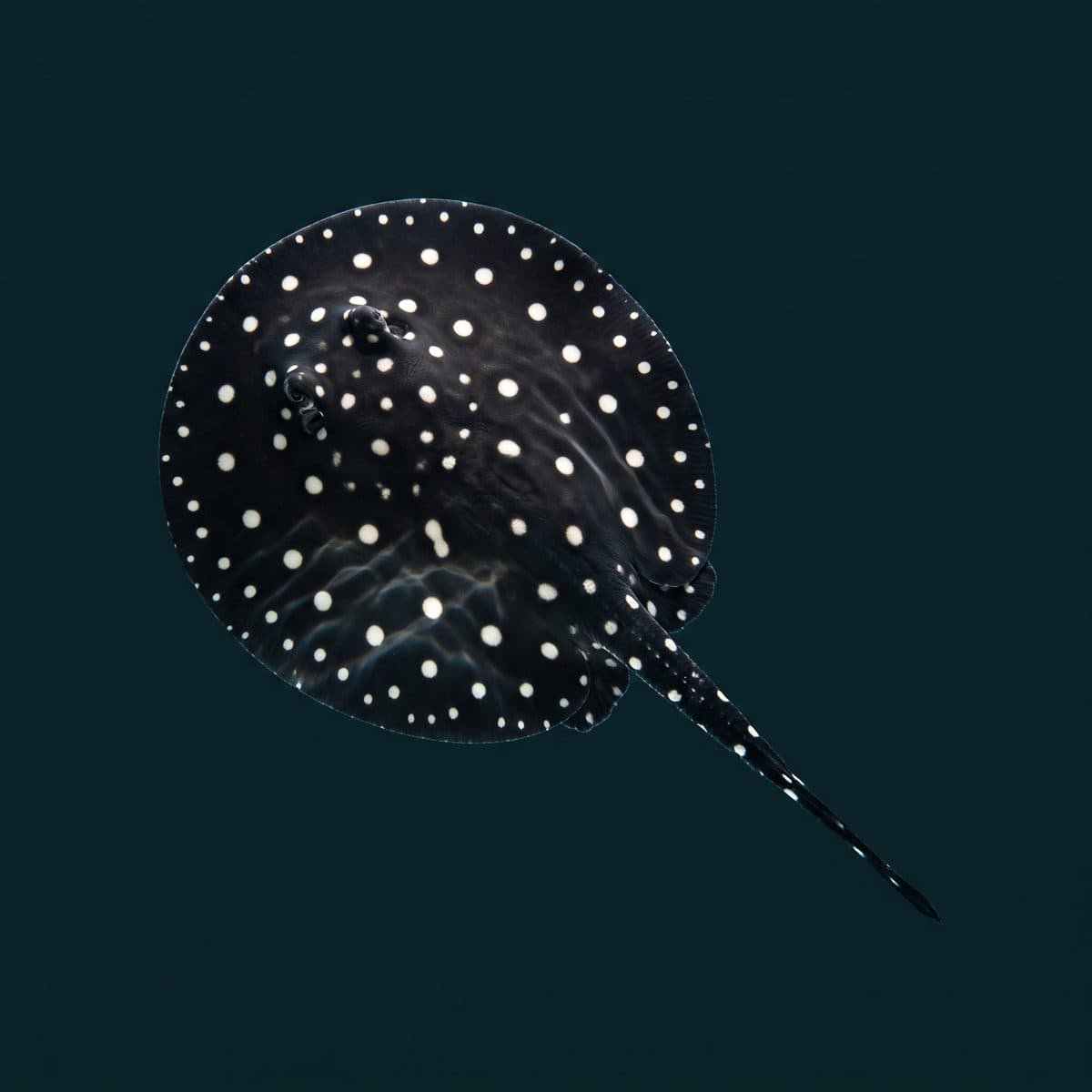
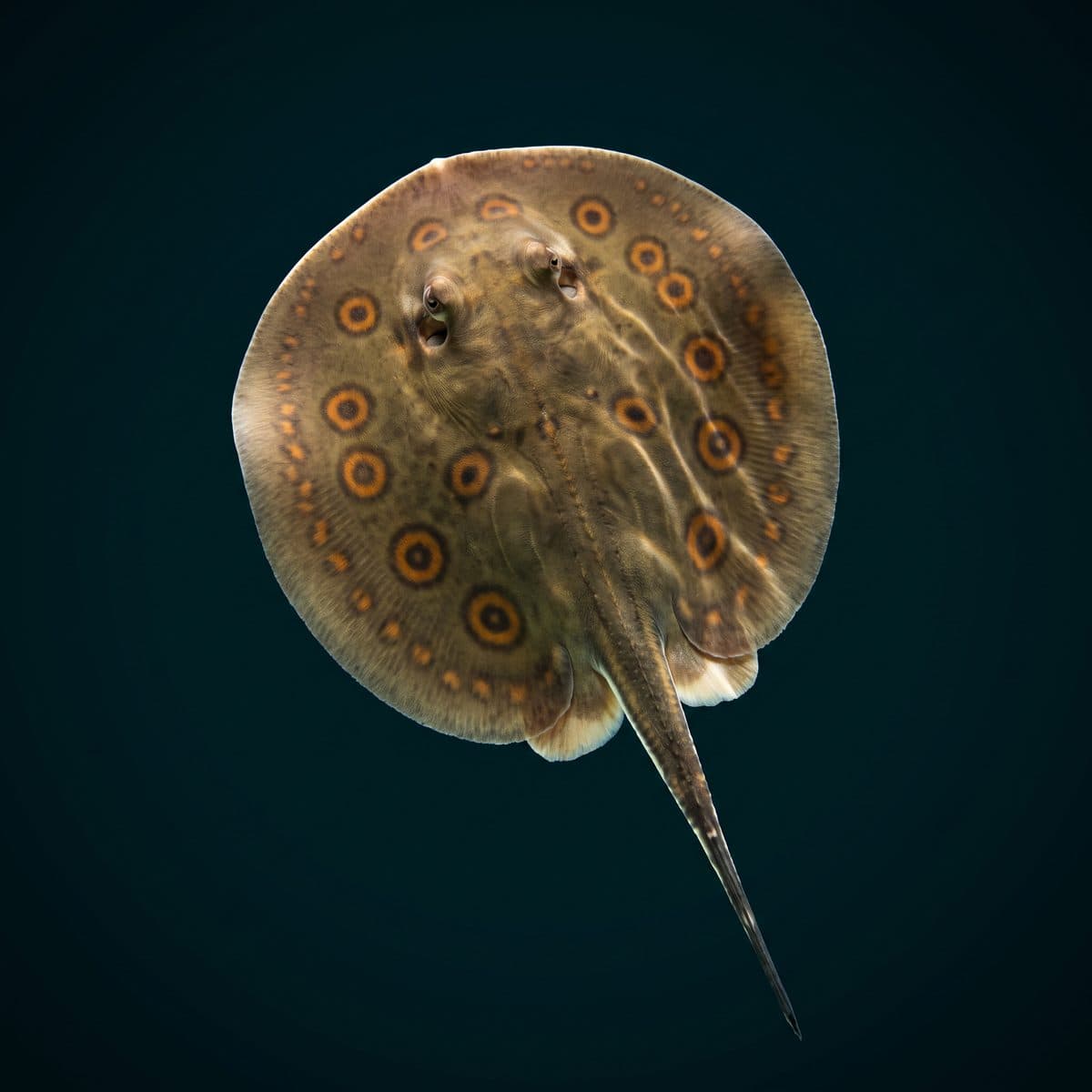
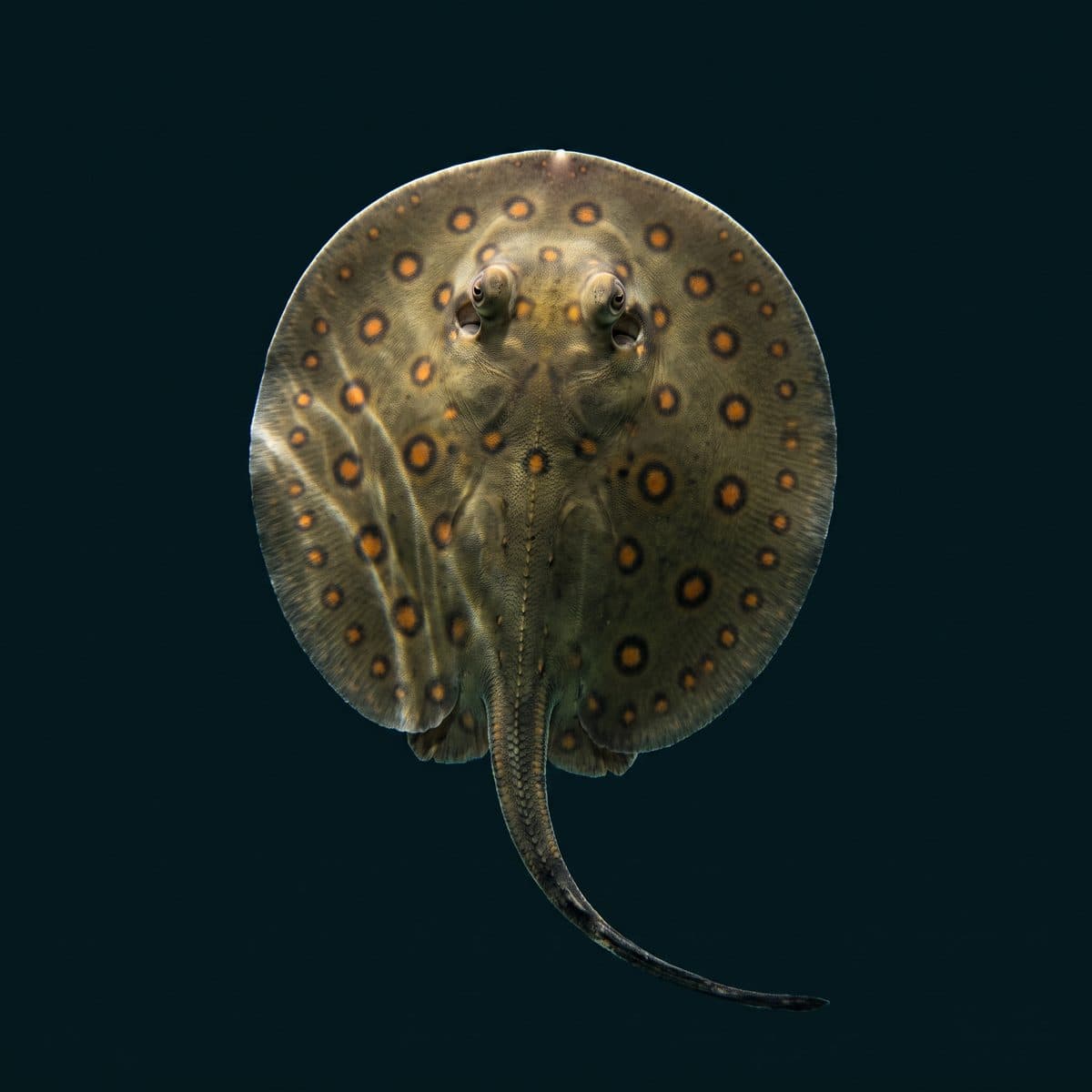
Freshwater stingrays (genus Potamotrygon) are native to South American river systems — the Amazon, Orinoco, Paraná, and their tributaries. They are among the most impressive and demanding freshwater aquarium fish, combining striking disc patterns with genuine danger from their venomous caudal barb. Popular species include P. motoro (Ocellate River Stingray), P. leopoldi (Black Diamond/Polka Dot), and P. henlei (Bigtooth).
Tank Requirements
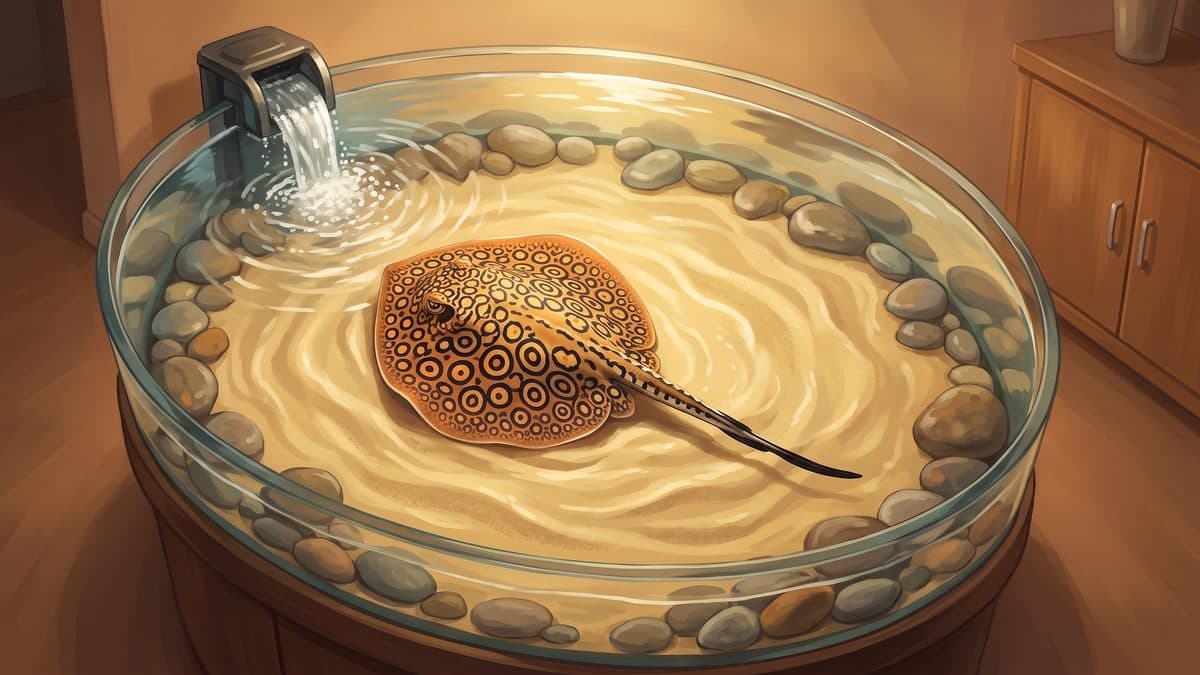
Stingrays need floor space, not height. A 180-gallon tank (72 × 24 × 24 in) is the minimum for a single juvenile; adults need 240+ gallons. Use fine sand substrate — stingrays bury themselves and coarse substrate damages their ventral surface. Keep décor minimal and avoid sharp objects. A bare-bottom tank with sand patches is used by many experienced keepers for ease of cleaning.
Water Quality
This is where stingray keeping gets demanding. Stingrays are extremely sensitive to ammonia, nitrite, and nitrate:
- Temperature: 78–82 °F (26–28 °C)
- pH: 6.0–7.0 (soft, acidic water)
- GH: 1–8 dGH
- Ammonia/Nitrite: Absolutely 0 ppm — even trace amounts cause disc curling ("the death curl")
- Nitrate: Below 10 ppm — ideally below 5 ppm
Use a sump rated for 10× turnover, R/O water remineralised to target, and perform 25–30% water changes twice weekly. Daily water testing is standard practice for stingray keepers.
Feeding
Stingrays have high metabolic rates and need 2–3 feedings per day. Staple foods: live or frozen earthworms (nightcrawlers), raw shrimp (shell-on for juveniles, peeled for adults), smelt, tilapia fillet, and mussels. Trained stingrays accept Hikari Massivore pellets and Repashy gel food. Young stingrays that refuse food for more than 3 days are at serious risk — starvation is a leading cause of juvenile mortality.
Handling and Safety
Freshwater stingrays possess a venomous serrated barb on the tail that delivers an excruciating sting. The venom causes intense pain, swelling, and tissue necrosis. First aid: immerse the wound in hot water (110–115 °F) for 30–90 minutes to denature the protein-based venom. Seek medical attention for severe stings. Never reach into a stingray tank without first locating the ray. Use a container — never a net — when moving stingrays.
Tank Mates
Stingrays can coexist with large, peaceful upper-water fish: arowana, large silver dollars, Bichirs, and peaceful catfish. Avoid aggressive cichlids (they nip ray discs), plecos (they rasp on ray slime coats at night), and any fish small enough to be eaten. Many keepers maintain species-only stingray tanks for simplicity.
Legal Considerations
Freshwater stingray ownership is restricted or banned in several US states, including Arizona, Arkansas, California, Georgia, Hawaii, Mississippi, Nevada, Oklahoma, Texas, and Utah. Check your state regulations before purchasing. Import of certain Potamotrygon species from Brazil is also restricted under Brazilian export law.
Health Issues
The most critical health indicator is disc shape — a flat, round disc indicates health; curled or cupped disc edges ("death curl") signal ammonia exposure, infection, or severe stress. Other issues include parasites (treat with praziquantel), bacterial infections on the ventral surface from substrate abrasion, and barb infections. Stingrays are sensitive to most medications — consult a specialist before treating.
The Daily and Weekly Routine
Before you commit, understand the time budget: a stingray system needs 30–60 minutes of genuine attention every single day. This is not a fish you check on twice a week.
- Daily: 2–3 feedings, a visual disc inspection (flat and round is healthy — any edge curl is an emergency), R/O top-off, and an ammonia/nitrite spot-check in systems under six months old.
- Twice weekly: 25–30% water changes with remineralised R/O, temperature-matched within 1 °F. Vacuum the sand patches — rays bury food scraps.
- Weekly: Full parameter test including nitrate (you're holding it under 10 ppm), filter sock swap, and a check of pump intakes and heater guards.
- Monthly: Deep-clean mechanical filtration, verify your test kits against reference solution, and inspect plumbing for the slow drips that become floods.
Put it on an actual calendar for the first few months. Rays don't forgive the "I'll get to it this weekend" habit that an established fish-only tank will tolerate.
Acclimating a New Ray and First Feedings
Buy the largest, best-started ray you can afford — pups under a 6-inch disc have brutal mortality rates even in expert hands. Insist on watching the ray eat at the seller's before money changes hands, and ask exactly what it's been eating.
On arrival day: drip-acclimate for 60–90 minutes in a covered container (rays can flip out of open buckets), match temperature precisely, and transfer with a fine-mesh container — never bare hands, never a net. Keep the lights off for the first 24 hours.
The first feedings set the trajectory:
- Offer live blackworms or chopped nightcrawlers scattered over the sand on day one — movement on the substrate is what triggers the feeding response.
- A settled ray should eat within 48 hours. If it hasn't, try feeding after dark and re-test your water — a stressed ray in imperfect water will not eat, period.
- Feed small amounts often (3–4 times daily for juveniles). A young ray should always look slightly plump — juveniles have no reserves, and there's no gradual recovery from starvation at that size.
Breeding Freshwater Stingrays
Stingrays are one of the few monster fish bred routinely in home systems, and captive-bred pups matter — they ease pressure on wild populations and adapt far better than imports. The biology is remarkable: rays are livebearers whose embryos are nourished in the uterus by secreted "histotroph" rather than a yolk alone.
The practical facts:
- Sexing is easy: males carry claspers — paired appendages on the pelvic fins — visible from juvenile sizes.
- Maturity: males around 2 years, females closer to 3. Breeding females need to be robust and well conditioned; gestation is demanding.
- Gestation: 9–12 weeks, producing 1–8 pups depending on species and female size.
- Separate pups promptly. Adults rarely eat them, but feeding-time competition starves pups quietly. A grow-out tank with blackworms available around the clock gets them established.
Watch for relentless males chasing and biting disc edges — pair harassment is the biggest problem in breeding setups, and females sometimes need a recovery tank between litters.
What a Stingray System Really Costs
We'd rather lose a sale than see a ray land in an unprepared setup, so here are honest numbers for a single-ray system:
| Item | Typical Cost (USD) |
|---|---|
| 240-gallon tank and stand | 3,000–5,000 |
| Sump and filtration | 800–1,500 |
| R/O unit and storage | 300–600 |
| Heaters, controller, backups | 200–400 |
| Food and utilities, monthly | 100–250 |
Notice that the ray itself often isn't the expensive part — a healthy captive-bred P. motoro can cost less than the R/O system supporting it, while high-end P. leopoldi morphs run to five figures. Budget the infrastructure first. If the equipment list breaks the bank, the ray eventually will too — just more slowly and less pleasantly.