Overview
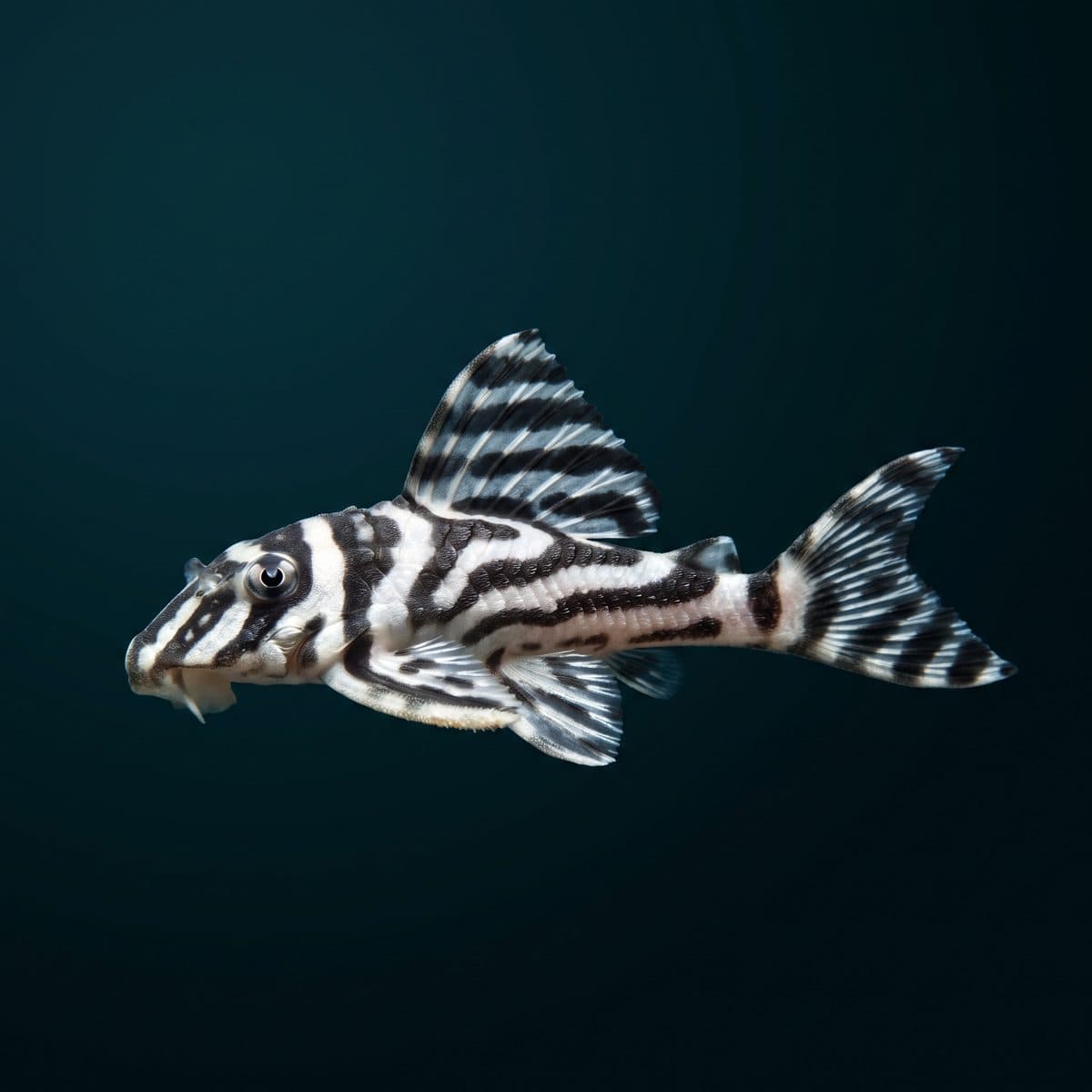
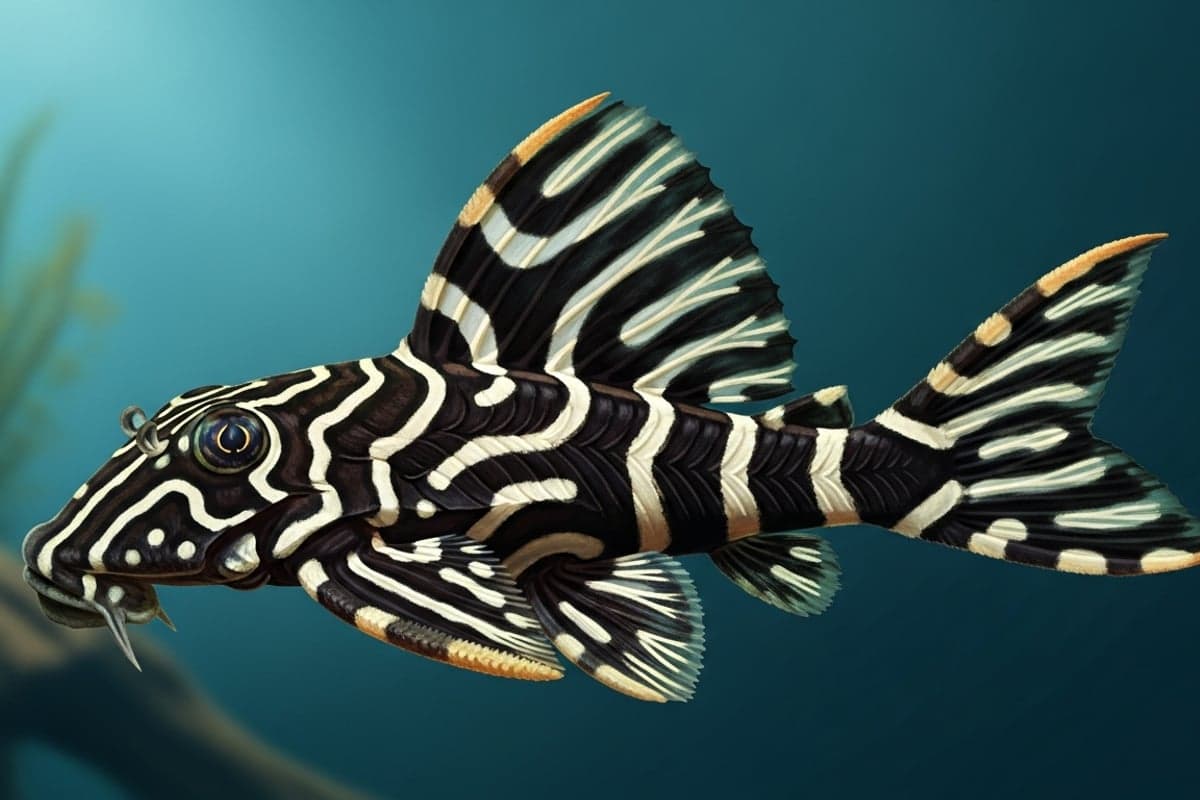
The Zebra Pleco (Hypancistrus zebra), assigned the L-number L046, is arguably the most famous Loricariid catfish in the ornamental fish trade. Discovered in 1991 in the big-bend region of Brazil's Xingu River, its instantly recognisable pattern of alternating black and white lateral stripes set the aquarium world alight and single-handedly ignited the global L-number pleco craze. Despite its small adult size of just 8 cm, the Zebra Pleco commands prices that rival fish many times its size — a testament to its beauty, rarity, and the challenges of producing them in sufficient numbers.
In 2004, the Brazilian government banned all wild export of Hypancistrus zebra in response to declining populations, a situation exacerbated by the construction of the Belo Monte hydroelectric dam on the Xingu. Today, all legally available specimens are captive-bred, primarily in Germany, Indonesia, and specialist breeding facilities in the United States and Japan. The Fish Collection sources exclusively from IBAMA-compliant captive breeders and maintains our own breeding colony of over 40 adults.
Despite their fame, Zebra Plecos are not beginner fish. They require warmer water temperatures than most tropical species, demand high dissolved oxygen levels, and are notoriously shy — an owner who expects a visible, active fish will be disappointed. For the patient aquarist who provides the right environment, however, keeping and breeding Zebra Plecos is one of the hobby's most rewarding experiences.
Natural Habitat
Hypancistrus zebra is endemic to a narrow stretch of the Xingu River between Altamira and the confluence with the Iriri River in Pará, Brazil. The Xingu is a clearwater river system characterised by warm temperatures (28–34 °C), moderate current over rocky substrates of granite and basalt, and well-oxygenated water. Zebra Plecos inhabit the deep crevices and interstices of fractured bedrock at depths of 3–10 metres, where water flow is strong enough to maintain constant oxygen exchange but not so powerful as to dislodge the small catfish from their hiding spots.
The water chemistry of the Xingu in this region is soft (GH 0–3 dGH) and slightly acidic to neutral (pH 6.2–7.0), with extremely low nutrient loads. The riverbed in Zebra Pleco habitat is essentially bare rock — there is no sand, mud, or organic substrate. This is important for captive care: Zebra Plecos evolved in a virtually sterile environment and are intolerant of organic detritus accumulation.
The Belo Monte dam has dramatically altered this habitat. Reduced flow rates, elevated water temperatures in stagnant sections, and siltation of the rocky crevices that Zebra Plecos depend on have devastated wild populations. The species is classified as Critically Endangered by the IUCN. Every captive-bred specimen represents a contribution to the insurance population against potential extinction in the wild.
Tank Requirements
Tank Dimensions & Aquascape
A colony of 4–6 Zebra Plecos can be maintained in a 30-gallon (115 L) aquarium with dimensions of approximately 90 × 30 × 38 cm (36 × 12 × 15 inches). While the fish are small, territorial males maintain exclusive ownership of individual caves, so the tank must contain at least one more cave than the number of fish. For breeding colonies, 40–55 gallons is preferable, providing additional territory and reducing male-to-male aggression.
Aquascaping should prioritise caves above all else. Use commercially available ceramic or slate pleco caves with internal dimensions of approximately 10 cm long × 2.5 cm wide × 2 cm tall — just large enough for an adult Zebra Pleco to enter and turn around. Position caves against the back glass or between rock piles, with openings facing into the current. Substrate should be fine gravel or bare bottom — sand can clog the caves and reduce water circulation through them. Stack flat stones to create additional natural crevices.
Filtration & Flow
Dissolved oxygen is the single most critical environmental parameter for Zebra Plecos. In the wild, their habitat is washed by well-aerated rapids; in captivity, you must replicate this with strong filtration and supplemental aeration. Target a turnover rate of 8–10× the tank volume per hour. A canister filter rated for a tank 2–3 times your actual volume, combined with a powerhead or wavemaker positioned to create laminar flow across the cave openings, is the standard approach.
An air stone connected to a quality air pump provides essential supplemental oxygenation, especially at the elevated temperatures Zebra Plecos require (28–32 °C), where dissolved oxygen capacity is naturally reduced. Maintain ammonia and nitrite at 0 ppm and nitrate below 15 ppm. Sponge pre-filters on canister intakes protect juvenile fish and reduce maintenance intervals.
Lighting
Zebra Plecos are strictly nocturnal and strongly photophobic. Standard aquarium lighting will keep them hidden in their caves throughout the photoperiod. Low-intensity red or blue moonlight LEDs allow observation of natural behaviour during dark periods without disturbing the fish. If lighting is desired for aesthetic purposes, ensure that every pleco has access to a fully darkened cave. A photoperiod of 8–10 hours of low-to-moderate light with a gradual dimming period is sufficient.
Water Parameters
Zebra Plecos demand warm, clean, well-oxygenated water. Target the following parameters:
- Temperature: 28–32 °C (82–90 °F). This is warmer than most tropical community tanks. A reliable heater with a digital controller is essential. For breeding, many successful breeders maintain 30–31 °C.
- pH: 6.0–7.2. Neutral to slightly acidic is preferred. Avoid pH below 5.5, which can stress the fish.
- General Hardness (GH): 2–8 dGH (36–143 ppm).
- Carbonate Hardness (KH): 2–6 dKH.
- Ammonia / Nitrite: 0 ppm — always.
- Nitrate: <15 ppm. Weekly 25–30% water changes are typical.
- Dissolved Oxygen: >6 mg/L. This is the parameter most keepers overlook. Use an O₂ test kit or meter and supplement aeration if levels drop below 5 mg/L.
Perform water changes with temperature-matched, dechlorinated water. Because Zebra Plecos thrive at high temperatures, ensure replacement water is pre-heated to avoid thermal shock. A mixing container with a heater is a worthwhile investment for serious keepers.
Diet & Feeding
Contrary to popular belief about plecos, Hypancistrus zebra is not an algae eater. It is an omnivore with a strong preference for animal protein. In the wild, Zebra Plecos feed on insect larvae, micro-crustaceans, and biofilm — not the aufwuchs (algae carpet) consumed by Ancistrus or Pterygoplichthys species. A diet heavy in vegetable matter will lead to malnutrition and wasting.
Recommended foods include:
- Frozen bloodworms — the staple diet for most successful keepers. Offer a small cube 3–4 times per week.
- Frozen brine shrimp — excellent supplemental protein. Alternate with bloodworms.
- High-quality sinking pellets — Hikari Carnivore Pellets, Repashy Morning Wood, or Northfin Kelp Wafers. These provide balanced nutrition when the fish refuse frozen foods.
- Live blackworms — outstanding for conditioning breeding adults and fattening juveniles.
- Blanched courgette (zucchini) — offered once weekly, provides fibre and micronutrients. Remove after 12 hours to prevent water quality degradation.
Feed in the evening, just after lights out, when Zebra Plecos are most active. Use a feeding dish to concentrate food near the cave openings and reduce waste. Remove uneaten food after 4–6 hours to maintain water quality.
Behaviour & Temperament
Zebra Plecos are shy, reclusive, and strictly nocturnal. During daylight hours, they remain hidden in their caves, emerging only after the lights are off to forage. Territorial behaviour is centred on cave ownership — dominant males will aggressively defend their preferred cave, chasing away rivals with fin displays and, in extreme cases, physical combat that can result in torn fins and scraped flanks.
Social hierarchy is established primarily through cave selection. Providing excess caves (N+2, where N is the number of fish) is the single most effective strategy for reducing aggression. Males display more pronounced territorial behaviour than females, which tend to roam more freely between hiding spots.
Compatible Tank Mates
Zebra Plecos are best kept in a species-specific tank. However, if a community is desired, tank mates must be small, peaceful, and active in the mid-to-upper water column. Suitable companions include:
- Small tetras — Cardinal Tetras, Rummy-nose Tetras, or Ember Tetras in schools of 10+.
- Corydoras catfish — Corydoras sterbai is an excellent choice, as it also thrives at 28–30 °C.
- Small rasboras — Harlequin or Chili Rasboras.
- Otocinclus — Peaceful algae grazers that occupy different microhabitats.
Avoid all other pleco species in the same tank — they will compete for caves. Avoid aggressive bottom-dwellers (cichlids, loaches larger than 10 cm) and any species that might harass the shy Zebra Pleco during its inactive period. Large dither fish that create excessive commotion can prevent Zebra Plecos from emerging to feed.
Breeding
Breeding Zebra Plecos in captivity is achievable and highly rewarding. The species is a cave-spawning egg depositor — the male entices a gravid female into his cave, where she deposits 7–15 large (4–5 mm diameter) adhesive eggs on the cave ceiling or wall. The male then guards and fans the eggs for 10–15 days until hatching. Fry carry a large yolk sac and do not require feeding for the first 7–10 days after hatching.
To trigger breeding, maintain pristine water quality, feed heavily with protein-rich foods (especially live blackworms) for 4–6 weeks, and then perform a large (50%) cool water change to simulate the onset of the Xingu's wet season. The temperature drop of 2–3 °C, followed by a gradual return to 30–31 °C, is often the trigger that initiates spawning behaviour. Males will intensify cave guarding and begin vibrating their body to attract females.
Fry can be left with the male (who provides excellent parental care) or gently extracted to a separate grow-out tank after the yolk sac is absorbed. First foods include microworms, baby brine shrimp, and finely crushed Repashy gel food. Growth is slow — fry reach 3 cm in approximately 6 months and full adult size at 18–24 months.
Common Health Issues
Wasting Syndrome
Wasting syndrome — a progressive loss of body condition characterised by a sunken belly and visible skeletal outlines — is the most common killer of captive Zebra Plecos. It is typically caused by internal parasites (nematodes, flagellates), inadequate diet (too much vegetable matter, not enough protein), or chronic stress from insufficient hiding places or aggressive tank mates. Treatment involves identifying and addressing the root cause: deworm with levamisole or fenbendazole if parasites are suspected, improve the diet with live blackworms and frozen bloodworms, and ensure the fish has undisputed access to a cave.
Bacterial Skin Infections
White fuzzy patches or red ulcerations on the body typically indicate bacterial or fungal infection, often secondary to physical injury from territorial disputes or rough handling. Improve water quality immediately (nitrate below 10 ppm), add Indian almond leaves for their mild antibacterial properties, and treat severe cases with a methylene blue bath or antibiotic (kanamycin) as directed by an aquatic veterinarian. Prevention centres on maintaining excellent water quality and providing sufficient caves to minimise combat.
Other issues include ich (white spot disease), which Zebra Plecos are susceptible to during temperature drops, and gill flukes from wild-caught specimens. Quarantine all new arrivals for 4–6 weeks in a separate system before introducing them to an established colony.