Overview
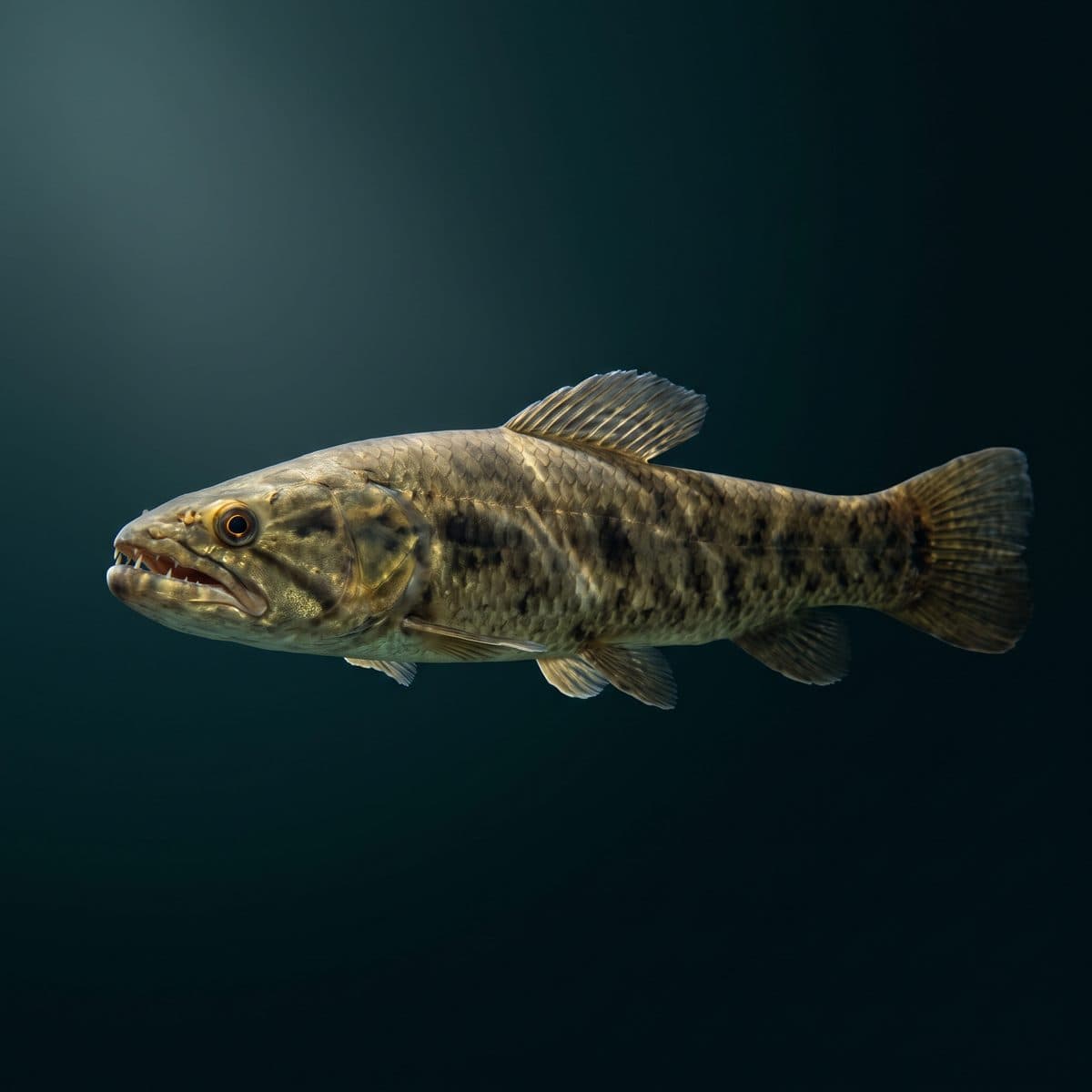
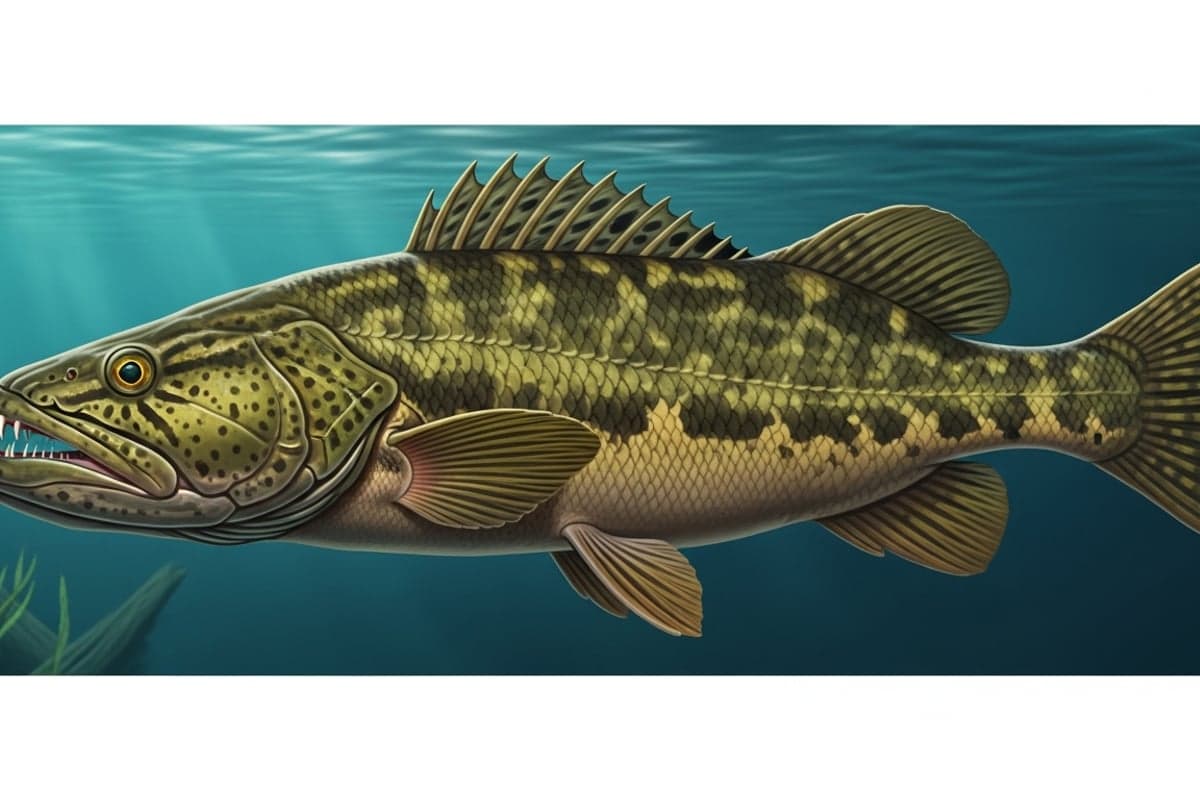
The Wolf Fish (Hoplias malabaricus), known throughout South America as "Traíra," is a member of the family Erythrinidae — a group of predatory characins that have evolved to dominate the still and slow-moving waters of the Neotropical region. What the Arowana is to surface predation, the Wolf Fish is to ambush hunting. Its morphology tells the story: a broad, flattened head housing a mouth filled with interlocking canine teeth, a thick cylindrical body optimised for explosive lunges rather than sustained swimming, and a camouflage pattern of dark mottled brown that renders it invisible against a substrate of leaf litter and submerged wood.
Hoplias malabaricus is actually a species complex — recent genetic analysis has identified multiple cryptic species within what was traditionally considered a single taxon. For aquarium purposes, most specimens entering the trade are collected from the Amazon, Orinoco, or Paraná basins and conform to the broadly defined H. malabaricus morphotype. Rarer congeners such as H. aimara (the Giant Wolf Fish, reaching 1 metre) and H. curupira are occasionally available from specialist importers.
Wolf Fish are not a beginner's fish, but nor do they demand the extreme water chemistry precision of Discus or the sheer space requirements of Arowana. They are remarkably tough, adaptable predators that thrive under conditions that would stress many ornamental species. For the predator enthusiast who wants a genuinely interactive fish with an unmistakable personality, the Wolf Fish is hard to beat.
Natural Habitat
Hoplias malabaricus has one of the broadest geographic ranges of any Neotropical freshwater fish, occurring from Costa Rica south through the Amazon, Orinoco, São Francisco, and Paraná-Paraguay river systems to northern Argentina. It inhabits still or slow-moving waters: swamps, floodplain lakes (várzea and igapó), sluggish tributary creeks, and roadside ditches. It is notably tolerant of hypoxic conditions — Wolf Fish are obligate air-breathers that gulp atmospheric air to supplement gill respiration, allowing them to survive in stagnant, deoxygenated pools where other predators cannot.
Water conditions across this range vary enormously — from tannin-stained blackwater with a pH below 5.0 and near-zero hardness, to neutral or slightly alkaline white-water rivers with moderate hardness. Temperature ranges from 22 °C in southern populations to 32 °C in equatorial lowland habitats. This ecological flexibility translates directly to captive hardiness.
In the wild, Wolf Fish are solitary ambush predators. They position themselves among submerged roots, leaf litter, or aquatic vegetation and wait motionless for prey — primarily small fish, frogs, crustaceans, and large aquatic invertebrates — to pass within strike distance. The attack is explosive: a lunge covering 1–2 body lengths in a fraction of a second, powered by the thick caudal peduncle.
Tank Requirements
Tank Dimensions & Décor
A single adult H. malabaricus (up to 50 cm) requires a minimum 125-gallon (475 L) aquarium with dimensions of at least 180 cm long × 45 cm wide × 50 cm tall (72 × 18 × 20 inches). The tank must be wide enough for the fish to turn comfortably and long enough to accommodate its ambush hunting behaviour. For the larger H. aimara, scale up to 300 gallons minimum.
A secure, heavy lid is absolutely essential. Wolf Fish are powerful jumpers, particularly when startled or newly introduced. Use a glass or polycarbonate canopy weighted with clips or locks — a standard screen top will not contain a panicked adult Wolf Fish.
Décor should replicate the cluttered, dimly lit environments where Wolf Fish feel most secure:
- Substrate: Fine sand (pool filter sand, CaribSea Super Naturals) in a dark colour. Wolf Fish spend considerable time resting on the bottom.
- Driftwood: Large pieces of Mopani, Manzanita, or spider wood creating caves and overhangs. Wolf Fish will claim a specific hideout and use it consistently.
- Plants (optional): Hardy species such as Anubias, Java Fern, and Vallisneria. These are not essential but add visual complexity and help reduce light intensity. Avoid delicate plants — the fish's movement will uproot them.
- Indian almond leaves or oak leaves: A layer of dried leaves on the substrate replicates the leaf-litter habitat and releases tannins that lower pH and provide mild antimicrobial benefits.
Filtration & Flow
Wolf Fish produce a heavy bioload relative to their size — they eat large, protein-rich meals and generate correspondingly large waste. A canister filter rated for 1.5–2× your tank volume (for a 125-gallon tank, use a filter rated for 200–250 gallons) provides the mechanical and biological filtration capacity required. FX-series canisters (Fluval FX4 or FX6) are a proven choice for predator tanks.
Flow should be moderate — 6–8× turnover per hour. Wolf Fish are ambush predators from still-water environments; they do not appreciate strong current. Direct the filter output along the back glass to create a gentle circulation pattern without a pronounced flow path through the centre of the tank.
Maintain ammonia and nitrite at 0 ppm. Wolf Fish are hardier than many tropicals, but chronic low-level ammonia exposure will erode gill tissue and predispose to secondary bacterial infections. Nitrate should be kept below 40 ppm through weekly 25–30% water changes. Wolf Fish are tolerant of moderate nitrate, but cleaner water means better colour and more active behaviour.
Water Parameters
- Temperature: 24–28 °C (75–82 °F). Maintain with a titanium or polycarbonate-guarded heater — glass heaters can be shattered by a startled Wolf Fish.
- pH: 5.5–7.5. Wolf Fish are genuinely tolerant across this range. Stability matters more than targeting a specific value. If your tap water is pH 7.2 and stable, that is perfectly acceptable.
- GH: 2–15 dGH. Soft water is preferred for breeding but not required for maintenance.
- KH: 1–8 dKH.
- Ammonia / Nitrite: 0 ppm.
- Nitrate: <40 ppm. Below 20 ppm is ideal.
Wolf Fish will tolerate sub-optimal conditions better than most tropical species — they survive in roadside ditches in the wild — but this should never be taken as licence to neglect water quality. A healthy, well-maintained Wolf Fish displays richer colouration, more active hunting behaviour, and a longer lifespan than one kept in marginal conditions.
Diet & Feeding
Wolf Fish are obligate carnivores with a strong preference for whole, meaty foods. In the wild, their diet consists primarily of fish, frogs, crustaceans, and large aquatic insects. In captivity, the following staple foods provide complete nutrition:
- White fish fillets: Tilapia, pollock, or cod — cut into strips appropriate for the fish's mouth size. Feed 2–3 times per week for adults.
- Market prawns: Shell-on, deveined. A staple food that provides excellent protein and calcium from the shell. 2–3 times per week.
- Earthworms (nightcrawlers): A highly nutritious live food that almost all Wolf Fish accept eagerly. Rinse thoroughly before feeding. 1–2 times per week.
- Smelt or silversides: Whole, thawed. An excellent source of omega-3 fatty acids. 1–2 times per week.
- High-quality carnivore pellets: Hikari Massivore or Northfin Predator Formula. Not all Wolf Fish will accept pellets, but those that do benefit from the balanced vitamin and mineral profile. Soak before feeding to prevent air ingestion.
Feed adults 4–5 times per week, offering a portion equivalent to roughly 3–5% of body weight per feeding. One or two fasting days per week support digestive health. Juveniles (under 20 cm) should be fed daily.
Avoid feeder goldfish and rosy reds. These introduce parasites and disease, provide poor nutritional value, and their thiaminase content depletes vitamin B1 over time. If you wish to feed live fish, use captive-bred guppies or mollies quarantined for 14+ days.
Safe Handling
Wolf Fish have teeth capable of inflicting deep lacerations. Never place your hands in the tank during feeding. Use long (30+ cm) feeding tongs or forceps for all food delivery. When performing tank maintenance, be aware of the fish's location at all times — Wolf Fish will bite defensively if they feel cornered.
For transport or medical examination, use a thick, knotless mesh net and transfer the fish into a container rather than lifting it free of the water in the net. Wet towels draped over the container reduce stress and prevent jumping. Wear cut-resistant gloves if you must handle the fish directly.
Behaviour & Temperament
Wolf Fish are solitary, territorial predators with a surprisingly developed personality. Experienced keepers consistently report that Wolf Fish recognise their owner, respond differently to different people, and develop individual behavioural quirks. They will approach the front glass when their keeper enters the room, "beg" at feeding time by hovering vertically at the surface, and retreat when unfamiliar people are present.
For most of the day, the Wolf Fish will rest motionless in or near its chosen hiding spot — a behaviour that reflects its ambush hunting strategy. Activity increases during dawn and dusk, when the fish patrols the tank perimeter. Do not mistake its stillness for lethargy; when food is detected, the Wolf Fish transitions from stone-like stillness to explosive violence in under a second.
Aggression toward tank mates is prey-driven rather than territorial in the conventional sense. The Wolf Fish does not care about territory — it cares about whether something fits in its mouth. Any fish small enough to be swallowed will be eaten, full stop. Anything too large to eat is generally ignored.
Compatible Tank Mates
The safest approach is species-only housing. However, for keepers who want a multi-species predator tank, the following guidelines apply:
- Minimum tank mate size: At least 60% of the Wolf Fish's body length. For a 40 cm Wolf Fish, tank mates must be 24+ cm.
- Proven companions: Large Plecostomus (Common, Sailfin, Royal — 30+ cm), Bichirs (Polypterus spp. — armoured and bottom-dwelling), large Synodontis catfish, Oscar (Astronotus ocellatus — in 200+ gallon systems).
- Risky but sometimes successful: Arowana (in very large systems — 300+ gallons with different activity zones), large cichlids (Jaguar Cichlid, Dovii).
- Avoid: Any fish under 15 cm, slow-moving mid-water species (freshwater angelfish, Discus), schooling fish, and anything with long trailing fins.
Breeding
Hoplias malabaricus can be bred in captivity, though it requires patience and a dedicated breeding setup. The species exhibits biparental care — both male and female guard the nest and fry, a relatively unusual behaviour among characins.
Breeding conditions:
- Tank: A dedicated 180+ gallon breeding tank with a flat stone or cleared area of fine sand as a spawning substrate.
- Water: Soft (2–5 dGH), acidic (pH 5.5–6.5), and warm (27–28 °C). A gradual temperature increase of 2 °C combined with a large (50%) water change using cooler, softer water can simulate the onset of the rainy season and trigger spawning behaviour.
- Conditioning: Feed the pair a high-quality, varied diet for 4–6 weeks prior to the spawning attempt. Live earthworms and whole fish are ideal conditioning foods.
- Spawning: The pair cleans a flat surface, and the female deposits 2,000–10,000 adhesive eggs in a single layer. Both parents fan and guard the eggs aggressively — do not attempt to add or remove fish from the tank during this period. Eggs hatch in 48–72 hours at 27 °C.
- Fry care: Fry become free-swimming in 5–7 days and can be fed newly hatched brine shrimp nauplii. Growth is rapid; juveniles reach 5 cm within 6–8 weeks. Begin separating fry by size after 4 weeks, as cannibalism is common.
Common Health Issues
Wolf Fish are among the hardiest tropical freshwater species, with a robust immune system adapted to the variable and often marginal conditions of their native habitats. Health issues in captivity are almost invariably linked to water quality, diet, or introduction of pathogens via live foods.
- Bacterial infections: Red ulcers or fin erosion, typically caused by Aeromonas or Pseudomonas bacteria secondary to water quality issues or physical injury. Treat with antibiotics (kanamycin, nitrofurazone) after improving water quality. Quarantine and isolate affected fish.
- Internal parasites: Common in wild-caught specimens. A prophylactic deworming course with praziquantel (PraziPro at 2.5 mg/L for 5–7 days) and metronidazole (250 mg per 40 litres, repeated after 48 hours) during the initial quarantine period is advisable for newly imported fish.
- Mouth/jaw injury: Wolf Fish can injure their mouth striking at tank glass or hard décor. Ensure no sharp edges on rock or driftwood, and consider covering the inside of the front glass with a dark film during the acclimation period to prevent the fish from lunging at its reflection.
- Obesity: Overfed Wolf Fish develop fatty liver disease (hepatic lipidosis). Maintain the recommended feeding schedule of 4–5 meals per week for adults and avoid the temptation to feed daily. A slightly lean Wolf Fish is a healthy Wolf Fish.