Overview
The Alligator Gar is a living fossil — a member of the family Lepisosteidae, whose lineage predates the dinosaurs. These ancient fish retain several primitive characteristics lost in most modern teleosts: thick, diamond-shaped ganoid scales that function as body armour, a vascularised swim bladder that allows them to breathe atmospheric air, and a heterocercal tail that provides powerful thrust. The combination of these features has remained essentially unchanged for over 100 million years.
In the aquarium hobby, Alligator Gar are the ultimate "monster fish" — juveniles are readily available and inexpensive, with their prehistoric appearance and predatory behaviour attracting keepers who want something extraordinary. However, the species' extreme adult size (routinely exceeding 1.5 metres in captivity) makes long-term keeping a serious commitment that requires purpose-built facilities.
Natural Habitat & Range
Alligator Gar are native to the lower Mississippi River Valley and Gulf Coast drainages of the southern United States, extending into northeastern Mexico. They inhabit large, slow-moving rivers, reservoirs, bayous, estuaries, and coastal brackish waters. They are remarkably euryhaline, tolerating salinities from fresh to nearly full marine conditions.
Historically, Alligator Gar ranged as far north as Ohio and Iowa, but overharvest and habitat modification reduced their range significantly. Conservation efforts in the 21st century have restored populations in several states, and the species is now recognised as ecologically important for controlling invasive carp populations in many waterways.
Appearance & Anatomy
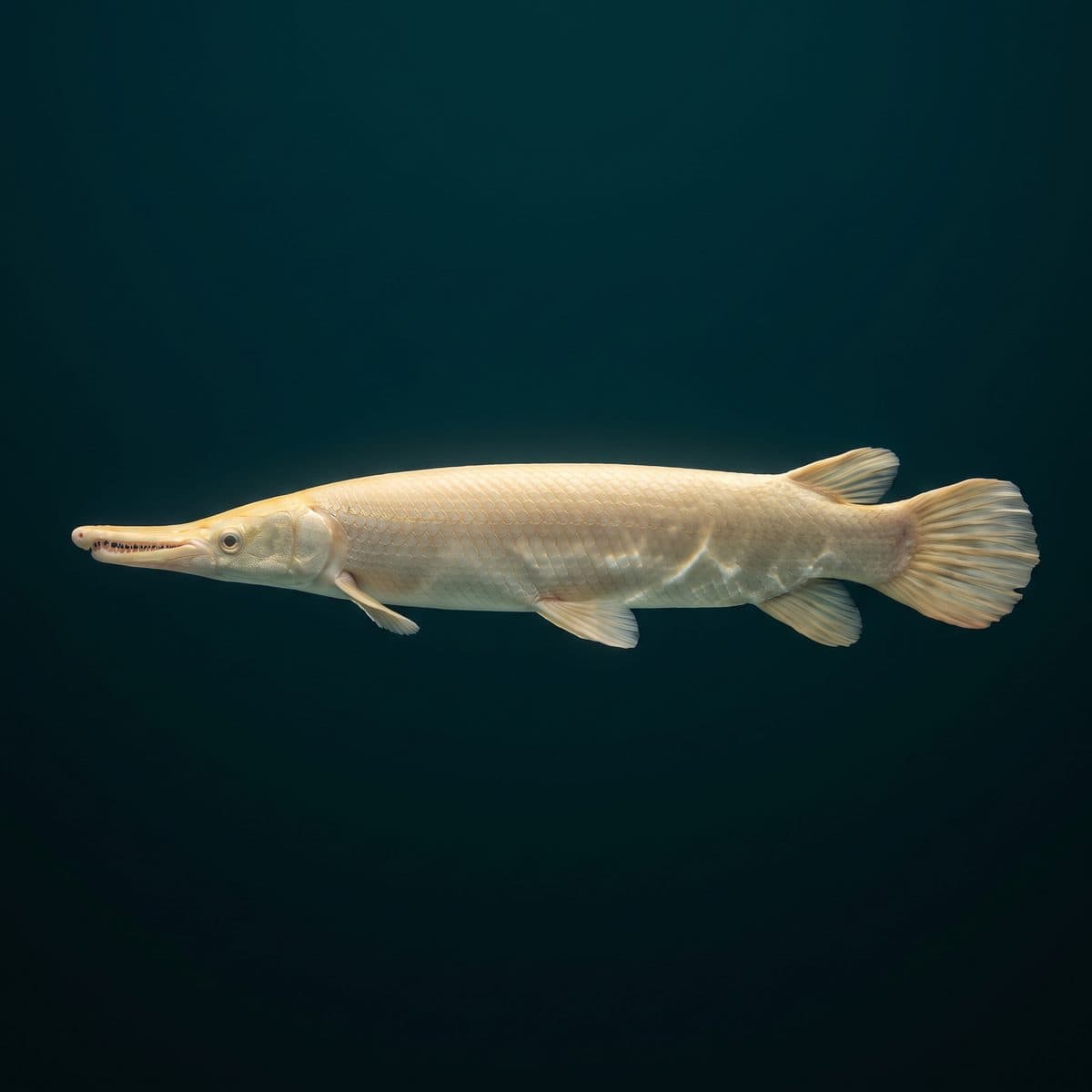
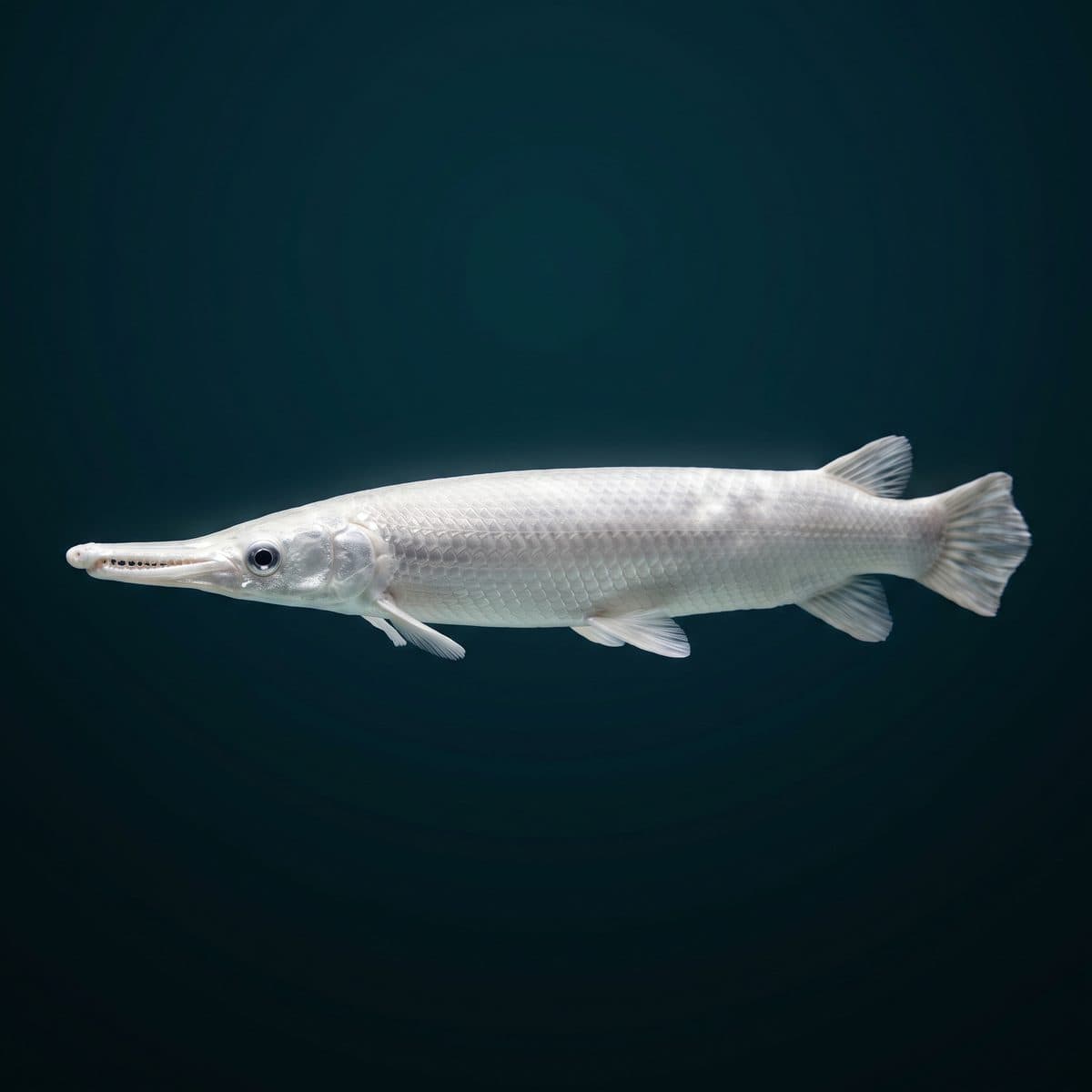
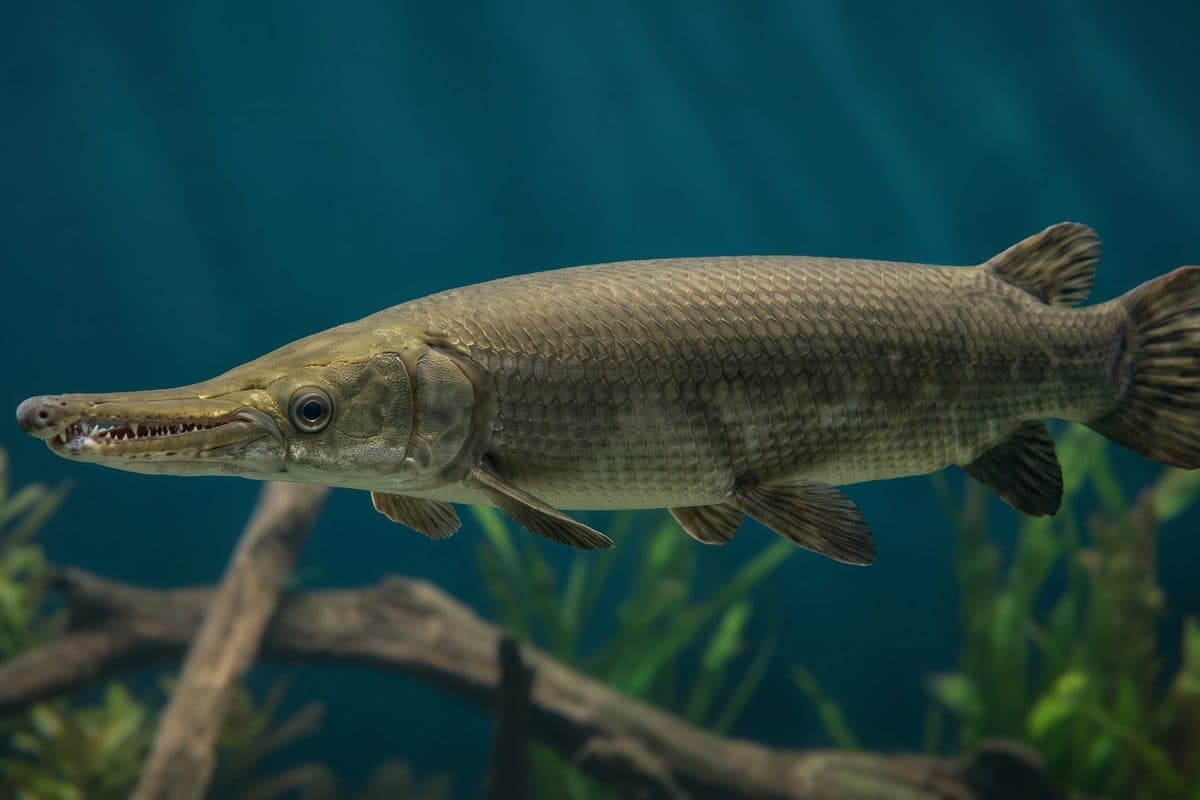
The Alligator Gar's appearance is unmistakable:
- Snout: Broad and flattened, with two rows of large, conical teeth in the upper jaw — this "alligator" snout distinguishes it from other gar species, which have narrower, more cylindrical rostrums.
- Scales: Thick, interlocking ganoid scales composed of ganoine (an enamel-like substance over bone). These scales are so tough that Native Americans used them as arrowheads and tools.
- Colour: Olive to dark brown dorsally, fading to lighter flanks and a white belly. Juveniles display bold black spots on the body and fins that fade with age.
- Air breathing: The vascularised swim bladder functions as a primitive lung, allowing Alligator Gar to gulp air at the surface. This adaptation enables them to survive in oxygen-depleted waters where other fish would perish.
Tank Requirements
This is where most Alligator Gar keeping plans fall apart. Juveniles are small (15–20 cm / 6–8 inches when sold) and manageable in standard aquariums, but they grow rapidly — reaching 30–60 cm (1–2 feet) within the first year and 90–120 cm (3–4 feet) by year three.
- Juvenile (under 30 cm): 125-gallon tank minimum. This is temporary housing — plan for upgrades.
- Sub-adult (30–90 cm): 300–500 gallon tank. Custom-built or stock tanks.
- Adult (90+ cm): 1,000+ gallons. Realistically, this means an indoor pond, custom plywood tank with viewing window, or dedicated fish room with stock tanks.
Filtration: Massive — turnover of 4–6× the total volume per hour using commercial-grade sump filtration, pond filters, or multiple large canister filters. Alligator Gar are surprisingly clean for their size (they don't eat daily once adult), but their bioload during feeding is enormous.
Décor: Minimal. Open swimming space is the priority. Large pieces of driftwood or smooth boulders for structure, but nothing that restricts turning radius. Gar need to be able to turn around comfortably — the tank must be at least 1.5× the fish's body length in its shortest dimension.
Water Parameters
Alligator Gar are among the most adaptable freshwater fish regarding water chemistry:
- Temperature: 60–84 °F (16–29 °C). They tolerate a wide thermal range but are most active and feed most readily at 72–80 °F (22–27 °C).
- pH: 6.5–8.0. Highly adaptable.
- Hardness: Not critical — adapts to soft through hard water.
- Salinity: Tolerates brackish conditions up to 15 ppt, though this is unnecessary in captivity.
Diet & Feeding
Alligator Gar are ambush predators that feed primarily on fish, crustaceans, and occasionally small mammals and waterfowl in the wild. In captivity:
- Juveniles: Live or frozen silversides, lance fish, shrimp, and smelt. Feed daily.
- Sub-adults: Whole frozen fish (tilapia fillets, smelt, sardines), large shrimp, and crayfish. Feed every 2–3 days.
- Adults: Whole frozen fish, large shrimp, and occasional fresh-caught fish. Adults may only feed once or twice per week — Alligator Gar have slow metabolisms and will naturally reduce feeding frequency as they grow.
Never use live feeder goldfish — they carry parasites, have poor nutritional value, and introduce disease risk. Frozen, thawed whole fish are the safest and most nutritious option.
Behaviour
Alligator Gar are ambush predators — they spend most of their time hovering motionless near the surface or mid-water, then strike with explosive speed when prey comes within range. This means they are not active swimmers in the traditional sense; most of their time is spent in a quiet, watchful state. Surface breathing is normal and should be expected — gar will regularly rise to gulp air, even in well-oxygenated water.
Despite their fearsome appearance, Alligator Gar are generally not aggressive toward tank mates they cannot eat. They coexist well with other large species — large catfish, other gar species, large cichlids — provided all fish are too large to be swallowed. However, anything that fits in the gar's mouth will eventually be eaten.
Legal Considerations
Alligator Gar ownership is restricted or prohibited in several jurisdictions due to their invasive potential and large adult size:
- United Kingdom: Not currently restricted, but may require a licence depending on local authority interpretation of non-native species regulations.
- Several US states prohibit or restrict private ownership of Alligator Gar.
- Australia, New Zealand, and some European countries prohibit the species entirely.
Always verify your local and national regulations before purchasing. The Fish Collection ships Alligator Gar only to jurisdictions where private keeping is legal and will require verification of appropriate facilities.
Growth Rate & Lifespan Commitment
If there's one thing to understand before buying an Alligator Gar, it's the sheer scale of the commitment — in both size and years. These are among the fastest-growing freshwater fish you can buy. A 15–20 cm juvenile can add 30 cm or more in its first year given good feeding and warmth, reaching 60–90 cm within two to three years. The tank that housed it as a cute baby becomes hopelessly inadequate in months, not years.
Then there's the lifespan. Alligator Gar are extraordinarily long-lived: wild fish over 50 years old are documented, and captive fish in proper facilities can realistically live 50 years or more. That's not a pet — it's a multi-decade responsibility that will likely outlast your current home, and quite possibly need to be written into your future plans.
Put those two facts together and the picture is stark. You're taking on an animal that will grow to 1.2–1.8 metres or more, needs a 1,000+ gallon system as an adult, and may live longer than a dog, a cat, and several subsequent pets combined. This is precisely why so many Alligator Gar end up abandoned, released into unsuitable waters, or surrendered to public aquaria that can't take them. Go in with your eyes fully open, or don't go in at all.
Health & Common Problems
Alligator Gar are remarkably tough — their thick ganoid armour and air-breathing ability make them resistant to many issues that trouble other fish. Most health problems in captivity are self-inflicted through housing or diet rather than disease:
- Snout and jaw damage: The most common injury. A gar that spooks in a too-small tank can smash its snout into the glass, causing abrasions that may become infected. Adequate length and open space are the prevention.
- Nutritional disease from feeders: Live feeder goldfish are nutritionally poor, high in fat, and a classic route for introducing parasites and disease. They can cause fatty liver and thiamine deficiency over time. Use whole frozen fish and shrimp instead.
- Poor water quality: Their large size means a large bioload, and neglected water leads to fin and skin infections. Heavy filtration and regular water changes are essential.
- Ich and parasites: Less common thanks to their armour, but possible. As primitive fish they can be sensitive to some medications, so treat carefully.
Because they can breathe air, gar will survive conditions that would kill most fish — but "surviving" isn't "thriving." The keepers who lose Alligator Gar almost always do so to undersized tanks (causing chronic stress and injury) or poor diet, not to disease. Give them space, clean water, and proper food, and they're nearly indestructible.
Handling & Safety
An adult Alligator Gar is a genuinely large, powerful animal with a mouthful of needle teeth, and handling one demands respect and preparation — though not fear. First, the reassuring part: despite their fearsome look, there are no confirmed records of Alligator Gar attacking people, and they're not aggressive toward their keepers. The teeth are built to grip slippery fish, not to bite defensively.
That said, a startled or thrashing gar can injure you by accident, and their bony jaws and sharp scales can cause cuts. Never put your hands near the mouth during feeding, and use long feeding tongs to offer food. When you need to move a large gar — for maintenance or transport — it's a two-person job with a large, soft, purpose-made sling or tub, never a standard net that its teeth and gill plates will shred.
One point that's easy to overlook: the eggs of gar are toxic to humans and other animals if eaten, a natural defence against predators. This only matters if you ever breed them, but it's worth knowing. Overall, the real risk with an Alligator Gar isn't to you — it's the danger of the fish injuring itself in a cramped space, and the ethical and legal problems of an animal that quickly outgrows almost any private setup.
Is an Alligator Gar Right for You?
For the overwhelming majority of aquarists, the honest answer is no — and that's not gatekeeping, it's arithmetic. An Alligator Gar needs more space, money, and time than almost any private keeper can provide. But for the rare few with the right infrastructure, it's an unforgettable animal.
An Alligator Gar could be for you if you:
- Own or can build an indoor pond or custom tank of 1,000+ gallons.
- Live where private ownership is legal, and can prove suitable facilities.
- Accept a 50-year-plus commitment to an animal that reaches 1.2–1.8 metres or more.
- Have the budget for the tank, filtration, heating, and food a monster fish demands.
It's not for you if you:
- Keep standard aquariums — no normal tank, however large, houses an adult long-term.
- Want the impressive juvenile without a concrete plan for the 1.5-metre adult.
- Aren't certain you can commit for decades, or that ownership is legal where you live.
If you can't say yes to every point above, a smaller gar species — or admiring these giants at a public aquarium — is the responsible choice. The saddest outcome in this hobby is a beautiful, decades-old fish that no one can house. Don't start that story unless you can finish it.