Discus Nutritional Needs
Discus are carnivore-leaning omnivores in the wild, feeding on invertebrates, insect larvae, small crustaceans, and plant detritus in the slow-moving blackwater rivers of the Amazon basin. In captivity, they need a high-protein diet (minimum 45 % crude protein) with balanced fat content (8–12 %), supplemented with vitamins and carotenoids for colour development.
The single biggest nutritional challenge with Discus is feeding enough without fouling the water. Discus are slow, deliberate feeders — they approach food cautiously, mouth it, and may reject items several times before consuming them. This means food sits in the water column longer than with aggressive feeders, releasing ammonia and nutrients that degrade water quality. The solution is frequent small meals rather than infrequent large ones, combined with prompt removal of any food not consumed within 5 minutes.
Staple Foods
Pellets and Granules
High-quality Discus-specific granules are the ideal staple food. They provide consistent, balanced nutrition in a form that Discus learn to accept eagerly. Top options include:
- Hikari Discus Bio-Gold: Colour-enhancing formula with astaxanthin, 45 % protein. The industry standard.
- Sera Discus Granules: Slowly sinking granules that suit the Discus feeding style. Available in colour-enhancing and growth-promoting formulas.
- Northfin Discus Formula: Whole krill and herring meal base, no fillers or artificial colours. 44 % protein.
- New Life Spectrum Discus: Whole Antarctic krill base with garlic for palatability and immune support.
Granules should constitute 40–60 % of the diet. They are the most practical way to ensure consistent nutrition, and their predictable sinking rate allows Discus to feed at their preferred mid-water level.
Frozen Foods
Frozen foods provide dietary variety and stimulate natural feeding behaviour:
- Bloodworm: The most universally accepted Discus food. Rich in protein but relatively low in nutritional density — use as a supplement (2–3 times per week), not a staple. Rinse frozen bloodworm in a fine-mesh net before feeding to remove phosphate-laden packing liquid.
- Brine shrimp: Good variety food accepted by virtually all Discus. Adult brine shrimp are lower in protein than bloodworm but provide carotenoids for colour. Enriched brine shrimp (Hikari, San Francisco Bay Brand) are nutritionally superior.
- Mysis shrimp: Higher in protein and fatty acids than brine shrimp. Excellent supplementary food, especially for conditioning breeding pairs.
- White mosquito larvae: Outstanding natural food if available frozen. High in protein, eagerly accepted, and stimulates active feeding behaviour.
Live Foods
- Blackworms: The premium live food for Discus. Rich in protein, stimulate vigorous feeding response, and are excellent for conditioning breeders. Source from reputable suppliers — blackworms from questionable sources can introduce parasites. Rinse thoroughly in clean water before feeding.
- Daphnia: Small crustaceans that provide roughage and stimulate natural foraging behaviour. Culture your own or purchase from aquarium suppliers.
- Newly hatched brine shrimp (Artemia nauplii): Essential for raising Discus fry. Rich in fatty acids and small enough for fry consumption. Not practical as a staple for adults but excellent as an occasional treat.
Beefheart Mix Recipe
Beefheart mix is a traditional Discus food that remains popular for its high protein content and palatability. The key is preparation — raw beefheart must be trimmed of all fat and sinew, as these components are indigestible for Discus and pollute the water.
Basic beefheart mix recipe:
- Purchase lean beef heart from a butcher. Trim all visible fat, sinew, and connective tissue — this step is critical.
- Cut into chunks and blend in a food processor until smooth.
- Add supplementary ingredients: spirulina powder (1 tablespoon per 500 g), paprika (1 teaspoon per 500 g for carotenoids), garlic powder (1 teaspoon per 500 g for palatability and immune support), and a multivitamin supplement.
- Optional additions: frozen shrimp (blended), frozen spinach (blended), and fish meal.
- Spread the mix thinly (3–5 mm) on a sheet of baking parchment and freeze flat.
- Once frozen, break into feeding-sized pieces. Store in freezer bags for up to 3 months.
Feed beefheart mix 2–3 times per week. It is a powerful growth food — many professional Discus breeders use beefheart as the primary grow-out food for juveniles. However, it fouls water faster than pellets, so increase water change frequency on beefheart feeding days.
Feeding Schedule by Age
Juvenile Feeding (Under 8 cm)
Juvenile Discus (under 8 cm / 3 inches) are in their critical growth phase. Underfeeding during this period produces permanently stunted adults with poor body proportions — damage that cannot be reversed later.
- Frequency: 3–5 small meals per day. Space meals evenly across the daylight period.
- Best foods: Beefheart mix (primary growth food), high-protein granules, frozen bloodworm, and live blackworms.
- Water changes: Twice daily (25 % each) in dedicated grow-out tanks — frequent feeding demands frequent water changes. Professional breeders often maintain a continuous slow-drip water change system for juvenile tanks.
- Temperature: Raise to 30–31 °C to maximise metabolism and growth rate.
Adult Feeding
Adult Discus (over 12 cm / 5 inches) have slower metabolisms and lower growth demands:
- Frequency: 2–3 meals per day.
- Staple: High-quality Discus granules (40–60 % of diet).
- Supplements: Frozen bloodworm, brine shrimp, mysis shrimp, and beefheart mix (2–3 times weekly each).
- Portion size: Feed only what the group consumes within 5 minutes. Discus have small stomachs relative to their body size — several small meals are always better than one large one.
Colour-Enhancing Foods
Discus coloration is influenced by genetics, water quality, stress levels, and diet. Dietary colour enhancement works through carotenoid pigment accumulation:
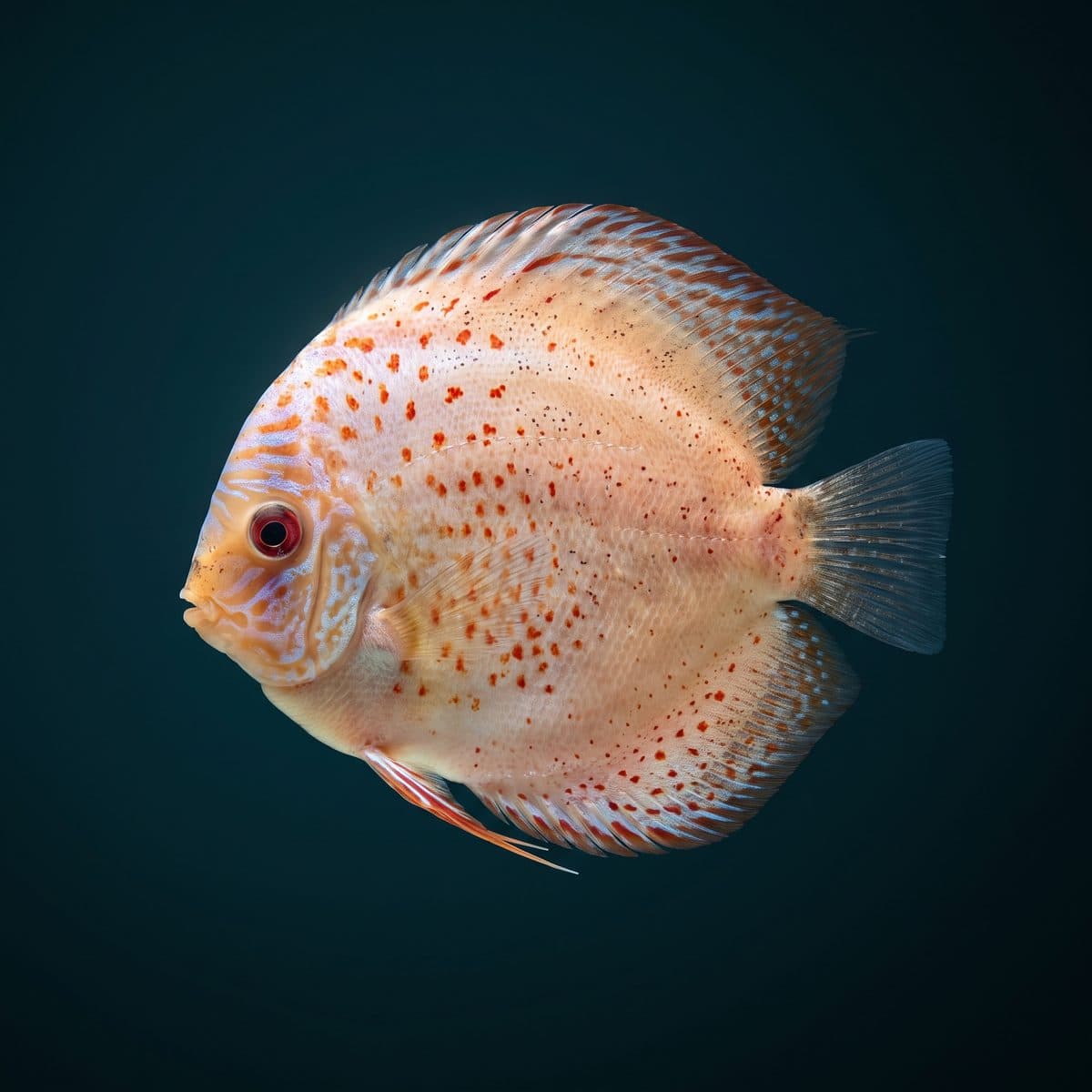
- Astaxanthin: The primary red-orange pigment. Found in shrimp, krill, and colour-enhancing pellets. Intensifies red, orange, and yellow tones in Pigeon Blood, Red Melon, and Red Turquoise varieties.
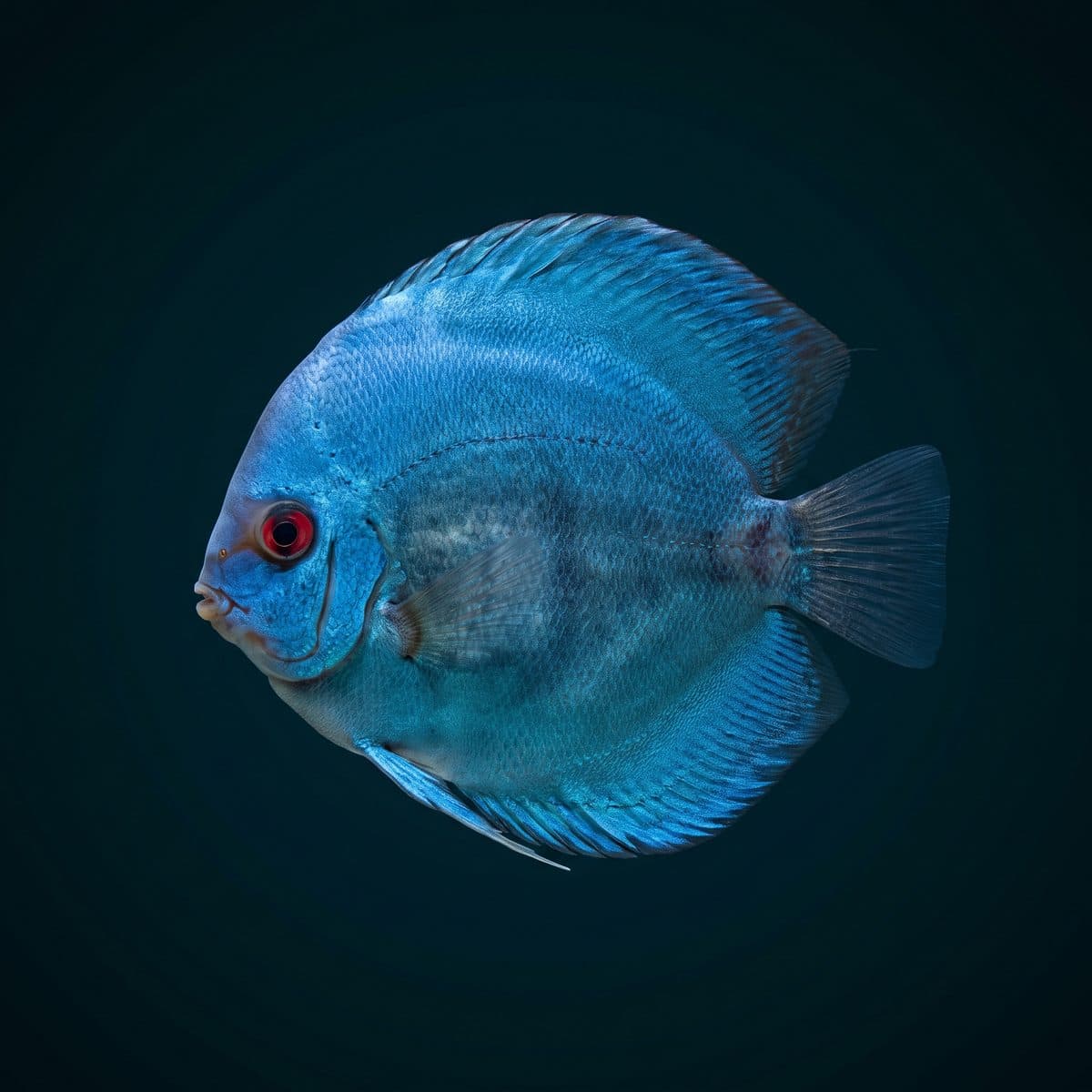
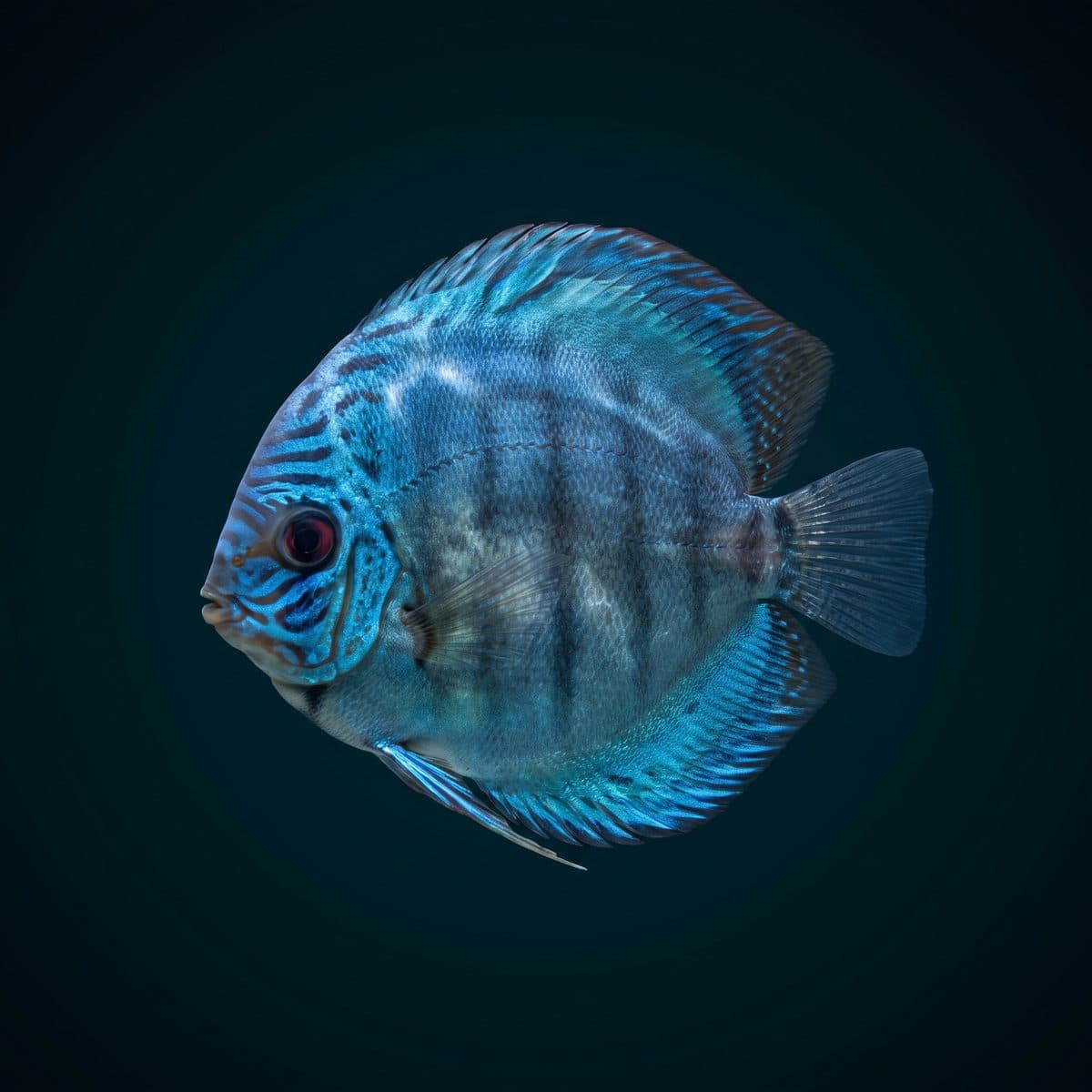
- Spirulina: Blue-green algae rich in phycocyanin and beta-carotene. Enhances blue and turquoise tones. Available as an additive in pellets or as a stand-alone powder mixed into beefheart.
- Paprika: Contains capsanthin and capsorubin — carotenoids that support red pigment deposition. Added to beefheart mix at 1 teaspoon per 500 g.
Colour enhancement through diet takes 4–8 weeks of consistent feeding to become visible. There are no shortcuts — artificial colour-injection practices (common in some Southeast Asian fish farms) produce temporary results that fade within weeks and harm the fish.
Foods to Avoid
- Tubifex worms: Commonly contaminated with bacteria and parasites from the sewage-rich environments where they are harvested. Blackworms are a safer live alternative.
- Feeder fish: Parasite and disease risk far outweighs any nutritional benefit. Discus do not naturally eat other fish as a staple.
- Cheap, filler-heavy pellets: Budget fish foods with wheat flour or soy as the primary ingredient provide inadequate protein and cause digestive issues. Invest in Discus-specific formulations with fish or krill meal as the first ingredient.
- Bread, lettuce, and other human scraps: No nutritional value for Discus and degrade water quality rapidly.
Common Feeding Mistakes
- Underfeeding juveniles: The most consequential mistake. Stunted juveniles become permanently undersized, poorly proportioned adults. Feed juveniles 3–5 times daily without fail.
- Overfeeding adults: Adult Discus fed excessively develop fatty liver disease and become susceptible to bacterial infections. Two to three moderate meals daily is sufficient.
- Single-food diets: Feeding only bloodworm (a common habit) creates nutritional deficiency. Rotate through granules, frozen foods, beefheart, and live foods for complete nutrition.
- Leaving uneaten food: Food decomposing in the tank spikes ammonia and nitrate. Remove all uneaten food within 5 minutes of each feeding.
- Feeding before water changes: Feed after water changes, not before. Water changes stress Discus slightly — feeding beforehand can cause regurgitation. Wait 30 minutes post-water-change before offering food.
For tank sizing, water parameters, and compatible tank mates, see our Discus tank size guide, water parameters guide, and tank mates guide. Browse The Fish Collection's Discus collection for premium captive-bred varieties.