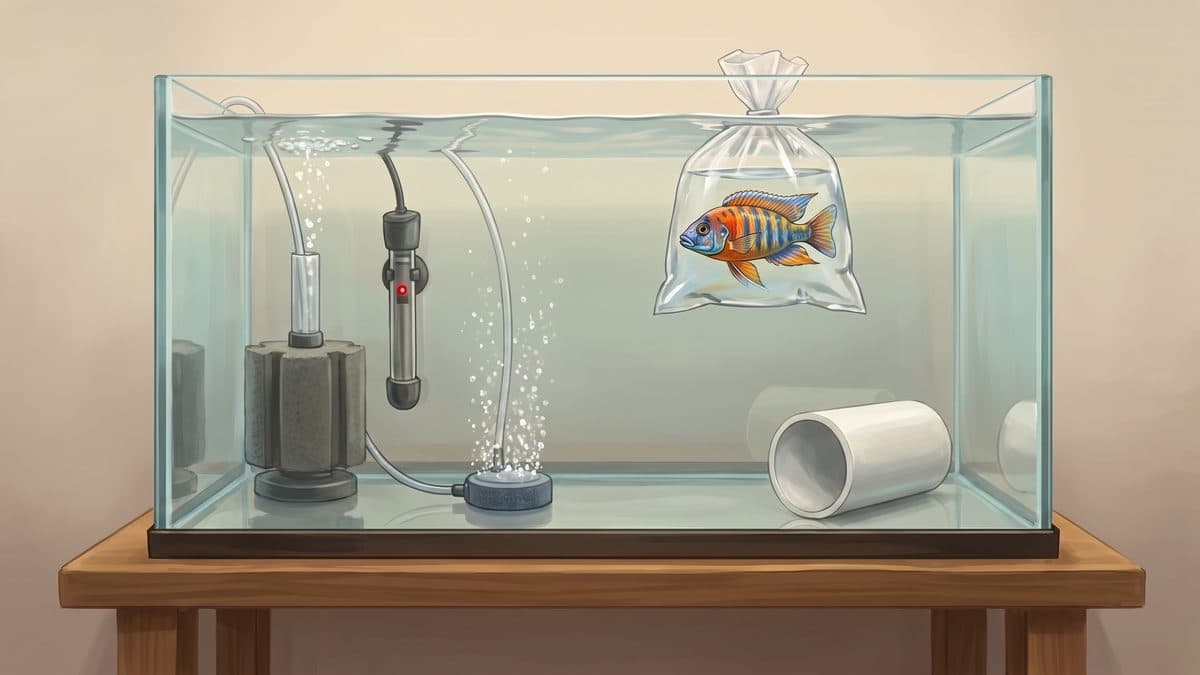
Why Quarantine Matters
Quarantine is the single most effective disease prevention practice in the aquarium hobby. Every new fish — regardless of source — is a potential vector for parasites, bacteria, viruses, and fungi that can devastate an established tank. Fish from wholesalers pass through multiple holding systems, each with hundreds of other fish from different origins, before reaching your local shop. Even visibly healthy fish can carry subclinical infections that become active under the stress of transport and acclimatisation.
A 30-day quarantine allows latent diseases to manifest while the fish is isolated, protecting your display tank inhabitants. It also provides a controlled environment to treat any issues that appear without medicating the entire display — preserving your biological filtration, plants, and invertebrates.
The cost of a basic quarantine setup (10-gallon tank, sponge filter, heater) is far less than the cost of losing an entire display tank to a disease outbreak. Quarantine is not optional for serious fishkeepers — it is a fundamental practice.
Quarantine Tank Equipment
- Tank: 10–20 gallons. A 10-gallon is adequate for small community fish; 20 gallons for larger species. For very large fish (Arowana, stingrays), a 40–75 gallon tub or stock tank works.
- Filter: Pre-cycled sponge filter. Sponge filters provide biological filtration without intakes that can injure stressed fish, and they continue functioning during medication (unlike HOBs with carbon cartridges). Keep a spare sponge in your display tank's filter at all times so you always have a pre-cycled sponge ready.
- Heater: Adjustable heater set to match your display tank temperature. Having an adjustable unit allows you to raise temperature for heat-based treatments (e.g., 86 °F for Ich).
- Hides: PVC pipes or fittings. These are non-porous, easy to sterilise, and provide shelter that reduces stress. Two or three pieces are sufficient.
- Air pump and airstone: Supplemental aeration is important during medication, as many treatments reduce dissolved oxygen.
- Lid: Essential. Stressed, newly arrived fish jump.
- No substrate: Bare bottom allows easy observation of faeces (for parasite assessment), immediate cleanup of waste, and simple sterilisation between uses.
- Lighting: Dim or ambient room light only. Bright lighting adds stress.
Cycling a Quarantine Tank
The quarantine tank must be cycled before adding fish. The easiest method: keep a sponge filter running permanently in your display tank's sump or clipped inside the tank. When you need the quarantine tank, transfer this pre-colonised sponge. It carries an established bacterial colony capable of processing ammonia immediately.
If you do not have a pre-cycled sponge, cycle the quarantine tank using bottled bacteria (Fritz Zyme 7, Seachem Stability) combined with a source of ammonia for 7–14 days before adding fish. Test daily until ammonia and nitrite both read 0 ppm with ongoing ammonia input.
Acclimating Fish into Quarantine
Use the drip acclimation method for the best results. Float the sealed bag in the quarantine tank for 15 minutes to equalise temperature, then open the bag and set up a drip line using airline tubing with a knot or valve to control flow rate. Drip tank water into the bag at 2–4 drops per second for 45–60 minutes, doubling the bag water volume. Then gently net the fish into the quarantine tank — never pour bag water into your tank, as it may contain ammonia, pathogens, and medication residues from the store's systems. For full acclimation methods, see our acclimation guide.
30-Day Observation Protocol
Week One: Critical Observation
The first week is when most transport-stress-related diseases appear:
- Observe the fish 2–3 times daily for 5–10 minutes each session.
- Watch for: white spots (Ich), gold dust (velvet), fin erosion, flashing (rubbing against surfaces), clamped fins, rapid breathing, white stringy faeces (internal parasites), loss of colour, bloating, or refusal to eat.
- Test water daily: ammonia, nitrite, pH. Perform 25 % water changes if any parameter is off.
- Begin feeding small amounts of high-quality food after 24 hours. Note whether the fish eats and what its faeces look like.
Weeks Two Through Four
- Continue daily observation (once daily is sufficient after week one if no issues).
- Test water every 2–3 days.
- Perform 25 % water changes twice weekly.
- Watch for slower-developing conditions: hole-in-the-head (hexamita), wasting, persistent fin damage, abnormal swimming, or body lesions.
- If the fish remains healthy, eating, and active for the full 30 days with no signs of disease, it is ready for the display tank.
Prophylactic Treatment Protocol
Many experienced aquarists run a preventive medication course during quarantine rather than waiting for symptoms. The standard "quarantine trio" covers the most common hitchhiker diseases:
- Praziquantel (PraziPro or Hikari PraziPro): treats internal and external parasitic worms — flukes, tapeworms, and flatworms. Dose per label and maintain for 5–7 days.
- Metronidazole (Seachem MetroPlex): treats internal protozoan parasites — Hexamita, Spironucleus — which cause hole-in-the-head and internal wasting. Dose per label for 7 days, ideally soaked into food using Seachem Focus as a binder.
- Broad-spectrum antibiotic (Seachem Kanaplex or API General Cure): covers bacterial infections and remaining parasites. Dose per label for one full course.
Stagger the treatments: praziquantel in week one, metronidazole in week two, antibiotic in week three. This avoids overloading the fish with multiple medications simultaneously. Perform a 30 % water change between each treatment phase.
Prophylactic treatment is particularly recommended for wild-caught fish, fish from unknown sources, and species going into tanks with high-value inhabitants (Arowana, Discus, stingrays).
When to Medicate Reactively
If symptoms appear during quarantine, treat immediately — the quarantine tank is specifically designed for this:
- White spots (Ich): Raise temperature to 86 °F, treat with Ich-X. See the Ich treatment guide.
- Fin rot: Improve water quality, add salt or antibiotics depending on severity. See the fin rot guide.
- Flashing with no visible spots: Likely gill flukes. Treat with praziquantel.
- White, stringy faeces: Internal parasites. Treat with metronidazole soaked into food.
- Velvet (gold dust): Raise temperature, treat with copper-based medication (Seachem Cupramine). Blackout the tank.
Reset the 30-day clock after any treatment course completes. The fish must be symptom-free for 30 days from the end of the last treatment before moving to the display tank.
Moving Fish to the Display Tank
After 30 symptom-free days:
- Match quarantine tank parameters to the display tank (temperature, pH, hardness). Adjust over 2–3 days if needed.
- Net the fish from the quarantine tank and place it in the display tank. Do not pour quarantine water into the display.
- Observe the fish in the display tank closely for the first 48 hours. Ensure it is accepted by existing inhabitants and finds feeding opportunities.
- Sterilise the quarantine tank with a dilute bleach solution (1 part household bleach to 10 parts water), rinse thoroughly, and allow to dry. The tank is now ready for the next arrival.
Quarantine is a discipline. It requires patience — 30 days feels like a long time when a beautiful new fish is sitting in a bare tank instead of your planted display. But one Ich outbreak or one parasitic infestation that wipes out a carefully built community teaches the lesson permanently. Quarantine every time, without exception.