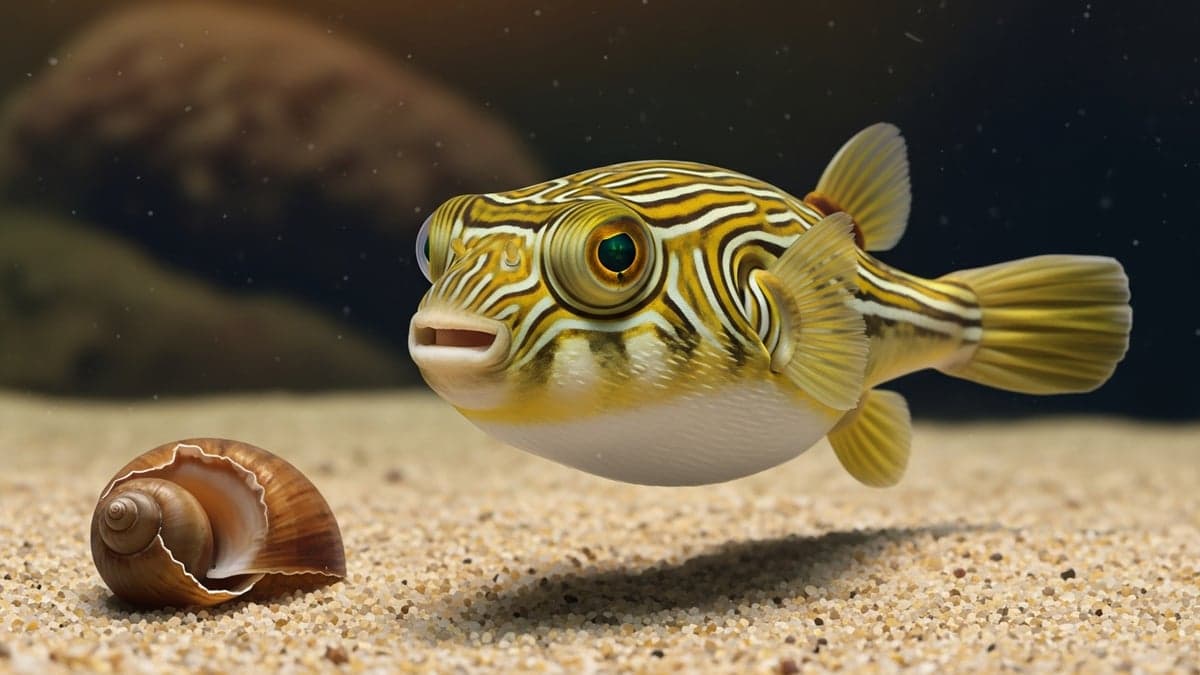
What Is the Fahaka Pufferfish?
The Fahaka Pufferfish (Tetraodon lineatus), also known as the Nile Puffer or Lined Puffer, is a large freshwater pufferfish native to the Nile River basin and associated waterways across North and West Africa. Adults reach 40–45 cm (16–18 inches), making the Fahaka the second-largest freshwater pufferfish after the MBU Pufferfish (Tetraodon mbu).
Fahakas are intelligent, personable, and interactive — they recognise their keepers, beg for food, and display a range of colour changes reflecting mood and stimulus. They are also among the most aggressive freshwater fish in the hobby, with a bite powerful enough to remove human fingers and a temperament that makes cohabitation with any other species essentially impossible. This combination of charisma and danger is what makes Fahaka keeping compelling — and why it demands experienced, dedicated aquarists.
Tank Setup
Tank Size and Dimensions
A 125-gallon (475-litre) tank is the minimum for an adult Fahaka. A 6-foot (180 cm) tank length provides adequate swimming space for a fish that patrols actively. Fahakas are not inactive ambush predators — they cruise their territory continuously, investigating every corner. A 150–180 gallon tank is preferred for full-sized adults.
Footprint matters more than height. A standard 125-gallon tank (72 × 18 × 22 inches) works well. Avoid tall, narrow tanks that waste volume above the pufferfish's typical swimming zone.
Filtration
Fahakas are extraordinarily messy eaters. Crushed shell fragments, uneaten food particles, and substantial waste production demand filtration rated for 10× tank volume turnover per hour. A sump is ideal; a pair of large canister filters (FX6-class) running in parallel is the next-best option.
Run activated carbon continuously to manage the odour from shellfish-heavy feeding. Replace carbon every 2–3 weeks. A UV steriliser (25–40 W) is a worthwhile addition to control bacterial blooms that can result from heavy bioload.
Substrate and Décor
Fine sand is the preferred substrate. Fahakas occasionally bury themselves partially in sand — a natural behaviour that should be facilitated, not prevented. Avoid gravel, which traps crushed shell debris and uneaten food.
Provide large, smooth rocks and driftwood for visual barriers and exploration. Fahakas are intelligent and benefit from environmental enrichment — rearranging décor periodically stimulates natural investigation behaviour. Avoid sharp or rough surfaces that could damage skin during puffing events (when the fish inflates as a stress response).
Live plants are generally destroyed. Fahakas bite everything, including plants, heaters, thermometers, and filter intakes. Use titanium heaters (glass heaters will be bitten and shattered) and protect equipment with heavy-duty guards.
Water Parameters
Fahakas are fully freshwater fish — despite occasional mislabelling as brackish species, they do not require salt:
- Temperature: 24–28 °C (75–82 °F)
- pH: 7.0–8.0
- Hardness: 10–20 dGH. Fahakas come from relatively hard, alkaline African waters.
- Ammonia/Nitrite: 0 ppm — pufferfish are scaleless and highly sensitive to dissolved waste.
- Nitrate: Below 20 ppm. Weekly 30–50 % water changes are the minimum.
Pufferfish lack scales and are therefore more sensitive to water quality degradation than scaled fish. What a cichlid might tolerate — a brief ammonia spike, elevated nitrate — can cause skin irritation, infection, and rapid decline in a Fahaka. Water quality must be impeccable at all times.
Feeding and Beak Maintenance
Fahaka Pufferfish possess a fused beak (four dental plates) that grows continuously throughout their lives, similar to rodent incisors. If the beak is not worn down through regular consumption of hard-shelled prey, it overgrows and prevents the fish from eating — a condition that requires manual trimming under anaesthesia and is stressful for both fish and keeper.
Essential Hard-Shelled Foods
Hard-shelled foods are not optional — they are the single most important aspect of Fahaka husbandry:
- Snails: Malaysian Trumpet Snails, Ramshorn Snails, and Mystery Snails. Fahakas crush the shell and consume the entire animal. Snails should be offered several times per week — ideally at every feeding. Many keepers maintain a separate snail-breeding tank specifically to supply their Fahaka.
- Mussels and clams: Whole, shell-on. Fahakas crack them open with their beak. Fresh or frozen (thawed) mussels from the seafood counter are readily available and affordable.
- Crab and crayfish legs: Excellent beak maintenance and high in protein. Shell-on shrimp works for juveniles.
- Cockles: Small enough for regular feeding, hard enough to maintain the beak.
Supplementary Foods
- Frozen shrimp and prawns: Whole, with shell when possible.
- Earthworms: Excellent nutrition, eagerly accepted.
- Frozen fish fillets: Tilapia, smelt, silversides — occasional variety, but should not replace shelled foods.
Feed adults every other day. Fahakas are prone to obesity, and their powerful begging behaviour (splashing, "staring," and following the keeper along the tank) tricks many owners into overfeeding. A lean Fahaka with a slightly concave belly profile when viewed from above is healthier than a round one.
For more on pufferfish nutrition, see our pufferfish diet and feeding guide.
Temperament and Tank Mates
The answer to "what can I keep with my Fahaka?" is nothing. Fahaka Pufferfish are solitary predators with extreme aggression toward any other living thing in their territory. They will attack and kill:
- Other pufferfish (including conspecifics)
- Large cichlids, catfish, and other robust fish
- Plecos (Fahakas have been documented biting through pleco armour)
- Invertebrates of any kind
There are anecdotal reports of Fahakas coexisting with specific individual tank mates for months or years before suddenly killing them. The aggression is not predictable or consistent — a Fahaka that ignores a Pleco for six months may one day decide to remove it. The risk is never worth taking.
The Fahaka's aggression is compensated by its interactivity. Keepers describe them as "aquatic dogs" — they respond to their owner's presence, follow movement outside the tank, perform for food, and display a range of mood-dependent colour changes (darkening when stressed, brightening when stimulated). A solitary Fahaka in a well-maintained tank is one of the most engaging fish in the hobby.
Common Health Issues
Beak Overgrowth
The most serious and common Fahaka health issue. An overgrown beak prevents feeding and will eventually starve the fish. Prevention through regular hard-shelled food is far preferable to treatment.
If the beak overgrows despite dietary efforts, it must be trimmed. This procedure requires clove oil anaesthesia and careful cutting with cuticle nippers — it is stressful for the fish and should be performed by an experienced aquarist or aquatic veterinarian. Preventing overgrowth through diet is always the priority.
Other common issues:
- Obesity: Fahakas are persistent beggars and will eat until their stomachs visibly distend if allowed. Overfeeding leads to fatty liver disease. Maintain a strict every-other-day feeding schedule for adults.
- Skin infections: Pufferfish lack scales, making their skin vulnerable to bacterial and fungal infection if water quality declines. Maintain zero ammonia, zero nitrite, and nitrate below 20 ppm at all times.
- Internal parasites: Wild-caught Fahakas frequently carry intestinal parasites. Prophylactic treatment with praziquantel upon acquisition is standard practice.
- Stress puffing: Fahakas inflate with water (not air) when stressed. Repeated inflation events can cause internal damage. Minimise stressors — sudden light changes, loud noises, and netting should be avoided.
Long-Term Commitment
Fahaka Pufferfish live 10–15 years in captivity with proper care. That is a decade or more of daily water management, twice-weekly water changes, maintaining a snail colony for food, and dedicating a 125+ gallon tank to a single fish that cannot share its space with anything.
This commitment is not for casual hobbyists. But for aquarists who appreciate intelligence, personality, and the challenge of maintaining a demanding predator, the Fahaka is deeply rewarding. They are available from specialist dealers — browse The Fish Collection's exotic fish collection for current availability, and see our Fahaka care guide for a quick-reference care sheet.