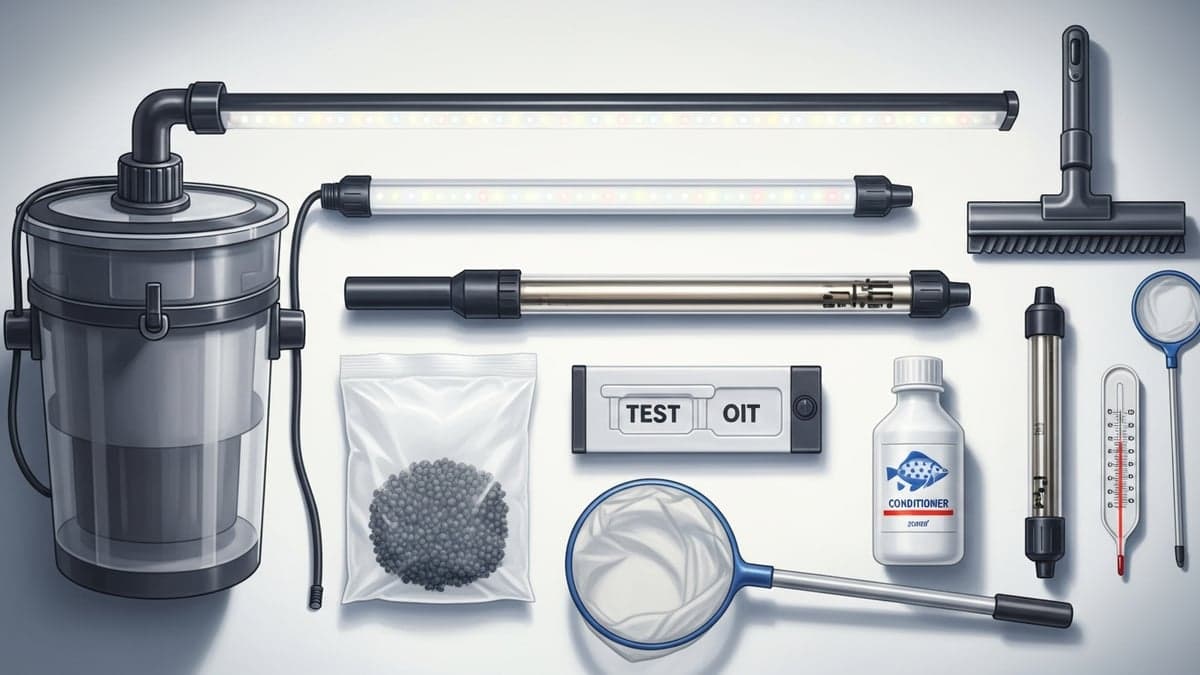
Aquarium Equipment Overview
A thriving aquarium is a life-support system, and every component — from filtration to lighting — plays a critical role in maintaining the stable, clean, oxygenated environment your fish need to survive and thrive. Cutting corners on equipment is the single most expensive mistake in the hobby, because cheap gear fails, and when it fails, fish die.
This guide covers the six essential equipment categories in order of importance: filtration, heating, lighting, water testing, substrate, and maintenance tools. For each, we provide sizing guidelines, brand recommendations, and budget tiers so you can build the right system for your tank and your wallet.
Filtration Systems
Filtration is the most important piece of equipment in your aquarium — it provides the three types of filtration that keep water healthy:
- Mechanical filtration: Physically removes particles (fish waste, uneaten food, plant debris) from the water column using foam pads, filter floss, or fine mesh.
- Biological filtration: Provides surface area for beneficial bacteria (Nitrosomonas and Nitrobacter) to convert toxic ammonia → nitrite → relatively harmless nitrate. This is the nitrogen cycle — the foundation of every successful aquarium.
- Chemical filtration: Uses activated carbon, Purigen, or specialty resins to remove dissolved organic compounds, tannins, medications, and odours.
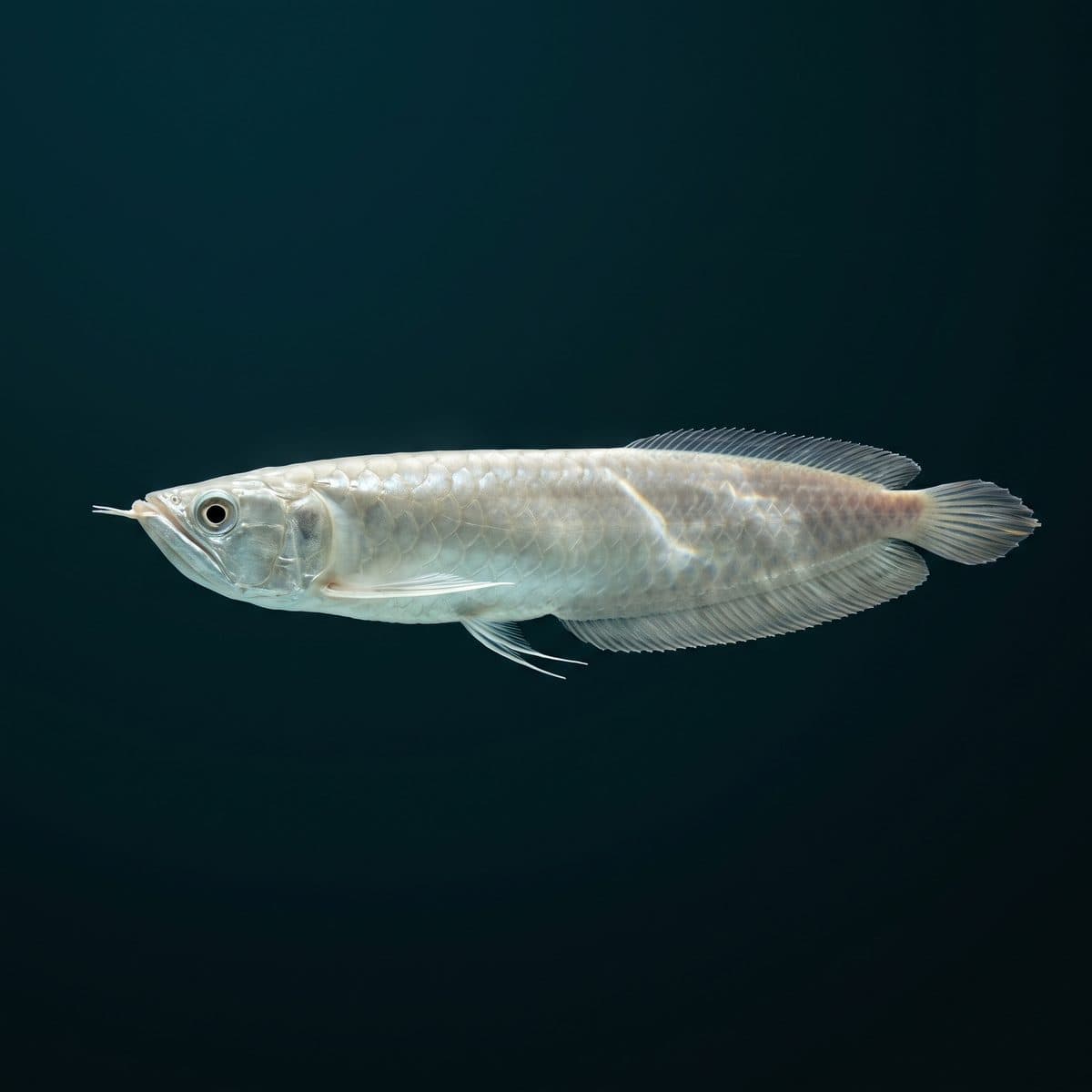
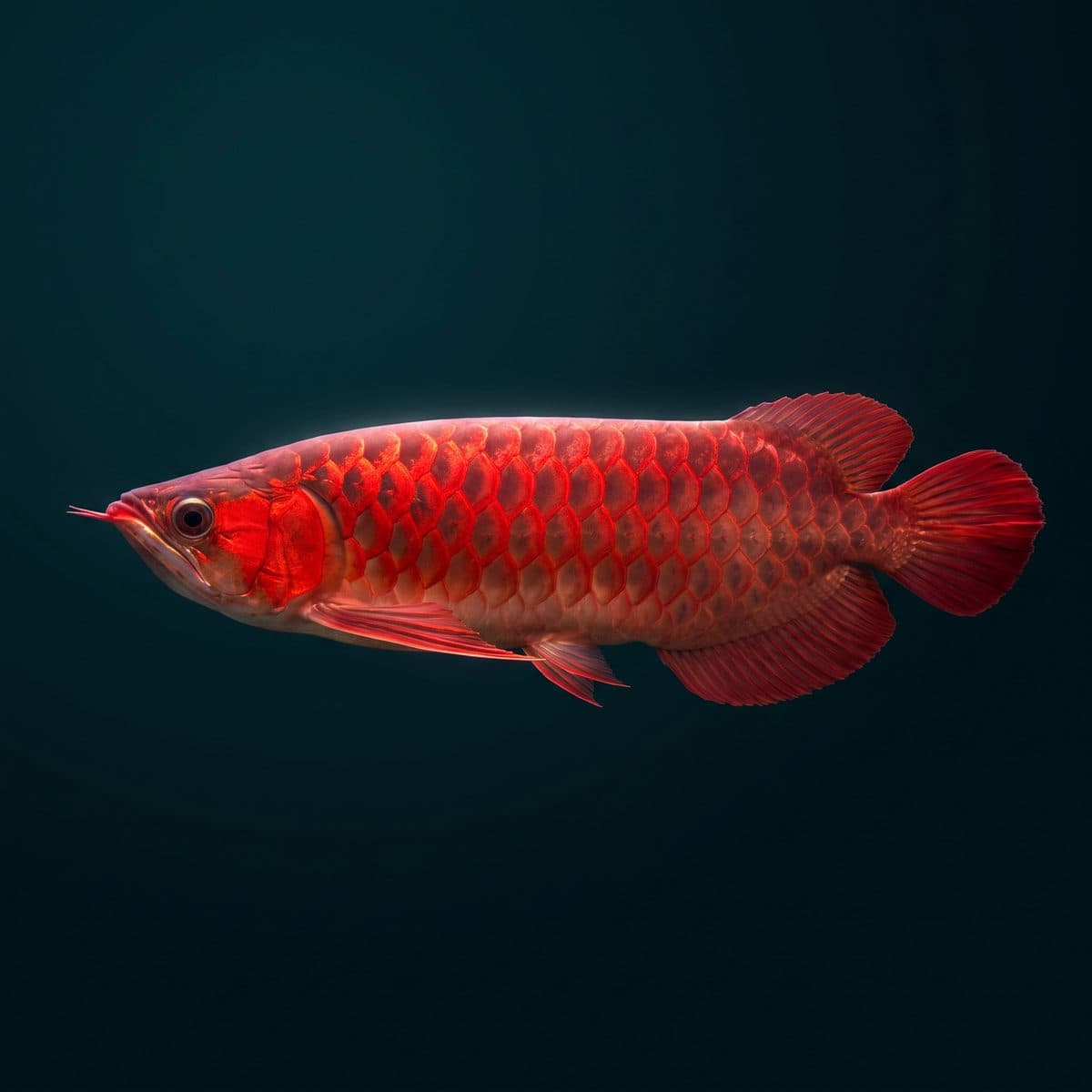
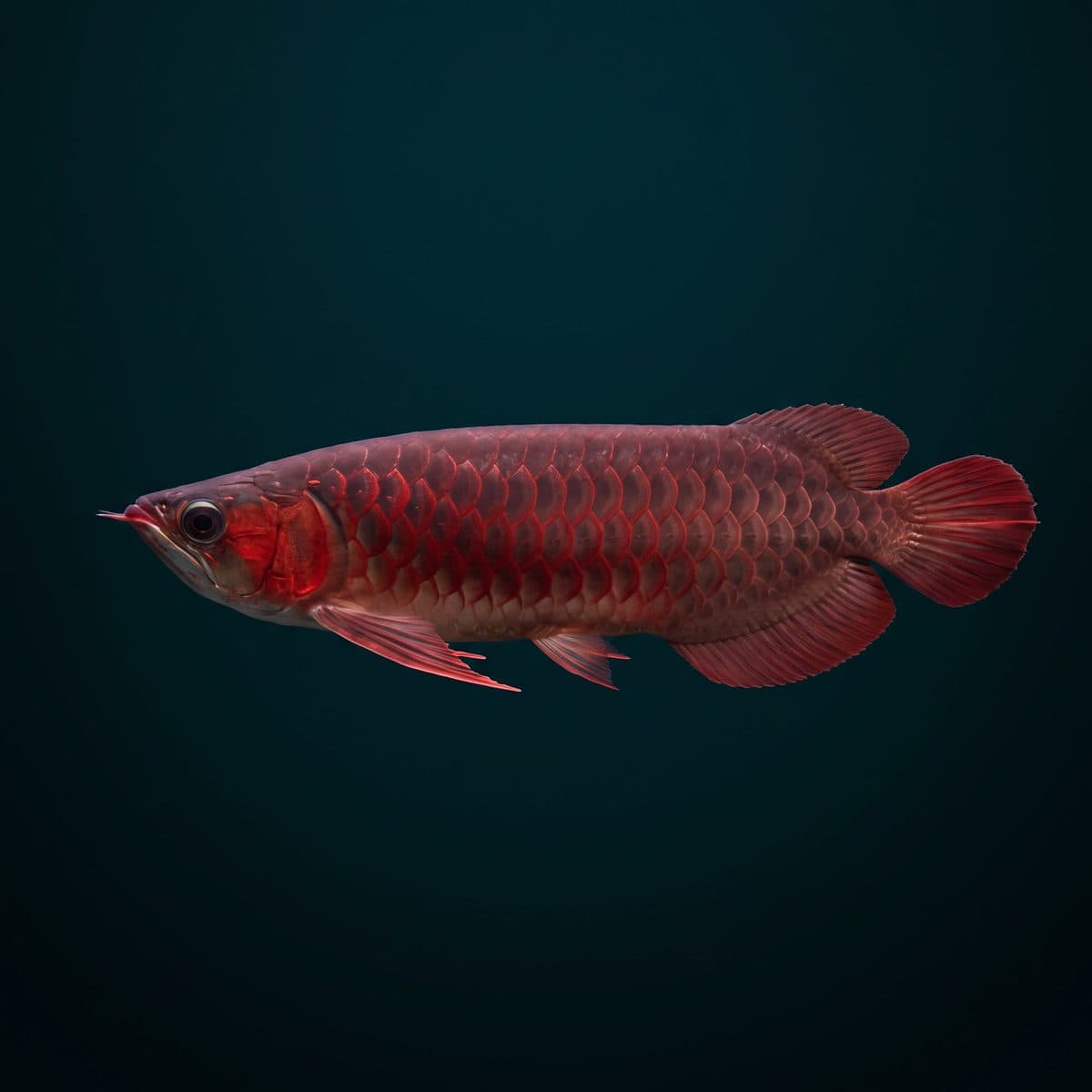
The general rule: filter turnover rate should be 4–10x your tank volume per hour. A 100-gallon tank needs a filter rated for 400–1,000 GPH (gallons per hour). For high-bioload species like Oscars, Arowanas, and Flowerhorns, aim for the higher end — 8–10x turnover.
Canister Filters
Canister filters are the workhorse of freshwater aquariums above 40 gallons. They sit below the tank, draw water through intake tubing, pass it through multiple media trays (mechanical → biological → chemical), and return clean water via a spray bar or output nozzle.
Top recommendations:
- Fluval FX4 (250 gal rated) / FX6 (400 gal rated): The industry standard for large tanks. The FX6 moves 925 GPH and holds 5.9 litres of media. Self-priming, built-in drain valve, and tank-mounted utility valve for easy water changes. Ideal for Oscar, Arowana, and large cichlid setups.
- Eheim Classic 2217 (159 gal rated): German-engineered reliability. Quiet operation, excellent biological filtration capacity, and a proven track record spanning decades. The go-to for planted tanks and Discus systems.
- Oase BioMaster Thermo (various sizes): Combines canister filtration with an integrated inline heater — eliminating the in-tank heater and giving a cleaner aesthetic. Available in 250, 350, and 600 models for tanks from 60 to 250 gallons.
Media loading order (bottom to top): Coarse foam pad → ceramic bio-rings (Seachem Matrix or Fluval BioMax) → fine filter floss → activated carbon or Seachem Purigen. Replace mechanical media monthly; never replace all biological media at once — swap 50 % at a time with 2-week intervals to preserve bacterial colonies.
Hang-On-Back (HOB) Filters
HOB filters clip onto the aquarium rim and are the most common filtration for tanks under 55 gallons. They offer ease of maintenance (media cartridges are accessible from above) and surface agitation for gas exchange.
Top recommendations:
- AquaClear (20/30/50/70/110): The best HOB on the market. Uses loose media (foam, carbon, BioMax) rather than proprietary cartridges, giving full customisation. The AquaClear 110 handles up to 110 gallons and moves 500 GPH.
- Seachem Tidal (35/55/75/110): Features a self-priming pump, surface skimmer, and maintenance alert. Excellent media capacity for a HOB — the Tidal 110 holds over 2 litres of media.
For nano tanks (5–20 gallons), sponge filters powered by an air pump provide gentle, effective biological filtration ideal for Betta, shrimp, and fry tanks.
Sump Filtration
Sump systems — a separate tank below the display tank plumbed via an overflow — are the pinnacle of aquarium filtration. They offer virtually unlimited media capacity, house equipment (heaters, probes, reactors) out of the display, and increase total water volume, improving stability.
Sumps are standard for saltwater reef tanks and highly recommended for large freshwater predator systems (200+ gallons). A well-designed sump includes compartments for mechanical filtration (filter socks or roller mats), biological media (K1 Kaldnes in a fluidised chamber or static ceramic media), a refugium section (macroalgae for nutrient export in saltwater), a protein skimmer bay (saltwater only), and a return pump chamber.
Return pump sizing: Target 5–10x display tank volume per hour after accounting for head pressure loss (typically 20–30 % reduction per metre of vertical lift). For a 200-gallon display with a 1-metre head height, a pump rated for 1,300–2,600 GPH at zero head will deliver approximately 1,000–2,000 GPH actual flow.
Heaters and Temperature Control
Stable temperature is critical — a swing of more than 2 °C in 24 hours stresses fish and triggers disease outbreaks, particularly Ich. The standard sizing formula: 3–5 watts per gallon for heated rooms (20+ °C ambient), 5–8 watts per gallon for cold rooms or basements.
Heater types:
- Submersible glass heaters: The most common type. Affordable and effective, but the glass tube can crack if exposed to air while hot. The Eheim Jager is the reliability benchmark — adjustable to 0.5 °C precision, shatter-resistant Schott glass.
- Titanium heaters: Virtually indestructible. Finnex TH-S series and BRS titanium heaters are ideal for large or aggressive fish that might break a glass heater. Pair with an external temperature controller (Inkbird ITC-306T) for failsafe protection.
- Inline heaters: Mount on the canister filter output tubing, heating water outside the tank. The Hydor ETH and Oase BioMaster Thermo models eliminate in-tank hardware entirely — a clean aesthetic preferred by aquascapers and Discus keepers.
Critical safety practice: Always use a separate temperature controller (Inkbird ITC-306T, ~$35) as a failsafe. Set it 1–2 °C above your target temperature — if the heater thermostat fails in the "on" position, the controller cuts power before the tank overheats. A stuck heater is the number-one equipment-caused fish kill in the hobby.
LED Lighting Systems
Modern LED lighting has revolutionised aquarium keeping — offering full-spectrum output, programmable sunrise/sunset cycles, and 50,000+ hour lifespans at a fraction of the energy cost of older T5 fluorescent or metal halide systems.
For fish-only freshwater tanks: Any LED providing 6,500–10,000K colour temperature at moderate intensity is sufficient. The Fluval Aquasky and Nicrew ClassicLED are excellent budget options. Run lights for 8–10 hours daily on a timer to maintain a natural photoperiod and control algae.
For planted tanks: Light intensity measured in PAR (Photosynthetically Active Radiation) matters more than wattage. Low-light plants (Anubias, Java Fern, Cryptocoryne) need 20–40 PAR at the substrate. Medium-light plants (Vallisneria, Amazon Sword, Pogostemon) need 40–80 PAR. High-light plants (Glossostigma, Hemianthus, red-coloured species) need 80–150+ PAR. The Fluval Plant 3.0 and Chihiros WRGB II are top-tier planted tank lights with full-spectrum programmability.
For saltwater/reef tanks: Corals demand high-intensity, full-spectrum light with strong blue/UV channels. The AI Hydra 32 HD, Ecotech Radion XR30, and Kessil A360X are the gold standard. Budget 8–12 hours of light daily with a gradual ramp-up/ramp-down simulating natural reef conditions.
Water Testing Equipment
You cannot manage what you cannot measure. Regular water testing is non-negotiable for maintaining a healthy aquarium.
Essential test parameters:
- Ammonia (NH3/NH4+): Must read 0 ppm in a cycled tank. Any detectable level indicates a problem — overfeeding, dead fish, or insufficient biological filtration.
- Nitrite (NO2-): Must read 0 ppm. Detectable nitrite means the nitrogen cycle is incomplete or has crashed.
- Nitrate (NO3-): Keep below 20 ppm for sensitive species (Discus, shrimp), below 40 ppm for most freshwater fish. The only way to reduce nitrate is water changes (or live plants/algae).
- pH: Stability is more important than hitting an exact number. Sudden pH swings are more dangerous than a pH slightly outside the "ideal" range.
- GH and KH: General Hardness affects mineral availability; Carbonate Hardness buffers pH stability. Critical for Rift Lake cichlids and breeding setups.
Top recommendations:
- API Freshwater Master Test Kit: The industry standard liquid test kit. Tests ammonia, nitrite, nitrate, pH, and high-range pH. Accurate, affordable (~$25), and provides 800+ tests. Far superior to test strips, which are imprecise and expire quickly.
- Salifert Test Kits (saltwater): Premium accuracy for reef-critical parameters: calcium, alkalinity, magnesium, and phosphate.
- Hanna Instruments digital checkers: Lab-grade digital precision for phosphate, alkalinity, and calcium. Essential for advanced reef keeping where parameter precision to 0.01 ppm matters.
Test weekly for established tanks, daily during cycling or disease treatment. Log results in a notebook or app to track trends — a gradual nitrate creep from 10 to 30 ppm over three weeks tells you something that a single snapshot reading does not.
Substrate Selection
Substrate serves three functions: biological filtration surface area, plant root medium, and aesthetic foundation. The right choice depends on your fish and plants.
- Fine sand (0.5–1.5 mm): Essential for bottom-dwellers that sift substrate — Corydoras, Geophagus, Freshwater Stingrays. Pool filter sand and CaribSea Super Naturals are affordable options. Avoid sharp-edged sand that can damage barbels.
- Gravel (3–5 mm): The traditional aquarium substrate. Good for general community tanks and easy to vacuum. Ensure it is aquarium-safe (no sharp edges, no calcium-based rock that raises pH unless desired).
- Planted tank substrates: Fluval Stratum, ADA Aqua Soil Amazonia, and UNS Controsoil are nutrient-rich substrates designed for planted aquariums. They lower pH (beneficial for soft-water plants and fish), provide root nutrients, and support beneficial bacterial colonisation. Typically buffered to pH 6.0–6.8.
- Aragonite/crushed coral: Calcium-based substrates that raise pH and hardness — ideal for African Rift Lake cichlid tanks and marine aquariums. CaribSea African Cichlid Mix is purpose-designed for Malawi and Tanganyika setups.
- Bare bottom: No substrate at all. Common in Discus breeding tanks, hospital tanks, and large predator systems where ease of cleaning trumps aesthetics. Maximises water quality control.
Depth guideline: 2–3 cm for fish-only tanks, 5–8 cm for planted tanks to allow root development, and 1–2 cm (or bare bottom) for stingray and large predator systems.
Maintenance Tools and Accessories
Routine maintenance is what separates thriving tanks from struggling ones. Invest in quality tools that make weekly maintenance fast and convenient:
- Gravel vacuum / siphon: The Python No Spill Clean and Fill is the gold standard — connects directly to a faucet for filling and draining without buckets. For smaller tanks, a standard 25 mm siphon tube works well.
- Algae scraper: Magnetic scrapers (Flipper, Mag-Float) clean glass without getting your hands wet. For acrylic tanks, use acrylic-safe pads only — standard scrapers will scratch.
- Water conditioner: Seachem Prime is the industry standard — detoxifies chlorine, chloramine, ammonia, and nitrite in one dose (2 drops per gallon for standard dosing, 5x dose for emergency ammonia detoxification). Always have a bottle on hand.
- Bucket set: Dedicate 2–3 buckets exclusively for aquarium use — never use buckets that have held soap, cleaners, or chemicals. Food-grade 5-gallon buckets from hardware stores are ideal.
- Fish net: Soft mesh nets reduce scale damage during catching. Have at least two sizes — one small for catching individual fish, one large for emergencies.
- Thermometer: A digital thermometer with a probe (Inkbird IBS-TH1) gives accurate, real-time readings. Glass-tube thermometers mounted inside the tank are acceptable backups.
Equipment Budget Tiers
Building an aquarium setup does not have to break the bank — but investing in quality equipment for the critical components (filtration and heating) saves money in the long run by avoiding equipment failures and fish losses.
| Component | Budget Tier | Mid-Range Tier | Premium Tier |
|---|---|---|---|
| Filter (75 gal) | AquaClear 70 HOB (~$45) | Fluval 407 Canister (~$230) | Fluval FX6 + sump (~$350+) |
| Heater (75 gal) | Aqueon Pro 200W (~$30) | Eheim Jager 200W (~$35) | Finnex Titanium + Inkbird (~$70) |
| Lighting | Nicrew ClassicLED (~$30) | Fluval Aquasky (~$90) | Fluval Plant 3.0 (~$150) |
| Test Kit | API 5-in-1 Strips (~$10) | API Master Kit (~$25) | Hanna Checkers (~$50+ each) |
| Substrate (75 gal) | Pool filter sand (~$10) | CaribSea Super Naturals (~$30) | ADA Aqua Soil (~$60+) |
| Maintenance | Basic siphon + bucket (~$15) | Python No Spill (~$45) | Python + Flipper + Prime (~$80) |
Budget total (75-gallon freshwater): ~$140 for essentials. Mid-range: ~$455. Premium: ~$760+. These figures exclude the tank, stand, and livestock.
Our recommendation: spend mid-range on filtration and heating (the components that keep fish alive), budget on lighting for fish-only tanks, and invest in a quality liquid test kit from day one. You can always upgrade aesthetics later — you cannot undo a heater failure that killed your entire collection.